Fstoppers Original Articles

Exclusive articles and expert opinions written by Fstoppers’ talented team of creative professionals. Here we cover everything from the latest photographic techniques to advice on running a successful photography business, to first hand accounts of working in the photography industry.

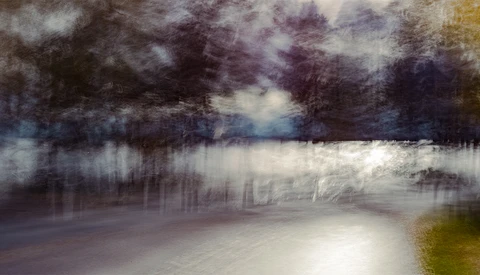
Understanding ICM, Part Two: Image Integrity

Beyond the gesture lies the question of what survives the movement. This part moves from the mechanics of the camera to the discipline of the image, identifying the "points of failure" where structure, color hierarchy, and spatial layers collapse into visual mud. It defines the "indexical anchor" as the boundary between a durable photographic image and a decorative dissolve.
The Website Mistakes I Keep Seeing Photographers Make

Over the years, I've looked at a ridiculous number of photography websites. Partly because I'm nosy, partly because I do website critiques, and partly because during lockdown, I worked for a marketing agency and did a lot of UX work. After a while, patterns start appearing.

The Camera Industry Treats Beginners Like Future Professionals. Most of Them Are Not.

The camera industry is built on a ladder. At the bottom, there is a $600 to $800 entry-level body with a kit zoom, often no in-body stabilization, a single card slot, a plastic build, and a thin lens ecosystem. At the top, there is a $3,000 to $6,000 professional body with IBIS, dual card slots, weather-sealing, a magnesium alloy chassis, and an extensive lens lineup. In between, there are two or three rungs spaced at $500 to $1,000 intervals, each one adding features the rung below deliberately omitted. The structure is obvious when you look at it from above: every camera in the lineup is designed to make you want the one above it.

The Sony a7R VI Has Illuminated Buttons. Why Did It Take a Decade?

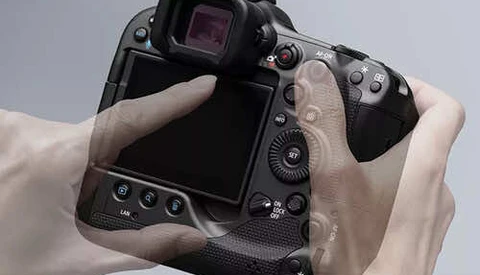
The Sony a7R VI arrived this month with 66.8 megapixels, a fully stacked sensor, 30 frames per second, and 8.5 stops of stabilization. The spec sheet is extraordinary. But the feature that will matter most to photographers who use their cameras after dark is one that does not appear in any resolution or burst-speed comparison: the rear buttons glow.

Why Most Beginners Quit Photography Right Before It Gets Good

I remember so vividly the excitement of when I first started taking pictures. It was all new, new, new. "Oh my God, what's this? Did you just see that?" No matter what it was I photographed, I felt a rush of pure exhilaration. Even now, 24 years later, I am thrilled to say that I still feel that rush.

Why Family Photographs Matter More Than Ever

Photography has always occupied a curious position. It can be art, journalism, testimony, or obsession. But before any of that, it is memory made visible. And nowhere does that become more apparent than in the family photograph.

5 Features Every Camera Should Have by Now

Every camera manufacturer in 2026 can build a sensor that resolves fine detail, an autofocus system that tracks a bird in flight, and a video engine that records 4K at 60 frames per second. The engineering on the headline specs is genuinely impressive across the board. And then you buy the camera, try to charge it from the same cable you use for your laptop, and scream into a pillow.

Mastering Light for Better Macro and Close-Up Photography

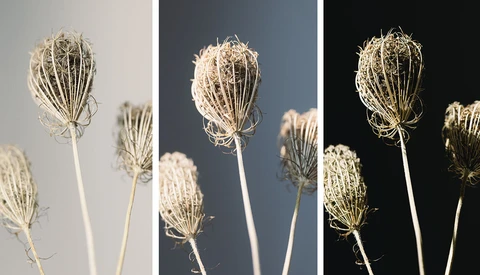
Macro and close-up photography is something we can all do, anywhere. We can find objects at home to photograph, or head outside into a local field or forest. It's a very enjoyable genre of photography. One of the more popular subjects to photograph is wildflowers.

Dear Lisa: I Want to Go Pro, but Selling Myself Makes Me Feel Sick

Dear Lisa,

I've loved photography for years and have always treated it as a hobby. Over time, friends, family, and people they know have asked me to photograph birthdays, couples, small events, and the odd portrait session. I never really advertised myself; it just sort of happened.

Instagram's Optional AI Labels Are Worse Than No Labels at All

Instagram has started testing an "AI creator" label, an account-level badge that tells viewers a profile "posts content that was generated or modified with AI." It is clearer than the vague "AI info" tag Meta already sprinkles on some posts, and it reads like a step toward honesty in a feed increasingly clogged with synthetic images and video. There is one detail that undoes all of it. The label is entirely optional. 

How to Photograph From an Airplane Window (And Actually Get Good Results)

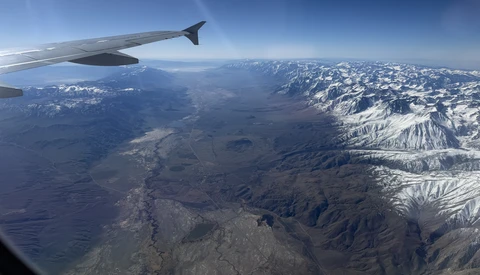
The view from a window seat at cruising altitude is one of the few genuinely unique perspectives available to anyone with a camera and a boarding pass. Mountain ranges, river deltas, coastlines, city grids, cloud formations, and weather systems reveal themselves at a scale and angle that no drone, helicopter charter, or hiking trail can replicate. The light at altitude behaves differently than it does on the ground: cleaner, less diffused by low-altitude haze, with color gradients at the horizon that shift from warm gold to deep indigo across a span of sky you cannot see from the surface. And the compositions are constantly changing, because you are moving at several hundred miles per hour through a landscape that rearranges itself every few seconds.

Why Great Photographers Steal

Growth in photography often feels like a series of overwhelming choices. We look at different genres and techniques, trying to find a starting point that feels right. But the most effective roadmap for development is found in a classic idea you've probably heard: great artists don't just copy, they steal.

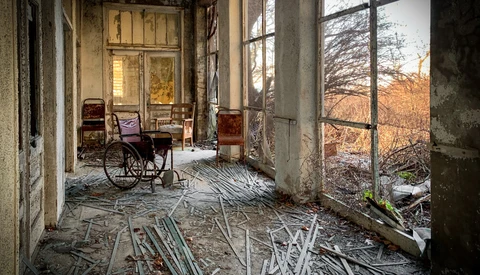
Telling the Country’s History of Sanatoriums in Photo

While some of us were indoors spraying Windex on our groceries during the COVID-19 pandemic, others took the time to explore how to visually relate to that time through passion projects. Photographer and author John Lazzaro did just that, spending those years and then some exploring, photographically, the history of sanatoriums in the United States to produce his latest book, Sanatorium.

Imagen Is Offering Full AI Editing Access for $10, Just in Time for Peak Season

Post-processing has long been the most time-consuming part of a photographer's workflow, and the numbers back that up. According to the 2026 Zenfolio State of the Photography Industry report, about 70% of photographers spend between 26% and 75% of their working time on editing. Only 5% of photographers surveyed feel they are managing the stress of running their business well.

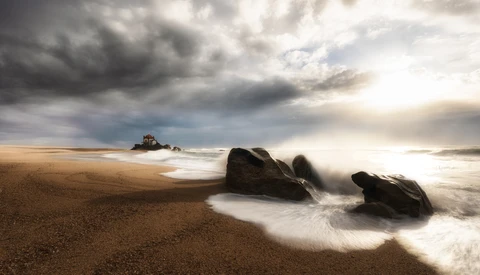
Bad Weather Is the Best Photography Teacher You’ll Ever Have

You know how it goes. You peel the curtain back just a fraction to get a glimpse of what kind of conditions are in store for you. It's that moment of truth. Beginner photographers might check the forecast for cloudless skies and gentle breezes—the kind of "safe" weather that makes for a pleasant walk. A more experienced photographer is checking for fog, heavy snow, or those unique, brooding storm conditions that most people run away from. Let's talk about the weather.

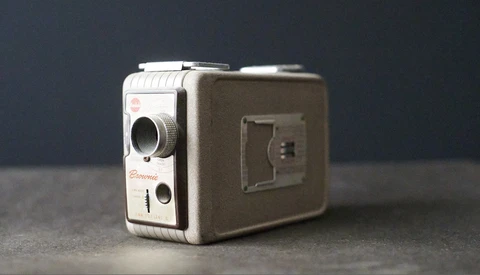
How Expensive Has It Become to Be a Photographer These Days?

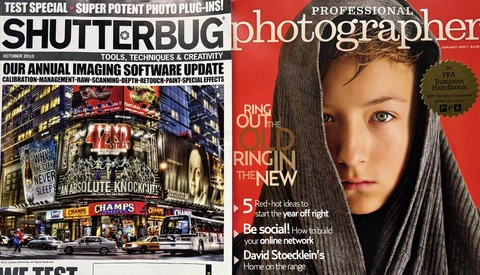
At a thrift shop the other day, I found a couple of relics. No, these weren't the usual camera finds, but rather 16-year-old photography magazines, specifically the now-shuttered Shutterbug and the still-active Professional Photographer. It got me thinking: How expensive has it become to be a photographer these days?

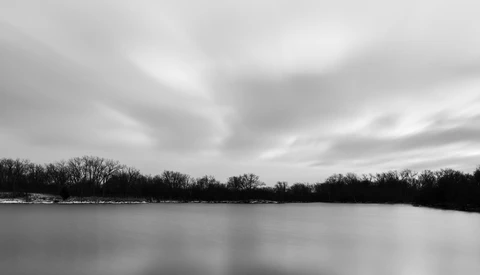
Understanding ICM, Part One: Effect vs Technique

The persistent contradiction surrounding ICM is not a matter of taste, but a failure of terminology. By grouping random expressive effects and disciplined photographic technique under a single term, the field masks a fundamental split. This part deconstructs the "collapse of cost" in the digital era and examines why a painterly appearance is too often mistaken for artistic depth.

What Would Happen If You Never Bought Another Camera Again?

As I sat in my kitchen on Memorial Day, once again procrastinating by watching my umpteenth gear review video this week on YouTube, a random thought popped into my head. What would happen if I were to never buy another camera for the rest of my life?

Why Fujifilm Understands Its Customers Better Than Any Other Camera Company

Every camera manufacturer makes good cameras. The sensor technology has converged to the point where a modern APS-C body from any major brand produces images that would have been full frame flagship territory five years ago. Autofocus is fast on most current bodies. Video is capable across the lineup. For many mainstream stills shooters, baseline image quality has become less decisive than handling, lens ecosystem, color rendering, and the overall experience of using the camera.

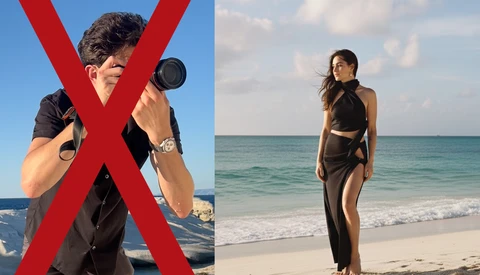
Has Ai Ended My Fashion Photography Career?

I am a fashion photographer by profession. Is AI going to take my job immediately? Should I quit now, hang up my camera, and forget it all? I decided to put multiple AI image generators to the test to see how quickly I'm going to be out of a job. After doing so, I feel safer in my current position, and here's why.