• Originals
    • Categories
      • Gear
        • Forum
          • Picture of the Day
            • Contests
              • More
                • FS Gear Guide
                • Fstoppers T-shirts
              • Home
              • Advertise
              • Meet the Writers
              • Submit Content
              • Contact

              How National Geographic Photographs A 300 Foot Redwood

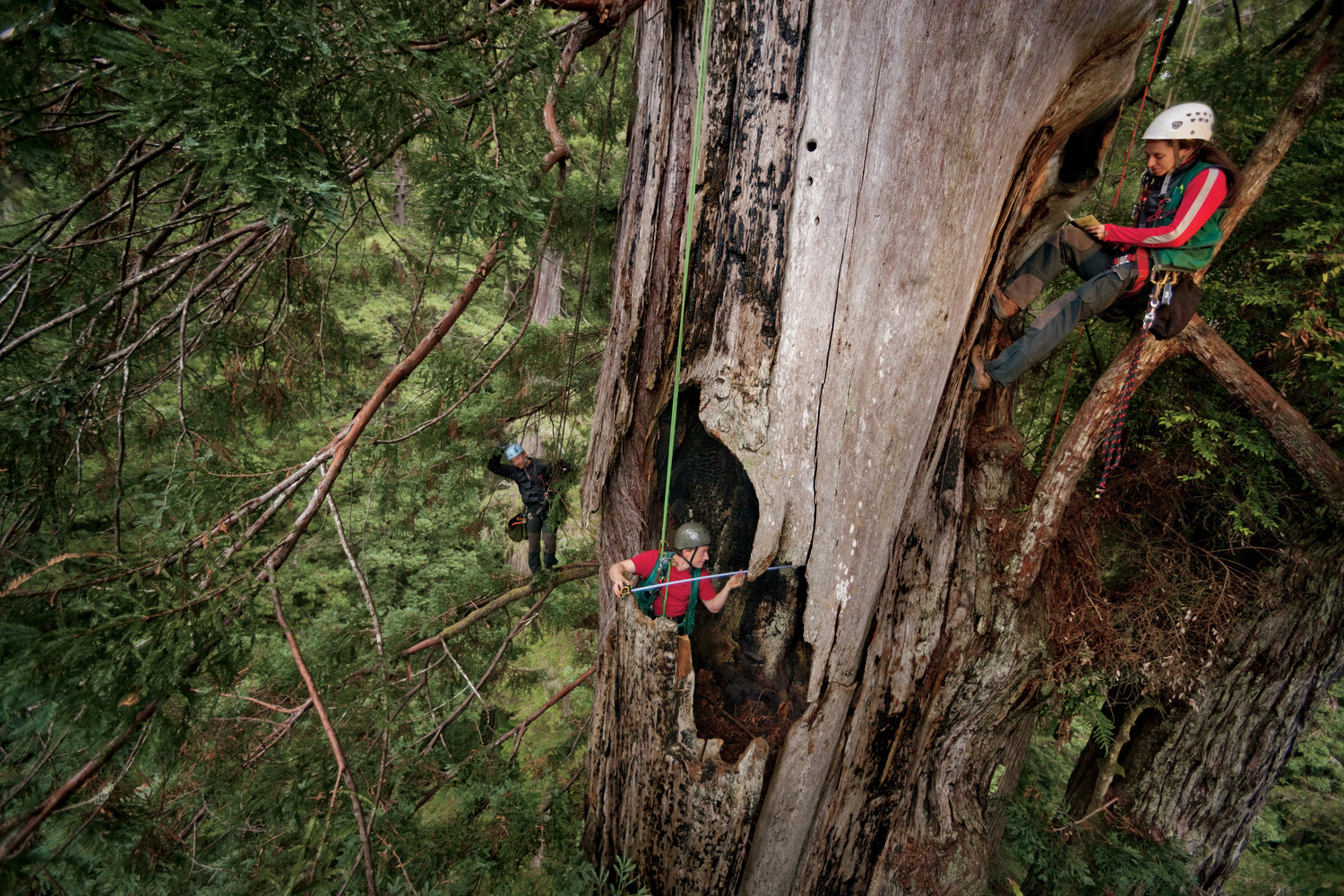
              Michael Nichols is a photographer for National Geographic who was recently faced with the task of photographing a 300 foot Redwood in Northern California. In order to capture the tree in all of its glory, Michael had to use 3 Canon 1Ds Mark II cameras, several pocket wizards, a cinema dolly system, and dozens of bracketed photos all shot at f2.8. Each full image of the tree took over 1 hour to complete and in order to capture the perfect photograph of the tree Michael and his team photographed the redwood over 18 days. The video below shows a quick recap of the project and the second video explains in detail how he was able to overcome all the obstacles required in creating this 18 meter tall image.
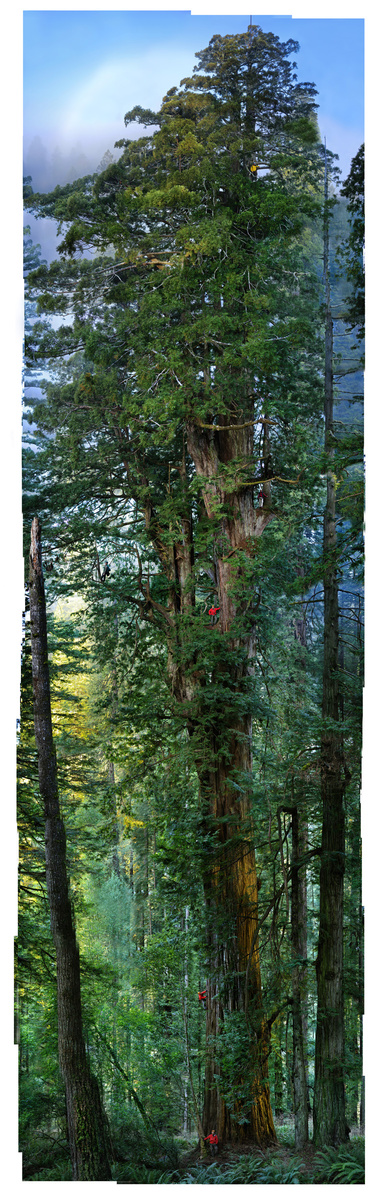
              national geographic redwood photograph 150x150 How National Geographic Photographs A 300 Foot Redwood
              national geographic redwood 150x150 How National Geographic Photographs A 300 Foot Redwood


              February 25, 2011
              Patrick Hall
              Tweet
              Composite
              Editorial
              Location
              Natural Light
              Nature
              « February Photo Contest Is Almost Over
              EA Sports: FIFA 2010, Fans, And A Lot Of Paint »
              • John

                Very Impressive! I’m struggling to see why three cameras were used? Someone care to enlighten me? :)

              • Kris

                INCREDIBLE final image

              • http://lowmanphotography.com Jeff

                Geeze, you would think that CPN would know how to white balance….

              • http://www.patrickhallweddings.com Patrick Hall Admin

                I think the reason they had 3 cameras was because they were bracketing. I guess it was easier to have each camera set at a specific exposure rather than trying to do it from one camera. I don’t shoot Canon but I’ve heard many complain that they are horrible for bracketing either in number of shots or the amount of exposure variation.

              • Jay

                I believe he mentioned at one point that they were shooting panoramas that they then stitched together. If you look at the full size shot you can see three frames stitched across the width. That would be why they used three cameras.

              • Brandon

                If you look closely at the rig, the top camera is to the right, middle camera is straight on and bottom camera is to the left. I think they did this because the tree is so wide, it doesn’t look wide in the image because its height but its got to be over 20 feet across and doing it this way would give it more of a 3D feel.

              • Beach

                Exactly, Jay. As you can see in this grab from the video, one camera is straight on and the other two are canted a little off to each side. http://i.imgur.com/wqEZT.png

              • http://www.aputure.com/blog Aputure

                What an amazing tree. And good job by the photographers.

              • http://www.mikewiesman.com Mike Wiesman

                Thanks for sharing this! It’s so nice to see his passion speak through his work and to see that it carries also through the NatGeo staff. (i.e. when he was talking about doing a 5-page foldout verses a 4-page)

              • agroforestier

                 Le 14 juillet 1978 je greffais sur de jeunes plants de séquoia toujours
                vert, des greffons d’Arc 154 qui m’avaient été confiés par le professeur William
                J. Libby Généticien Forestier de Berkeley. 

                Arc 154 avait été découvert par le docteur Paul A. Zhal quelques mois après mars
                1963, date de l’attribution d’un financement par la Société National Geographic
                pour l’étude du séquoia toujours vert et de son environnement. Les détails de
                cette découverte d’ARC 154 mesurant 367,8 pieds de hauteur (112,1 m) en faisait en 1963  le plus
                grand être vivant connu 

                Les
                détails de cette découverte sont relatés dans le volume 126 n° 1 de NATIONAL
                GEOGRAPHIC paru en juillet, 1964. 

                Le professeur W. Libby m’avait confié les greffons d’ARC 154 pour que je
                les rajeunisse par culture in vitro, car ce clone ne répondait pas au
                rajeunissement par taille et élagage qui faisaient merveille à Berkeley sur le
                Pin radiata.

                Après plus de dix années de culture in vitro au laboratoire de l’AFOCEL et
                au Laboratoie Miginiac (Paris 6) et 4 thèses et un DEA soutenus… ARC
                154(Officiellement désormais appelé”National Geographic “) est maintenant un clone parfaitement rajeuni
                et très vigoureux en France. Il est déjà planté dans de nombreuses régions et
                l’une des premières copies , plantée en septembre 1985, mesurait 227 cm
                (C.B.H.) en 2010 au moment de l’abattage. Le tronc,a été scié et a fourni des
                planches magnifiques en cours de séchage.Ce clone, comme l’ortet, n’a pas une très belle forme,branches tombantes et cime fragile bifurquant facilement.

                .ARC
                28 devenu Orion,. le deuxième plus grand en 1963,mesurant alors 367,4
                feets ( 111,98 m) qui répondait bien au rajeunissement à Berkeley est en France
                un clone de qualité supérieure à “National Géographic”Il
                est plus droit,plus vigoureux et sa branchaison horizontale et fine.  .

                En 2006, on a découvert 3 arbres plus grands que National Geographic :

                                                                                          Icarus: 112,8 m

                                                                                          Helios:114,4
                m

                                                                                          Hyperion:115,55
                m

                Je me demande
                pourquoi ce ne sont pas ces champions qui ont été photographiés par

                Michael Nichols ,
                photographe de National Geographic. L’arbre de 300 pieds qu’il a choisi est une
                horreur pour un forestier!


                André FRANCLET                                                                                     

              • Connect with Fstoppers
                Follow @Fstoppers
              • Fstoppers Originals
              • Popular Articles
                • What A Week Of Groceries Looks Like Around The World
                • My Top 8 Pieces Of Gear For Shooting Run And Gun Video On A DSLR
                • The Story of How Law Enforcement Uses Photoshop to Fight Crime
                • Flickr (Finally) Gets Total Design Overhaul, Adds New Features
                • Get a Stanford Education FOR FREE!
                • Canon Photographers Biggest Secret Exposed
                • Behind the Scenes of South Carolina Gamecocks' Photoshoot
                • Bulb Ramping Tutorial Makes Complicated Timelapses Look Easy
                • Airline Says 'No Photography' on Flights
                • Scientists take 3D Photos with Single Pixel Sensors
                • LensRentals Shows Us How to Clean Your Lenses for Dust and Effectively Scare the Crap Out Of Us
                • Categories
                • How Would You Feel Being Secretly Photographed in Your House For An Art Exhibit?
                • Iconic Rock Photographer Norman Seef's Stories Behind the Photos
              • Recent Comments
                • Julius_Caesar1 said To back an argument one must come up with statistics, if not backed up then it becomes weak and flimsy. T »
                • Julius_Caesar1 said To back up an argument one must support it with statistics and hard core facts, if not it becomes weak an »
                • Guest said To back an argument one must come up with statistics, if not backed up then it becomes weak and flimsy. T »
                • Guest said Let me also point out that companies that hire industrial and scientific photographers, don't look for a »
                • BDWT said Hahah, got me there. At least I can still cross border shop while our dollar is on par! If I lived closer »
                • BDWT said "Kinda like mac users"? That sounds as aggressive as your Canon comment, as if you're fuelling for anothe »
                • Cheryl Pierce said So, if I recently paid for my Pro account, I have to change to a "free" account by 8/20/13? What if I wa »
                • Chris Adval said I haven't shot a wedding yet as I am still an emerging pro, but as I am planning to break into the local »
              • Support Fstoppers
                current nikon rebates deals
              • FS Originals
              • My Top 8 Pieces Of Gear For Shooting Run And Gun Video On A DSLR
              • Canon Photographers Biggest Secret Exposed
              • Endearing Animal Portraits By 18 Year Old Photographer Jessica Trinh
              • How to Go Pro Without Going Crazy
              • Fstoppers Sits Down with Lara Jade
              • Categories
              • Commercial
              • Video
              • Gear
              • Location
              • Strobe Light
              • Contests
              • Win a 30x40 Print
              • Alien Skin Retouch Contest
              • Win the Art Behind the Headshot
              • Black Rapid Contest
              • Win a Lowepro Bag
              • Random Posts
              • Cheap and Easy DIY Alternative For A Vinyl Seamless Backdrop
              • Now You Can Wear Pantone Around Your Neck
              • Life Time Fitness Behind The Scenes
              • [Contest] Win a 30×40 Print from ClickPixx on Flickr
              • No More Re-Composing: Use Your Camera’s Custom Functions
              • Picture of the Day
              • Cyclist
              • Ferris Wheel
              • Cloudbreak
              • Highway 90
              • Frankfurt Delay
              • Home
              • Advertise
              • Meet the Writers
              • Submit Content
              • Contact
              • Sitemap
              © Fstoppers
              Made by Novum