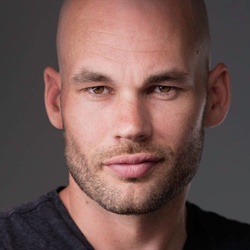
 Hey everyone! I'm Reese and I'm excited to be a part of the Fstoppers team. My segment, The FS Spotlight, is a new weekly Q&A session with professional photographers at the absolute top of their field. The interviews are going to touch on everything from how they reached rock star status to their shooting style to what cameras they shoot with as well as their advice to all aspiring photographers. This week's feature is underwater photographer Thomas Peschak; enjoy!
Marine biologist and underwater photojournalist Thomas Peschak is a man on the move. The near-nomadic photographer spends over 300 days a year on the road, creating photographs that inspire viewers while focusing on very serious environmental issues, including kelp forest ecology, shark conservation, and the impacts of illegal fishing. Peschak is a Fellow of the International League of Conservation Photographers, a contributor to National Geographic magazine, and was recently named as one of the 40 most influential nature photographers in the world. He catches up with Fstoppers to talk about swimming with great whites, the power of photography as a conversation tool, and his most controversial photograph.

Fstoppers: Photography or conservation, which came first?
Thomas Peschak: I was a marine biologist before becoming a photojournalist. I started snorkeling at the age of six and scuba diving when I was about 12. The moment I put my head under the water it was an instant love affair with this alien realm. I grew up surrounded by the work of Jacques Cousteau and the early underwater photo stories by David Doubilet in National Geographic magazine; those guys were really my inspiration, but being able to actually see with my own eyes what they were photographing, that was when it became this irresistible lure that would just not go away. It changed my life. I became a marine biologist with the principal goal of carrying out research that would help protect our oceans.

Thomas Peschak: After almost a decade in marine biology I began to grow frustrated that even armed with the most overwhelming scientific evidence major conservation successes proved elusive. I was studying the impacts of abalone poaching in South Africa and the smuggling of this high value shellfish by Asian crime syndicates. I quickly discovered that the numbers in the scientific reports and the numerous lectures to government departments weren’t resulting in any conservation action. Photography had always been a passion of mine and when I wrote a popular article on the poaching the magazine also used some of my images. I found that people were drawn to the photographs and more articles for newspapers and magazines followed. In a matter of just a few months I achieved more conservation mileage than during the previous five years. Finally the government created a dedicated anti-poaching unit and introduced tougher environmental laws. That was my Aha moment, my wake up call when I realized that I could achieve more through my photographs than through statistics.

Fstoppers: You’re working with often potentially dangerous wild animals. How does this
affect the way you approach your assignment?


Thomas Peschak: I spend around 300 days a year away on photo assignments, and for about half of that time I visit beautiful places and take photographs that celebrate the ocean and hopefully inspire people. On the other 150 days I document the darker side of our relationship with the sea. For me, conservation photography is all about the carrot and stick approach. One way to make people feel something for an animal or an ecosystem is to inspire them, show them something that makes them go “Wow! I didn’t know anything like that could exist.” As a photojournalist, it is also my job to accurately reflect what is going on today. So, the other half of my year I spend my time photographing the realities of rampant overfishing, marine pollution and the impacts of climate change on the oceans. I feel that I walk a fine line between trying to inspire and disturb! My aim is to tell balanced and honest photo stories that get people to think act and ultimately make a difference by changing the fish they eat or what they throw away.

Fstoppers: Where do you travel for work?
Thomas Peschak: I shoot all over the world and in the process I have become addicted to life on the road. I get into a zone and it is actually hard to adjust to being home again. The first 2-3 days are exciting; you have your own bed and books, but then I begin to get restless fast. It is always much more traumatic coming home than leaving. As far as current travels goes, I have just finished an almost year long series of assignments for a National Geographic magazine story set in the Arabia region. I am also about to return to the Great Bear Rainforest of coastal British Colombia, which is still threatened by the proposed construction of oil pipeline. Then later in the year I will continue my work on the shark fin trade in Asia and then return to southern Africa to document its network of marine reserves.

Thomas Peschak: Being a marine/underwater photojournalist is one of the most challenging disciplines of all. I take more than half of my photographs while free diving, and so I’ll swim up to six kilometers a day and spend eight hours in the ocean. I always have a game plan in place long before I enter the water. I know what I want for the story. I have done all my homework and now I just have to find what I am looking for. You can’t do that on a short scuba dive. The only way to shoot powerful imagery underwater is to get close and around 90 percent of my work is wide angle. In most my photographs my subject is less than half a meter away. So I have to gain my subject’s trust and find ways for it to allow me to enter its personal space without radically altering its behavior.
Fstoppers: You took a pretty controversial image of a great white following a kayak. Can
you tell me a bit about that?

I knew that I had captured an unusual and powerful image, but was not prepared for the public reaction. When this photograph was first published it resulted in more than 100,000 visitors to my website in a 24 hour period. Many thought the photo was a digital fake and to date there are still hundreds of websites that fiercely debate its authenticity. Of course the image is 100% real, in fact it was one of the last images I took using film, before I transitioned to digital in 2004. In all my photojournalistic workflows I only do minimal post-production work, restricting myself to basic modifications of levels, contrast and color correction.

Fstoppers: What was it like shooting the manta ray feeding frenzy?
Thomas Peschak: In 2008 I shot a story on manta rays for National Geographic magazine. I worked with my friend and marine biologist Guy Stevens to document a unique feeding aggregation of manta rays in the Maldives. During the monsoon season currents wash swarms of krill into Hanifaru bay, a cull de sac in the reef setting the stage is set for a feast that attracts up to 250 manta rays into a area the size of a basket ball court. Sometimes it is a highly choreographed ballet of hundreds of manta rays feeding elegantly in a tornado like vortex, but it can quickly turn into the ultimate manta train wreck, with rays crashing into each other left, right and center. Now mantas are placid non-aggressive creatures, but in that context they, especially when hungry seem to temporarily loose all coordination and become a bit frisky. To get the images for this story I had to get right into the middle of a chaos-feeding group and the thought of being knocked unconscious by these 1-ton giants did cross my mind. However much to the manta rays credit, I only had one minor collision and a few near misses.

Thomas Peschak: I am a Fellow of the International League of Conservation Photographers, a collective of some of the world’s best wildlife and environmental photographers who together tackle some of worlds most important conservation issues. I firmly believe that photographs created by committed photojournalists are the most effective tools in the conservation toolbox. The greatest conservation results happen when photographers team up with the scientists and NGOs. If those three parties come together you can create a force for conservation that is almost unstoppable.

Fstoppers: If you could make people more aware about one specific conservation issue,
what would that be?
Thomas Peschak: It would have to be the dramatic decline in shark populations that has occurred in the last two decades. The ever-increasing demand for shark fin soup in Asia has resulted in up to 73 million sharks being killed every year. Sharks are the lions and tigers of the sea. They are an integral link in the ocean food web and have been an indomitable force in shaping the sea since their reign began 350 million years ago. Currently we now little about the exact ecological role that sharks play,but the few studies undertaken provide striking evidence of their vital importance. Three quarters of our planet is made up of oceans and we as a species intimately depend on a healthy seascape for our very survival. A healthy needs sharks, lots and lots of sharks!
Fstoppers: What advice do you have for aspiring photographers?
Thomas Peschak: First and foremost find a story or subject that you are passionate about and then research the hell out of it. Before every assignment I routinely read hundreds of scientific papers, popular articles and books. I also spend days on the phone or email talking to every expert in the field I can find. To be successful you have to be two hundred million percent obsessed with photography and with telling stories that matter! If I haven’t got the image I don’t sleep and I get grumpy and miserable. It isn’t a nine-to-five job, it is a passion, and it helps to be little crazy. I am madly in love with photography. It’s all I want to do from the moment I get up in the morning until I go to sleep.





Amazing!!! really Amazing and great job
One of the best interviews yet!
Thanks Derek!
I love id!!!
incredible photos.
Whoa, I totally remember seeing that bird photo at World Press Photo this year.
Great story! However, it would be worthwhile to proofread, there are a number of typos and spelling errors.
Hey Jon! This one had to come together faster than normal since Thomas is on assignment half way across the planet, but I'm glad you're reading closely! Now, tell me about some other niche areas of photography you want to read about. :)
Great story, great pics. I personally never cared too much about underwater photography but Thomas' pictures are strong enough to make me wish I could dive and shoot.
Great interview and really amazing pics!
Thanks!! I had a great time with this one
What spectacular shots, thank you for sharing.
You guys rock! Love the interview and enjoy visiting the site. :-)
Thanks, Rick!
Great !
WHich underwater housing do you use ?
Great !
Which underwater housing did he used ?
Another great story. Thank you so much for your insightful interviews.