
I love Nikon, but for its professional line of cameras (anyone can make the little guys). But I've never been a fan of the Coolpix name. Maybe it reminds me of an era during which plastic boxes that could barely make a file for a 4x6 print were actually cool. So when I first saw the Coolpix A, I didn't think anything of it. But when I really read about it, I realized it's time for me to drop the silly baggage I have with the Coolpix name. This isn't just cool. It's red hot -- for a number of reasons.
For those that haven't yet read about it, the Coolpix A is a compact camera with an APS-C (DX, in Nikon lingo) sensor. While it might be tempting to relate this to the Fuji X-Pro 1 or Canon EOS M cameras, this isn't quite that -- it has a fixed, 28mm-equivalent lens that's pretty fast at f/2.8. But the principle is the same: tiny camera, pro results. So what's the big deal? The Coolpix A fixes a spot in history that's critical for moving into the future. Finally, finally, finally, Nikon -- the last big company to do so -- has said, "Ok, it's time."
I've made this analogy a hundred times already, but the future truly is a digital version of what Leica did for photographers of the early 20th century (which is, of course, making high-quality image-taking portable). Of course, Leica has their digital cameras. But they suffer in two respects. They're expensive and they're still not quite a DSLR-in-a-bottle, offering less than ideal firing rates (fps), slow (non-existent, you say?) autofocus, and still-limited, if modern and "refined," controls.
Does the Nikon Coolpix A fix those two issues? It fixes one of them. You could get more than five of these for the cost of a digital Leica body. But it still doesn't offer a combination phase- and contrast-detection AF, sports-like shooting speeds, or a range of lenses that can cover any situation. Maybe now I'll finally share why you should care.
The thing is, while we're not there yet, Nikon's commitment to the basic larger-format, ultra-compact body puts the future within reach. The last of the big companies that might make something like this actually possible essentially promised to keep trying.
As far as I'm concerned, Nikon messed up (or at the very least delayed) their opportunity for the mirrorless camera. The Nikon 1 series, apart from bringing back a big name in its history, was created for the consumer that wanted just a bit more than the point-and-shoot. Its price and feature set both show this.
Meanwhile, Canon took advantage of the opportunity to produce -- and impress -- with a surprisingly well-done first attempt at a larger-sensor compact EOS M. The Fuji X-Pro 1 set new standards before that, even, with a new sensor technology that removed the AA filter without introducing moiré (a pivotal step if we're going to see a compact replacement for a DSLR in this decade). And Sony, in a surprise blow from behind, introduced the world's smallest full-frame digital camera with the RX1.
Nikon's been struggling lately, no doubt. But its bandwagon-joining Coolpix A finally ensures that we will continue to see the development of compact, professional-quality cameras. Because honestly, if there was a camera as big as your first point-and-shoot that honestly had the same exact features of the Nikon D4, why wouldn't you get it?
Now, I've spent the whole time not really talking about the Coolpix A, but instead about the industry that it is diving into. So let me say that I'm sure the A (can we call it that? I still like leaving Coolpix out of it) will surprise me when I first pick it up. Why? It really does have some firsts for Nikon. It gets rid of the AA filter in the small body, which will provide for sharper images, even if a bit of moiré is present in certain situations. I still can't ignore that there's a pretty good size sensor in that small one-hand-holdable body. And the no-frills fixed lens is fast enough to really take this thing everywhere you go. This really is the point-and-shoot for the pro that doesn't want to lose the ability to shoot sharp RAW images when he leaves his 5-pound beast at home.
So in short, don't write this thing off without looking into it further. Don't do what I almost did. This thing really is worth it.


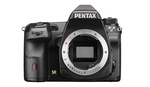
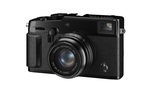
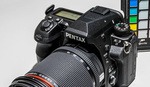
ill take an X100 over this any day of the week.
By the time you put a X100 in your jacket pocket, that jacket is heavy on one side. X100 is 16 ounces, the A is 10. The volume of the X100 is twice the A. The A is just a tiny bit larger than the RX100 which dissapears in my jacket pocket.
I'd love to try this camera. Really good point you've made in your post.
in short you are a nikon fanboy who would buy any crap nikon produces... yawn.
no need to hide it.
with this lens the camera is a joke.
Sorry you feel this way. Honestly, it's expensive (I don't know what Nikon is thinking, especially with its accessories...people won't take their prices seriously for long if they keep this up). And it's far from perfect. But so are the other smaller cameras I discussed. They're everyone's "first try." And while this is interesting, I probably would buy an X-Pro 1, even, over this. I never said I would buy this. But it's a big step. Now everyone is working toward something like this. I just hope they really go all-out sooner rather than later. The D4 is expensive. But would I buy a camera with its specs in a package this size for a couple grand a couple years from now? You bet. It'll happen....just a matter of time.
So fan boy? Not so sure abou that...
How do you know it's a joke? Have you tested it? Looking at it's specs alone it looks on par to the Fuji x100/s. And that camera is probably the greatest "mirrorless" PnS on the market. If this new Nikon A is anything close to it, they'll have a great product.
Troll harder next time.
a 28mm fixed lens ... and 1000$... well only a nikon fanboy can love that. :)
28mm f/2.8..gahhh..make it f/1.8 then it's acceptable.
Or everyone in love with the Fuji x100s.
f/2.8 and a $450 OPTICAL viewfinder?
Ugh. Nikon would be successful if they could just get their act together.
Nikon after so many years decided to listen to what we want: quality in a small body. Now they will just kill us with the smallest incremental upgrades possible until one day we have what we really wanted in the first place. And if it was not for the companies who disrupted the marketplace in order to gain market share (Sony and Fuji) then Nikon and Canon would have never made those smaller cameras.
Unless the Nikon option is a clearly superior photographic tool, I will hold that grudge.
This can fit in your pocket a x100 can not thus this is a better camera by bing with you everywhere. This reminds me of the ricoh gr1s. Nikon was in the point and shot wars of the 90s with the 28ti and 35ti.
Oh My God. This article makes me cry. It confuses the enticing basic concept of this ilk of cameras with the actual model.
The concept is great and makes for a wonderful small high quality camera. Unfortunately the current implementation is odd at least to say. As already mentioned the slow lens is a bummer. The missing built-in VF either makes me shoot in "zombi-mode" or makes me buy the external VF which then makes the body quite bulky.
By the way, Sonys RX1 (even cooler due to its 35mm sensor) suffers from similar shortcomings unacceptable at this price point.
Bottom line : Without exception ALL major cam manufactures need to do some serious improvements on their compact large sensor models. "Small is not all (I want)" and for serious photogs the yardstick still is their DSLR in terms of IQ, features and behavior.
Absolutely. I'm not saying anyone's there yet. The point is that everyone's now committed to getting there (Nikon was the last to show any interest in this, really). And that's a key step. Hopefully we'll get there this decade. But it is a bit unreasonable to expect a full DSLR-featured compact camera. We'll get there...just not quite yet... (it's hard for me to be patient, too). If someone were to release what we all want -- what we're all talking about here -- it would be $8k if they could even do it...
F1.8+ APS-C sensor will make this camera bigger though....
Too wide, too slow, too little, too late. X100s please.
you forgot too expensive
I don't understand what Nikon is doing. I hope they don't go out of business. They've been around for a long time but the challenges these days are significant. I hope they have figured out something that I can't see because their survival depends on success in the still image making space unlike their rivals that have a significant stake in other business areas. I really hope they have some solid plan that we haven't been able to figure out yet.
Still not sure why you insist on comparing it to the Fuji X-Pro1 (interchangeable), Sony RX1 (FF), and Canon EOS-M (interchangeable) even after admitting that these cameras are in a different, higher class.
Why not see how it holds up against other APS-C, fixed lens, mirrorless compacts like the Fuji X100s, Leica X1, Canon G1X (1.8X crop), or Sigma DP3 (foveon)?Having an APS-C sensor in a mirrorless body doesn't make you special in 2013, Especially when compared against, cheaper, more flexible, interchangeable lens APS-C systems like Sony NEX, Samsung NX, Fuji X-E1, Pentax K-01, or even Ricoh GXR with better lens options.
The big boys want to sell DSLRs & cheap P&S. Mirrorless markets, whilst the pure awesome future, will hurt the old stand by bread and butter sales. I speculate that within 5 years, DLSR tech will be dinosaur products and everything will be mirrorless. But until then, we'll keep getting these quasi crippled, yet tremendous, mirrorless products. Resistance is futile. . . . and Fuji is already leading the way.
I will be curious to see how this camera stacks up against a good Micro 4/3 compact like the Olympus E-PL5, which has the same body size without a lens. ( the E-PL5 is 1 oz heavier ) Add on a pancake lens like the Panasonic 14mm f/2.5 and you are a couple ounces heavier. ( price wise the Olympus with the pancake is about the same )
http://www.dxomark.com/index.php/Cameras/Camera-Sensor-Database/Olympus/...
why would anyone buy this over either an X100s (or used X100) or an olympus MFT option? They're soooo much better. The one thing this body has is that it's small. Beyond that 2.8 is a terrible decision on a fixed lens camera. F/2 on the x100 is just fast enough for low light and decent separation Nikon's going backwards making it a stop slower AND a wider lens so it's even harder to get separation And the controls look like they're straight off the P&S they announced the same day. yuck! Canon's EOS-M is also terrible. Slow AF makes it worthless. Sony and Panasonic both put terrible logic in their EVIL systems making them painful to use. Olympus and Fuji seem to have the best best options in this group, everyone else is catching up. Canon and Nikon are the furthest behind IMHO.
sorry --- sony has it done right ----- rx100
This article takes forever to get to the point, which only gets clear on the bottom line - a P&S that does RAW.
The mounds of text leading to that is way too "how I see the world" for me to enjoy. I know it's an opinion article, but it's just overdone IMO.
I am a Nikon Pro shooter but honestly this seems like a toy for the price. It's the Nikon's first attempt, so it means that there will be 2-3 more revisions in 3 years until a product we can all like hits the market. It's very clear that they take it slowly, offering stuff in small increments.
I had the same opinion about the V1 when it came out - especially because of the price ( like here ), however I managed to get a V1 + 10mm 2.8 at a special offer for about $300 and so I bought it solely for the purpose of reselling it for a small profit. However, I played with it a bit and absolutely liked it - FOR 300$ !! It's initial price was over $1000 in my country ( dont remember exactly ). I have a feeling it will be the same here. If they lower the price, yeah it can be taken into consideration.
Considering it's fixed focal, slow lens, no OVF ( hahaha @ 450$ accessory OVF ), looks cheap ( at least in photos ) - I don't know if this will turn out to be a success. The X100 sure does look a lot better, better built ( again judging from the photos ), faster lens and a built in OVF - so there's not even a discussion there.
Not sure where Nikon is going with this, but maybe the sensor is a stellar performer ( hopefully it will use the d7000s sensor as per speculations ) and the AF is superb ( like the 1 series ). Otherwise...
+1 to this.
Good that Nikon finally showed commitment to the high end P&S market. Bad that their late entry is pretty crappy in comparison to even the X100s and Canon EOS-M.
I think Nikon thought the V1 was enough, but it turned out people wanted the X100s, G1x and Canon EOS-M. Bet Nikon users would have been a lot happier if they released an EOS-M competitor w/ faster focus but could take Nikon lenses...
Here's what I got out of Adams article. I don't think he was saying we should all go out and purchase this camera now because it's the greatest compact ever. I believe he was simply giving his perspective in the vision Nikon was going in the near future with the new high quality compacts, which I agree with. All I am seeing in the responses is a many people complaining and whining about what you THINK was being portrayed..... My Goodness people stop the griping...so tired of the negativity and disrespect from some.
The Sigma DP1 should be mentioned as well in your history of small camera big sensor line up. I believe it was actually first. And from the start, there is no AA filter in Sigma cameras. The latest versions DP1 Merrill, DP2 Merrill and DP3 Merrill are quite a line-up with a truely unique sensor!
Interesting vision Nikon got here. Let's see. 28mm lens, f2.8, contrast detect AF, 3 inch LCD, absence of AA filter, sounds like a Sigma DP1 Merrill to me. Not only they were late, it's also too expensive. I've read a few comments in some forums that Nikon still trying to protect their DSLR sales. This event is worse than Sony's RX1 price problem which has a Zeiss lens.
They have to give it up. Plenty of the DSLR sales are from consumers who never bought another lens who just wanted better IQ versus their P&S. Or, is it just as a company to make profits, just wanted incremental upgrades each year?
Many people said a lot of crap about the Nikon 1 system, and it worked out well for them. Nikon is apparently marching to the beat of a different drum, and I wouldn't be surprised if this camera winds up as successful as their 1 series. Not that I would buy either one of these cameras, but I think we first need to give this camera the time it needs to prove itself, or not.
NEX still number 1. :)
Like the author says here - nothing the size of the Nikon Coolpix 'A' can make an image as good. And you just can't put a price on that.
How to turn the NCA's failing grade into an "A":
1) 35mm-e f/2 lens. Image stabilization gets you extra credit.
2) Built-in EVF, Sony NEX-7/Fuji XE-1 style.
3) PDAF and external active AF (IF sensors).
4) A "real" grip.
5) Better battery life.
6) Integral filter thread and hood bayonet.
Nikon A is a camera you can put in your pocket - Nex,X100,RX1 are all great cameras, but you cant carry any of them in a pocket.
Now if a 28mm prime works for someone or not is a personal thing. Some people prefer the flexibility of a zoom, others prefer primes (not only because of better IQ).
The Coolpix A is certainly not cheap (as the other mentioned cameras are not really cheap), but the user interface is good and the IQ is very good. (sharpness is better than the Leica 28/2.0asph on an M9, tonality is richer than that of the Fujis (IMO))