
Featured Articles

Fstoppers Originals

Fstoppers Community
Photo of the Day
Jun 8

Max capacity

Jun 7

The spider on the train.
Jun 6

Shirtless

Jun 5

Kin

Jun 4

... rare beast ...

Jun 3

A Rare Storm
Jun 2

Phare d’Eckmühl_Bretagne

Jun 1

Olive Tones - Dukkah

May 31

Charlotte

May 30

The Long Watch
May 29

Dreaming Under The Stars
May 28

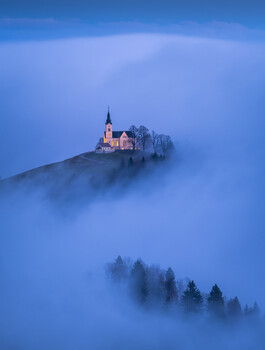
Foggy hilltop church
May 27

Motherhood

May 26
Clara Kovacic

May 25

Moonpiercer

Editors' Picks

Bjarnarhöfn


Reach to the sky


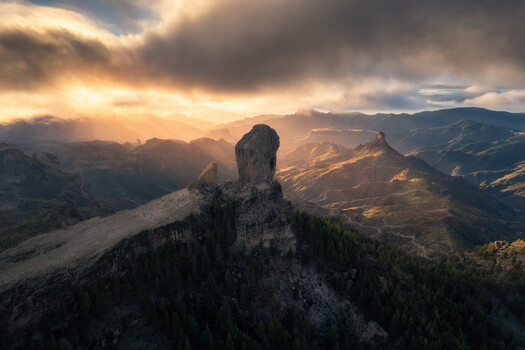
Roque Nublo

Cowboys Waiting


Stream, Black Sand & Foothill, Vik Iceland
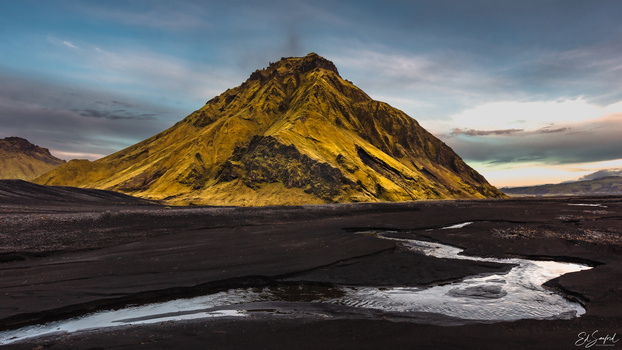

Vestrahorn Aurora


Patibulaire
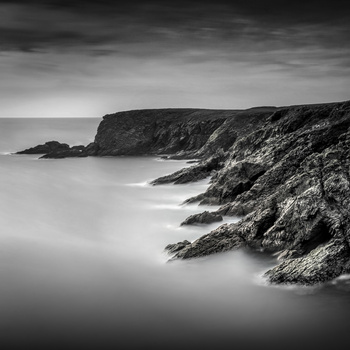
Père Eternel
Sea Dragon

National Gallery of Art
National- and University Library of Strasbourg_2

Staircase / Musée Unterlinden

Metropol Parasol / Sevilla

Spiral staircase at Leica


Onions & Garlic Still Life


The Camera Industry Ignores Its Youngest and Oldest Customers
The camera industry designs products for a narrow band of humanity. Browse the marketing material from Canon, Nikon, Sony, Fujifilm, or any other manufacturer and the target buyer is consistent: a 25-to-45-year-old enthusiast or professional, fit enough to carry a kilogram of gear on a mountain, dexterous enough to operate tiny buttons in the dark, and technically literate enough to navigate a 400-item menu system. The cameras are excellent for this person. They are less excellent for the two populations on either side of that band: the photographer over 60 whose hands, eyes, and patience have different requirements than they did at 35, and the child under 12 who wants to take real photographs with a camera that can survive being a child's possession.
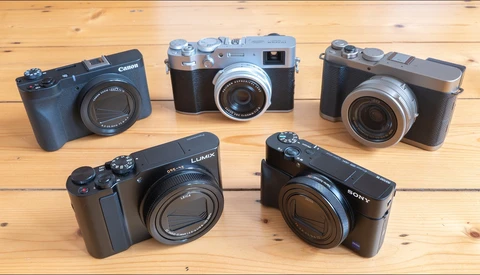
Five Premium Compact Cameras Tested Side by Side: Which One Actually Wins?
Choosing a premium fixed-lens compact camera is harder than it looks, because the category spans everything from true shirt-pocket cameras to chunky near-mirrorless bodies, and the right answer depends almost entirely on what you actually shoot. The Canon PowerShot V1, Fujifilm X100VI, Panasonic Lumix LX10, Panasonic Lumix ZS300, and Sony RX100 VII are not variations on the same theme; they make fundamentally different tradeoffs across sensor size, lens range, portability, and price.
Latest Gear Reviews





Active Contests

3
60
Submit Your Best Long Exposure Shots
Welcome to the June Critique the Community! For this contest/critique, we are doing another abstract theme that should allow more photographers to enter. For this month we want to see your best photograph that feature "Motion Blur".
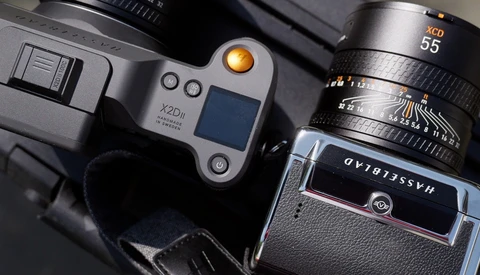
Hasselblad X2D II vs. 907X 100C: Same Sensor, Very Different Cameras
Choosing between the Hasselblad X2D II and the Hasselblad 907X 100C is genuinely difficult, and not just because both cost the same and share the same 100-megapixel sensor. The decision comes down to something more personal than specs, and getting it wrong at this price point is an expensive lesson.
Fstoppers Exclusives






How to Start Wedding Photography
The exposure triangle, autofocus modes, backup systems, flash technique, portfolio curation, and scam awareness — wedding photography demands you get competent across all of them before your first paid job. Miss any one, and you'll either lose the shots, lose the files, or lose money from your bank account.

Three Images, Three Masking Strategies: Color Control in Lightroom Classic
Lightroom Classic's color masking tools can target individual hues in a scene without touching anything else in the frame. If you've ever pumped up saturation only to watch every color in the image shift at once, masking by color range solves that problem directly.

5 Lenses Nobody Gets Excited About That Produce More Photos Than Anything in Your Bag
Photography publications, including this one, spend most of their editorial energy on exciting lenses. The fastest aperture in the category. The sharpest optic in the lineup. The new release that leapfrogs last year's model. The GM, the Art, the L-series, the S-Line flagship. These are the lenses that generate press coverage, forum arguments, and YouTube thumbnails with wide-eyed reviewers holding glass that costs more than a used car.

Why Slowing Down Improved My Landscape Photography
One of the biggest changes in my photography did not come from buying new gear, learning a complicated editing technique, or traveling to better locations. It came from something much simpler. I stopped relying on the idea that I could fix everything later in editing.

How Does the NIKKOR Z MC 105mm f/2.8 VR S Macro Lens Fare for Flower Photography?
Today, I decided to try something new. So, join me on a walk through the park with the NIKKOR Z MC 105mm f/2.8 VR S macro lens.
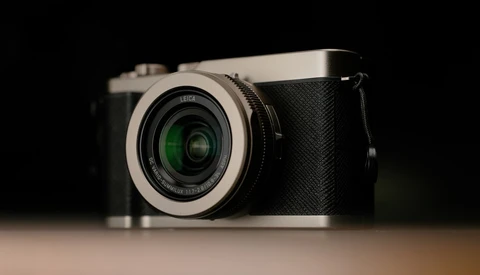
The Panasonic Lumix L10 Is a Compact Camera That Might Change How You Think About Photography
The Panasonic Lumix L10 lands in a crowded field of compact everyday-carry cameras, but it takes a noticeably different approach from most of its competition.

The Problem With Paradise
Acapulco at night feels less like a city and more like a stage set designed by a casino architect having a mild nervous breakdown. Palm trees multiply in every direction. Floodlights blast the sand with the subtlety of a prison yard. Massive hotels rise from the coastline pretending time still moves the way it did decades ago, as if glamour could survive indefinitely through architecture and denial alone.

How to Edit Portrait Skin Tones in Lightroom
Lightroom skin tone editing is one of those things that separates a gallery that looks cohesive from one that looks like a collection of individual images. Get it wrong and even technically sharp, well-exposed portraits look off in ways clients can't always name but will absolutely feel.
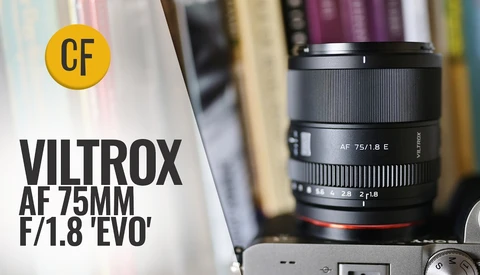
The Viltrox AF 75mm f/1.8 Review: A $329 Portrait Lens That Actually Delivers
The Viltrox AF 75mm f/1.8 is a short telephoto portrait lens for APS-C mirrorless cameras, giving you a full frame equivalent of around 113mm. At $329, it sits in a price range where quality can vary wildly, and whether Viltrox has delivered something genuinely worth the money is exactly what this review puts to the test.

The Three Lighting Decisions That Control How Old Your Subject Looks
Lighting choices age or youth your subject more than any retouching tool. Three specific decisions, made on every shoot, determine whether someone looks weathered or fresh, and most people make them without fully understanding what they're doing.

Understanding ICM, Part Two: Image Integrity
Beyond the gesture lies the question of what survives the movement. This part moves from the mechanics of the camera to the discipline of the image, identifying the "points of failure" where structure, color hierarchy, and spatial layers collapse into visual mud. It defines the "indexical anchor" as the boundary between a durable photographic image and a decorative dissolve.

The Website Mistakes I Keep Seeing Photographers Make
Over the years, I've looked at a ridiculous number of photography websites. Partly because I'm nosy, partly because I do website critiques, and partly because during lockdown, I worked for a marketing agency and did a lot of UX work. After a while, patterns start appearing.

Going Off-Grid: The Plug-and-Play Bluetti Balco for Creative Spaces
Have you ever wanted to run away to a cabin in the woods, live off grid, and just create freely? It sounds like a dream, but modern photo and video workflows require too much power to make it a reality, that is, until now. I traveled to Paris for the global launch of the Bluetti Balco series to find out how its new plug-and-play solar ecosystem lets creators generate and store their own energy on location.
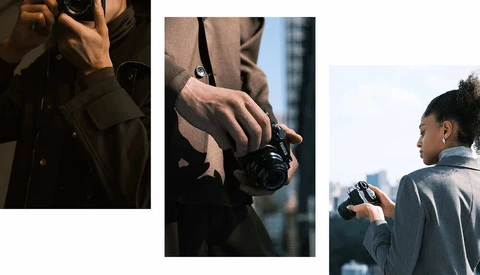
The Camera Industry Treats Beginners Like Future Professionals. Most of Them Are Not.
The camera industry is built on a ladder. At the bottom, there is a $600 to $800 entry-level body with a kit zoom, often no in-body stabilization, a single card slot, a plastic build, and a thin lens ecosystem. At the top, there is a $3,000 to $6,000 professional body with IBIS, dual card slots, weather-sealing, a magnesium alloy chassis, and an extensive lens lineup. In between, there are two or three rungs spaced at $500 to $1,000 intervals, each one adding features the rung below deliberately omitted. The structure is obvious when you look at it from above: every camera in the lineup is designed to make you want the one above it.

The Sigma 100-400mm Contemporary Is Cheaper Than You Think, and More Versatile Than Anyone Gives It Credit For
The Sigma 100-400mm f/5-6.3 DG OS HSM Contemporary sits in an awkward middle ground that most people dismiss without thinking too hard about it. Street shooters call it too big. Wildlife photographers call it too short. Row thinks they're both wrong.
3
60
Submit Your Best Long Exposure Shots
Welcome to the June Critique the Community! For this contest/critique, we are doing another abstract theme that should allow more photographers to enter. For this month we want to see your best photograph that feature "Motion Blur".

The '90s CGI Render Challenge: Pro 3D Artists vs. Bryce 2
Bryce 2 defined the visual language of '90s CGI, and almost nothing in modern 3D software can replicate it. The raw ray tracing engine, the playful UI designed by Kai Krauss, the fog, the chrome, the fractal mountains — modern renderers have layered so many features on top of that foundation that getting back to that specific look is nearly impossible without going back to the source.
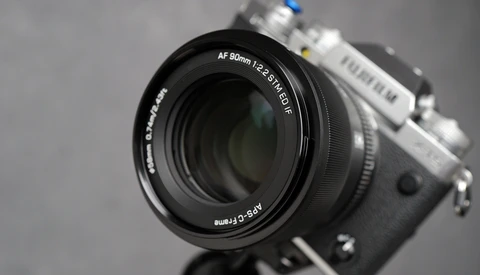
We Review the Viltrox AF 90mm f/2.2 EVO Lens
The Viltrox AF 90mm f/2.2 EVO is the company's latest in its budget-friendly, compact line of lenses for APS-C systems, and it offers excellent image quality and value for the dollar.

Is Sticking to One Photography Genre Actually a Good Strategy?
If you've ever wondered whether sticking to one genre limits your growth as a visual artist, this video makes a strong case that it doesn't.

How to Find a Photo Anywhere, Even When Nothing Looks Interesting
Finding a great photo isn't always about being in a great location. The ability to see a story or a feeling in whatever's in front of you is one of the most practical skills you can build as someone with a camera.

The Sony a7R VI Has Illuminated Buttons. Why Did It Take a Decade?
The Sony a7R VI arrived this month with 66.8 megapixels, a fully stacked sensor, 30 frames per second, and 8.5 stops of stabilization. The spec sheet is extraordinary. But the feature that will matter most to photographers who use their cameras after dark is one that does not appear in any resolution or burst-speed comparison: the rear buttons glow.

Día de Muertos Cannot Be Photographed in a Hurry
The first mistake people make when photographing Día de Muertos is thinking they already understand it.