
After spending last weekend at the 50th Annual Society for Photographic Education’s National Conference in Chicago, a sold out symposium attended by more than 1,000 photo educators and students, I decided to examine the question: What is the value of a photo degree? Here are the pros and cons.
Created in 1963 as photography was emerging as a course of study in art departments rather than strictly journalism programs, the Society’s initial conference was attended by such photographic legends as Beaumont Newhall, Aaron Siskind, John Szarkowski, Jerry Uelsmann and Minor White. Today, SPE occupies a unique role in the photographic industry as it promotes “a broader understanding of the medium in all its forms through teaching and learning, scholarship, and criticism.”
Held at the Palmer House hotel in downtown Chicago and hosted by Columbia College Chicago’s Photography Department and the Museum of Contemporary Photography, the conference highlights included keynote presentations by Magnum photographer Martin Parr, fine art landscape photographer Richard Misrach, and fine art portrait photographer Zwelethu Mthethwa. Daily programs offered over the three day conference included Lightroom Seminars by Julieanne Kost of Adobe, ASMP presentations by Peter Krogh, Richard Kelly and Judy Hermann, bookmaking tutorials with Blurb and a variety of talks on subjects ranging from the Garry Winogrand archive to mobile photography’s role in social activism. The exhibition hall featured a wide range of industry booths with major displays by manufacturers Calumet, Canon, MacGroup, Sigma and Sony.
During rare breaks in the conference schedule, I was able to sit down with photo educators Stan Strembicki, professor of art at the College of Art at Washington University, Jay Gould, professor of photography at the Maryland Institute College of Art, and Steve Benson, associate professor at Daytona State College to discuss the merits of a photo degree.
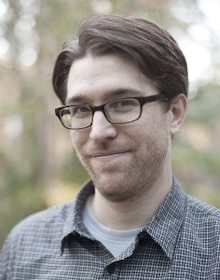


Pictured from left: Jay Gould, Stan Strembicki and Steven Benson.
Pros:
- Peer criticism and peer-to-peer learning. “It’s hard to think about making work in a vacuum, without peers to push you,” said Gould. “Critique is incredibly valuable as you have to give someone feedback. I do believe in a certain competitiveness that student’s have and they see what someone is working on and they want to do better. It does seem to elevate everyone’s work as they are aware of a certain threshold.”
- Presentation skills and the ability to talk with visual literacy about why a photograph is successful or not. “Even though we are making pictures, we still communicate through words, we still have to describe them, we still have to work with art directors and use words to come to terms with what we want,” said Gould.
- The academic community and exposure to ways in which photography intersects with other disciplines. Good schools have regular photography exhibitions, guest lecturers and visiting artists. Many degrees will allow for experimentation in related disciplines like graphic design, film, and digital media. "If the interest is commercial photography, there are two primary paths — assisting, workshops and tutorials or an applied photography program like our's at Daytona State College," said Benson. "It is worth noting that your chances of getting better assistant jobs will be much easier if you have a formal education in the field."
- Guidance and mentorship by a professor or group of professors who often have multi-faceted careers in the medium ranging from fine art to photojournalism. “Art schools and educational programs teach us to be self-critical, they give us a methodology and guidepost for moving our work forward,” says Strembicki.
- The ability and freedom to experiment with formats, cameras, lighting and types of imagemaking beyond simply digital.
- The ability to problem solve as technologies continue to evolve. “We are in a rapidly changing technological environment and in that kind of environment, you have to teach people to be creative problem solvers just as you teach students within their own work to discern what is good and bad in you're their work,” said Strembicki.
- A network of alumni that are working on some level in the field of photography and creative arts. This can often be a gateway to an internship, assistantship or first job right out of school. "It is not absolutely required to have a degree to be successful career as a commercial photographer but it can help to open more doors," said Benson.
- A degree makes you more well rounded and more interesting as a creative individual. “We all want to work with people who are interesting to us,” said Gould. “We base things on portfolio but we also base it on ‘how can we connect with them, what is it like to spend a great deal of time working with this person?’”
Cons:
- A college degree is expensive and photographic study costs money for cameras, computers, software and printing material that other disciplines don't require. Saddled with loans, it can be an expensive burden to manage when a young photographer comes out of school ready to launch a career.
- Photo editors at magazines don't care about your degree or where you went to school. They care about your portfolio and if your images will solve their needs and work in their context of their project.
- You can learn a great deal by working as a photo assistant in a major market and fill gaps in your knowledge base with workshops and seminars.
While not a required ingredient for success in photography, formal academic training can foster a robust technical foundation for aspiring photographers. Ultimately, the decision is a personal one but the financial investment in a two to four year course of directed study in photography can be intimidating and a significant hurdle to manage when kickstarting a photo career. Should you ever hope to teach photography (and many of the great photographers of the 20th century were also educators), an undergraduate degree is essential when pursuing advanced degrees like a Master of Arts in Photojournalism or a Master of Fine Arts in Photography.
So, do you need a photo degree? The choice is yours.
More information on the Society for Photographic Education can be found online here: https://www.spenational.org.



Join the Fstoppers community for free
-
Post comments and join in the discussions
-
Browse the site ad-free
-
Share your work and get featured in the community
-
Compete in the photo contests for fun and prizes
50 Comments
You know, every person I have known who graduated with a photo degree (a few even from Brooks) have been outstanding technically, but mediocre when it comes to actually creating images. It's a lot like going to college to learn how to paint: there will be others who are just born with the talent to make beautiful paintings and will just be better due to raw ability.
Exactly. People put a school they graduated from, or a camera club they belong to as if it's validation of their skills and a reason to pay them. If your photos are good, that's all that matters. I had coworkers go on about how you need a degree to be a photographer. I had to teach them basic lighting concepts, camera controls, how DOF is controlled, and other basics of the software we used. I don't have a degree. Somehow I manage. The other problem is that these students are using a school's $100,000 studio to build their portfolio. When they get out, they can no longer produce the same work and end up tricking people and scamming them out of money. It's really frustrating seeing kids advertising as "professional photographers" and then they have one consumer camera, variable aperture lens, and sometimes not even one flash.
" When they get out, they can no longer produce the same work and end up tricking people and scamming them out of money." I'm sorry, what?...
These people have paid the tution fee to be able to use that equipment. They have worked hard to be able to practice how to properly use the studio so they are prepared for a professional environment. The students who practice a lot in the studio are probably going to be the ones looking for jobs working in the commerical industry and are using this oppourtunity to further their portfolios and technical skills in order to have a better chance at getting those jobs.
Also, what does it matter what equipment you own? That doesn't qualify how 'professional' you are. Anyways, surely if you wanted to be working in a studio environment often you'd rent all your equipment?...
It'd be fantastic if only the quality and content of your photos mattered but in industry that's only one factor; you need to be able to evidence strong technical skills and practicing in the studio is one of the best ways to do that.
Tricking and scamming them out of money? They still have the knowledge they acquired in school. Equipment can be rented at a fraction of the price it cost to buy new (and in some cases, it makes WAY more sense to rent than to buy). I can rent a set of Profoto strobes from my local camera shop for about $75/day, and pass that cost onto my customer as part of their fee for hiring me. Also, working with those expensive Profoto or Hensel sets prepares the student for the industry standard equipment when they DO go out and assist others - they won't be tripping and fumbling over themselves on where that cable goes or how to adjust light output or setting wireless channels on the strobes.
Does it matter if I shoot with an Einstein, Profoto, Elinchrom or even dinky little speedlites as long as I KNOW how to use them to achieve my ends? Yes, there are limitations to each lighting piece. The key is knowing how to work around those limitations, and create those images your client needs. A photographer isn't just a "clicker" of the shutter button, they problem solve, light, direct, among a multitude of other things.
My work covers a wide breadth. My education helped me get that wide breadth, otherwise I'd be another one of those "natural light" photographers who limits themselves. I'm very glad I spent the money to get that education, and for what it's worth, my school required business classes towards earning that degree.
Re: $100,000 studios...it's highly unlikely you are going to have this available to you on your graduation. How many schools do a "Shoot with what you Got" course? That is more realistic. Perhaps something else to try is mandating that their final portfolio is to be done with only rented kit and a limited budget. Nice to have the equipment the school provides but you can't go back to use it when you are out their doors.
That's exactly what every person that didn't go to school says about people that did go to school. Photographers that are formally trained are often looking at different elements of a photograph than non-educated people will look at. What a self-taught person might call "creative" ...a formally taught photographer might call "cliche." Most graduates from the better photo programs are not impressed by cheap photo gimmicks in the same way that self-taught people are, so their portfolios always seem boring to people that like gimmicks. All self-taught photographers fall for gimmicks. Don't kid yourselves, you all fall for them LOL
Funny. That's what most people with a photo degree say. Is it part of the curriculum or your own way of justifying the amount of money you spent?
Read my previous post (below in this thread) to get the answer about money.
I can personally attest that, while I did not go to school for photography myself, I am CONSTANTLY being emailed by graduates or soon-to-be graduates of a well known photography school asking for an internship/appreticeship/job. Just sayin'
That's a good point. The bulk of my assisting work was done for photographers that had never gone to school. I was always puzzled by the situation. I thought that surely formally taught photographers should have an advantage in business over self-taught photographers. So the paradoxical situation just didn't make sense. Over time, I observed patterns of behavior that finally led me to a conclusion as to why more professional photographers appear to be self-taught rather than formally educated....
The reason is because the vast majority of clients know close to nothing about objective form in the arts. For this reason, they cannot validate work based the abstract properties of self-expression that are necessary for determining art. Instead, they look for OBVIOUS novelties that make work "stand-out" etc. In other words, they need in-your-face gimmicks that cannot possibly be ignored and don't require sophisticated levels of abstract thought to notice.
At first, the requirement to stand-out may sound quite reasonable. But remember, if a circus clown were walking down a city street on a weekday then he'd probably stand-out too. Would that make him an artist, or just a freak? The reason he'd get attention is because he's making a spectacle of himself when considered in relationship to his environment. The keyword is "spectacle."
Most photographers that were formally educated in the major photo schools understand that spectacle is something to avoid when working seriously in the proper arts. Meanwhile, most photo clients actually look for spectacle when they are assessing the value of a photographer's work. This creates a strange situation where self-taught photographers are actually at an advantage over formally educated photographers when it comes to getting clients. The self-taught photographer actually knows less about form in the arts, which actually makes him/her better able to relate to the majority of clients that don't know anything about form either.
Ugh, god no. The last thing you should do is start your career $40,000 - $70,000 in debt from school loans etc. This goes for any art school major, as a degree from art school is essentially useless.
The best advice I could give is just take an internship when you're 18-23 years old. You will learn as much or more by working in the industry. If you really need help understanding the technical aspects of cameras, you can always take a few select workshops and pay out of pocket.
While I am in complete agreement on the difficulty with student loan debt can play on future aspirations - all degrees are expensive, how is one from an art school "essentially useless"? There was a report recently that some of the poorest individuals in terms of net worth vs student debt vs job prospects were recent Law School graduates. A profession that is usually stereotypically seen as "important" and "prestigious" and "wealthy".
I chose to get a MFA in photography from an expensive art school. Totally my choice, and there are times when I wish I didn't have the student loan debt I do, but I don't once regret getting my degree. The pursuit of a degree opens one up to a variety of educational experiences and information that isn't readily available otherwise. True, you don't need many of these to be a "professional" or to succeed in the industry commercially, but those experiences can impact the work you end up making, and who you are as an individual, so its still valid.
Another reason I chose to get a MFA was so I would have the opportunity to teach, at a college level. I feel like its a way that I can give back to the future of our industry. I could hold workshops on my own, but that may or may not be successful. Joining the faculty at a school (of which you need a MFA to do) allows me to give back, as I have been helped by so many of my professors and peers in the past.
Same here. I don't think anyone should get a BFA in Photography to be honest. You can learn everything they try and teach by simple having the initiative and making images on your own. But I'm all for the MFA "if" you want to teach as your end goal. Which is why I got mine.
Your argument is invalid because in most non-art profession a degree is mandatory for the career path after getting out of school. To use your example, you simply cannot practice law without attending law school first.
That is not the case with art school. I see virtually no art jobs that require a degree from art school.
Good article, I think you meant "intimidating" instead of "intimating" though :)
I think no one needs a photography degree to succeed as a photographer. Not a single client has ever asked me if I have a college degree. My portfolio is all the credentials I'll ever need. Having said that, here is why you should go to college regardless: To get a degree in business, mainly in accounting and marketing. After all, that's how you'll spend the most amount of time. I still kick myself for not having done it that way...
yeah, I agree 100%. If you want to make your life photography, then business is a far more important major.
I agree with you completely and also Antonio. But I would also augment your business education with a strong salesmanship course. One has to know who their potential markets are, but how to reach and sell them. A good salesmanship course also teaches about rejection, helping the entrepreneur to understand that not everyone is going to want your services or buy from you and to keep forging ahead despite lost 'potentials.'
A course on sales is usually part of a marketing track in college.
I don't buy this argument. I doubt if publishers ask writers if they have a college degree, but there's no doubt that the education has been crucial to many writers. Of course it depends on how you want to use photography.
As someone with an MFA and an instructor at universities (SAIC, SFUAD currently and UNM earlier) that teach photography and award photography degrees, I'd have to say that my educational experience on both sides of the lectern has been critical to who I am as an artist. Could I have done without it? Yes but my art career and life would have been the poorer for it. Even my commercial work (I am an architectural photographer for 34 years), like my b&w art, IMHO has benefited from the critical and nurturing environment of the university photo programs I have been associated with. As university trained artists themselves (architects) my commercial clients respect my art degrees. Need? No. Useful? Absolutely.
I could be wordier, but my experiences with both approaches leads me to believe my photographic education is far more enlightening and enriching than the alternative. It definitely depends on the program, the cost and what the other options you have available, but I'd choose my photographic education every time. Also, all of those other classes you can take to enrich your life in college do far more for photography than you might think. (Business, art history, history in general, etc.)
I have said it before but its not all about the degree, its about the person and their drive towards a career in the arts.
Hey Joseph!
Great article I really liked it. I am a student in photography however I didn't apply to college for photo instead I studied Criminology for two years and really not enjoying what I was doing and more importantly I knew that law was not something I ever wanted to do. In India doing art for a degree isn't praised by many but I really wanted to put my life in college to good use so I decided on doing photography which yes puts me at financial and experience disadvantage but the way I see it if you have time to learn it I rather not waste it on a degree I really wouldn't want to do.
Cheers!
today, degree is advantage but not essential. it just a label. a good one. but before the google, history(art&photography), concepts, techniques, styles, without a 3"display medium and large format in studio, b&w processing, color film print, rayogram, media and advertising bla bla, just focusing on the art of photography. the decision is yours.
Photoschool may not be a requirement today, but if you do attend a school, it does matter which one you go to since not all schools are created equal. If the instructor thinks Photoshop is the same as lighting… chances are it is the wrong school, LOL.
I attended Brooks from 1987-89, back when it was all film and we shot with 4x5's and Hassy's. The instructors were great and I got my technical skills down pat. I wanted a technical education and not an artistic education, I already had two years of art college under my belt.
Art school was fun, but the instructor said he could not teach me technical lighting so he recommended Brooks, Art Center Pasadena and Rochester Institute of Technology.
Looking back, I would recommend business and marketing as a major and photography as a minor. I spend 75% of my time marketing and 25% of the time shooting.
I also recommend assisting the best photographer you can for about a year. I assisted 3 of LA's top fashion and product photographers and I learned more about creativity AND lighting in one year of assisting THAN in 5 years of shooting on my own.
School also reinforced and taught me what a good image should look like. At the risk of sounding rude or arrogant, I can care less what 40 people on Photo.net think of an image. It might look great to them, but will the image fly on Workbook.com or the clients I shoot for.
Would I recommend spending $100,000 for a photo education in todays market….nope!
I am a on again,off again hobbiest photog but I have spoken with many Pros and your 75% Business / 25% Photography is also what I hear from them. Great reality check.!
"All art is quite useless." - Oscar Wilde
Nobody should go to school for photography to make money. A proper education in the arts is supposed to be "worthless" because art is not a utilitarian enterprise. People that want to learn something that earns money should become accountants, not photographers.
Photo school is just one way to learn these things. Both technical skills and conceptual thinking can easily be learnt just by creating a huge volume of work. Which is basically what school forces you to do, otherwise you'd have to be self-disciplined enough to do so.
By far and large most photographers would benefit more from any form of business education, if their goal is to live as a professional photographer.
I think I might try to see when the photo classes at my school are and then sneak in.
If you've got the money and time, do it. If you can learn from a working photographer, do it.
But don't think either of these paths will guarantee your success. There ain't no corporate ladder to climb.
A photo degree isn't worth it to go into debt for. Universities with good enough photo programs to enroll in are usually upwards of $100,000 for a bachelor's.
It's really true that your portfolio is what separates you in the market today. I think you'd get a much more impressive portfolio by taking a third of what most colleges would charge and spend it on attending your favorite photographers workshops, shooting second, and getting some great equipment.
I'd be interested in seeing research into how many of the world's top photographers, artists and musicians, past and present, have degrees and doctorates (but not honorary ones) in their respective fields. Knowledge and creativity are often very disparate qualities. It reminds me of the saying "Those who can, do; those who can't, teach".
Interview with Walker Evans when he was teaching (no degree, he dropped out of undergraduate):
Yale: What do you tell your students?
W.E.: First of all, I tell them that art can’t be taught, but that it can be stimulated and a few barriers can be kicked down by a talented teacher, and an atmosphere can be created which is an opening into artistic action. But the thing itself is such a secret and so unapproachable. And you can’t put talent into anybody. I think you ought to say so right away and then try to do something else. And that’s what a university is for, what it should be — a place for stimulation and an exchange of ideas and a chance to give people the privilege of beginning to take some of the richness of general life that’s in everybody and has to be unlocked.
The question in the opening post is ambiguous because it expresses an incomplete question that can be completed in many ways. For example: Do I need a photo degree to be financially viable in today's commercial marketplace? Or, do I need a photo degree to produce images that satisfy my own or someone else's aesthetic tastes? Or, do I need a photo degree to produce images that make relevant critiques of current social problems that I am interested in critiquing? Among others. This ambiguity makes for excellent blog posts!
Maybe I can offer a few clarifying thoughts to help someone who is trying to make this decision.
If you are wrestling with the question of getting a photo degree or not, the first thing you need to do is expand and refine your question. Decide what you want your images to do, who you want your images to do that for, and then consider the possible means by which you can achieve those goals. This is a lot to ask of any late-teens aspiring photographer who is ready to head to the university or marketplace for the first time. Pro tip: whatever you decide now is likely to change ten years from now.
Also, I see no necessary connection between the value of a photo degree and the financial costs a university will demand of you to get that degree. So, if a person tells you that you do not need a photo degree only because a photo degree is too expensive, then the person you are talking to is conflating the value of the degree with the financial costs to attain that degree. If you believe a photo degree is valuable for your goals as a photographer, but you cannot find any university that is affordable, then the issue you have is not with the degree but is with the broader marketplace that is affecting the costs of university degrees. It is quite possible for a photo degree to be very valuable for your goals but also be too expensive for you to obtain. Conversely, a photo degree may have no value for your goals but also be within your budget, in which case you would waste money to attain that degree.
Further, as several commenters have already stated, a photo degree will not automatically make you able to produce aesthetically pleasing images or images that are socially relevant or images that are commercially marketable. It is possible that you can master the technical crafts of image making and still produce images that no one wants to look at, think about, or buy. On the other hand, if you are only interested in making a living in the marketplace, it is possible to produce aesthetically mediocre and socially irrelevant images all while making a strong income from commercial sales of those images, as long as those images satisfy the technical requirements of the clients who want to buy them.
Somewhere in the mix of art, social relevance, and commercial marketability, is a balance that many photographers find. However, some photographers are purists and will never find a balance between these; for these photographers, they want their images to be all art, or all social relevance, or all income. If you are considering a photo degree, you need to come to terms with what kind of photographer you want to be, or already are, and then decide if a photo degree can help you.
(full disclosure: I work for Joseph Gamble on occasion, and I have an A.S. in digital photography, a B.A. in religion and am working on a new B.A. in philosophy)
I've often wondered at this same question. I completely agree with Mbutu Namubu when he says that the arts are meant to be "worthless" because it is not a utilitarian enterprise. But is it not part of the problem that photography is so often evaluated by financial success; That the best photographers are those that can make money doing it? So one may take a course in photography for the expressed purpose learning the technical skills necessary to make a little bit of dough. However, as many have already said, a business degree may be better suited for those who wish to make a living doing photography.
So do you need a photo degree? Well if you are in it for the money, then probably not. If you are in it for art and prowess, then a photo degree might be incredibly enriching.
Personally, I have not studied photography in any formal manner. However, I did graduate with a BA in Humanities while minoring in music. And if the art of musicianship is any analogue for the art of photography, then formal schooling does make a huge difference.
My question is: how, if at all, does "photography as art" coincide with "photography as business" if the arts are "worthless"? Does this mean that a photography business suffers in artistry?
My question is: how, if at all, does "photography as art" coincide with
"photography as business" if the arts are "worthless"? Does this mean
that a photography business suffers in artistry?
Does the photography business suffer in artisty? In a word... YES. Zach, excellent questions and you're definitely probing into the heart of the matter. I believe that the reason for this has to do with the difference between an ignorant mass audience and an educated niche audience. The attention of the mass audience can only be captured by the in-your-face to the senses of spectacle and novelty. They cannot understand the subtleties associated with objective form and metaphorical expression because those qualities of art are too abstract. The mass audience needs something concrete that gets their attention right away and doesn't require thinking. They will ALWAYS be drawn to gimmicks. The photographers that can provide those gimmicks will be the ones hired by the clients catering to the mass audience.
Meanwhile, educated niche audiences are unimpressed by novelties and often offended by spectacle. They are searching for something that appeals to their mind and doesn't insult them by appealing just to their senses. The type of work that captures their attention is often subtle and subdued. Unfortunately, this audience is small and doesn't have much power when it comes to consumer spending. Therefore, there is very little money available in advertising to hire photographers that can appeal to the sophisticated audience that demands the objective form associated with art proper.
Basically, the entire modern commercial photography industry is geared towards the mass audience and the lowest common denominator. The type of photography that is necessary for the mass audience is often of the lowest quality and is best produced by mediocrities. Bad is good! Bad photographers actually have the business advantage in the upside down economic world created by mass production.
The good news is that the internet is changing everything. There is no longer a mass audience and the traditional advertising industry based on the model of mass production is collapsing. The internet is creating an environment where small niche audiences will demand high quality photography based on the formal elements of art. They simply won't be impressed by spectacle anymore since there's already plenty of that all over the net. Ironically, subtlety in the arts is actually what is going to rule in the future.
The future's great we just have to work hard and be ready for the cultural shift that is about to take place. Folks that are building their portfolios on the old business model for the mass audience are going to be out of luck. Right now, the future elite of the photo world are probably reading books about the Vienna School of Art History rather than learning lighting formulas from the BTS videos of yesterday's pros.
Look at hacks like Jasmine Starr... It's all about marketing and image.
I chose not to go to photography school, I figured I could work on it by myself. And I was right. I've been able to spend time pursuing a plethora of photography through opportunities at school. However, I see my actual degree (Commerce) get in my way every day, time-wise. It has also been incredibly helpful, I do my own books, marketing, and I've had the chance to learn from C-level executives of major Canadian/American companies. I've also had the opportunity to build my network out and away from other photographers, to clients.
I would encourage anyone to pursue a real bachelor's degree, it provides more opportunities for critical thinking and learning outside one's discipline than a BFA. I produce more work than my friends in photo school and have been able to progress at a faster pace based on the opportunities that arise from attending a top 100 university.
It takes a fraction of a second to be a photographer-pro, but it takes 20 years to become a photographer-artist.
People that are primarily motivated by the goal of being a professional photographer are usually interested in having a fun lifestyle, being popular with others, wearing the label of "creative" or "artistic", and accumulating money/resources. They are guided by practical reason and will usually take the easiest route possible to achieve their goals. School is usually NOT the best fit for these types of people.
On the other hand, folks that want to become photographer-artists are primarily motivated by the goal of learning to express themselves through a medium. To do this, they must first embark on the tedious process of self-discovery. The route of self-discovery is time consuming, arduous, and totally non-utilitarian from the perspective of practical reason. The only way that an individual can truly become self-aware is through interaction and conflict with their environment. This means that any person that wants to become a photographer-artist must experience EVERYTHING that the world of photography can possibly throw at him. He must do his best to go to school, assist, work for free in certain circumstances, work for less money than actually cover photo expenses, be willing to move to a new market, spend years struggling to get the best gear (not just good enough gear) etc etc etc. In short, the process of self-discovery requires suffering through all obstacles. At the end of the process, the photographer knows his strengths and weaknesses. He knows what makes him "tick" as an individual and is now capable of producing photographic work that is sincerely self-expressive art.
The payoff for the photographer-artist is that he'll never have to compete with anyone else. Since his work is based on self-expression, he only has to compete with himself. Meanwhile, the photographer-pro that never became self-aware cannot possibly produce self-expressive work, so he is always competing with others. In the end, the photographer-artist can NEVER lose his position because it is connected to him by mere fact of his being an individual. Meanwhile, the photographer-pro is always in danger of losing his position to millions of others guided by a similar practical reason.
Is getting a degree from school worth it? Yes, for the photographer that is primarily motivated to gain as much experience as possible in order to become an individual and create work that is truly self-expressive (even if it takes 20 years). No, for the photographer that is primarily motivated to be a professional and have a lifestyle.
Good thoughts. Thanks.
RE ::: "I think no one needs a photography degree to succeed as a photographer. Not a single client has ever asked me if I have a college degree." ... sure not however your skills and sense for composition / presentation is all over your image. If you are born as a genius well then you do not need "training/education" ...
I went to the Art Center in Pasadena in the early 80's. I think back then school was very valuable to learn how to shoot with a 4x5 camera, how to light and how to shoot E6 film correctly. Today the learning curve is much faster with digital cameras. In my many years of photography no one has asked me for a college degree. When it comes down to it the art directors or photo editors will hire you because of the images in your portfolio and by word of mouth. Today you can learn very fast from Youtube videos, assisting, a few community photo classes and lots of experimenting with the digital camera. No longer do you have the expense of buying film, processing and polaroid. I cringe when I see kids coming out of photo school with an 80,000 student loan. Finding work to pay off that loan right out of school can be extremely difficult. When I went to school the cost of education was much lower and lucky I never had student loans. I had a business degree prior to photo school and worked a few years to save money before starting school. Remember most private schools are their to make a profit. I believe if you want to be a teacher a degree is important.
Great read. A degree will give you a good foundation on concepts and practices and a general look on the art or business of photography that is if you were a good student and was genuinely interested in the course. But it doesnt guarantee you a good career as there are many factors to consider even if one is so talented.
In another note, I think If you are paid to fulfil a brief then it is not art, but it doesnt mean the work you produce lack artistic merit. Some people are confused of thinking that all they produce is art.
Well, if you want to be a photographic educator and the society at hand is the Society for Photographic Education, you do need the MFA. Also, I am curious as to why you only talked to men?
It wasn't by design to speak only to male professors at the conference but I had a tight deadline and the interviewees were available on short notice. I had other interviews lined up that fell through due to scheduling and my deadline was extremely tight given the conference wrapped on Saturday and I posted Monday evening.
Sales is included in some business classes, and it isn't in others. I have talked with photography graduates who have had NO training in sales at all. The point I would make is always be on the lookout for additional and refresher sales courses as a businessman/woman and photographer.
To back up an argument one must support it with statistics and hard core facts, if not it becomes weak and flimsy. Now back to the question "Do I need a photography degree?", my answer would be a degree is needed if one wants to survive. Ask yourselves what specific's degrees does one need in order to survive in todays world? Photography isn't one of them, don't believe me then take a good look at these links (websites).
http://www.servicecanada.gc.ca/eng/qc/job_futures/statistics/5221.shtml
and
Bureau of Labor Statistics
http://www.bls.gov/ooh/media-and-communication/photographers.htm
(If these links don't work in this forum then by all means look up the job ratio/skills/qualifications of a photographer in the BLS)
I currently hold two degrees (Bachelor of environmental science & occ. health and environment) and an MBA, absolutely nothing to do with photography.
Let me also point out that companies that hire industrial and scientific photographers, don't look for a photography degree. They look for a degree related to SCIENCE or your portfolio has to be damn good. How do I know this? That's exactly what got me into photography, I had a science background and knew how to use a camera. It was a fortunate accident. They were more interested in my science background, it sounds weird but its a fact!
Another fact is University is mostly self study, everyone will agree with me on this. Lecturers are their to feed you with information but its up to you how you want to process that info. Only one word for University and thats RESEARCH. If someone has good RESEARCH and business skills, photography will become an excellent career. If a photographer has the eye, art talent but no research and business skills then he will be just another bum in the streets. Sorry folks but reality bites! Most people holding photography degrees will probably kick my a__ when it comes to art and museum work. When it comes to dealing and hunting for clients this is were I take the win.
Okay, the only advantage I see in a photography degree is the fact that it is a DEGREE. A degree can have so many advantages and can open new horizons, not particularly in the field or visual arts and photography. I know of someone who took up a BFA degree and we used to laugh at him for being slack, true enough when he graduated job opportunities were scarce. He went back to University and took up law, using his BFA as an entry. He is now a successful lawyer, he who laughs last laughs best.
My conclusion:
If you're going to consider photography as a career then I suggest taking up a business course then sit for workshops and short courses on photography. If its your passion, you have the money and want to enjoy Uni. then by all means go for it. Is that piece of paper worth framing and hanging on your wall? YES its still a degree!
To back an argument one must come up with statistics, if not backed up then it becomes weak and flimsy. Thats one of the most important things I've learned in University. I currently hold two degrees (Environmental Science and Occ. Health & Safety) and an MBA. Absolutely nothing to do with photography.
Getting back to "do I need a photography degree?", my answer would be a degree is needed to survive in todays world. Better yet ask yourselves this "what SPECIFIC degree in is needed to survive in todays world?" Lets be real, a photography degree isn't one of them. Do you want proof? I suggest taking a good look at these websites.
Bureau of Labor Statistics
http://www.bls.gov/ooh/media-and-communication/photographers.htm
and
http://www.servicecanada.gc.ca/eng/qc/job_futures/statistics/5221.shtml
(If these links don't work in this forum then by all means look up the job ratio/skills/qualifications of a photographer in the BLS)
Let me also point out that companies that hire industrial and scientific photographers, don't look for a photography degree. They look for a degree related to SCIENCE or your portfolio has to be damn good. How do I know this? That's exactly what got me into photography, I had a science background and knew how to use a camera. It was a fortunate accident. They were more interested in my science background, it sounds weird but its a fact!
Another fact is University is mostly self study, everyone will agree with me on this. Lecturers are their to feed you with information but its up to you how you want to process that info. Only one word for University and thats RESEARCH. If someone has good RESEARCH and business skills, photography will become an excellent career. If a photographer has the eye, art talent but no research and business skills then he will be just another bum in the streets. Sorry folks but reality bites! Most people holding photography degrees will probably kick my a__ when it comes to art and museum work. When it comes to dealing and hunting for clients this is were I take the win.
Okay, the only advantage I see in a photography degree is the fact that it is a DEGREE. A degree can have so many advantages and can open new horizons, not particularly in the field or visual arts and photography. I know of someone who took up a BFA degree and we used to laugh at him for being slack, true enough when he graduated job opportunities were scarce. He went back to University and took up law, using his BFA as an entry. He is now a successful lawyer, he who laughs last laughs best.
My conclusion:
If you're going to consider photography as a career then I suggest taking up a business course then sit for workshops and short courses on photography. If its your passion, you have the money and want to enjoy Uni. then by all means go for it. Is that piece of paper worth framing and hanging on your wall? YES its still a degree!
Hello,
where could I find a list of where in Europe one could get a good quality photo degree? (And perhaps in English)
Thanks!