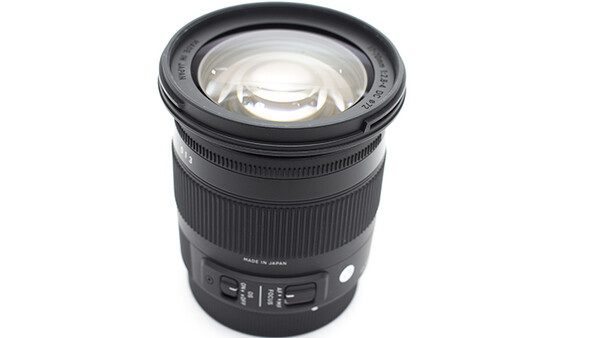
Variable aperture lenses are generally scoffed at by anyone who has been shooting for a few years, myself included. That said, collectively variable aperture lenses probably make up a vast number of sales for lens manufacturers. They aren’t necessarily bad lenses, but it can be tricky to select the quality from the lousy. So how does Sigma’s second lens that carries its new design, the 17-70mm f/2.8-4 lens, fare? Actually, really well.
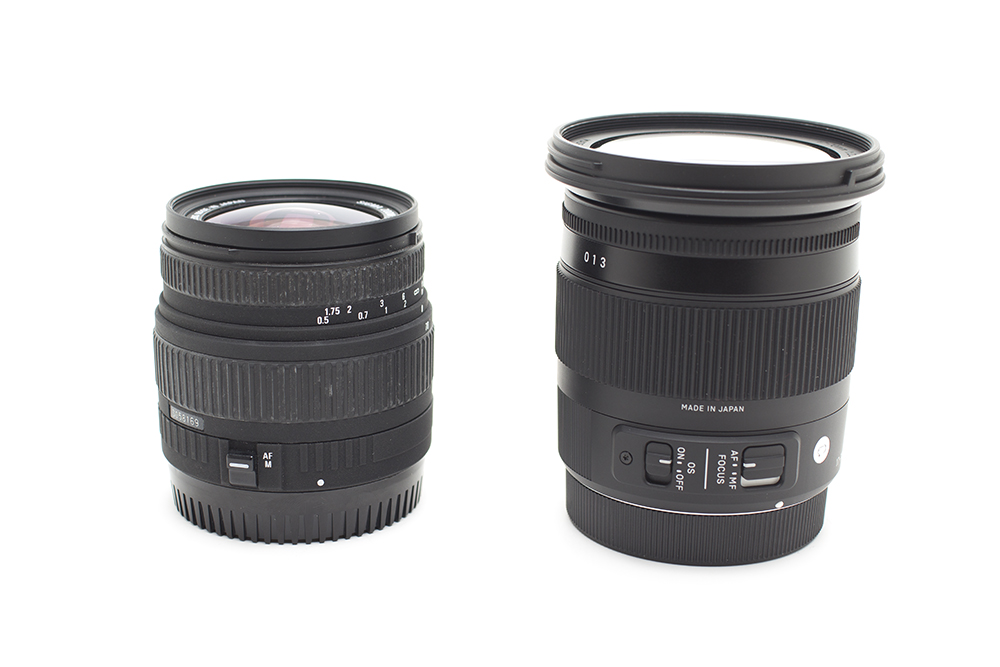
The very first lens I ever owned was a Sigma 28-70mm f/2.8-4 (seen below next to the 17-70mm), a lens that's not even in production anymore. It was cheap, light, small, opened up to f/2.8 and it worked well for me for years until I was making enough money to invest in better glass. What it wasn’t was super sharp or “high performance” in really any category. But that didn’t matter. It was what I wanted and it worked really well for years. When I saw the new version of the 17-70mm come onto the market, it evoked a lot of sentimental feelings. If I was again back in my past looking at lenses, I would no doubt have my eyes on this lens. But with those sentimental thoughts were also memories where performance was just about at par. Nothing special. Average. In the my mindset of years ago, this wouldn’t have been a big deal. But where I am now, I expect more out of a lens. Because of those expectations, I was pretty sure that I wasn’t going to be as happy with the new 17-70mm as I once was with my original 28-70mm. Times change, and I’m not the photographer I once was. I have grown to expect more. I did not expect this lens to deliver to that grown expectation.
But I have to say, I was pretty happy with how this lens performed.
I’m sure many of you are crying foul to my apparent Sigma fanboyism, and I’m not going to say I don’t really love Sigma right now (that would be an outright lie). I will say that when you take a look at the image results from my tests you will be hard pressed to not take my side on this one. The 17-70mm really performed well, especially given expectations and other similar lenses and price point. It will only set you back $500.
Let’s start with sharpness. As expected, wide at 17mm it wasn’t the sharpest at f/2.8. It’s not blurry by any means, but it’s not dazzlingly sharp either. On a 10 scale, I would rate it about a 5. But as we crept up between f/4 and f/10, this lens was quite satisfyingly sharp, and 8 or 9 on my 10 scale. Through f/22 it was way more than acceptable. Though at f/22 you will see blurring similar to what is seen at f/2.8, at the surrounding stops it still performed great, about 6 or 7 on my scale. You can judge for yourself in the samples below. In order left to right: f/2.8, 5.6, 8, 11, 16, and 22.


When we zoom in to 70mm, sharpness looks to improve in a regular fashion as the aperture closes. At f/4 (widest at this focal length) it’s not quite as sharp as it was wide at 17mm at the same aperture, but it’s acceptable. As we close down the aperture, the image continues to get sharper. It’s bang-on sharp past f/10 and keeps getting better.
Honestly, I wish the sharpness was more consistent but when it’s sharp, it’s really sharp. I know that in many situations, I’ll be as wide open as the lens can go and that’s unfortunately not where this lines shines. However if you’re traveling a lot (which is common for those who buy lenses like the 17-70mm) you will likely be closed down most of the time for landscape shots. In those cases, this lens will shine.
Again, judge for yourself from the sample below. In order left to right:


Just like with the last few lenses Sigma has released, the autofocus is extremely reliable. It rarely missed focus and it’s super quick. The only times it racked in and out looking for a subject was in very dark situations or on highly reflective surfaces, neither situation uncommon for any lens, especially not a lens in this price range/class.
I also like how the minimum focusing distance is only 8.66 inches, increasing the usability of this lens. You don’t expect this lens to be macro and that makes for a really pleasant surprise while shooting. Being macro shows how Sigma wanted this lens be as close to a do-all lens as possible, and it’s making a strong case for being called that. The lens is almost adaptive, doing anything you really need it to in the field.
There was no chromatic aberration, and I put it through some crazy situations to try and get some to appear. This was probably the most impressive aspect of the lens. Have no aberration at any focal length or aperture is extremely rare. There was very little vignetting when at 17mm, basically none when out at 70mm.
This lens comes equipped with Optical Stabilization, and I gauge it to be about as good as what you can expect from Nikon or Canon’s versions. It’s going to be very helpful for those of you shooting in low light and also video. It’s not quite as good as Tamron’s vibration compensation, but neither are the image stabilizers from Canon or Nikon, so I can’t hold that against Sigma. Besides, it has a lot of other factors going for it.


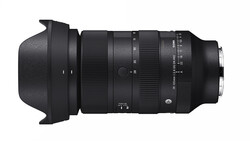
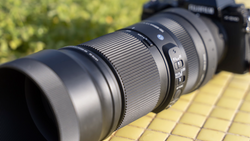
The build quality of this lens is very similar to the 35mm f/1.4, but it’s not quite as nice. The 35mm has a lot of metal on the exterior, which made for a lens that just felt sturdy. The 17-70mm looks really nice before you hold it, but once it is in your hands you will notice it has no metal on the outside which I imagine was done to keep the prices low. Not to fear though, as it still functions like I wanted. Nothing is loose when racking the focal length in and out. Being without the metal parts, this lens is very light, which is great for travel. It feels firm and strong. The lens hood still snaps on with a firm and gratifying “click.” All in all, it’s no 35mm but it’s no slouch either. As far as how it stacks up to lenses in its class, it’s easily one of the better in terms of look and feel. I think that trading metal exterior parts for weight and price works. In this category, it was the right decision.

It’s wider than the most popular focal range (which is 24-70mm) and that lets it compensate for the APS-C sensor at 17mm, making it actually 25mm or so at its widest. That’s pretty darn good in my book. Close enough to being an actual 24-70mm on a crop sensor, and very well priced.
What I liked:
Auto focus performance
Ease of use
Versatility
Macro
Price
What could use improvement:
Sharpness at widest apertures
Consistent sharpness
Variable aperture


I really wasn’t expecting to like this lens. Aside from being easy on the eyes (it is a very pretty lens), I was prepared to shrug it off and move on. But after using it, I’m really surprised with how well it performed especially given its price point. Anyone looking to grab a do-it-all lens for a low price, consider the Sigma at the top of your list. It never really fails in any one place and any stumbles it may have are negligible, especially when compared to other lenses in its class. It may have issues with sharpness when you're zoomed in at more open apertures, but at it's widest focal length it performs pretty darn good. Add to that the complete lack of chromatic aberration and negligible vignetting and you have a pretty solid lens.
If you have an APS-C sensor in your camera and are looking for an affordable yet quality lens you'll hardly ever take off that body as you tote it around for the next couple years, you'll be hard pressed to find a better option than the Sigma 17-70mm f/2.8-4 Macro OS HSM.


Join the Fstoppers community for free
-
Post comments and join in the discussions
-
Browse the site ad-free
-
Share your work and get featured in the community
-
Compete in the photo contests for fun and prizes
16 Comments
My Sigma (Gentec) rep brought by samples of all the new lenses and I was impressed by this lens. I too favour constant aperture zooms, if I use them, because I am mostly a prime guy. I also shoot full frame, where this lens doesn't work. However, if I were to recommend a great lens with a nice aperture range and zoom range, this would be it. It's a great competitor to the Tamron 17-50 2.8 VC. I found the non VC legendary in terms of its sharpness throughout the entire zoom range and even wide open.
Sigma is onto something here and I am excited to see where it takes them!
I used to be a Sigma skeptic until I purchased a 50-500mm OS - I am blown away how sharp the lens is - dare I say it's "about" as sharp as my 70-200mm VR1 BUT the focusing speed is not there but it's still a fantastic lens. The Sigma 35mm f1.4 creative is another amazing lens too. I think they are on the right track. The problem for some still seems to be some AF Fine Tuning needed - it is the LENS or is it the newer (Nikon) bodies that are the culprit?
the 50-500 wide open is as sharp as the 70-200 if you know what you're doing and focus correctly?
Nope. Also, in the same situations shooting wide open with the bigma, you could shoot the nikon at 4-5.6, and I guarantee it's much sharper.
Here is f5.6 on the Bigma again my copy is tack sharp - others may vary :) http://www.flickr.com/photos/nikoncouplesoflo/8351543164/sizes/l/
Thanks for this review Jaron!
It would be awesome to have full size jpg to see better the shortcomings in terms of sharpness. And also, C stands for Contemporary, not Creative as stated in the title of the article.
Nice catch. Also all those crops are 100%, so that is full size for your viewing pleasure.
Sigma should have metal coated it.
Then it would have been $800. Kind of prohibitive for first-timers and would be at the very top of comparable lenses.
stick with my sigma 17-50 2.8 OS for now
"Variable aperture lenses are generally scoffed at by anyone who has been shooting for a few years, myself included"
The key difference, "a few years", and many years.
_________________________________________________
"variable aperture lenses... aren’t necessarily bad lenses, but it can be tricky to select the quality from the lousy"
Lol really? I can see you've only shot Sigma in your entire life ;).
______________________________________________________________
"I’m sure many of you are crying foul to my apparent Sigma fanboyism"
-You've never shot any serious lenses that aren't sigma branded.
____________________________________________________________
"I will say that when you take a look at the image results from my tests you will be hard pressed to not take my side on this one"
-...You don't even note what system you were shooting these with.
___________________________________________________________
"This lens comes equipped with Optical Stabilization, and I gauge it to be about as good as what you can expect from Nikon or Canon’s versions"
Alright there buddy, and which Canon and Nikon lenses did you *actually* compare to this?
... Yeah, Nothing. WE get it. You're a reviewer of assumptions, not actual firsthand knowledge.
__________________________________________________________
"Nothing is loose when racking the focal length in and out"
And what recent lens are you comparing it to that does become loose when you zoom?
That's akin to saying, "This lens has glass in it. And it zooms. It's very unique for that purpose".
__________________________________________________________
"All in all, it’s no 35mm".
Actually, it is a 35mm. and a 40, and a 70. It's not a prime. But do you even know what that word means?
--------------------------------------------------------------------------------------------------------------------------
"I think that trading metal exterior parts for weight and price works. In this category, it was the right decision."
As every sub $1k lens zoom does. Once again, you might as well tell us that the $99 50mm f/1.8 is partially plastic for a good reason. What a revelation.
_________________________________________________________________________
"I really wasn’t expecting to like this lens. "
Well, out of everyone who has read your last few reviews on Fstoppers, you were the only one who expected that...
"I’m sure many of you are crying foul to my apparent Sigma fanboyism"
________________________________________________________________________
"If you have an APS-C sensor in your camera and are looking for an affordable yet quality lens you’ll hardly ever take off that body as you tote it around for the next couple years, you’ll be hard pressed to find a better option than the Sigma 17-70mm f/2.8-4 Macro OS HSM"
Yeah, definitely not the 18-55s with VR IS, 16-85 or 15-85 with IS/VR, 18-135 AFS or STM, 18-200s or 18-300mm. Have you honestly shot ANY competitor's lenses that would be competing against this?
You're effectively shooting Sony's first SLR, and going "yep, this is as great as all of the other options, I've never tried any, I just KNOW IT"S THAT GOOD.
Yeah... okay then. Maybe if you actually get experience with the lenses you say this is better than, people would respect your reviews as more than the obvious ignorant fanboyisms that they are.
Similarly priced lenses- 18-55s about $150-200
Lose less than one, to one stop. You would take this with a zoom, and have 35mm equivalent reach of 28-300mm for $100 less than your sigma lens.
And if you're buying a kit, you have to factor in the price of the kit lens that's just sitting while you use this sigma.
18-135mm 2/3rd to 1 stop, gain significant reach (film equivalent of 200mm, as opposed to your 105mm)
16/17-85 about $30 more. Increased range (All you ever need), and slightly slower lens. I *know* you haven't tried either of these, to come to the conclusion that sigma's is the best.
Jaron, really. Just say you have little experience with any lenses, and everything that is thrown at you, made within the last 20 years, from a main brand that is named sigma, is going to be the most advanced thing you've ever seen in your entire life.
Lenses with this wide a zoom range can never be good in any setting, especially the wide angle units like this one. Anything over 3x is pushing it, with few exceptions. I wonder if they updated their really shoddy 24-70 f/2.8 if it would become a useful lens. I just bought the Tamron 24-70mm f/2.8, and it was hideous at the wide end at any aperture, and had flat contrast overall. Bringing it back tomorrow. I can't imagine this new Sigma being better than that Tamron, TBH.
How much can you zoom off of the 17mm and still open I up to 2.8?
17-20mm @f/2.8
20-28mm @f/3.2
28-50mm @f/3.5
50-70mm @f/4.0
Will it work with a 5d mkii or is it JUST for APS-C sensor cameras?
for 500 bucks i'd still go for the Tamron AF 28-75mm f/2.8 SP XR Di LD Aspherical (IF) for Canon.
Regardless of the price, focal length and variable aperture, how would you compare sharpness and only sharpness against the nikon 17-55 2.8 ??