Fstoppers Original Articles

Exclusive articles and expert opinions written by Fstoppers’ talented team of creative professionals. Here we cover everything from the latest photographic techniques to advice on running a successful photography business, to first hand accounts of working in the photography industry.

Monitor Specs Decoded: What sRGB, Adobe RGB, DCI-P3, and Delta E Actually Mean for Photo Editing

Buying a monitor for photo editing feels a lot like reading the back of a memory card package: numbers everywhere, most of them meaningless without context, and manufacturers betting you won't ask follow-up questions. The difference is that a memory card mistake costs you convenience, while a monitor mistake costs you accurate color judgment on every image you edit.
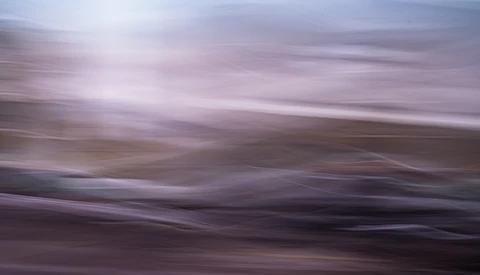
Mood Matters: Transform Your Images Through Thoughtful Editing

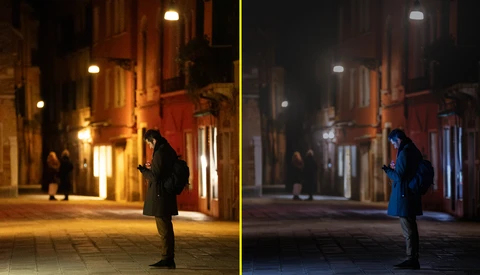
Let’s explore the often-overlooked significance of editing in photography and how it transforms raw images into compelling visual stories. We will break down the two stages of editing and provide examples that highlight the creative process involved in crafting mood and atmosphere. 

Why Your Mindfulness Practice Is Stalling Your Growth

Photography increasingly measures its progress through internal states rather than visible change. The language of self-care feels ethical and mature, but it quietly removes the ability to tell whether the work itself is improving. 

A Mistake Almost Every New Photographer Makes

Here's a scenario most photographers will recognize: you come home from a portrait session or family event with 800 frames on your memory card, feeling like you absolutely nailed it. Three hours of culling later, you've exported maybe 15 images worth keeping. The math on that works out to under 2%, which isn't a success rate so much as it is a coin flip repeated until something lands. 

The Biggest Photography Stories of January 2026

January opens the year with CES and closes before the spring photography-focused trade shows like CP+ and NAB. It is often treated as a transitional month, but 2026 proved anything but routine.

Photography Isn’t About the Camera — It’s About Learning How to See

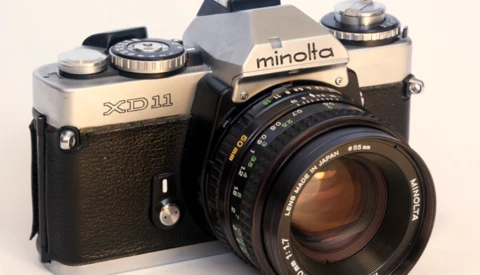
“Wow, what an amazing photograph. What camera do you use?” “I really love your photographs; you must have a very expensive camera.” “Gee, thanks. I use a very old, outdated camera system that’s not very expensive at all.” Let's talk about gear and how it doesn't make you a better photographer.


The "Fun Camera" Effect: Why People Buy Worse Cameras

There's a particular kind of cognitive dissonance that happens when you spend months researching dynamic range charts, reading MTF curves, and comparing autofocus systems, only to find yourself genuinely excited about a plastic camera with a 1.6-megapixel sensor that hangs from your keychain.

Why Camera Upgrades Feel Incremental and Why Leica Still Feels Different

Decades ago, when a new iteration of your favorite camera model was released, you looked forward to seeing the meaningful improvements the new model offered. Today, the Mk II version of a camera is likely to be almost indistinguishable from its predecessor. The only time the new offering is unique is when that camera was made by Leica. 

What Reviewing a Year of Photos Taught Me About Who I Am as a Photographer

Every year, I make it a ritual to look back at the photographs I’ve taken—not just to see if I ended up with a set of images I’m actually happy with, but to understand what they say about me. Reviewing a year’s worth of images can reveal patterns you didn’t know were there: the subjects you’re drawn to, the way you use light, the emotions you chase.

Mechanical Shutter vs. Electronic Shutter: When Each Wins

The photography internet loves a good "this technology is dead" narrative, and mechanical shutters have been on the chopping block for years. Every time a manufacturer announces a new mirrorless body with blazing electronic shutter speeds, someone declares that physical shutter curtains are finally obsolete. The reality is considerably more interesting.

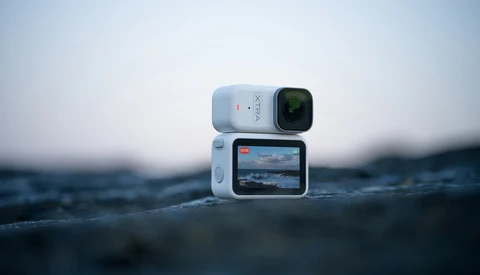
Xtra Atto: The Game-Changing Mini 4K Action Cam for Creators Debuts in the US

Xtra is an innovative U.S.-registered startup founded by an experienced team dedicated to advancing imaging technology. Having established a strong foundation with products such as the Xtra Muse, Xtra Sphra360, Xtra Edge and Xtra Edge Pro.Xtra’s latest product is aimed at those needing a lightweight, highly versatile solution to film BTS and POV content on the move. They call it Atto.

The Precision Myth: A Photographer's Guide to Bit Depth

You've captured what you believe is the perfect sunset. The light was extraordinary, your composition was deliberate, and the histogram looked pristine. You import the file into Lightroom or Photoshop, apply a standard S-curve to add some contrast, and suddenly your beautiful sky transforms from a smooth gradient into something resembling a topographic map.

5 Whys Photography Discussions Always Collapse Into the Same Arguments

Photography arguments don’t stall because people are uninformed. They stall because professionals, hobbyists, and spectators speak from different realities while using the same language. This text maps the fault lines that make most debates structurally impossible. 

Will Sony Ever Make a Retro Camera?

Fujifilm has built an empire on it. Nikon proved it works at full frame. Canon is openly entertaining the idea, with an AE-1 tribute rumored for this year. And Sony, the company that defined modern mirrorless photography, is nowhere to be found. 

Covering ICE in Minneapolis

Working the ICE story in Minneapolis meant relying on others—friends, colleagues, total strangers even. It meant leaning on the community and knowing how to sift good information from bad—and by the end of my time there, there was a lot of the latter. 

This Image Enhancer Beats the Competition

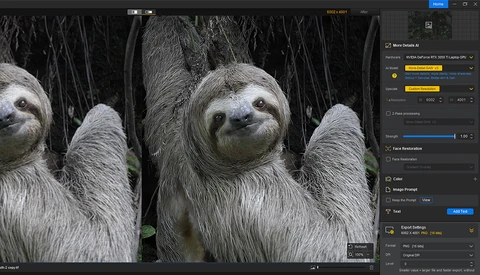
Among the many AI-powered image enhancement tools, the one we show in this article is the first to come close to a one-click solution for print preparation, with nearly no additional cleanup required. 

Strong Images, Weak Edits: Why Your Archive Deserves Another Look

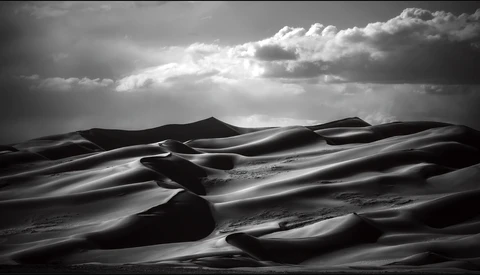
Have you ever gone back to look at older images you created? Whether they’re from six months ago or six years ago, there are often elements worth revisiting. As our eyes mature and technology advances, we’re able to see opportunities to refine those images in ways we simply couldn’t before. 

What “Nat Geo-Quality” Actually Means: A Photo Editor Breaks Down Your Shot Selections

If you’ve ever looked at National Geographic’s “Your Shot” favorites and thought, “I could never compete with that,” you’re not alone—and you’re also probably aiming at the wrong target. Most photographers assume editors are hunting for the sharpest file, the cleanest composition, or the most technically “correct” exposure. A picture editor’s job isn’t to find the most perfect photograph.

Why the Sigma 150–600mm Changed How I Photograph the Coast

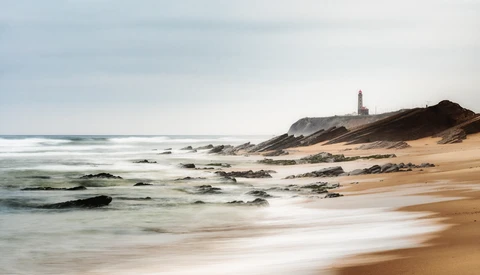
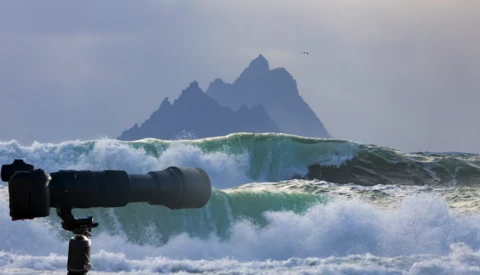
Some ideas take years to resolve in photography—not because the location changes, but because your ability to translate what you see into an image takes time, experience, and sometimes the right tool. 

When a Firmware Update Is Worth Installing (And When It’s Not)

For some photographers, firmware feels like a dirty word—especially for beginners. Should you install every update that appears, or leave things as they are if your camera works fine? For many, it starts with a more straightforward question: What is firmware, and why does it matter? 

The Spec Sheet Is a Dead End. These Cameras Found Another Way.

Pick up a Sony a7 V. Now pick up a Canon EOS R6 Mark III. Now a Nikon Z6 III. All three cameras launched in 2025. All three hit roughly the same resolution. All three offer comparable autofocus performance, similar video capabilities, equivalent build quality, and nearly identical ergonomics. They are, for most practical purposes, the same camera wearing different logos. 

5 Reasons You Should Stop Shooting at Eye Level

There is a moment early in every photographer's journey when they realize that simply pointing a camera at something interesting does not automatically produce an interesting photograph. The gap between what we see with our eyes and what the camera captures can feel impossibly wide.