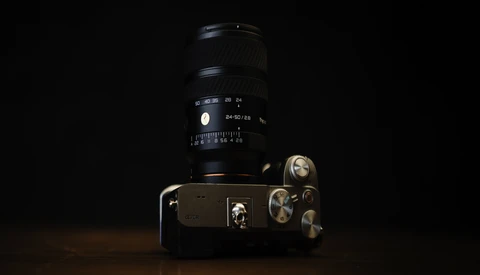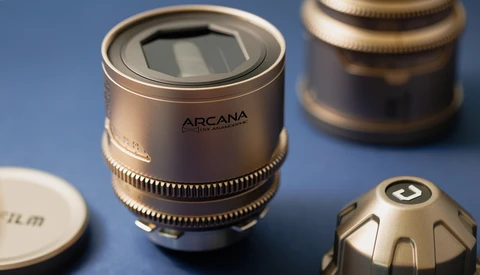
Review Of The New T1 Cinema Lens: The Zhongyi Zone T1
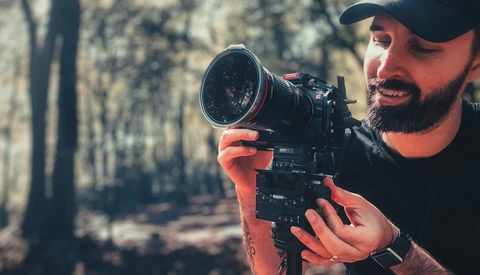
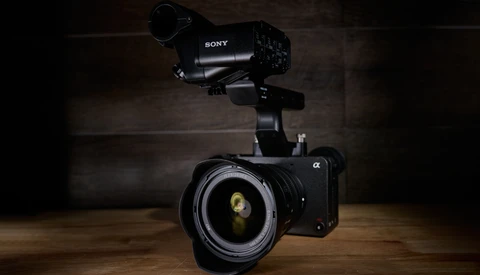
Today I'll have a look at an exciting new lens option for filmmakers, the Zhongyi Zone T1 cinema lens.
There are lenses that photographers buy because they need them, and there are lenses photographers buy because they can't stop thinking about them.
The 200mm f/2 sits firmly in the latter category.
This lens is the perfect example of why one should not judge a lens by its cover. While it may seem like any other budget fast prime, it offers a real, visible difference for your images.
To paraphrase a favorite pair of authors of mine: once is never, twice is always. Not sure where the third and fourth times something goes wrong rates.
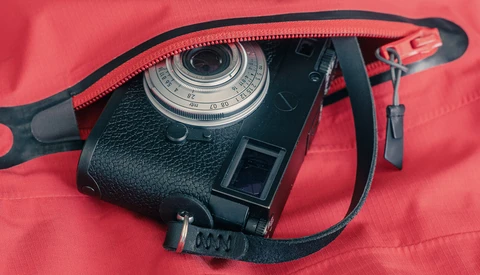
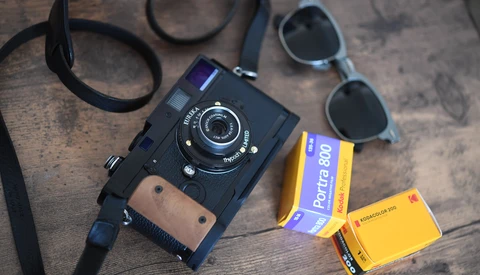
Because that's how many times my Leica MP pulled my bulk-loaded film out of the canister. Not the camera's fault; instead, the cheap tape I've been using didn't seem to be holding up to the stress of those final few tugs of the film advance. The first time it was something important: two dozen arrests during a protest downtown. Thankfully the rest were less important, mostly technical shots for this lens review.
Why fix what isn't broken? Well, Viltrox seems to have a good subtle reason as to why it did with the 35mm f/1.2 LAB (N) that photographers might appreciate.
Thypoch has been slowly making a name for itself in the industry and is no stranger today to creating modern manual lenses that pay homage to classic lenses—starting with the Simera, Eureka, and now the Ksana. The 21mm f/3.5 Asph is Thypoch's first entry in the new "Ksana" series, designed to be an ultra-light and compact everyday lens with vintage rendering. If you must know, the name Ksana comes from the Sanskrit word Kṣaṇa (क्षण /ˈksɑːnə/), representing the eastern concept of the "instant" or the duration of a sudden enlightenment.
Following my recent speculation about M-mount lenses being the next big thing, the M-mount ecosystem has seen some truly exciting developments lately. Even in such a niche and crowded market, we are still getting frequent releases from companies like Thypoch. And after all the good releases, they still manage to surprise us every now and then to give us a reason to pick their lens.
I used to think all fog machine liquid was the same. Never once had I considered that a new fog formula could be far better than what I've been using for decades. PMI's Vanishing Formula Kit has changed my opinion, and today I test it against three of the most popular portable fog systems on the market.
The Neewer Q120 is a compact 120 Ws TTL pocket strobe aimed at photographers who want more power than a speedlight without carrying a full-size studio flash. After using it for outdoor portraits and location shoots, I found it surprisingly capable for its size. Compact and lightweight, the Q120 is clearly designed for outdoor and location shooting, but is it worth adding to your kit bag?
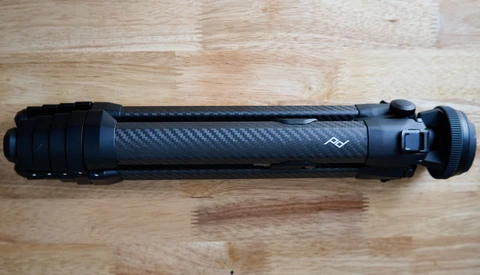
Yes, hate is a strong word, but it would be accurate in this instance. In the words of the great Dion DiMucci, "Here's my story, it's sad but true, about a tripod that I once knew." I think that was how the song went.
If you think the 7Artisans 35mm f/2.8 M Mount lens looks like it belongs to another era, you'd be quite correct. It was inspired by the compact optics used on Leica's early Barnack cameras in the 1930s. This tiny beauty, weighing just 88 g, embraces simplicity, portability, and character in a way that many modern lenses have forgotten.
A lot of photographers nowadays prefer camera bags that are built to protect gear but barely look like it. This variation of Wandrd's Prvke backpack takes that to a whole new level.
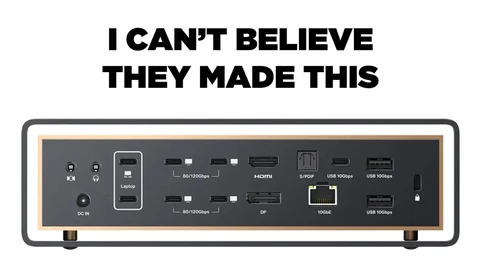
If a docking station can support or charge everything you use on your desk, this might be it. This 15-in-1 docking station powers all your devices safely and efficiently while keeping your desk neat.
Behind every lens decision is a balancing act between autofocus, portability, and excellent optical quality. It usually feels like you can only pick two. But with the introduction of Viltrox's second L-mount lens, the AF 28mm f/4.5 L, we might have just found a recipe that genuinely delivers on all three fronts by making the compromise elsewhere: a fixed, slower aperture. In this article, I will be putting this tiny lens to the test to see if it actually holds up its end of the bargain—translating a spec sheet into real-world performance.
Let's be honest, buying a memory card is probably the most boring part of picking up new gear. It's not a shiny new lens or a camera with a red badge. But if we're being real, it is arguably the most critical piece of the puzzle. Without a memory card, cameras without built-in memory will not be able to save any data, essentially becoming an overpriced paperweight.
Today, I decided to try something new. So, join me on a walk through the park with the NIKKOR Z MC 105mm f/2.8 VR S macro lens.
The Viltrox AF 90mm f/2.2 EVO is the company's latest in its budget-friendly, compact line of lenses for APS-C systems, and it offers excellent image quality and value for the dollar.
When it comes to focal length choice, my photography goes in cycles. For a few years now I've been shooting 28mm and 35mm, but recently decided it was time to move back to the 50mm focal range.
Today, I'd like to have a chat about Nikon's latest version of its workhorse 70-200mm zoom lens, the NIKKOR Z 70-200mm f/2.8 VR S II.
Everybody has different ways of traveling, and that's why bags, tripods, and even camera gear come in different shapes and sizes. Peak Design took note of that and has come out with more options.
If you travel with camera gear even a few times a year, you already know the problem. Sometimes you're heading to a wedding with a full kit and your clothes are checked. Sometimes it's a weekend trip where you need a few lenses and room for a change of clothes. And sometimes you don't need any camera gear at all and you just want a normal bag. The issue is that most bags are built for one of those scenarios, not all of them. So you end up owning three or four bags and playing a guessing game before every trip.
The Atlas One is the first bag I've used that actually solves this.
Modular. Configurable. Stackable. The Pelican CRATE system could be one of the most rugged photography gear cases on the planet, even if it doesn't realize it yet.
Is the old way of retouching dead? With various AI plugins, the world of classical retouching is definitely changing. Recently, I tried out Retouch4Me and some of their plugins, and these are my thoughts as a working pro on whether it is something that would fit into my workflow or not, as well as where it excels and where I find it to struggle more. Retouch4Me has a suite of different plugins across frequency separation, dodging, burning, healing, cloning, fabric removal, dust removal on a backdrop, and many more.
There are probably as many portable flash options on the market now as there are roads that lead to Rome, and just as many reasons to use one. But if we are talking about one that has a classically inspired design, is portable, and delivers professional functionality with studio-grade lighting, we might just have a reason to get one. We are talking about the latest release by Viltrox, the Vintage Z1 Pro Retro On-Camera Flash.
There are some pieces of gear you expect to be good, and then there are the rare ones that change your expectations altogether. I recently tested the 31L version of the new Wandrd Prvke Pocket Bag, which is an item you don't fully appreciate until you're halfway through a trip, standing in the rain, juggling passports, tech, and camera gear. This article discusses my experience with the bag, traveling long-haul.