Fstoppers Original Articles

Exclusive articles and expert opinions written by Fstoppers’ talented team of creative professionals. Here we cover everything from the latest photographic techniques to advice on running a successful photography business, to first hand accounts of working in the photography industry.

Why I Put a Stealth Lens on the Loudest Camera I Own

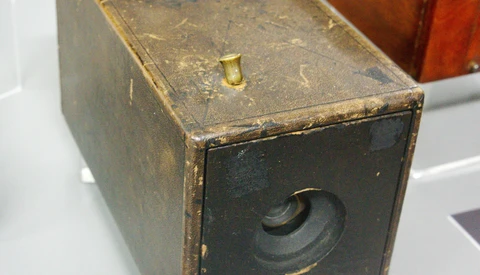
Most likely, this won't matter to many people, but I'm writing it and proposing it anyway, also because I'm convinced that there's only one person who will be interested in this piece about an antiquated setup that, in my opinion, still works great today. At least it works for me.

'We Own More Cameras Than We Have Employees': Inside Capture One's Hasselblad Deal

The announcement itself was straightforward enough. On July 2, Hasselblad and Capture One confirmed that Hasselblad's .3FR raw files now open natively in Capture One, with dedicated color profiles for the X2D II 100C, the X2D 100C, and the CFV 100C digital back, and lens profiles covering 19 XCD lenses. Tethered capture is planned for later in 2026. After years of forum threads and feature requests, the wait ended with a software update.

11 Mistakes That Make a Portfolio Look Unprofessional

A portfolio is not a gallery of your favorite photos. It is a sales tool, and its only job is to answer one question in a potential client's mind: can this person deliver the specific thing I need, done well? Most portfolios fail at that job not because the photography is bad, but because of a handful of avoidable mistakes in how the work is chosen, ordered, and presented. A viewer forms an impression in well under a second and decides whether to keep looking or move on within a few images. Here are eleven mistakes that quietly cost you that decision, each with a fix.

Overcoming the Greatest Fear in Street Photography

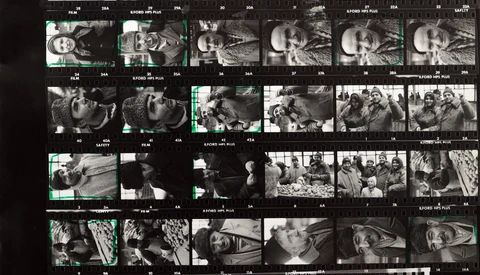
Every photographer who has thought about photographing a public space knows the low-humming anxiety of the "worst-case scenario." The fear of someone seeing and confronting us remains one of the steepest mental hurdles to actually getting started in street photography. For years, it was mine. We convince ourselves that the moment we are noticed, the world will grind to a halt and anger will follow. But what actually happens when the nightmare comes true?

The FIFA 2026 World Cup Is Somewhere Else

There is a particular kind of expectation that follows you when you say you are in a country hosting a World Cup. It is not always spoken out loud, but it sits there in the background of conversations, in messages, in assumptions that come almost automatically, as if geography alone were enough to place you inside the flow of the event.

Why Your Photos Look Worse Than the Scene You Saw

You stand in front of something stunning, a valley flooded with evening light, a city skyline at dusk, and you press the shutter sure you have captured it. Then you look at the file and the magic is gone. The colors are flatter, the sky is blown out or the ground is a muddy mess, the mountain that loomed over you looks like a small bump, and the whole thing feels ordinary. The instinct is to blame the camera, or your skill, or to start shopping for a better lens. Usually none of those is the real culprit. The real explanation is that your eyes and brain were never showing you the scene the way a camera records it, and once you understand the gap between the two, you can start closing it on purpose.

Haters Never Show Their Faces and Photographic Work

I've always wondered what goes through someone's mind when they decide to become a hater. Being a hater is a kind of job: you have to create fake accounts, which guarantee anonymity, and then, from those accounts, launch attacks against the object of your hatred.

11 Landscape Photography Mistakes Beginners Keep Making

Landscape photography looks like it should be easy. You find a beautiful place, point the camera at it, and press the shutter. Then you get home, look at the files, and the magic that was right in front of you has somehow drained out of the picture. Almost always, the cause is not your gear or the location. It is a handful of specific, fixable habits that nearly every beginner falls into. Here are 11 of the most common, each with a fix you can apply the very next time you are out.

Myth: You Must Shoot in Manual Mode to Be a Pro

There is a belief that follows almost every beginner around: that real photographers shoot in manual mode, and that the semi-automatic modes on the dial are a kind of training-wheels embarrassment you are supposed to outgrow as fast as possible. The aperture priority setting even gets the dismissive nickname "A for amateur." It is one of the most persistent myths in photography, and it is wrong. Plenty of working professionals shoot in aperture priority every day and have for decades. The mode you use says nothing about whether you are a pro. What matters is whether you understand what the camera is doing and why.

What Is the Difference Between F-Stops and T-Stops?

You may have noticed that photography lenses are marked in f-numbers, f/1.4, f/2.8, f/8, while cinema lenses are marked in T-numbers, T1.5, T2.9, and wondered whether they mean the same thing. They are closely related, they sit in the same spots on the aperture ring, and a T-number looks just like an f-number with a different letter in front. But they measure two genuinely different things, and the gap between them tells you something real about how lenses work and why a cinematographer cares about it while a portrait photographer mostly does not.

What Is a Leaf Shutter vs. a Focal Plane Shutter?

Almost every camera has a shutter, the mechanism that controls how long light hits the sensor, but not all shutters work the same way. Among mechanical shutters, there are two main designs, the leaf shutter and the focal plane shutter, and the difference between them is not trivia. It determines how fast you can sync a flash, how quiet your camera is, how big and expensive your lenses get, and which kind of photography each system is best suited to. If you have ever wondered why a small fixed-lens camera can do something your big mirrorless body cannot, the shutter is often the reason. There are electronic shutter modes too, which we will come to, but the mechanical pair is where the story starts.

What Two Dead Drives Taught Me About the Cost of Keeping My Photos

Red lights blinking on my NAS. Drive failure. Double drive failure. I'm on RAID 6, so the data's still there, but my heart rate has increased. My day is reprioritized — time to work on this.

So I did what we all do now — I asked the internet, specifically Google's AI, how to fix it. The advice was tactically good, but it missed the real problem, and a thought stuck with me: the same AI tech I was leaning on for answers is the reason storage just got so expensive.

When storage costs this much, having good discipline with your data management practice beats blind redundancy.

What Hyperfocal Distance Is and How to Use It for Sharp Landscapes

You frame a landscape with a striking rock in the foreground and mountains on the horizon, you focus on the mountains because that is your subject, and when you get home the foreground rock is soft. Or you focus on the rock, and the mountains go mushy. The scene your eye saw as sharp from front to back will not cooperate. The fix is more than a century old and it is one of the most useful, and most misunderstood, ideas in landscape photography: the hyperfocal distance.

What Is Focus Breathing and Why Do Videographers Care?

Pull focus on a video clip from a near subject to a far one and watch the edges of the frame. On many lenses, the image seems to subtly zoom in or out as the focus shifts, as if the lens is quietly inhaling and exhaling. That is focus breathing, and once you have noticed it you cannot unsee it. For photographers it is usually a footnote. For anyone shooting video, it is one of the defining differences between a photo-first lens and a lens built for video or cinema, and it explains a large part of why true cinema lenses cost what they do.

10 Reasons I Chose Canon: Even When the Internet Thinks It’s “Not Cool” Anymore

Let's begin with the usual disclaimer:

I am not affiliated with Canon in any way. No sponsorships. No ambassador contract. No free gear raining from heaven. This is simply the perspective of a working photographer who has spent years using multiple systems professionally across documentary, editorial, portrait, and street photography.

The Article That Became Three Books

Back in September 2024, I sat down to write an article for Fstoppers called What I Wish I Knew Earlier. I had no idea it would eventually become a trilogy of books. At the time, it was simply an opportunity to reflect on some of the lessons landscape photography had taught me over the years. Not the technical lessons that can be found in camera manuals or specification sheets, but the things that only seem to reveal themselves after countless early mornings, long drives, missed opportunities, and disappointing photographs.

What Is Bokeh, and What Actually Makes It 'Good' or 'Bad'?

Bokeh is one of those words you hear constantly in photography and almost never hear defined. People use it to mean "blurry background," they use it to mean "expensive lens," and they use it as a compliment without being able to say what they are complimenting. So let us clear it up, because once you understand what bokeh actually is, you can stop chasing it blindly and start using it on purpose.