
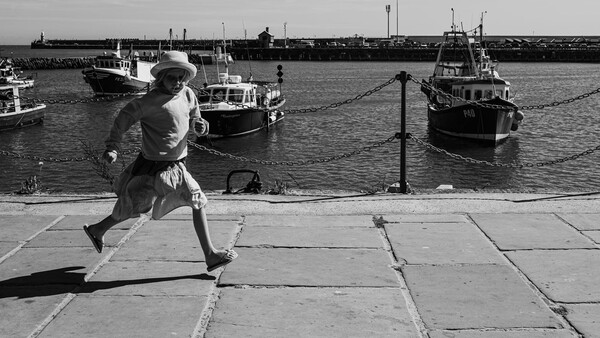
For landscape photography, summer is a curse. Harsh, bright light and blue skies give some photographers nightmares. They stay inside and read Fstoppers articles. Probably. No one really knows—they keep so quiet. Maybe they should read this article, because summer just so happens to be a fabulous time of year to grab a camera and wander into town for a spot of street photography.
Summer street photography is full of energy, color, and contrast. That bright summer sunlight creates strong shadows, which are a street photographer’s friend.
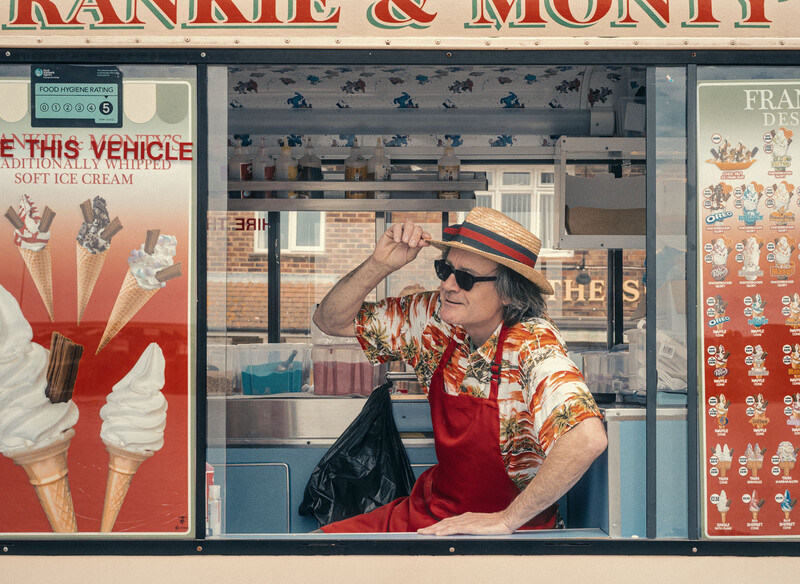
You get more people out and about in the summer, offering more opportunities for interesting photos. In the warm weather, people tend to be out and about doing more activities, from skateboarding to eating ice cream.
The Right Gear for the Job
I use the term “street photography” loosely, because I often shoot scenes without people—a sacrilege to some, I know. For me, street photography also overlaps into travel photography. If you’re on vacation at a seaside town or even a beach resort, you can still do “street photography.”
Of course, you can use any camera to shoot on the street, but if you’re getting serious about this genre, the best street photography-specific cameras are small and discreet. They allow for fast reactions, have quiet shutters, and ideally offer good low light performance.
With street photography, you don’t need all the latest tech and bells and whistles. Simple is best. So the way to go, in my opinion, is to look for something used. You’ll save a lot of money. One of the best places to browse many hundreds of cameras perfect for the job on MPB.
The Joys of Summer Sun
-
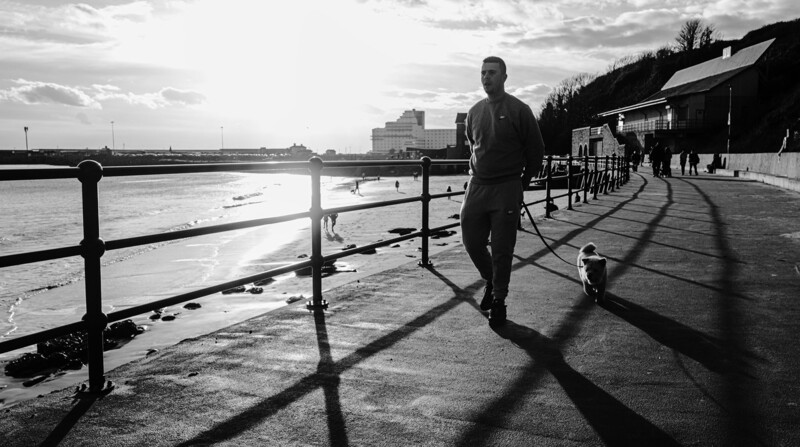
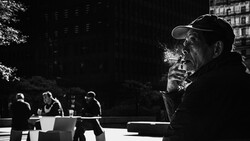
Harsh shadows create high-contrast, dramatic graphic compositions.
-
Bright light creates silhouettes.
-
Bright light hitting glass and water can create interesting reflections.
Embracing and working with the harsh light can result in some terrific photos.
My Top Tips
Expose for the Highlights
With all that contrast, your camera’s dynamic range will likely have a hissy fit. But that’s fine—just expose for the highlights. Don’t worry if you lose detail in the shades; it can simplify your image, and that can be a good thing.
Fast Shutter Speeds
With everyone moving about, you want to capture a sharp image, so my preference is to keep my shutter speed at 1/1,000, or even 1/2,000. My rule is: If the light is bright, shoot as fast as you can.
I also keep my ISO as near to the base ISO as I can. Many modern cameras have dual base ISO, so it’s worth finding out what yours are.
Consider Shooting in Manual
This is a much-debated topic, but I’ve found it best to expose my images in manual mode using a histogram. Some prefer shutter or even aperture priority. There’s no right or wrong—whatever works best for you. I find I have more control in manual. I’m not relying on the camera to figure out the exposure; I’m keeping an eye on the histogram, because that doesn’t make a mistake.
One thing I do believe is absolutely the best to do in manual is focus. I use zone focusing as my default. Set and forget. I set my focal distance to a pre-determined distance and know what the zone is in the frame where someone will be in focus. This is a particularly good approach if you’re fishing (see below). I wrote an article about zone focusing here if you want more detail.
Go Fishing
One of my favorite places to spend time photographing is at a seaside town. I find a bench near the water, sit down, and watch people walk by. This is “fishing.” You find a great backdrop and wait for people to come into frame. There’s so much to photograph just by doing this for half an hour. This is the best way to ease into street photography and is the least intimidating introduction to the genre.
Seek Out Color
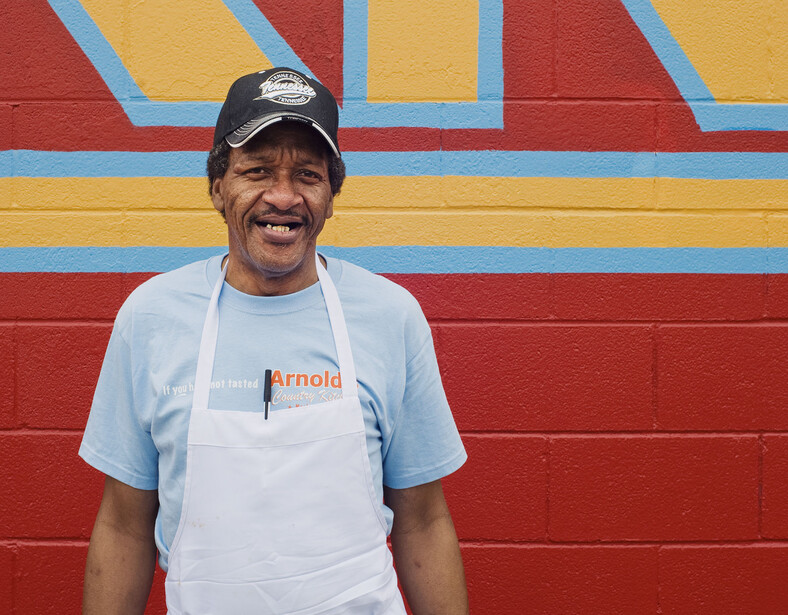
Everything is so much more colorful in the summer, particularly people. They tend to dress with more color, and this provides some fantastic opportunities. One of my favorite things is to look for someone wearing a color that contrasts with their background. It’s incredible how much visual impact even a simple composition can have.
Some Project Ideas
It’s a good idea to assign yourself a project, looking for a theme or story in your photos. This gives us a focus and a purpose, and a set of cohesive images can be far more interesting and rewarding than a bunch of random snaps that lack purpose or a point.
Here are some ideas worth considering:
Street Performers and Activities
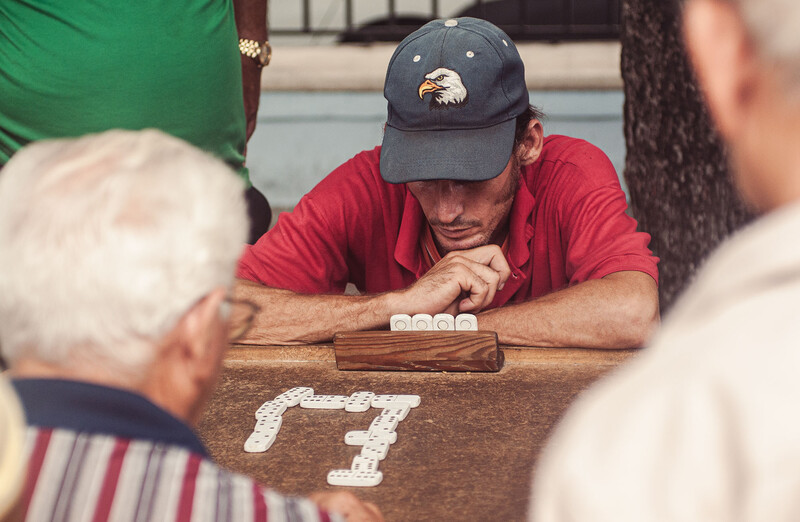
There are always lots of buskers entertaining the crowds, which can be fun to document. You may also see people sitting in a park playing board games, which make an interesting theme.
Dog Walkers
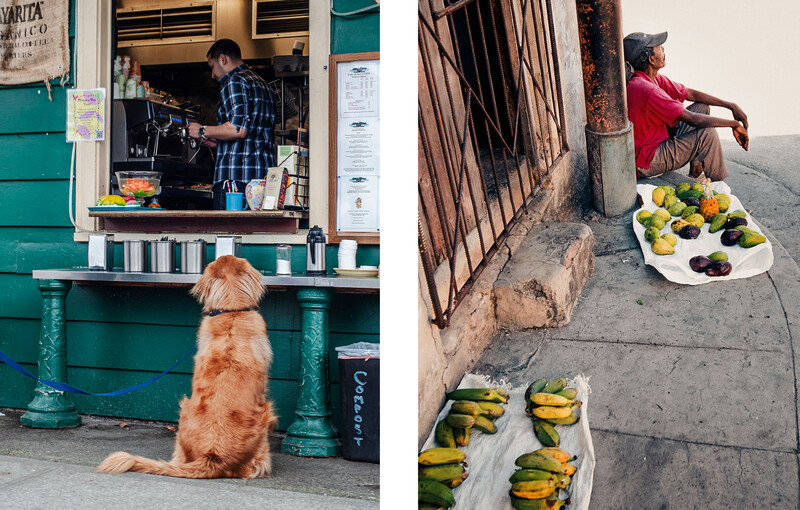
This is a fun subject. There are so many different characters walking their dogs. This is an easy topic to work with; there is so much opportunity. And who doesn’t love a happy puppy pic?
Sunglasses
Shooting people wearing interesting shades is a good one. People of all ages can be found wearing a variety of sunglasses. Plus, you’ve got the reflections in them, which can be a topic unto itself.
On The Move
Capture motion on hot city streets. Document how people move about—walking, biking, skateboarding, or even buses and horse-drawn carriages.
People Eating Food
This is one of my favorites. There are always people walking around with food and drinks. People with ice cream, fish and chips, churros—there are endless opportunities.
Shade Seekers
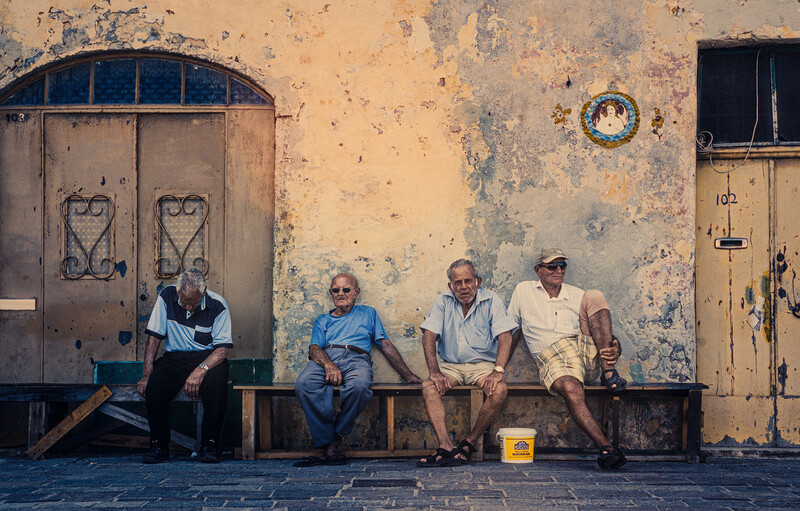
On the beach or in a city park, people are sitting or lying around enjoying the warm, sunny weather. They use a variety of ways to shade themselves, from umbrellas to towels or newspapers over their heads—a colorful and even comical topic.
Contrasting and Bright Color
Another favorite one for me: People wearing bright colors, signs, graffiti, fruit stands. A wide scene of rows of colorfully painted houses to a small, colorful cocktail sitting on a bar. I could spend the entire summer with just this topic in mind.
What Camera?
These are my top three street photography brands worth considering. Most of the cameras I mention are older models, which give you much better value for your money. They don't have the latest technology that, quite frankly, you won't need.
Fujifilm
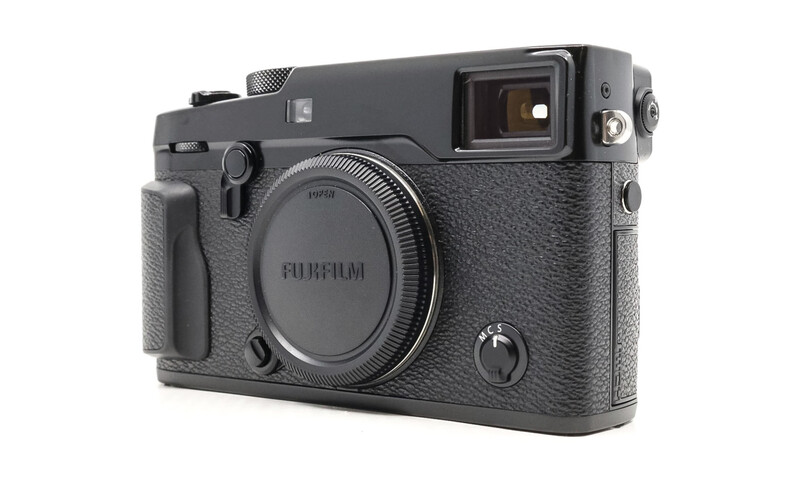
Fujifilm’s X series cameras are perfect street cameras. The newer models—X100V and X100VI—are hard to find and are priced at a premium on the used market, but there are older alternatives worth considering.
My choice would be the Fujifilm X-E4 or Fujifilm X-Pro2.
They are APS-C sensors, so not as good in low light as a full frame camera. This isn’t an issue in the summer sun. They do allow for interchangeable lenses, including some good manual focus third-party options.
Average used cost:
- Fujifilm X-E4: $949
- Fujifilm X-Pro2: $1,149
Ricoh GR Series
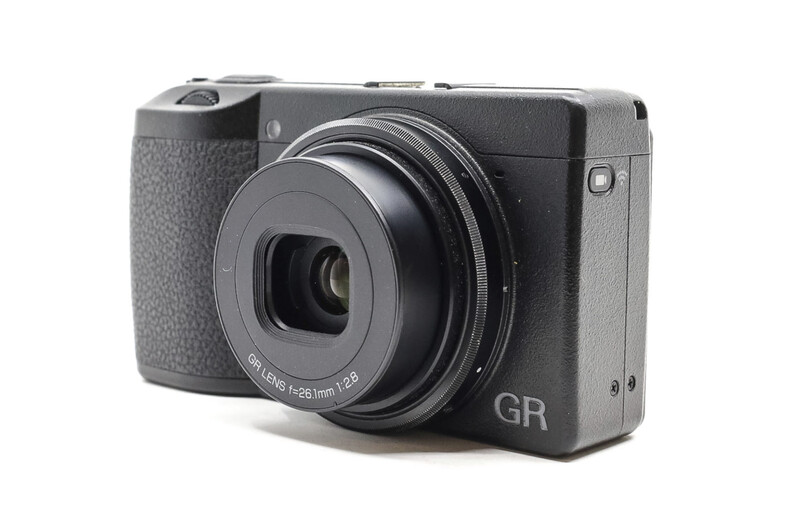
A great option on the used market right now is the GR III. It’s a 24 MP camera and has a fixed lens at 28mm full frame equivalent. There’s also a GR IIIx, which has a 40mm full frame equivalent fixed lens. A few of my YouTube friends use these cameras and swear by them.
Ricoh GR cameras are the smallest and lightest on the market—you can pop one into your pocket. Like the Fujifilm options, they are APS-C.
Average used cost:
Leica Q Series
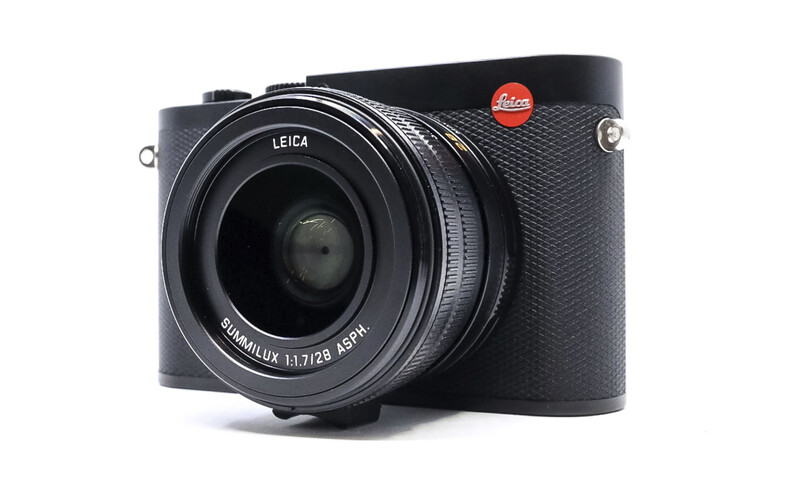
The only full frame option in my list. I’ve saved the best for last, because Leica Q series cameras are an absolute joy to use, and the image quality is astounding—even on the original 24 MP Q, which was launched in 2015. The Q, Q2, and Q3 all share the same incredible Summilux 28mm f/1.7 fixed lens. What I love best about these cameras, besides the unrivaled image quality, is the simple design that allows you to operate it completely in manual mode with ease, including focusing.
The only downside to this camera is you’ll need deep pockets. My recommendation would be to get a Q2. It has 47 MP, which is more than enough pixels to allow you to crop your image if you need to. The Q3 has 60 MP and a fold-out screen—two things I don’t need, but maybe you do.
I bought the Q2 Monochrom two years ago, and quite honestly it’s the best camera I’ve ever owned. I’m now saving for the regular Q2—I love it that much. Hopefully, MPB will have some left after this article.
Average Used Cost:
Other Options?
Another camera worth mentioning is the compact 33 MP full frame Sony a7C II. These average £1,600 used right now. You have the option to change lenses on this very capable camera.
For five years I’ve used the little Nikon Z50 with a small manual third-party prime lens, and I believe this is a fabulous option. The new Z50 II was recently launched, so there are plenty of Z50s for sale used, averaging just £400. This is possibly one of the best-value small, lightweight cameras on the used market right now.
At the other end of the market, you have the option of a Leica M series camera—a true old-school rangefinder experience with no autofocus or modern tech, which has much appeal to street photography purists. If I were to go this route, I’d be looking at the 24 MP Leica M10, averaging $3,700. But then, I’d have to factor in the cost of a divorce too.
Final Thoughts
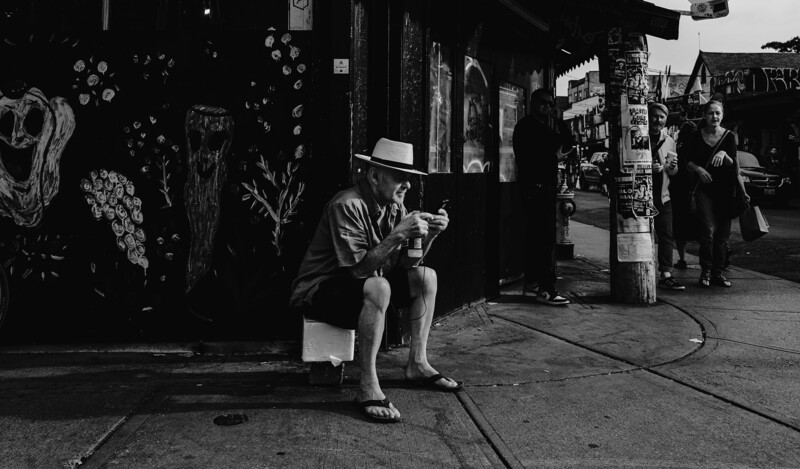
Summer light can be unforgiving, but it can be used to great effect with a little practice and some creative vision. Don’t fear the sun—use it to shoot boldly and graphically. The opportunities for summer street photography are endless. It’s the best time of the year to be out and about with your camera.
The big buying decision is: Do you need a full frame camera? If indoor and evening low light shooting is important to you, you’re at a slight disadvantage with an APS-C over a full frame camera. However, with an interchangeable lens APS-C camera, a fast third-party lens can solve a lot of these issues. If you’re shooting outside during the day, you won’t have any issues with any of the cameras mentioned.
So grab some suntan lotion, a hat, and a camera, and head out into that wonderful bright light. Happy summer shooting!


Join the Fstoppers community for free
-
Post comments and join in the discussions
-
Browse the site ad-free
-
Share your work and get featured in the community
-
Compete in the photo contests for fun and prizes
5 Comments
Nicely presented! Often when shooting discreetly in public, particularly with people as subjects, it's best to shoot from the waist. You'd think modern AF-C with AI face detection and tracking would be ideal, but often it misses, and when there are multiple subjects its choice may be incorrect. When shooting from the waist, viewing the focus box on the LCD is tough, especially in bright sun. MF with peaking can be easier to see. I've owned the Fuji x100v and the x100vi but sold both in favor of the Sony a7CR which has far better MF, AF, peaking and haptics (fingertip control of peaking color, level, drive mode and so on using the customizable buttons) and the fully pivoting screen which enables portrait mode composition from waist level. Just returned from a walk with a Zeiss Loxia 35 mounted; every picture fine.
I have gotten pretty good at shooting from the hip (waist). A lot of shots cut off the head, but I get enough good ones that with a little alignment within the frame post-production, they are good photos. They won't win a Pulitzer, but good enough for this amateur. I use a wide-angle lens with a fairly small aperture so that focus generally isn't a problem. Street photography is a favorite genre of mine.
These are great tips! I love that you gave color some love. There is a sector of street photographers who are fiercely devoted to monochrome but with almost disdain for color. Color and monochrome both have their place in the practice of street photography.
Regarding gear, I used a Panasonic GX9 for several years and found that the touch to focus was so insanely good that it gave shooting from the hip a new meaning! It felt the closest I could get to my Rolleiflex with a digital camera. The Ricoh GR was also such a nimble experience. I went through 4 iterations but the longevity was not there for me in terms of durability. Since then, I gravitate between MFT, the OG Z50 (you're right - it's a highly underrated gem!) and Fujifilm's older X-Trans II sensors.
When it comes to street, my 20 years have taken me through the gamut of bodies, both film and digital. In the end, it's less about autofocus and screens and more about your feet, your vision and your heart.
Thanks for the great input Juliette, much appreciated. Wow, you've got a lot of cameras, what fun you must have! Ah, the old Z50, yes, hugely underrated.
Re: color. I do prefer black and white for street. Well, I don't have a choice as my camera has a monochrome sensor. But I do love color too, There's a place for it all out on the streets and when travelling.
We're on the same page, and I love how you sum it up with :In the end, it's less about autofocus and screens and more about your feet, your vision and your heart." So true.
I took a peek at your website, lovely work. 🙂
Hi Simon, just seeing this. Thank you so much!