Fstoppers Original Articles

Exclusive articles and expert opinions written by Fstoppers’ talented team of creative professionals. Here we cover everything from the latest photographic techniques to advice on running a successful photography business, to first hand accounts of working in the photography industry.

The Problem With How Photographers Talk About Money (and What Needs to Change)

Photography has a money problem. Not a "there is not enough of it" problem, although that is also true for many photographers. A deeper problem: the photography community has developed a set of cultural patterns around money that no other professional industry tolerates, and those patterns are actively suppressing income for everyone in the field.

Why the Nikon Zf Became My Most Important Camera

I realize that articles about older cameras don't trend nearly as hard as shiny new toys. But my recent purchase of the Nikon Zf has paid off in more ways than I could have ever imagined.

8 Unpopular Photography Opinions That Are Actually True

Photography has a generous supply of conventional wisdom. Some of it is earned. Some of it is repeated so often that nobody questions whether it was ever true in the first place. And some of it is actively wrong, kept alive by a community that confuses encouragement with honesty.

Can AI Make Useable E-Commerce Fashion Photography?

As artificial intelligence continues to advance, everyone seems to be saying AI is coming for the fashion industry, especially for photographers and models. I recently put Nano Banana Pro through a real e-commerce test to see whether it could actually do the job of a professional photographer with a full team.

Your First 30 Days With a New Camera: A Day-by-Day Learning Plan

You just bought a camera. Maybe it is a Canon EOS R50, maybe a Nikon Z50 II, maybe a Sony a6400 you found on sale, maybe a Fujifilm X-T50 that took three months on a waitlist. Whatever it is, you unboxed it, charged the battery, took a couple of test shots of your cat, and now it is sitting on the counter while you wonder what to do next.

Why So Much Art Photography Feels Historically Late

Many photographers produce carefully crafted images and still struggle to gain attention. The problem is rarely a lack of skill. In many cases, the photographs simply belong to an earlier photographic moment.

14 Hidden Costs of Being a Professional Photographer Nobody Talks About

When you calculate whether photography can support you financially, you start with the obvious math: how many sessions per month, times your session rate, equals annual income. That number looks promising. It is also wrong, because it does not account for the dozens of expenses that sit between your gross revenue and the money you actually take home.

Picture vs. Photograph: Why the Difference Matters

Most of us overlook great images not because we fail to see them, but because we stop at thinking, "That's a nice picture." A picture serves as proof that you were present; a photograph shows you made deliberate choices. Here's how to transform quick snapshots into purposeful photographs, both in the field and during editing.

12 Signs Your Photography Has Plateaued and What to Do About Each One

A plateau does not announce itself. There is no notification, no error message, no dramatic moment where you realize you have stopped growing. It arrives quietly, disguised as comfort. You know your camera. You know your style. You know your workflow. Everything is efficient, consistent, and predictable. And that predictability is exactly the problem.

16 Signs You Are Ready to Go Full-Time as a Photographer

The question is not whether you are talented enough. Talent got you to the point where going full-time even feels possible. The question is whether the business infrastructure, the financial runway, and the personal support system are in place to survive the transition without collapsing under the weight of it.

New Topographics in the Age of Permanent Change

Look around any expanding city today. Warehouses rise where fields stood five years ago. Housing developments stretch toward dry hills. Highways carve through fragile terrain. Data centers replace factories. The landscape is no longer something we visit. It is something we continuously build, erase, and rebuild. It is progress, they say.

9 Things That Go Wrong on Every Landscape Photography Trip and What to Do About Each One

Landscape photography looks serene from the outside. A lone figure on a hillside, tripod silhouetted against a sunrise, communing with nature. What the Instagram post does not show is the two-hour predawn drive, the boots soaked through before the first frame, the sky that refused to cooperate, and the 200 exposures that produced three usable images. Landscape photography is not a passive activity. It is an ongoing negotiation with an environment that does not care about your shot list.

10 Summer Photography Projects You Can Finish Before September

Summer is the easiest season to photograph and the hardest season to use well. The light is long, the weather cooperates, and the subjects are everywhere. But without a specific project to anchor your shooting, those three months dissolve into a scatter of random images that do not add up to anything.

Sharpness Is the New Beige

We finally reached a weird point in photography where sharpness isn't even a goal anymore; it's given. Modern lenses are so good that "tack sharp" is basically a factory setting. And yet, scroll any comment section, and you would think sharpness is a whole sport. Not light. Not timing. Not mood. Just crazy sharp.

10 Things That Go Wrong During a Client Consultation and How to Redirect Each One

The consultation is supposed to be the easy part. The client reaches out, you meet (in person, by phone, or over video), you discuss what they want, you explain what you offer, and you both walk away aligned on the vision, the scope, and the price. That is the theory. In practice, the consultation is where every mismatched expectation, unrealistic budget, and conflicting creative vision reveals itself, and your ability to navigate those reveals determines whether the conversation ends with a booking or a polite "I'll think about it" that means no.

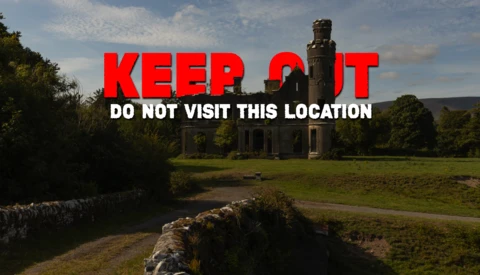
The 'Monster House' Effect: How to Find Narrative in Ordinary Ruins

There's a stretch of Highway 69 outside Muskogee that I've driven enough times to stop noticing it. You know the kind of road I mean — your brain goes into cruise control, the scenery becomes background noise, and you're just trying to get where you're going without getting stuck behind a log truck doing 42 in a 65.

The Concept Comes First: Building a Photograph From an Idea, Not a Scene

Most photographers start with a subject or theme. Conceptual photographers start with a question. What does isolation feel like? Not, where can I shoot next? Entering the world of conceptual photography is a beast of its own. It comes with its own challenges and rewards. My biggest question was, how do I start?

"Fix It in Post" Is Costing You Money: A Mathematical Case for Getting It Right in Camera

You are standing on location. The light is good, the client looks great, and you are in the zone. Then you notice it: an orange traffic cone lurking at the edge of the frame. Your assistant is nowhere to be found. The client is already in position. You could pause everything, walk over, and drag the cone out of shot. Or you could keep the momentum going and mutter those five dangerous words to yourself: "I'll fix it in post."

12 Things That Go Wrong on Every Outdoor Portrait Session (and What to Do About Each One)

If you have shot outdoor portraits for any length of time, you already know that the session you planned and the session you got are never the same session. Something always goes sideways. The light shifts, the location changes, a variable you could not have predicted shows up and rearranges everything. The difference between a beginner and a working portrait photographer is not that the veteran avoids these problems. It is that the veteran has been ambushed by them so many times that the solutions are automatic.