Fstoppers Original Articles

Exclusive articles and expert opinions written by Fstoppers’ talented team of creative professionals. Here we cover everything from the latest photographic techniques to advice on running a successful photography business, to first hand accounts of working in the photography industry.

Is This the Best Indie Filmmaking Rig?

I have heard people talk about this and wanted to try it for myself, especially as Canon released the new C50 mirrorless camera. I decided to pair that with the 24-105mm f/2.8 to see, is this the perfect run-and-gun indie filmmaking rig?

10 Milestones That Make You Feel Like a "Real" Photographer

Nobody hands you a certificate. There is no exam, no licensing board, no official moment where someone taps you on the shoulder and says "you are now a photographer." The transition from hobbyist to something more happens gradually, in small moments you do not always recognize as significant while they are happening. But looking back, every photographer can identify a handful of milestones that shifted something internally, moments where the thing you had been doing started to feel like the thing you are.

“Shoot Every Day” Is Great Advice Until It Isn’t

You've heard it once, you've heard it twice: shoot daily. Sounds like excellent advice (because it is — for some people). Shooting daily is one of the most repeated pieces of advice that gets thrown around. It gets repeated because it's simple and sounds disciplined. But for working adults, parents, busy people, or burned-out creatives, it can quickly become a guilt machine. What if the goal isn't shooting every day, but building a practice you can actually sustain?

The Face Is Not Innocent

Portraiture did not begin with photography. It began with control. Long before the camera, someone was already deciding how a face should be seen, remembered, and fixed in time. The portrait has always been an act of authority. Photography didn't change that; it just made the act faster and more invisible.

11 Things Every Photographer Has Done but Will Never Admit

Photography has a public face: the curated Instagram grid, the confidently delivered gallery, the calm professional who shows up with two bodies and a plan. And then there is the private face: the one where you google "how to use back-button focus" in the parking lot two minutes before a portrait session.

The Secret Weapon Behind My Best Editorial Work

If you could only have two lights for the rest of your career, what would they be? Having used everything from the sun to niche '80s modifiers that predate dinosaurs, I can swear by two light modifiers: the Briese Focus.2 77 and 180.

How to Get Better Concert Photos With Your Phone

The best concert photography happens in the pit and around the stage, with dedicated cameras and strict access. But when we go, most of us are just fans in the crowd. With a little intention, your phone can document the experience surprisingly well without turning the night into a photo shoot.

When Photographing Protest Is the Protest

I've been covering protests for a long time, as a journalist and journalism professor, and one of the things I've noticed is that, at least in the Trump era of the last decade, more people are showing up with cameras to photograph these happenings than before. I've been trying to parse out why that is.

What "Dynamic Range" Actually Means and Why It Matters More Than Megapixels

When most people shop for a camera, the first number they look at is megapixels. It is the biggest number on the box, the easiest spec to compare, and the most intuitive to understand: more pixels equals more detail. But megapixels are not the reason your sunset photo has a white, blown-out sky. They are not the reason your indoor portrait has muddy, noisy shadows where the detail should be. And they are not the reason a professional photographer can rescue an underexposed shot in Lightroom while yours falls apart the moment you touch the shadow slider.

The Shot You Can't Buy: Why Access Beats Gear Every Time

Two photographers. One has decades of experience and a full professional kit. The other is a tourist with an iPhone. On paper, no contest. But the tourist did the homework and found a better vantage point. The pro trusted experience and stayed put, confident that superior gear would carry the day in a space already crowded with photographers. In that moment, the advantage was not skill or gear. It was access.

The Value of Leica's Classic Lens Line

New iterations of our favorite tech appear regularly, and though the new version is often indistinguishable from the previous one, the manufacturer tells us we can't live without it. The previous version of the product is quickly forgotten, as it is now considered obsolete, with nothing to offer over the new model. Nikon, Canon, Sony, and Fuji have taught us not to look to the past when we select a camera or lens. Leica is the only company that understands the value of choosing tech that isn't state-of-the-art.

What "Exposure Compensation" Actually Does (and When You Need It)

Somewhere on your camera, there is a button or dial marked with a plus sign, a minus sign, and a zero. It might be a physical dial on the top plate, a button near the shutter, or a virtual slider in the quick menu. You have probably noticed it. You have probably never touched it. And that single untouched control is the reason a surprising number of your photos come back too dark or too bright even though you are shooting in a semi-automatic mode that is supposed to handle exposure for you.

Real Estate Photography Is Dying

AI powered photography software is getting so good that it may make us obsolete. This may have already happened with real estate photography. 

What Is It Like to Photograph a 24-Hour Race?

2026 marked the fifth time I worked IMSA’s season-opening Rolex 24 at Daytona race, but only the third as a photographer. My first two races focused on writing magazine articles; as a photographer, I still have a lot to learn and continue to find my way creatively.

How to Fire a Photo Client (and When You Should)

Nobody goes into photography hoping to turn away paying work. You spent months (or years) building a portfolio, learning your craft, and figuring out how to convince strangers to hand you money in exchange for images. Every booking feels like validation. Every cancellation stings. So the idea of voluntarily ending a client relationship, of looking at money on the table and walking away from it, feels counterintuitive at best and financially reckless at worst.

How to Land Your First Paid Photography Gig: A Step-by-Step Guide

The gap between "photographer with a portfolio" and "photographer with a client" feels enormous when you are standing on the wrong side of it. You have spent months learning your camera, building a body of work, and editing your images to a standard you are genuinely proud of. But nobody has paid you. And the longer that gap persists, the easier it becomes to convince yourself that the market is saturated, that you are not ready, or that real photographers get discovered rather than having to hustle for their first booking.

Attempting To Edit An Entire Wedding On Macbook Neo

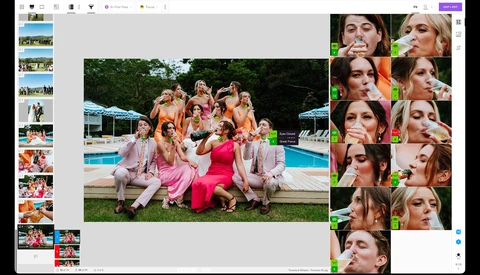
After hearing that “no professional would ever use” a cheap laptop, I decided to test it. I edited an entire wedding, about 2,600 RAW files, on Apple’s budget MacBook Neo and compared it to a MacBook Pro. The twist: I let AI do almost everything.

The Worst Photography Advice Isn’t Wrong—It’s Vague

Every photographer has heard it: use better light, tell the story, know your camera. None of that advice is wrong; most advice is just too broad, and it becomes useless. Are we giving photographers real guidance, or just repeating slogans?

Inside Lexar: How Memory Is Built, Tested, and Trusted

Like many digital creators, I've always justified paying more for quality memory, whether that be SD cards, CFexpress cards, or SSDs. Higher-end memory storage is faster, more reliable, and widely trusted. But I never really stopped to consider why that trust exists. That changed when I recently traveled to China to visit Lexar's facilities as part of their 30th anniversary. Seeing the process firsthand gave me a completely new perspective, and in this article, I will share what I took away from that experience.

Is It the End of Street Photography as a Genre?

Street photography was built on proximity, on the unscripted moment when two strangers briefly shared the same space and the same gaze. In a world where every face is searchable, traceable, and legally accountable, that proximity no longer carries the same meaning.

How to Build a Photography Portfolio From Scratch (Even With No Clients Yet)

Here is the paradox that stops most aspiring photographers before they start: you need a portfolio to get clients, but you need clients to build a portfolio. It feels like a locked door with the key on the other side, and plenty of talented people quit before they figure out that the door was never actually locked.

How to Photograph Reptiles and Amphibians: Ethical Wildlife Photography Guide

Photography has become one of the most important tools for nature conservation. Our images can help us learn about wildlife species and can also inspire our audience to join existing conservation efforts. This is certainly not an easy task, especially when many animal species fall victim not only to myths and fears, but also to what humans label as "ugly" for failing to meet certain beauty standards.

If You're Not Doing Spec Shoots, Here's Why You Should

You'll always hear photographers say that you should create the work you want to be paid for. This is a practice I implemented early on but have refined over the years to help me attract new and larger clients, and that is spec shoots.

Why Your Photos Are Blurry: 7 Causes and How to Fix Each One

You took the photo. It looked sharp on the back of the camera. You got home, opened it on your computer, zoomed to 100%, and there it is: soft. Not artistically soft. Not "dreamy." Just blurry. The composition was right, the moment was right, and the file is unusable.