
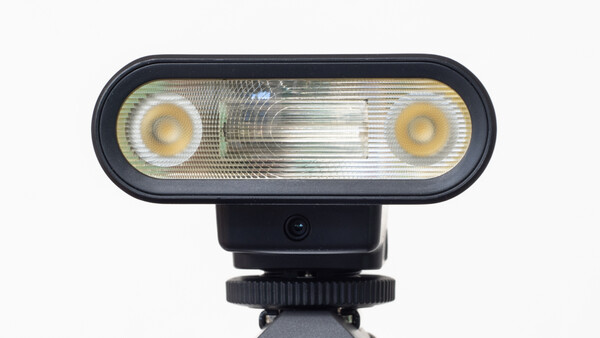
Some good-looking gear released lately is a welcome change from the soulless and ghoulish-looking models that have haunted the camera industry since the dawn of digital photography. This cute flash is designed for those who want to have fun.
If you have read my reviews before, you will know that recent Neewer gear has impressed me. Thinking back to the first time I was asked to review any of their equipment, I was dubious because my only experience with them was several years ago with some very cheap filters. However, what they sent me turned my head. It became clear that they had upped their game and are now aiming at the enthusiast market with very nice equipment. Much of what Neewer produces now meets or is very close to the quality sought by professionals but at a much lower price point than the big names.
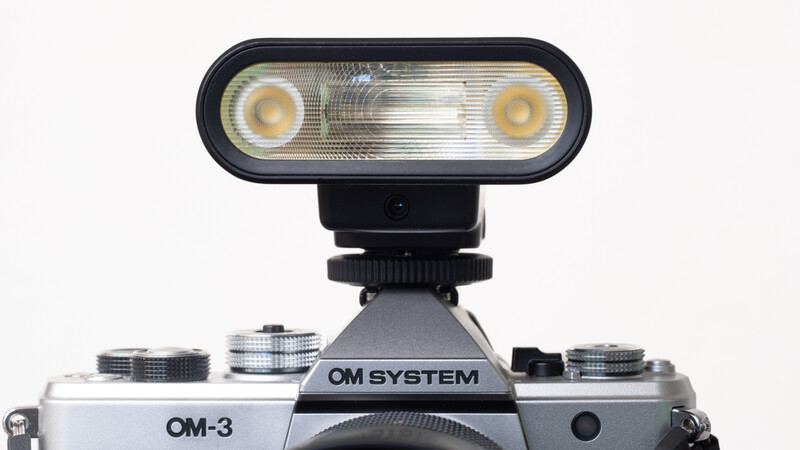
The Neewer Z160 flash surprised me. It seems to target a slightly different market than the semi-professional or avid enthusiast. Instead, I think it is aimed at those who find aesthetic inspiration from their gear and those who want to have fun taking photos.
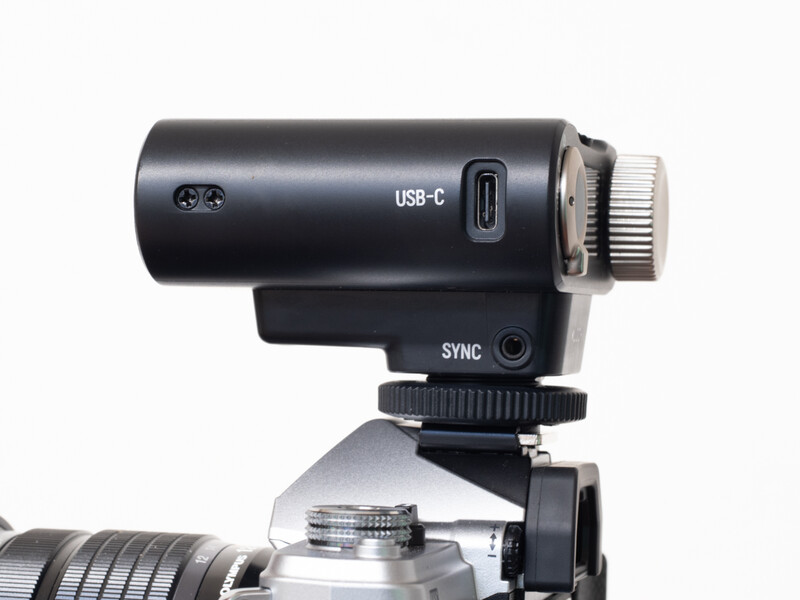
The flashgun's styling would have been comfortable sitting on top of a 1950s shutterbug’s camera. It oozes retro.
Consequently, this will not look out of place when paired with other great-looking cameras, such as OM System’s new OM-3 or some of the Fujifilm models.
Description of the Neewer Z160
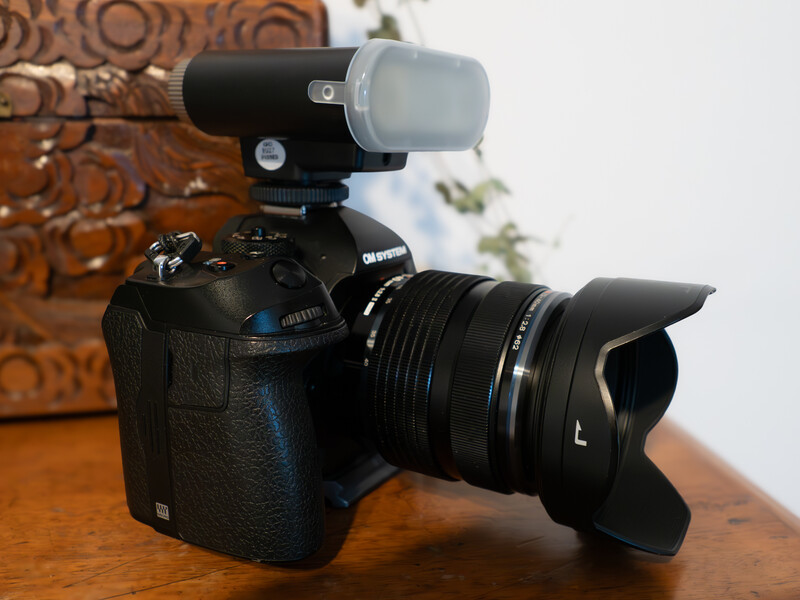
The Neewer Z160 comes in a semi-solid nylon case. Within that case is also a flash stand, a sync cord, and a USB-A to USB-C charging cable. There is also a clip-on diffuser that doubles as a protector for the flash lens.
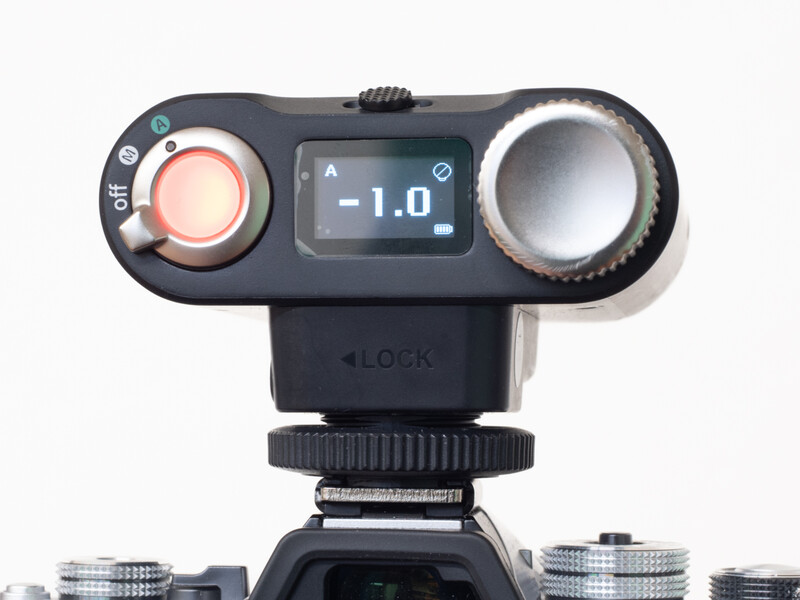
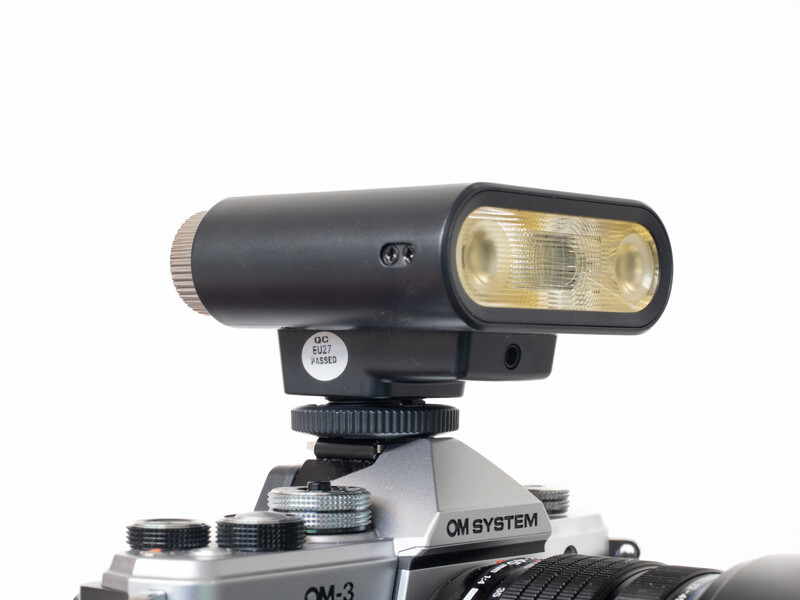
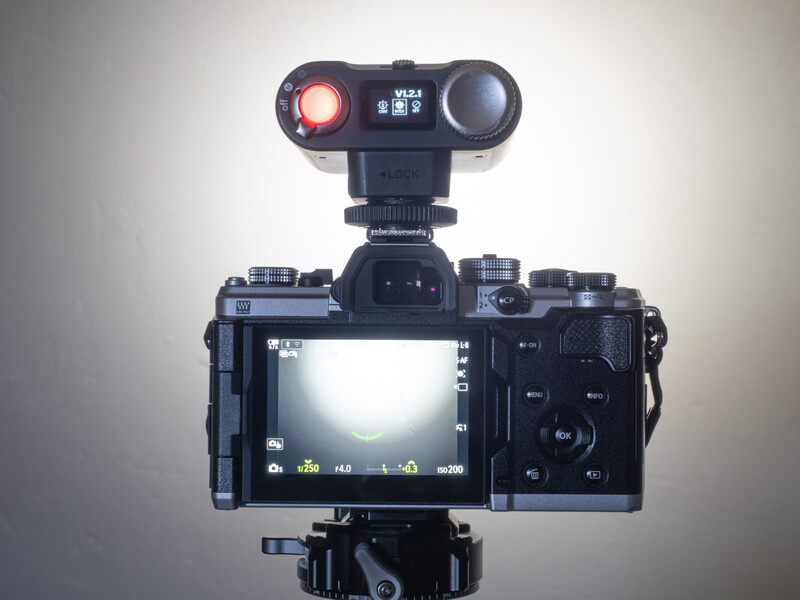
The body of the flash unit is plastic but feels solid. It is a forward-facing unit. At the front is a light meter and the flash unit set between two modeling lights. These are controlled by the adjustment knob on the back, which also controls the power of the flash. Also on the back is the rotary power and flash mode selector. In the middle of that is the flash recycling indicator light. It also has a display screen that shows the power adjustment, the modeling light settings, and other settings.
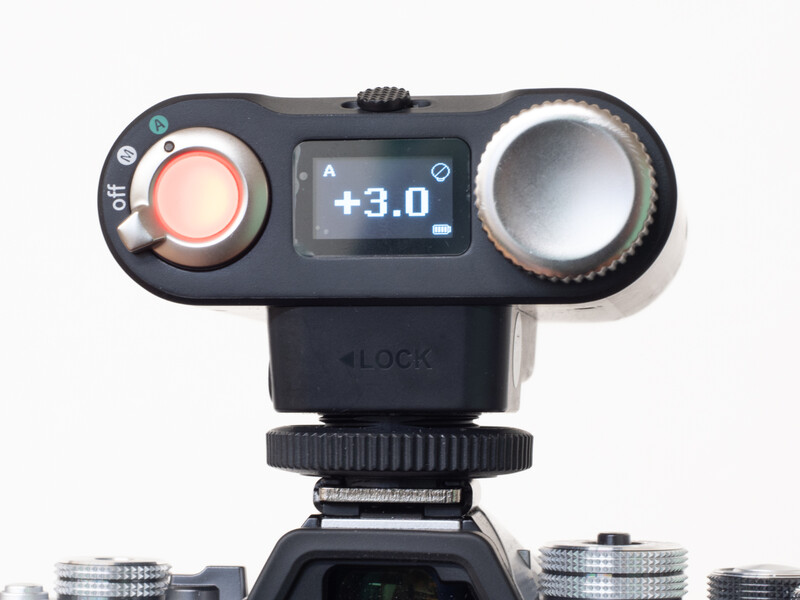
On top is a light sensor and a three-way switch that is only functional in manual mode. In the S1 position, the flash will function as a slave flash, triggered by the first flash of the master flash, thus achieving the same triggering effect as using a wireless trigger. When switched to S2, it will act similarly but will ignore the first measurement flash of a master working in TTL mode. Both of these only operate in manual mode. Switching it to X returns the flash to normal manual mode.
Besides its manual function, the flash can switch to auto mode. This will measure the light and adjust the flash’s power accordingly. You can still change the flash's power in auto mode using the control knob.
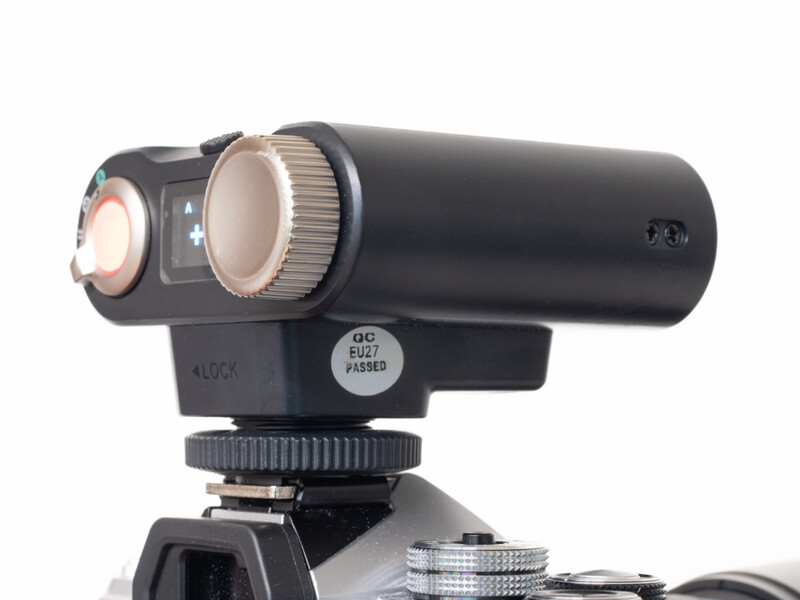
The flash has an internal 1,100 mAh Li-ion battery, providing around 650 flashes at full power. The battery takes about 1.5 hours to charge and will recharge the flash in 1.5 seconds. The entire unit weighs a little under 160 g. It has an operating temperature range from -10°C to 40°C.
With a guide number of 14 (in meters at ISO 100), the flash’s power is not enormous, although it is more than the pop-up flash of most cameras. It delivers 22 Ws at a color temperature of 6,000 K.
In Use
I mounted the flash onto an OM System OM-3, first in automatic mode. Because this is not a dedicated unit and only utilizes one pin to fire the flash, there is no feedback into the camera. In other words, there is no TTL metering. This means that in aperture priority mode, the camera will keep the shutter open for the ambient light, so you may end up with too long an exposure if the light is low, which is often the case when using a flash. Therefore, it works best if the camera is in shutter priority or manual mode. You can then set the camera to the flash sync speed—often 1/200 second or 1/250 second on OM System cameras—and then vary the flash power using the dial on the back, adjusting both that and the ambient light by modifying the aperture.
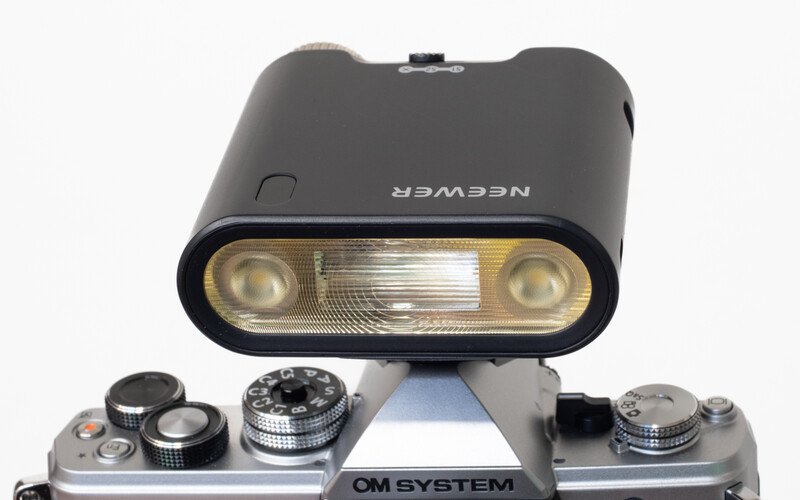
Most flash photos are of people, so I took a series of selfies with different configurations, varying the level of ambient light, and taking shots with the diffuser attached and removed.
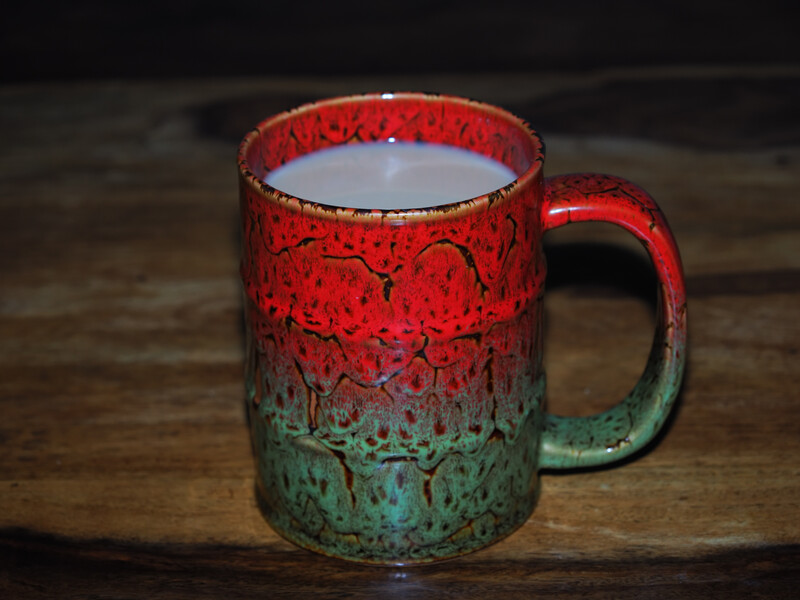
For a forward-facing flash, it did an okay job within the restrictions of all flashes of this kind. Forward-facing flashes produce a specific look. They make harsh shadows and create well-saturated images. It’s not the result a portrait photographer would seek, as the unprocessed results are not always flattering. However, it does produce the typical look one expects from snapshots taken during a night out. Its relatively short reach makes the subject stand out against the background.

I pushed it to its limit, and overheating is possible with over 30 continuous shots. The recycling time extends to seven seconds after that, but the manual warns of potential damage to the flash and advises not to exceed 30 rapid shots. A hot warning icon can appear in the display, and the flash cannot be fired until it has cooled down.

What I Liked and What Could Be Improved Next Time
What I Liked
- Small, light, but robust
- The inclusion of a modeling light is welcome
- The clip-on diffuser works well
- Very easy to change the flash’s power
- Interchangeable between most brands of cameras
- High-performance battery
- Can work as a slave or master flash
- Looks great
- Affordable
- Accessories are good quality
What Could Be Improved Next Time?
- A hinged version would be welcome so that bouncing the flash is possible
In Conclusion
My initial shots with it were a learning exercise. I would never get results as good as I would with my studio gear, but that's not the point of the Z160. This is a flash made for playing with. As I suggested earlier, this isn’t a flash for most professionals. Instead, it is made for casual photographers who want to enjoy themselves. It’s small enough to slip into a pocket or handbag, mount onto a compact interchangeable lens camera, and is easy to use. If the flash is too powerful or too weak, then adjusting it by simply turning a knob is faster and easier than anything I have tried.
I got better results later when shooting images of other people where the subjects were better looking than me and the background was further back. However, for data protection reasons, I cannot include those here.
It’s a retro-designed bit of fun for people who want more than their pop-up flash can deliver but don’t want to make things too complicated. It sits nicely on smaller cameras with a hot shoe and also worked on my old film SLRs. Moreover, it is a relatively inexpensive learning tool for those wanting to discover the joys of flash photography.
Currently, the flash is available on Amazon.



Join the Fstoppers community for free
-
Post comments and join in the discussions
-
Browse the site ad-free
-
Share your work and get featured in the community
-
Compete in the photo contests for fun and prizes
11 Comments
Can you actually adjust the power in photography-logical sense like on i.e. Godox IM30? Meaning in stops, as if you adjust any parameter like ISO by 1 stop one way or another, you are one twist of dial away to compensate appropriately. Also, like with the mentioned IM30, I think using aaa batteries would have been a better choice as you can always have spare ones on you.
Hi Vit. Thanks for your comment. In answer to your question, yes, you can adjust in thirds of a stop. I think 650 shots at full power is a lot, and you can take many more than that using low power. I can't envisage many people wanting to exceed that in a single shoot.
No bounce, no go - a one trick pony. Even my ancient little Nikon SB-400 has a basic ceiling bounce.
Thanks for the reply, Rob. Yeah, it's not going to be everyone's cup of tea. But pivoting hotshoe adaptors are available if that's important to you. I guess the type of person this is aimed at just wants straightforward flash capabilities that are better than the popup flash, if the camera even has one.
I guess that's what the long discontinued Nikon SB-400 is selling for $100-$200 used on eBay. It's not much of a flash, but it's pocketable, far better that a popup, AND it bounces - basic bounce, no rotation, but a bounce.
Does it have a hinge to change the angle of the flash?
Sadly; no wireless remote for off-camera flash, so no off-camera flash. As long as you like a paparazzi look to your photos 😕
Thanks for commenting, Andy. As I mentioned in the article, if the switch is in the S1 position, it functions as an optically triggered flash and can be operated by another flash in this way. So, it does have off-camera flash capabilities. If you want radio wireless triggering, then using a separate trigger unit is necessary.
Here's the real take: These are for hipster Gen Z's who want cool looking bling instead of legit photographic tools.
No off camera doesn't bother me, I have others for that. No bounce of any kind kills it completely for me. Even my ancient and pocket size Nikon SB-400 can do a basic vertical bounce.
I just got this flash. I’m looking forward to trying this out for situations like on the dance floor where I’m often using some direct flash for locations where there is nothing to bounce off of. I like the ability to very quickly manage the output power which on some of my flashes takes a lot more button pushing. I also like the light weight which will also be a nice change from my big flashes.
I hope you enjoy using it. It's a lot of fun. I experimented with one at an evening event with a similar situation, but outdoors. It worked well for me. It will be interesting to hear how you get on with it. Thanks for commenting.