
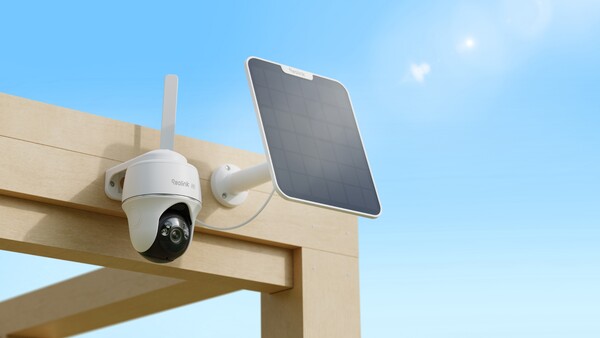
I’ve spent some time testing the Reolink Go PT Ultra to see if it’s a viable option for use as a remote wildlife camera, particularly in woodland areas. With 4K video, pan/tilt control, and 4G connectivity, it looked promising on paper. In practice, the footage quality is superb, but the battery performance in real-world conditions—especially shaded woodland—is a significant limiting factor.
Setup and First Use
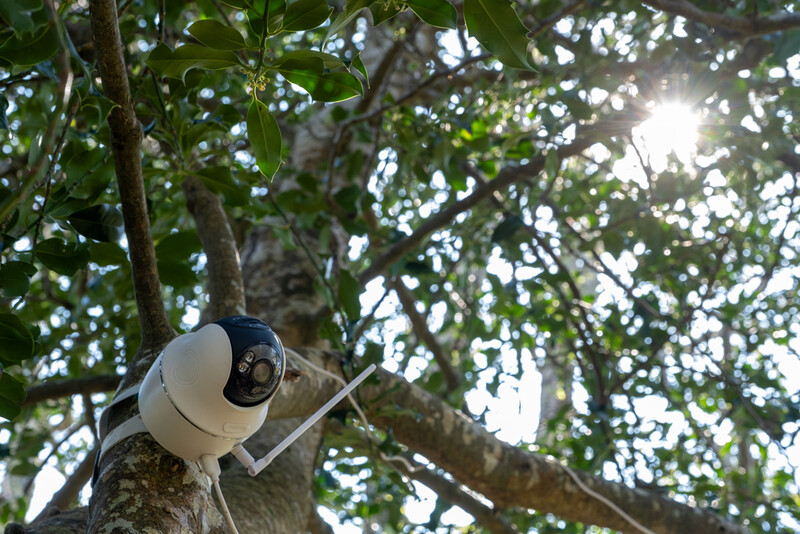
Getting the Reolink Go PT camera up and running was straightforward. I slotted in a basic mobile SIM (€15/month), installed the Reolink mobile app, and was connected within minutes. The desktop app worked fine too—though I had to tweak my VPN and antivirus settings before it recognized the device.
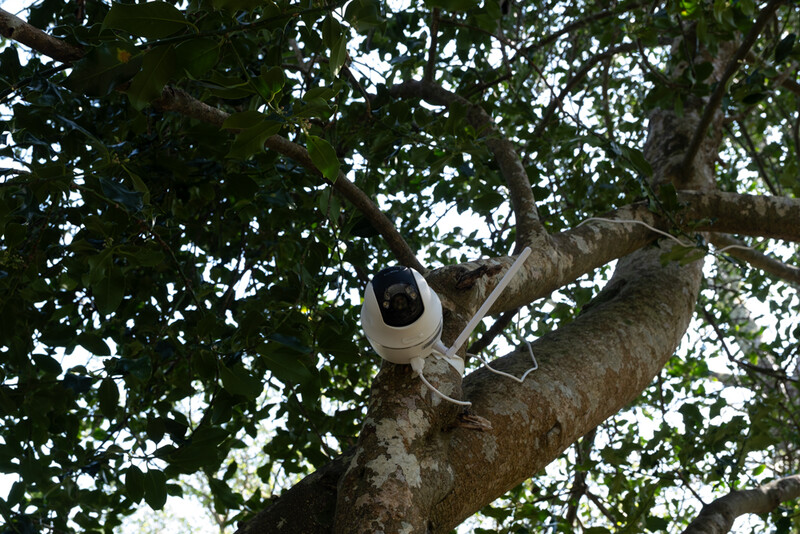
The hardware is solid, but the entire unit is bright white—camera body, solar panel, even the brackets. That’s fine if you're using it for security on a farm or in a yard, but it makes no sense in woodland, where camouflage is essential. It stands out badly unless you're trying to film snow hares or polar bears.
The included straps are too short for larger tree trunks or many natural mounting spots. The permanent mounting bracket is solid, though, so it would work well if you fix it to a long-term structure.

Footage Quality and Features
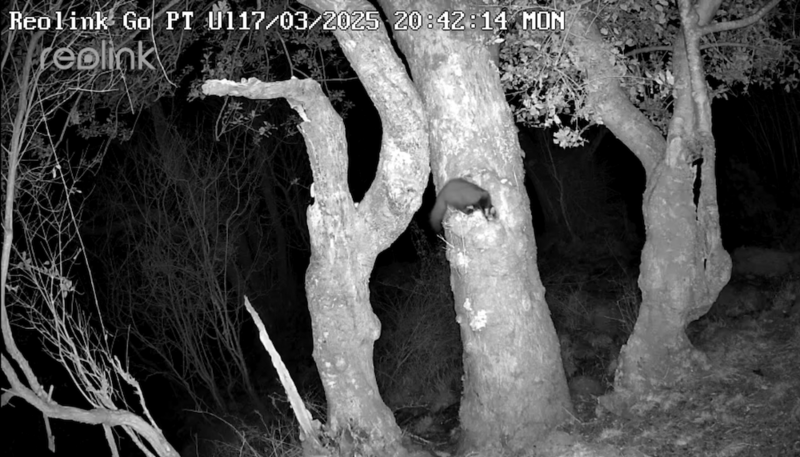
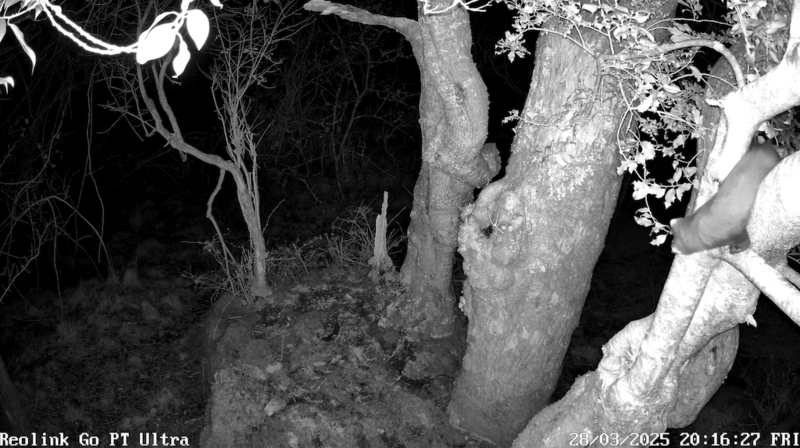
One of the things that impressed me right away was video quality. The 4K resolution is excellent, and the camera's PIR sensor is sensitive enough to pick up small birds. The PTZ (pan-tilt-zoom) control is responsive, and the app lets you record, live view, or grab snapshots remotely.
I also tested the spotlight function, which I initially assumed would scare away nocturnal wildlife. Surprisingly, it didn’t. The spotlight lit up a night scene in full color, and the animals didn’t react at all. That said, I chose to leave the spotlight off to conserve battery life—it’s a power draw I can’t afford in shaded woodland settings.
The alarm and siren features, though, are totally inappropriate for wildlife use. If they go off accidentally, you’ll scare everything off for hours. The menu feels like it was designed for a home security system, not a trail camera.
 Battery Performance and Solar Charging
Battery life is where things start to unravel—especially in the kind of shaded environments where most wildlife activity occurs.
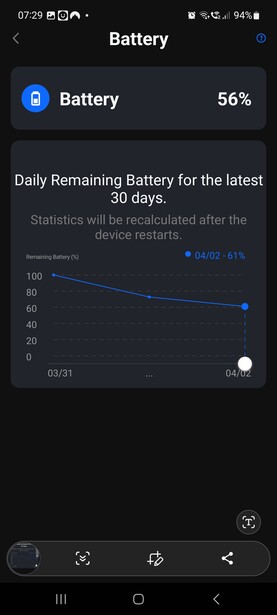
When I fully charged the unit on a Friday, it was already down to 30% by Monday, despite fairly moderate activity. The included solar panel just doesn’t keep up in a woodland environment. I should point out, though, that in open, bright locations, the solar panel can adequately keep the battery topped up. A friend using it on a remote farm, where the camera has clear sky exposure, reports no battery issues—but he only checks it when an alert is triggered.
That’s not the typical use case for wildlife monitoring. In my case—and with two other people I know using the same model in wooded areas—we’ve all had the same issue. They’ve both had to replace the stock panel with much larger third-party solar panels just to get through a few days without needing a manual recharge.
The camera also defaults to auto-record clips of only 30 seconds, likely to save battery. You can manually record longer clips from Live View (up to around 5 minutes), but that only works if you’re actively monitoring it in real time. It’s not a true trail cam setup in that sense.
Reolink themselves have posted a battery-saving tutorial on YouTube, recommending that users:
- Reduce PIR sensitivity
- Shrink the detection zone
- Limit live view time
- Turn off the spotlight and alarm
But all of that feels like trying to patch over a core design issue. I want a camera I can leave in place and rely on, not one I have to keep managing or recharging every few days.
Remote Access and App Performance
The Reolink app—both mobile and desktop—offers a solid set of features. You can choose between three resolution levels (Clear, Balanced, Fluent), set detection zones, and differentiate between humans, vehicles, and animals. There’s good control over the size range of animals it will detect, and the area masking is useful to exclude things like swaying branches.
The only drawback is downloading full video clips—in practice, I’ve only managed this consistently by removing the SD card. Trying to pull larger files remotely has been patchy at best, even on strong 4G. You’ll need a reliable signal, or lag can become a problem during live viewing.
Use Case Verdict
This camera is not a trail camera in the traditional sense. If you're expecting it to quietly sit in the woods for days or weeks at a time without maintenance, it's likely to let you down—unless you rig up a larger solar panel and limit your monitoring habits severely.
That said, in the right conditions, it could be excellent. If you have a fixed wildlife feeding station or a clearing with good sunlight, and you’re OK with it being visible or mounting it high out of reach, it might work well.
Pros and Cons
Pros
-
Excellent 4K video quality
-
Sensitive enough to detect small wildlife
-
Smooth PTZ control
-
Clear night vision footage
-
Spotlight delivers usable color night footage
-
Mobile and desktop apps offer deep control
-
Works well in bright, open conditions
Cons
-
The bright white design is completely unsuitable for wildlife use
-
Short mounting straps limit temporary use
-
Spotlight and siren features are inappropriate in wildlife settings
-
The solar panel is underpowered for shaded areas
-
Battery drains quickly in woodland
-
Default auto-recording is limited to 30 seconds
-
Remote video downloading is unreliable
-
Needs a strong 4G signal to perform well
Final Thoughts
The Reolink Go PT Ultra isn’t a bad camera, but it’s not a true wildlife or trail camera either. It captures great quality footage, offers strong remote access, and performs well in the right conditions—but battery limitations, design choices, and power consumption features hold it back in woodland environments, which is where most wildlife watchers will want to use it.
I could see this working well for a fixed camera setup at a feeding station or as a remote farm security cam, but if your goal is long-term monitoring in forested areas, you’ll need to budget for a larger solar panel and accept the need for ongoing battery management. Be careful where you place it also, as you may need to get access to it to retrieve your 4K footage.


Join the Fstoppers community for free
-
Post comments and join in the discussions
-
Browse the site ad-free
-
Share your work and get featured in the community
-
Compete in the photo contests for fun and prizes
1 Comment
TLDR - Using a security camera as a trail cam doesn't work as well as hoped...