
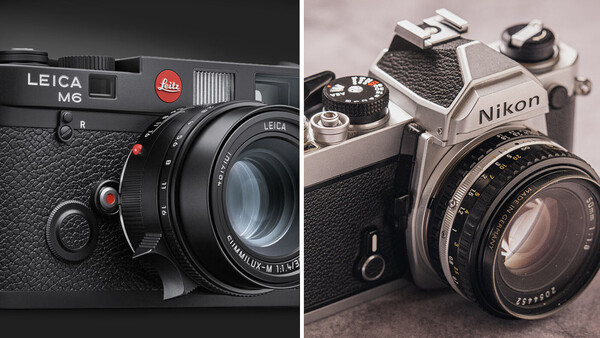
There was a moment recently when I realized the digital noise became too loud. Influencers and brands constantly talking about the latest technology and how it can improve your image quality. Menus became complicated. Firmware upgrades necessary. Increasingly faster eye-tracking and endless focus modes you never asked for. At some point, you start to miss something simpler—something quieter. Something that feels like photography again.
Cue film photography discussions.
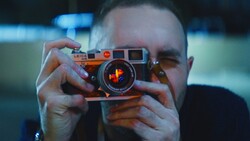
And that's also when people—typically younger people—start telling you that you need a Leica.
They don't mean to be unhelpful. Leica has done a brilliant job convincing Gen Z and millennials that real film photography begins at three or four thousand dollars. That if you don't have an M6 hanging from your neck, you're somehow not doing it properly. Tattoos and cowboy hat optional.
Of course, this is complete and utter nonsense.
If what you want is a camera that teaches you how to see, how to feel, and how to slow down, there is a better answer. A much cheaper answer. A more honest answer.
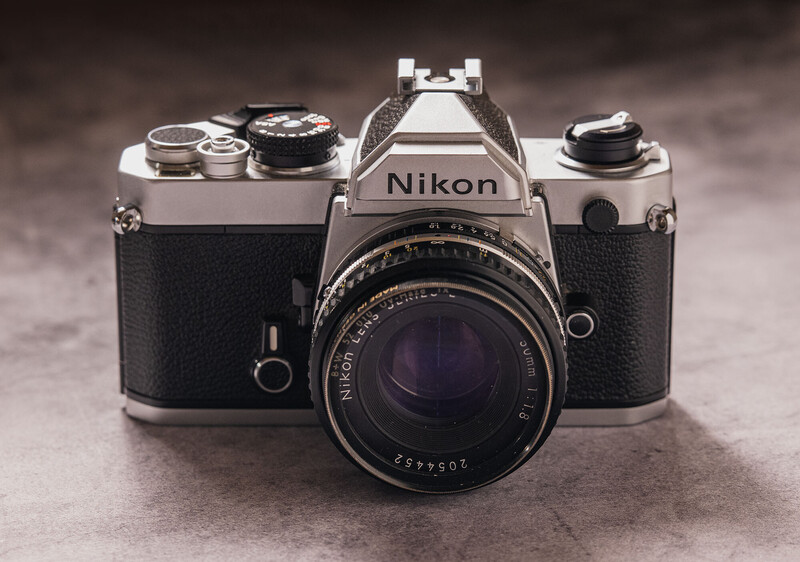
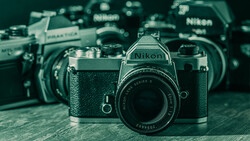
It's called the Nikon FM. Or Nikon FE, F2, EL2… there are a few. But we'll stick with the FM as a perfect example of a good and very affordable film camera for this article.
Yes, there are also great options from Canon, Pentax, Minolta, etc., but I know a fair amount about Nikon and very little about the other brands. Nikon is the best choice if you're discovering film photography for the first time, in my humble opinion. The wide and affordable range of very high-quality legendary lenses is a big part of this.
I should quickly add that I own a couple of Leicas and love them. No, I mean really love them. But I want to give you a no-BS unbiased opinion based on many years of experience, to genuinely help you if you're considering giving film photography a go.
Sit tight, this ride could become upsetting to a few of you…
The FM Is a Tool, Not a Fashion Accessory
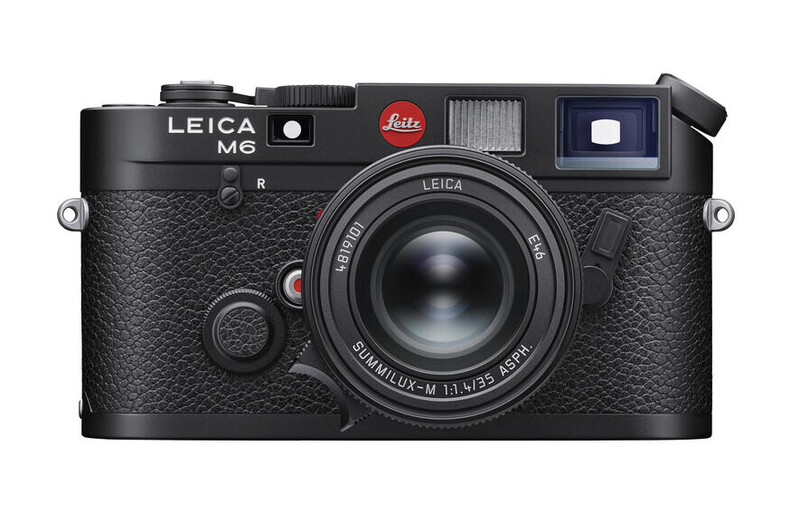
Photographers are choosing the Leica M6 because, thanks to branding and influencers, it's a desirable object. It's a status symbol, a fashion accessory to be shown off. Often blinged up. Before the reinvention of the Leica brand, their cameras were typically bought by street photographers and artists, who favored a compact, quieter, more discreet system and didn't require a wide range of lenses. They started to become the default camera for the rich and famous in the 60s and 70s; even Queen Elizabeth II had one that she was seen using often.
I spoke to a very senior Leica employee who happily admitted Leica these days is positioned and sold as a luxury item. Like an Hermès bag. In fact, Leica has made a few special Hermès edition cameras in the past—the most recent being an M9-P set for a mere $50,000, back in 2012. And some muppet decided to take off the hot shoe to make it look more stylish, rather than functional. At the time of writing this article, this set is available on eBay for $135,000. Yup, you read that correctly.
A Nikon is something else entirely. They were built for people who simply needed their camera to work—to actually use. Photojournalists and press photographers. War correspondents and travelers. People who wanted rugged reliability and lasting quality with a versatile range of lenses and accessories. For this reason, they dominated the 1960s and well into the 1980s.
Both FM and M6 cameras are fully mechanical. A battery is required for the internal light meter, but the cameras can still be used if it fails. No electronics decide when you're allowed to take a picture. You wind it, you press the shutter, job done.
That mechanical honesty changes how you shoot. You stop thinking about the camera and start thinking about light, timing, and framing. That's refreshing.
Why a Nikon is So Much Cheaper Than a Leica
Here's the truth:
Leicas are expensive because of branding, scarcity, and mystique, not because they take better photos.
The classic Leica M6 was launched in 1984, and over two decades approximately 175,000 were made.
The Nikon FM was made in huge numbers. From 1977–1982, over 1,000,000 were made. Nikon sold them to working photographers and enthusiasts, not collectors. There is no luxury tax baked into the price. No red dot. No mythology. Just really good uncompromising engineering.
A clean Nikon FM with a lens often costs less than a new Leica lens hood!
The Image Quality Myth
This is where people get emotional.
They'll tell you Leica has "a special look."
These people need to stop reading Barbara Cartland novels, because film does not care about romance. Film cares about light hitting emulsion.
A film camera is just a box that holds a roll of film and exposes it to light. That's it. The lens is more important than the camera body in terms of a look and image quality.
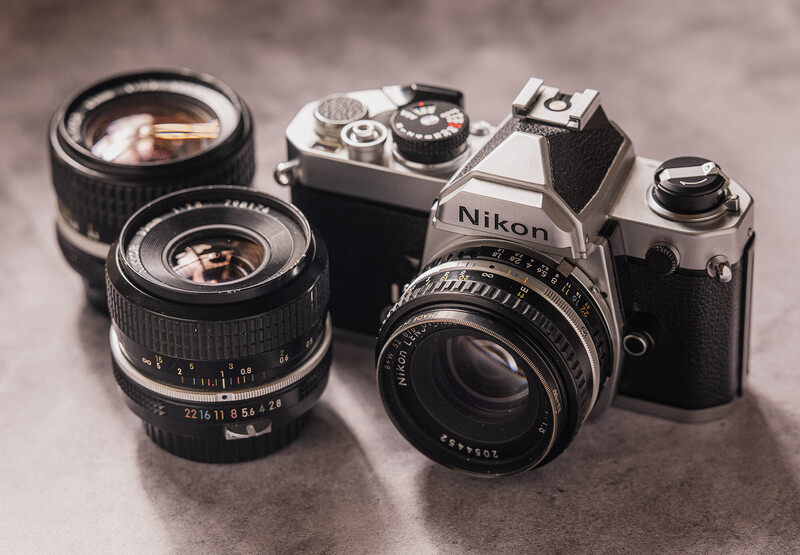
Nikon's manual focus lenses—especially the classic AI and AIS primes—are some of the best ever made. They are sharp when they need to be, gentle when they should be, and honest in how they render contrast. In recent comparison tests I've conducted, you'd be hard-pressed to tell any difference between a Leica Summicron 50mm f/2 compared to a Nikon 50mm f/1.8 Series E. I own both, and this was a digital test. But we're talking film here, a completely different beast.
When shooting film, a Nikon lens will give you just as much depth, tone, and emotional weight as a Leica lens. The only difference is price. A vintage Nikon lens could cost you as little as $50, whereas a vintage Leica lens can run into thousands of dollars.
The idea that a Leica somehow produces a special or unique look is down to good marketing.
I've heard arguments that a Leica will give you better tonal information, better detail, and sharpness. It doesn't.
Why? Film. Film is the limiting factor long before either lens is. A film negative can only hold so much information, and both brands exceed it.
The film stock you use is what plays the important role in the final results. It softens highlights, compresses contrast, adds grain, and color shifts.
Put a Leica Summicron and a Nikon 50mm AIS on cameras loaded with Portra 400, and 99% of viewers couldn't tell which was which.
And the 1% who claim they can are usually lying to themselves.
Leica is Luxury. Nikon is Freedom
A Leica M6 is a beautiful object to own. A Nikon FM is a beautiful object to use.
One asks you to admire it. The other asks you to take pictures.
This is evident from all the photos in photographers' social media feeds of their Leica on a table next to a cup of coffee. Usually sporting a fancy strap or pretty thumb grip. I've not seen any FMs on a table—they're probably in someone's hand on the street, being used to take photos!
If you're stepping into film photography because you want to reconnect with seeing, stripping everything away that's unnecessary to enjoy the process, with that click of a shutter after you've truly decided something matters… the Nikon FM is already perfect.
You don't need a camera that impresses strangers.
You need one in your hands that lets you feel the world.
That's what the FM does. And it does it really well.
Conclusion
I thought back to how much more fun and relaxing photography was back in the film days when I had an old manual Nikon, a couple of manual primes, and a few rolls of film. That was enough to get me back into it.
Please don't get me wrong, I love technological advancements in photography and filmmaking, and it's helped me with my client work no end. Particularly when crisp, sharp images are required. I often get new gear to review here on Fstoppers, and much of what I see is very impressive. But creating great photography isn't about image quality perfection; it's about what we do with the tools we have. How we see, feel, and communicate to the world.
Having the latest gear doesn't matter because it doesn't make us better, but the one big "gear matters" thing—that is often overlooked—is how you feel about the gear you're holding and using. User experience is everything. Leicas do give you a wonderful user experience because of their superb quality, which you can feel when you hold most of their cameras.
If I was asked what the best 35mm film camera ever made was, I would say a Leica M3, without any hesitation. I have one made in 1956, with a Summicron 50mm from the same year. The manufacturing quality cannot be rivaled by modern Leicas or anyone else. It's a thing of beauty, a pure joy to hold, appreciate, and use. It sits in a league of its own.
But the truth is, my all-time favorite Nikon, the Nikon EL2 from 1977 with a 50mm prime from the same era, can give me the same results. And is almost as much fun to hold and use.
If you want to give film photography a try, at least start with spending a few hundred dollars on a nice Nikon FM camera and lens. I've seen too many people, having been influenced by YouTubers, make the mistake of thinking that a Leica M6 or similar is the way to go from the start. They end up not liking the film experience, and are stuck with something they struggled to afford, that's now a paperweight and hard to sell without taking a big loss.
It's much easier to sell a $200 camera on a platform like Facebook Marketplace than a $4,000 camera.


Join the Fstoppers community for free
-
Post comments and join in the discussions
-
Browse the site ad-free
-
Share your work and get featured in the community
-
Compete in the photo contests for fun and prizes
19 Comments
I would say yes. I have used film cameras for many years. But don't forget about the used camera market. You can get an excellent quality Canon T or F series for $100 -300 or Pentax K-1000 for $70-200 From a certain used camera dealer in Atlanta, Georgia. For even less on e-Bay if you know what you're looking for.. And those are excellent and very usable mechanical cameras. BTW, always get mechanical film cameras and avoid the electronic ones.
I agree, Canon and Pentax from the 70s/80s are excellent choices too. Mechanical is always the better option in my opinion. Cheers!
This is a subject that you've been writing about for quite some time... undoubtedly something which has had a profound effect on your outlook on life and photography. I'd love to see some of the images you've made lately with your FM camera. Don't need to be award winning... just seeing what you've pointed your camera toward can be enjoyable. It always seems like the lens is pointed back at ourselves when we click the shutter.
Yes, I want to get away from technology and strip down photography to it's bare basics, which is how I learnt the craft in the 80s. I'll have to find some time to update my website, write about some of my cameras, and share further thoughts, and photos.
I love this thought of yours Ed about the lens is pointing back at ourselves.
My father gave me a used Nikon FM for Christmas in '93 along with a 50/1.8 and a Third Party 70-200/4 and I was on my way. I used that camera to start a career that has gone on for over thirty years. I lusted for an F3HP but I loved that first camera.
What a wonderful gift!
There are a large quantity of old 35mm film cameras still in the market place for very little money. One can be had from reputable dealers for under $200. Best to avoid electronics, as mentioned, but no need to spend thousands on a Leica, when something suitable from Minolta, Pentax, Canon or Nikon is available. Keep shooting film.
Agreed. One camera I've been seeing on Facebook marketplace recently are old Prakticas from the 70s. You can pick one up for as little as $50, including a lens. A perfect camera for learning film photography with.
Praktikas are a problem, and I would suggest caution. They were made in East Germany, and when I sold cameras in a camera store Praktikas were one of the few cameras we always suggested people avoid. They were difficult to work with and parts for repair were notoriously hard to get. There are a couple of brands that were like that. Konica was another one and also Argus. Most lenses from that era were less sharp than the film could resolve, so unless you get a lens that is just bad, you will see little difference between lenses. In my 40+ years working with film I have see one lens that was just a bad lens. It was a Vivatar 28mm and it was just incapable of producing even a semi sharp image.
My dad had a couple of them, MTLs I think, and gave me one when we travelled. I loved it, I learnt photography with it. We never had any issues with them, but that was the early 80s when they were still quite new.
The Prakticas I see for sale are around $50-60, and often come with a Carl Zeiss Jena 50mm f/2.8 lens. That alone makes it worth buying. If the camera dies, you've got a great lens for another camera if you buy an adaptor. Same deal with the Zorkis and the Jupiter 8 lenses they come with. That Jupiter 8 is fabulous. Just toss the camera.
Zeiss lenses are spectacular. That's the lens that is on the older Hasselblads, and they are way sharper than the film behind them. The issue we had with the Hanimex Praktikas was that because the film wind knob reversed the direction of the film feed around the take up spool is that they would jam. We had a local camera repairman so we could get the issue resolved pretty quickly. But sometimes the thing would break and parts could not be gotten since the factories were in East Germany. That may have changed since there is no more east or west zones. That was in the early to mid 70's, so a lot of time has passed.
I used to own Nikon FM's (two, over 30 years). Nice camera, yes. But I borrowed my friend's M3 with an older Summicron 50mm lens and shot a roll of film. Oh my. Much nicer image with "pop." What I saw was clearly better.
Any noticeable difference is from the lens, not the camera itself. A film camera is just a box that holds film, although a Leica is rather lovely to hold and the build quality is evident.
I would argue the FE is the better camera for most, over an FM. You gain Aperture Automatic, the metering and shutter are more accurate, and they're significantly less expensive than an FM.
The only thing the FM has going for it is that it doesn't require batteries. But the FE's batteries can last years and they're some of the smallest batteries money can buy, so get 3 of em and keep them packed in your bag...
I've had and FM and FM2 to try them out, and never did I prefer them over my FE.
I would say both FM and FE are great options. I shoot manually, so not interested in auto modes, but I can see how some might prefer that. The FE is less clunky sounding.
When I had an FM, my dream camera was always the FM2. Never really thought about getting an FE. I don't know why. (Anyway, I'm more into digital now. And primarily use aperture priority.)
FM2 is fantastic! I've seen a few around at a reasonable cost, it's not one of the models that the influencers have hyped and therefore seen a huge price increase. I've always wanted an original F. I keep looking out for one, but the prices have gotten silly right now. Maybe in the future.
A long time ago, I sold my FM for an F2A. It was much more heavy and it didn't take any better photos 😁 so I sold that and bought another FM.
If you buy an F (and you should), I can almost guarantee it'll need a CLA, so factor in another $200-$300 for that.