
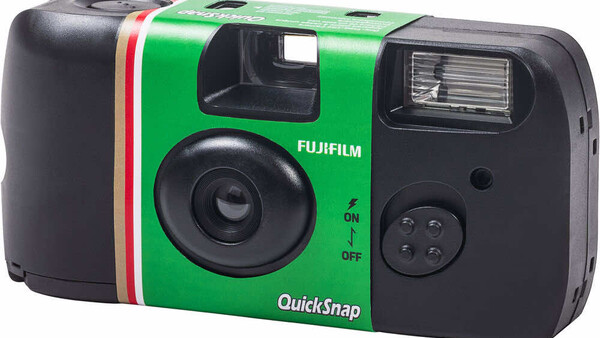
There is a specific feeling that I am going to try to describe, and I am not sure I will succeed. It is the feeling of being nine years old in 1996, holding a plastic Kodak FunSaver on a wrist strap, with the flash recycling and the little red ready light blinking on and off, knowing that I had 27 chances to take a picture and that I would not see any of them until my mom got the envelope back from the grocery store a week later. It is the feeling of a camera that did not ask anything of me and did not promise anything in return, and it is the feeling I have been trying to recapture in pieces ever since.
The disposable camera, the Kodak FunSaver and the Fujifilm QuickSnap of my childhood, is the most honest camera ever made. No autofocus. No meter. No menus. No settings. One fixed focal length. One fixed aperture. One fixed shutter speed. Twenty-seven exposures on a single roll of film already loaded at the factory, and the absolute certainty that you could not preview any of it until the film came back from the lab. The camera did one thing, and it did it whether you were ready or not.
This is a love letter to that camera, and it is also a kind of quiet argument for the cameras that follow in its tradition. Because the disposable is back, the photography industry has quietly started imitating its constraints on much more expensive gear, and I think there is a lesson in all of this about what we actually want from a camera when we are not being paid to be professional about it.
What It Was Like to Shoot One as a Kid
The ritual was the same every time. The camera came in a cardboard box with a film-like graphic on the front, and you tore it open to reveal the plastic body with its oddly textured grip and its little rectangular viewfinder that was not quite aligned with the lens. The thumbwheel on the back had to be advanced before the first frame, and you learned quickly that the wheel required a specific amount of pressure to click into the next position, and that if you did not advance it fully, the next frame would overlap with the one before it and ruin both. It was actually a bit hard to push as a kid, and the plastic teeth hurt slightly as you shoved the wheel into position.
The flash had a switch on the front that turned on a little orange light. You had to wait for the light to stop blinking before you could take the shot, and the recycle time between flash exposures felt like an eternity when you were trying to photograph a friend doing something briefly funny. As it charged, a quiet, high-pitched whine could be heard. By the time the ready light came on, the moment was usually gone, and you took the picture anyway because you had twenty-seven frames and you were not going to waste one worrying about whether the moment had passed.
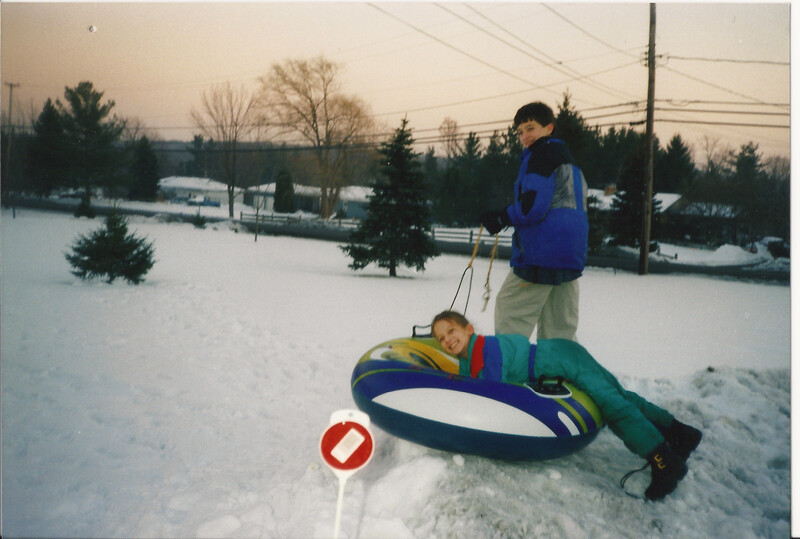
The viewfinder was a joke. You looked through a small plastic rectangle that gave you a rough approximation of what the lens was seeing, except not really, because parallax error meant the lens was seeing something slightly different from what the viewfinder showed, and you would not know until you got the photos back that your subject's head was half-cut-off in the frame. This was normal. Everyone's photos came back with half-cut-off heads. Nobody particularly cared. Nobody cared because the pictures were often not the point. They were just the thing that primed your memory, that started the conversation about the moment they hard captured: "oh my gosh, this is when they brought out the cake with the wrong name!"
The waiting was the part I remember most clearly. You would finish the roll on a birthday or a vacation or a sleepover, and then the camera would sit on the kitchen counter for a week or two before mom and I dropped it off at the photo counter that shared space with the dry cleaners inside the Giant Eagle. Then another week would pass while the film was being processed at some regional lab. Then we'd go back to get the envelope, and I would go through them in the passenger seat of our van, and half of them would be blurry or over-exposed or under-exposed or just wrong, and the other half would be perfect, and nobody would remember which ones we had actually been trying to take when we pressed the shutter.
Why They Came Back
Disposable cameras did not die, exactly. They lost market share to digital point-and-shoots starting in the early 2000s, then lost the rest to smartphones by the early 2010s. But they never fully left the shelves. Walgreens and CVS kept carrying them because tourists still wanted them, weddings still bought them by the case, and a specific kind of person who did not want to worry about their phone at the beach kept picking them up on impulse.
What changed around 2018 or so is that younger photographers, people who had grown up on smartphones and who had never owned a film camera in their lives, started buying disposables on purpose. The aesthetic was the draw: the warm casts from expired film, the heavy flash falloff, the light leaks, the grain, the specific cheapness of the images that smartphones had spent a decade trying to engineer out of their output. The imperfect aesthetic that digital photography had tried to eliminate was suddenly the thing a whole generation of photographers wanted. Instagram filled with disposable-camera shots. TikTok did the same. The FunSaver and the QuickSnap, cameras designed in the 1980s and largely unchanged since, became cool again because they had never tried to be anything other than what they were.
The current FunSaver costs around $20. The current QuickSnap Flash 400 costs about the same. Both are available on Amazon, at Walmart, at most drugstores, and at any photography retailer that still carries film. Both are essentially identical in construction to the cameras I was using as a kid, which is part of why they work. The design was correct the first time. There is nothing to improve.
What Disposables Teach That No Other Camera Can
The constraint of a disposable camera is absolute. You cannot second-guess the exposure because there is no exposure to set. You cannot check your focus because there is no focus to check. You cannot preview the shot because there is no screen. You cannot delete the frame because the frame is gone the moment the shutter closes. You cannot adjust the color because the color was decided at the Kodak factory. You have twenty-seven chances, and each one costs you about a dollar once you factor in the camera and the developing, and the only decision you get to make is whether to press the shutter now or wait for something better.
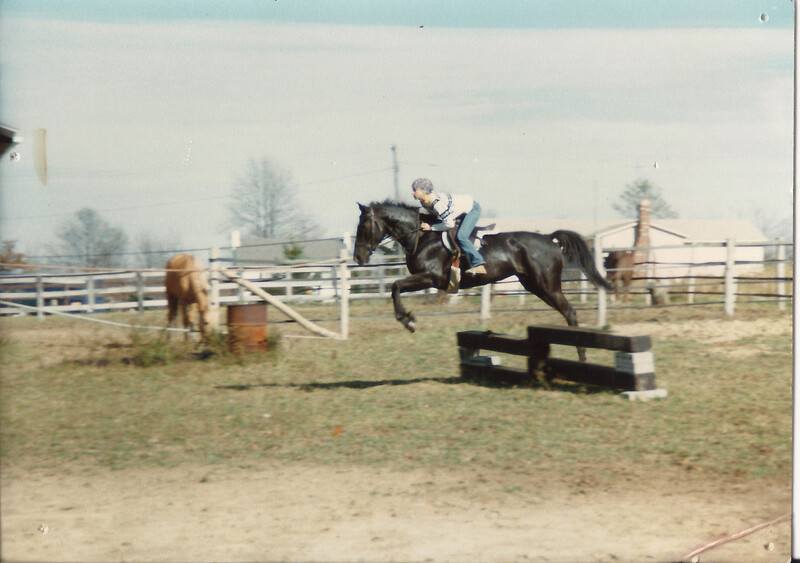
This is a kind of absolute surrender that no other camera asks of you. Even a fully manual film SLR lets you meter the scene and compose carefully. Even a point-and-shoot has some approximation of exposure control. The disposable has nothing. It is just a box with a lens that opens once per frame and closes, and your only job as the photographer is to aim it at something worth photographing and commit.
The lesson is about overthinking. Most of the photographs I have taken over the course of my life are photographs where I overthought the shot. I metered twice, or fiddled with the white balance, or adjusted the composition one more time, or shot the same scene fifteen times in burst mode looking for the best frame, or reviewed the image on the back of the camera and decided I needed to do it again. The disposable does not allow any of that. The disposable says: this is the shot, take it or do not, the next frame is waiting. And it turns out that a lot of the photographs I actually want to keep, the ones that capture something real, are the ones I would have overthought to death if the camera had let me.
Why They Have Become the Wedding Camera of Choice
Somewhere in the past decade, couples started putting disposable cameras on the tables at their wedding receptions. One or two per table, with a little card explaining how to use them. Guests picked them up, took photos of each other at the reception, and dropped the cameras in a basket on the way out. The couple got the rolls developed the following week and ended up with a hundred or more photographs of their wedding that no professional photographer could have captured.
The reason this works is that the unreliability is the point. A guest at a wedding, armed with a smartphone, takes photos that are too clean, too composed, too algorithmically corrected, too identical to every other photo of every other wedding. A guest at a wedding armed with a disposable takes photos that are blurry, badly composed, flash-glared, and often genuinely bad. But they are also loose and real in a way that the professional coverage cannot be. They capture the drunk uncle at 11 PM. They capture the best man's handwriting on a napkin. They capture moments the professional photographer was not in the room for, from angles the professional photographer would not have chosen, with the specific casual framing that only a guest with a disposable would have settled for. It also encourages them to put their phones away.
A working wedding photographer knows that the disposable cameras on the tables are not competition. They are a complement. The couple hires you for the deliberate images, the portraits, the ceremony coverage, the reception set pieces. They put disposables on the tables for the other layer, the one you cannot shoot because you are not at every table simultaneously and because your presence changes how people behave when you are there. The disposables catch what your professional eye would have missed, and the pairing of the two sets of images is what the couple ends up treasuring decades later.
The Cameras That Followed in This Tradition
Here is the part where the industry finally caught up to the lesson. A handful of cameras released in the past two years have taken the disposable's constraints and built them back into digital bodies, and they are the most interesting small cameras on the market right now. Two of them live in my bag.
The Fujifilm X half, released in 2025 at $849, is the clearest expression of the disposable-camera philosophy in a modern camera. It has a Film Camera Mode that locks you into a virtual "roll" of up to 36 frames, refuses to let you preview any of them until the roll is complete, and includes a physical film advance lever that you have to flick between shots. There is no raw support. The images are JPEG only, processed through Fujifilm's film simulations, and committed to the memory card without a preview. The camera has been polarizing in the review press because it is expensive for what it does, and I understand the criticism. I also love mine. The X half is one of the few modern cameras I have picked up and instantly recognized as a descendant of the FunSaver in a way that felt intentional rather than accidental, and the Film Camera Mode specifically is the feature that keeps bringing me back to it. It is one of the only digital cameras that reproduces the specific anticipation of not knowing what the roll looks like until you finish it. The Flashback One35 lives in my bag too, and it does something even more direct. It is a screenless digital camera that mimics the disposable experience with modern sensor technology: no display, no settings, a photo counter, and an honest attempt to recreate the "take the shot and find out later" feeling that the FunSaver pioneered.
These two cameras share a design philosophy that mainstream photography has mostly forgotten, and they are among the first signs that the industry is remembering it. There are also larger cameras doing something similar at a different price point. The Fujifilm X100 series, the Leica Q3, the fixed-lens medium format cameras that have emerged in the past two years. All of them are cameras that have decided to be specifically what they are rather than trying to be everything, and all of them trace their philosophical roots back to the disposable camera's original insight that a camera with fewer decisions to make is often a camera that makes better pictures.
That is what the disposable taught me, and it is the lesson I have been applying to every camera purchase I have made since. Buy the camera that makes you take pictures. Avoid the camera that makes you think about taking pictures. The disposable, in its total absence of features, makes you take pictures better than almost any other camera I have ever used. The great modern cameras are the ones that preserve something of that feeling even as they add capability on top of it. The X half does this. The Flashback does this. The point-and-shoots that have survived are the ones that have accepted that they are not general-purpose tools, and that their job is to be in your pocket when you see something worth photographing.
The great lesson of the disposable camera is not that it produces better photographs than a professional body. It does not. It produces worse photographs, by almost every technical measure, than nearly any other camera I could use. The great lesson is that the photograph is not really the point. The act of photographing is the point, and the camera that gets out of the way of that act is the camera that earns a place in your life, that serves as a marker of a memory. The disposable, for all its limitations, does that as well as any camera ever made. And the $20 it costs is the cheapest photography lesson you will ever buy.


Join the Fstoppers community for free
-
Post comments and join in the discussions
-
Browse the site ad-free
-
Share your work and get featured in the community
-
Compete in the photo contests for fun and prizes
1 Comment
While I'm sure it's waxed and waned, disposable cameras on the tables at weddings long predate the past decade. We had them at ours, and we celebrated our 30th anniversary last year.
I didn't use them often otherwise, since I usually had a "real" camera even if it was only a point and shoot. But there was something amazing about being able to buy a *whole camera* on impulse for not very much, pretty much anywhere. (And for a while, even get it developed that day at a place with one hour service.) It may have been basic, but it was kind of magical.