Fstoppers Original Articles

Exclusive articles and expert opinions written by Fstoppers’ talented team of creative professionals. Here we cover everything from the latest photographic techniques to advice on running a successful photography business, to first hand accounts of working in the photography industry.

Dogma 11 in Photography: A Set of Rules or a Necessary Constraint?

In photography, there's always a tension between control and immediacy. On one side, you have post-production, refinement, and the ability to shape an image long after it's been captured. On the other, there's the raw act of photographing in real time, where decisions are irreversible.

"Dogma 11" sits firmly in the second camp.

The Most Underappreciated Trend in Lens Design Right Now

For roughly two decades, the standard zoom lens started at 24mm. Before that, it started at 28mm or even 35mm. The 24-70mm f/2.8 became the default in the early 2000s and stayed there so long that the starting focal length became invisible. 24mm was simply where a standard zoom began, and nobody questioned it because there was nothing to question.

Who Are the Unique Voices in Street Photography Today?

Street photography has become so codified that much of it now looks like photographers photographing other photographs. That sentence might sound unfair, perhaps even provocative. After all, we are living through a golden age of technical accessibility. Cameras have never been better, books are everywhere, and great work from every continent is just a swipe away. Knowledge that once took decades to acquire is now available in a 20-minute YouTube video. In the first years of the 2000s, we did not have anywhere near the access to information that we have today.

Chasing the Light: Tips for Dramatic Landscapes

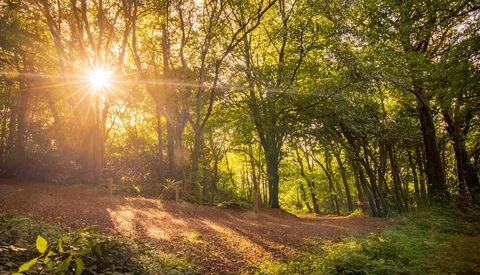
Let's talk about a few careful composition choices I made at sunrise in a quiver tree forest of Namibia, and how good ambient light helped to make the landscape photography shoot successful.

When People Become Props in Street Photography

Street photography still speaks about people, encounter, and human communication in the moment. Much of the practice already uses people differently. People become form, scale, color, silhouette, and rhythm inside the frame. Has the photographer begun to use people as compositional material?

Focus and Sharpness in Landscape Photography: What Actually Works in the Field

Sharpness is one of the first things many photographers judge in a landscape image, but it is also one of the areas that caused me the most frustration when I was starting out. I used to come home convinced that I had captured strong images, only to load them onto a larger screen and realize the foreground was soft or the distant detail was not as sharp as I thought it would be. At the time, I blamed gear more than technique. I assumed my camera or lens was holding me back, when in reality the biggest issue was my process in the field.

Which Is Right for You? Canon's R6 Lineup Compared: Mark II vs. Mark III vs. R6 V

The Canon EOS R6 used to be a simple recommendation. You wanted a full frame hybrid that did a little of everything well without costing as much as the R5, so you bought the R6, and that was the end of the conversation. That clarity is gone. The line has split into three very different cameras that happen to share a name, and choosing between them now means knowing what kind of shooter you actually are. The good news is that once you sort that out, the right answer becomes obvious, because Canon has aimed each of these bodies at a genuinely different person.

The Quiet Argument Against Photographing Everything

There is a reflex most photographers know well. Something happens, a light shifts, a child laughs, a stranger's face catches the sun, and before the moment has fully registered, the camera is already up. The hand moves faster than the thought. 

Hit Rate in Landscape Photography: Why Most Shoots Don’t Work, and Why That’s Normal

There is a moment I've become very familiar with over the years. It usually happens on the drive home, just after I've packed the camera away and the light has long since faded.

It's that quiet realization that nothing from the day will make it into a final image.

No keeper. No portfolio shot. Nothing to process.

For a long time, I treated those days as failures. I would mentally replay decisions I made in the field, question timing, and sometimes even question whether I had missed something obvious. It felt like the effort should have guaranteed a result.

Over time, though, that way of thinking changed completely. Not because I started getting better images more often, but because I started to understand what hit rate actually means in landscape photography, and more importantly, what it doesn't mean.

Why You Should Embrace the Natural Rhythm of Your Photography

When we think about seasons in photography, our minds usually jump to the literal shifts throughout the year. We imagine the specific light of a spring morning or the way autumn color transforms a familiar trail. But we spend so much time obsessing over the conditions outside that we often overlook the shifting climate within our own creative process.

My Amazon Prime Day Pick: The OBSBOT Tail 2

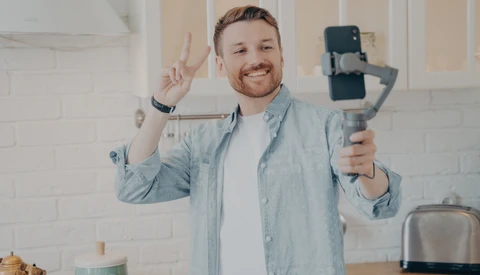
Prime Day is an excellent opportunity to pick up top tech at lower prices, but it can be a little overwhelming when browsing through all the products on offer. The OBSBOT Tail 2 is one such product, which we previously reviewed and recommended, and now has a great Prime Day deal. From vloggers, creators, and YouTubers to live-streaming conferences and gatherings of all kinds, this little PTZR camera is the camera crew that fits in your pocket.

The Decisive Moment Is 74 Years Old. Does It Still Apply?

In 1952, Henri Cartier-Bresson published "Images à la Sauvette," a collection of 126 photographs with a cover designed by Henri Matisse. The American edition, published the same year by Simon and Schuster, was titled "The Decisive Moment," and that phrase entered photography's vocabulary so completely that it has shaped how photographers think about their medium ever since.

AI Can Make a Picture, That Doesn't Make It a Photograph

I still use AI. I'm not out here trying to churn butter by hand in a cabin while yelling at electricity. I use the tools. I test the tools. I've built workflows around the tools when they save time, cut friction, or keep me from doing some repetitive task that makes my soul feel like it got trapped in a printer jam. I'm not precious about it. If a tool works, I use it.

Why Buying New Gear Rarely Makes You a Better Photographer

I love G.A.S. (Gear Acquisition Syndrome). I really do. But being as "stony broke" as I am, I am very restricted in the purchases I can actually make. That being said, if I had the means, I would be up to my eyeballs in all the new shiny things. It's a siren song we all hear: "Surely if I just had this—insert arbitrary piece of gear here—my images would finally be the best."

Everyone Assumes the First Weather Satellites Used Film. The Real Story Is Far Stranger.

When Hurricane Camille filled the Gulf of Mexico in August 1969, satellites watched it the entire way in. The storm came ashore on the Mississippi coast as a Category 5 with sustained winds of 175 mph and a storm surge of more than 24 feet, and it killed more than 250 people. It would have killed many more if forecasters had not seen it coming from space. The Weather Bureau later estimated that the warnings and evacuations enabled by modern tracking and forecasting may have saved as many as 50,000 lives.

The 5 Best Film Stocks for Beginners in 2026

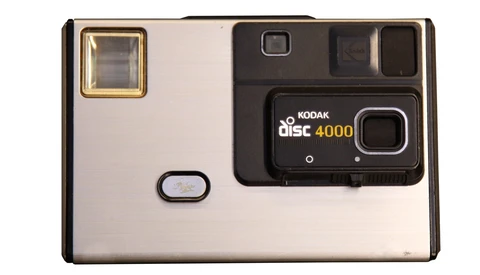
Starting in film photography means making a choice before you ever press the shutter: which film to load. The wrong stock can make a beginner's early rolls frustrating and expensive, full of muddy colors and missed exposures. The right stock is forgiving, widely available, affordable enough to shoot freely, and consistent enough that you learn from your mistakes instead of wondering whether the film was the problem. These five fit that description better than anything else on the market, and between them they cover bright daylight, saturated landscapes, mixed and low light, and the two classic black-and-white looks every new shooter should try.

The 10 Most Important Camera Settings: A Plain-Language Glossary for Beginners

A new camera presents you with hundreds of settings, and the manuals that explain them are written as if you already understand the vocabulary. You do not need to learn all of it. You need to understand about ten settings well, because those ten control almost everything about how your photographs turn out. Here is what each one does, in plain language, without the jargon that makes photography sound harder than it is.

When Experience Stops You From Seeing

Experience makes photographers faster by teaching them to recognize patterns. The same mechanism can also prevent them from seeing photographs that do not fit those patterns.

Should The Camera Industry Make a Left-Handed Camera?

Roughly 10% of the global population is left-handed. That is approximately 800 million people. In almost every industry that manufactures hand-operated tools, those 800 million people can buy a product designed for them. In the camera industry, they cannot.

Understanding ICM, Part Three: Legitimacy

The deficit of trust in ICM stems from an underdeveloped language of results. While we can describe how to move the camera, we lack the criteria to evaluate what has emerged. This final part addresses the legitimacy of formal photographic practice in a culture dominated by "image-as-statement" and examines why beauty, without a named visual task, is so easily reduced to a gimmick.

How I Photographed a France Football Cover in Mexico

What photographing Jennifer Hermoso taught me about editorial photography, trust, and why magazine covers still matter.

Magazine covers still matter.

That may sound almost old-fashioned in a time dominated by feeds, algorithms, and endlessly scrolling images that disappear seconds after being seen. Yet the magazine cover remains a strange exception. It still carries weight, it still feels curated rather than accidental, and perhaps most importantly, it still says something about the image selected to represent an entire story.

Aftershoot Just Became an Entire AI Photography Workflow

AI software for photographers is getting so good that it is both incredible and a little horrifying. Every few months, a new app claims it can save us time, but most of them still only handle one piece of the job. Aftershoot’s newest update feels different.