
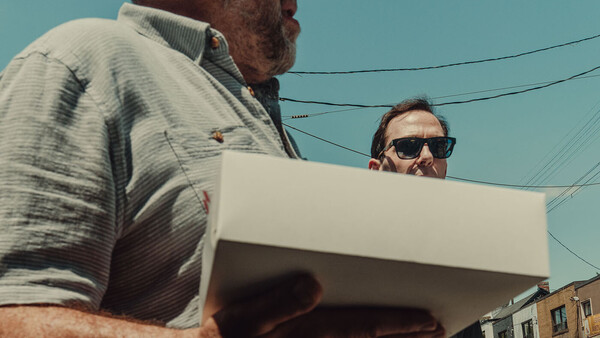
I love street photography; it’s fun. Everyone can do it because you don’t need to spend a lot of money to travel to far-off destinations. If there are no big cities nearby, no worries, we can do it in our local towns. Perfect!
But there’s a problem. Street photography has become so incredibly popular that somewhere along the way, much of it has become so unbelievably predictable. When you scroll through social media, you see the same photos over and over. Someone walking through a shaft of light. A reflection in a puddle. A person framed perfectly in a doorway or walking past a large poster or mural that looks like it’s interacting with that person. Grabbing hand, anyone? And let’s not even talk about the random, pointless photos shot from the hip of people walking toward the camera, doing absolutely nothing.
You know the images I'm talking about. You’re shaking your head in agreement, aren’t you? We've all taken them. I've taken them myself. Actually, I still do, but don’t tell anyone. Shhh…
Let me be clear: I’m not criticizing, I’m just sharing an observation. There’s nothing wrong with any of these types of photographs. I would say—particularly if you’re starting out on a street photography journey—they’re excellent exercises for learning timing, composition, exposure, and the all-important zone focusing.
The problem is, however, that so many photographers don’t get past these kinds of images. They see YouTubers and influencers shoot them and think, “Oh, that’s what I need to do to be part of this cool street photography tribe!” Hey, don’t forget the cowboy hat.
Social media is dictating what street photography should be, what it’s supposed to look like. We’re not exploring the world around us with curiosity; we’re simply hunting for examples of images that platforms like Instagram have programmed us to look for. We’re not discovering and creating; we’re part of a Pokémon scavenger hunt, collecting images like young schoolboys used to collect stamps.
So here’s a question to you, dear reader: Has street photography become formulaic, predictable, and boring, and lost its soul?
I think it has, but I’m interested to know if I’ve simply lost the plot and become a miserable old curmudgeon.
There are not enough discussions that ask questions like, “Where’s the creativity in doing this?” What’s the point? Where’s the why?
Well, I’m asking, “Why is everyone simply recreating images we’ve already seen? Including me!”
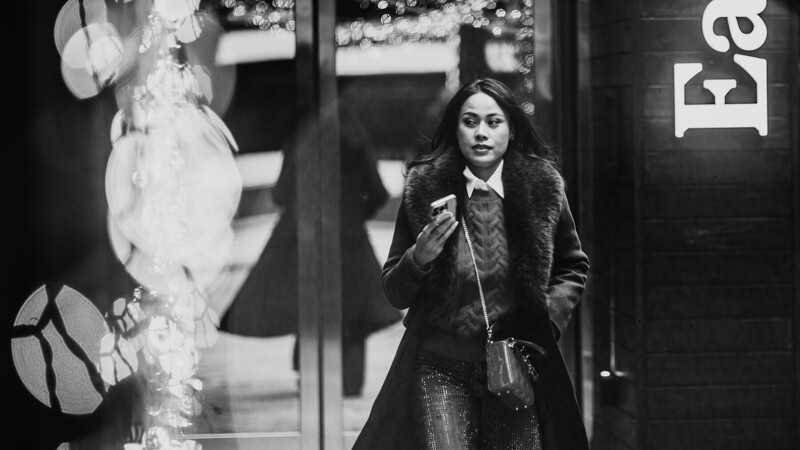
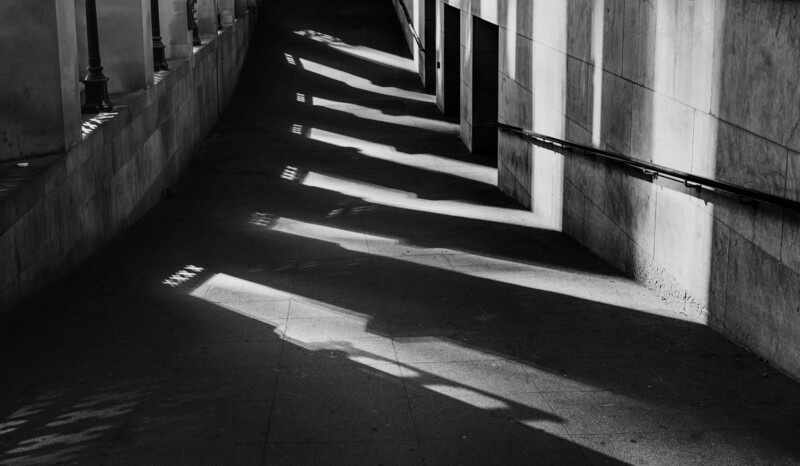
Rules Are for Fools
While I’m on this little rant, another thing that fascinates me are the self-appointed rule-makers who insist street photography must follow a rigid checklist.
I love grabbing my camera and heading out onto the street for a few hours of photographing whatever I feel like. Whatever piques my curiosity. I’ve been doing this for decades, long before many of today’s loudest gatekeepers were even born. But now, apparently, I’m doing it wrong.
I was informed recently by a young photographer, clutching an M6, that you can’t ask an interesting person you meet on a street if you can take their photo—that’s not “proper” street photography. People photos have to be candid.
Those interesting storefronts I love to photograph? Not street photography.
Architecture isn’t street photography unless that shaft of light between the buildings has a person walking through it.
Details aren’t street photography. Nor are empty streets.
You can’t use long lenses; you need to get close to your subjects.
There are more, but I’m bored typing them. You can keep your rules; I’m not interested in them.
Seriously, who even decided this? There are more gatekeepers and know-it-alls in the street photography genre than in any other. Landscape photographers don’t question whether the mountain in your photo is quite tall enough to be technically classed as a mountain, and wildlife photographers certainly don’t tell you the pigeon you shot in the forest spends its spare time in the city eating out of tourists’ hands, so it’s not really a true wildlife photo.
Yet street photographers can spend entire evenings on forums arguing whether a photograph qualifies as street photography or documentary photography or urban photography or environmental portraiture.
Who cares?
The photograph either works or it doesn’t. It’s interesting, or it's not. It tells a story and makes you wonder what’s going on, or it doesn’t.
So do you really need a defined label for that? I don’t think you do.
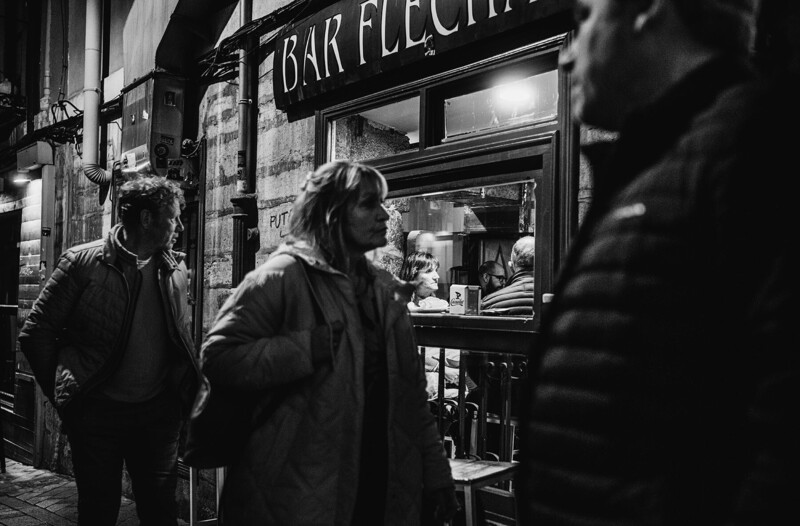
The Best Photographers From the Past Didn't Care About Categories
When I look at some of my favorite photographers, such as Henri Cartier-Bresson, William Eggleston, Tom Wood, or Peter Mitchell, they weren't trying to satisfy a genre checklist.
They photographed what interested them. Sometimes it was people. Sometimes it was architecture, a shopfront, a parked car, an old decaying sign. Their photos were born from curiosity.
Their photographs felt personal because they were photographing what genuinely caught their attention rather than what was expected of them.
What Can We Do to Address Boring Street Photography?
We could stop photographing a stranger walking down the street doing absolutely nothing out of the ordinary. That would be a start.
I do believe documenting everyday life has value, but the thing is, 50 years ago there were only a handful of photographers doing it, and today every other person is a street photographer. Does the insane number of photos shot now mean future generations may find those photographs any less fascinating? I don’t really know, although I would hazard a guess they’ll bore the pants off people after too much looking.
Documentation alone was enough 50, or even 30, years ago. But I don’t believe it’s enough to create a compelling image today. So what is? Well, in my opinion, the best street photographs tend to do at least one of three things:
- They tell, or suggest, a story.
- They capture a well-timed human moment and create an emotional response.
- They impress us with their beautifully considered and skillfully created composition, utilizing shapes, textures, and light.
Sometimes all three happen at once.
Those are the photographs we stop and look at, immerse ourselves in, and the photographs we remember. Those are the photos I prefer to pursue, because they have soul.
Does Originality in Street Photography Even Exist?
The problem with copying visual trends is that eventually everybody arrives at the same destination.
The same focal lengths, the same editing styles, the same compositions. Street photography becomes less about seeing and more about belonging to a cool tribe. I’ve talked about this in my YouTube videos: the desire to belong is understandable; it’s a human trait. We need to belong to a tribe and feel safe.
But belonging and originality rarely occupy the same space.
If your goal is simply to participate in street photography culture, then by all means photograph people walking through beams of light, or someone sitting at a table, seen through a window full of reflections. There's absolutely nothing wrong with that, and it’s a lot of fun. Personally, though, I’m trying to be done with that. I want to move in a direction that builds a body of work that feels personal and unique. How about you?
If you do, then I strongly suggest you don't ask yourself, “What should a street photographer photograph?” and look to social media for the answer.
Instead, start asking:
“What am I genuinely interested in?”
That question changes everything. And to be honest, it’s the same question we should be asking for every genre of photography.
Final Thoughts
These days I find myself increasingly photographing shopfronts, safety cones, signs, architectural details, layers, colors, gestures, small interactions, and the kinds of things many street photographers walk straight past.
Some people will say that's not street photography. And that's fine, because I’m not interested in categories and all that nonsense anymore. They can call it whatever they like. The older I get, the less interested I become in photographing what street photography is supposed to be, and the more interested I become in photographing what the street actually gives me as a place to explore and express my creativity.
I'm interested in making photographs driven by curiosity, photographs that feel honest and personal.
With the enthusiasm and belief that, perhaps, that's where the soul lives.
If you wish to hear more thoughts about street photography, and see me break down some of my favorite recently shot street photos, watch below:


Join the Fstoppers community for free
-
Post comments and join in the discussions
-
Browse the site ad-free
-
Share your work and get featured in the community
-
Compete in the photo contests for fun and prizes
12 Comments
I agree with the sentiment, there is a lot of average street photography out there. My biggest gripe are YouTubers who set up a street photography channel but produce mediocre/bad photos, thus accelerating a downward decline as new photographers hang on their every word. However, I think this could be applied to any genre of photography. Swap 'street photography' with 'landscape photography', or even 'analogue photography', and the same can be said. And I think this phenomenon goes beyond photography.
Of course social media has a lot to answer for, and part of the problem is that new photographers are studying social media photographers only. One guy recently listed the 'best British street photographers' to me, and I hadn't heard a single one of them. They were all young Instagram/YouTube photographers, most producing very average work. A couple of my favourite photographers are Mark Cohen and Bob Mazzer. Have you heard of them?
The ideal solution is for these influencers to spend less time on "What's the best XXX for street photography" content, and more time on studying the greats and encouraging young photographers to go out and buy photography books (there are tons on the second hand market). Channels like The Photographic Eye or Tatiana Hopper, to name just two, are far more rewarding to watch than some self-elected expert with an X100VI and social media savvy post up yet another high contrast photo of someone waking into a ray of light across a zebra crossing. But this then opens up another point of debate: do younger photographers give enough time to watch long-form content or study a photo book? Possibly not. It's far easier to doom-scroll your feed and hit the like button. Unfortunately, that is not a measure of how good the photographer or photo is. It is merely an indicator of how prominent they are on social media.
Thanks for your comment Jamie. The issue with YouTubers making street photography videos, as I have found, is usually when you go out onto the streets you don't find an interesting moment that makes a great photo. But you feel the need to include photos in the video. And those watching think that the mediocre photos being shot and shown are what street photography should be. As you say, this applies to all genres of photography on YouTube.
I agree with you, that we should study books, containing images curated from the masters of the craft, to learn what good photography is.
You said: "I think it has, but I’m interested to know if I’ve simply lost the plot and become a miserable old curmudgeon."
Wow, Simon, if I gave that opening around here, my kids would never stop talking. I'd be enduring geezer jokes for an hour. One other quick response: Whenever I'm the target of someone saying to me: "You need to... " I tune them out faster than a rap song on the radio.
Ooh, did I really write "You need to...". That's unlike me, my apologies.
You were not writing those words as if you were saying them yourself. You used them as an example in your "rules for fools" of what not to say.
It's not so much that street photography has become so popular, the problem is that it is too easy to publish the pictures. If we think about the 20th century street photography heros, most were accomplished professional photographers doing documentary, media or fashion work and their street photography was an outlet for them. Those individuals brought their training and developed eye to the genre that few us that are out in the streets and posting can even imagine.
Why worry, go out and enjoy photography.
Some good points. You've touched on something really important here about professionals doing street photography with years of experience behind them as a creative outlet, versus a kid who just bought a camera for the first time, and decided to call themselves a street photographer. We see more of the latter on social media.
Going out to enjoy photography, regardless of what one photographs, is always the bottom line.
"What Can We Do to Address Boring Street Photography?"
Consider changing the way you look at it. Instead of deciding that a particular type of street, landscape, portrait or any other photo is boring, quit having so much of your impressions of a photograph influenced by social media. Stop scrolling. Every picture has meaning to the person who made it. Nobody sets out to intentionally bore the world with their pictures. The word boring should be deleted from the photographer's vocabulary. You've said many times that you don't particularly care what the viewer thinks of your photos, so why should anyone worry about whether their picture is perceived as boring or not?
Often times, I think about a photo as being timeless instead of new and different. That's why black and white has become so meaningful to me. There's nothing new about it, but it feels good being a part of photography's tradition. I'd feel no regret from making a shadowy, abstract sort of street photo in the manner of Paul Strand, or a photo with a deep black sky made famous by Ansel Adams. I don't mind being a follower, in that regard, instead of an innovator. How can following greatness be all that bad? Innovation is overrated in my opinion.
You claim everybody and their dog is out with a camera shooting street pictures. That sounds like an opinion influenced by the larger world of social media. Social media is not reality. In the community of about 150,000 people where I live, I can count on one hand the number of people I know who feel comfortable enough doing street photography to enjoy it. We used to have someone in our camera club who tried to organize street walks, but they were the least popular club activity of all. The size of the group doubled for drinks at the bar afterwards.
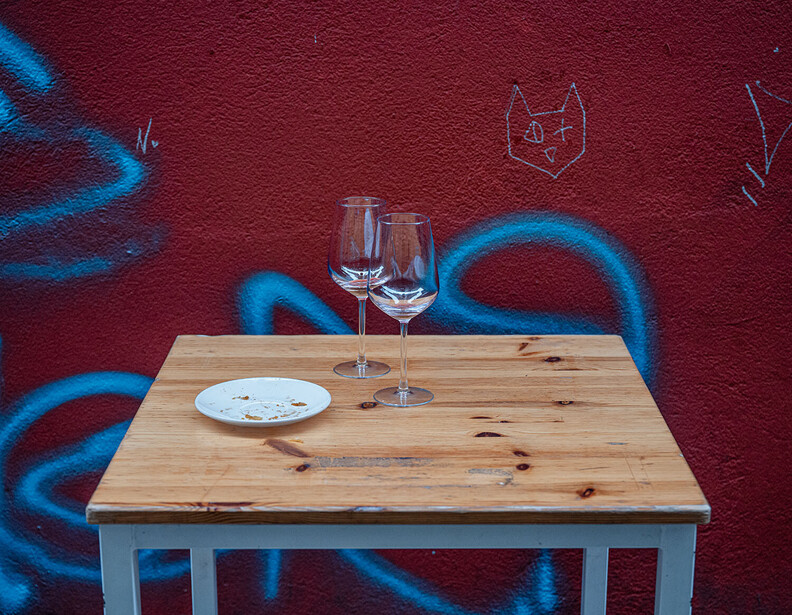
The reason I make that point is because the images you find so boring may not be as common as you think. And I fail to see the logic for why a picture with a person walking toward or away from your camera is any more or less boring than an empty sidewalk cafe table. It's all in the way you see it, not the subject of the photo itself.
'Stop scrolling". Good advice.
I have to disagree with your statement that social media is not reality. It isn't for you or me, but for many people, it is. It's where so many new photographers get their cues to what a good photo should be, based on popular influencers and the likes their images receive. It's a sad state of affairs, but a reality.
Yes, I've said I don't care what people think of what I choose to like, and photograph. The purpose of this article is to make people think about their own photography, and hopefully stop looking at what others are doing to guide them, and just photograph what genuinely interest the instead.
Regarding "boring" photos, I'm going out of my way to photograph what many would consider boring situations and boring scenes now, it's become a fascinating personal project. More on that in a future article.
Since when did street trash shapshots ever have a "soul" to lose?
The point of street trash snapshots (I'm NOT going to honor it by calling it "photography". Photography implies that there are photographs with impact, which street trash snapshots completely lack.) is to say this:
1. I live in a city
2. I feel smug, self-satisfied, and superior that I live in this city
3. I want to show off that I am so cool that I live in this city for social media dopamine hits
4. Additionally, I don't care about consent when I photograph other people, because I'm so special
Yes, I'll die on this hill. Street trash snapshots can go straight to hell.
Your opinion is undoubtedly true for you, otherwise it is universally narrow minded and false. Contrary to your claims, street photography is interesting, it can have impact, and New York is not a disgusting city. And I say that, not as a street photographer (I am not), or resident of NYC, but that I enjoy photographs depicting the human condition. They have the capacity to convey emotions that inanimate objects do not. Not all street photographs are as equally successful in that regard, but that does not render the entire genre worthless. Claiming that street photography is of no interest is simply incredulous.
Most people are naturally curious about other people. It's a human trait. Don't you ever read books about people? They stimulate the imagination. Why should photos of people be less interesting than a flower? And, most importantly... you can't seem to appreciate that someone might make a photograph for the reason that the subject is genuinely meaningful to them, as opposed to the ego driven motivation that appears to rule your world. If you would listen to the authors of these articles who write about street photography, their motivation appears to be driven by human curiosity rather than social media hits. Open your eyes to the sincerity of other people and you might learn something.
This is a very sad and narrow-minded perspective. It appears you clicked on the wrong article, or maybe you just wanted an opportunity to express your anger at the world? As Ed says, your opinion may be true for you, but for most of us, taking our camera out onto the streets provides a wonderful opportunity to capture something special.