
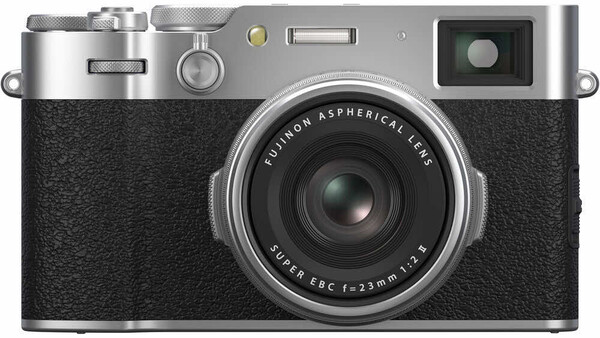
Walk into a department store in Tokyo and you can buy an anti-aging skin cream made by a camera company. It is called Astalift, and the collagen and antioxidant science inside the bottle came straight out of the labs that once kept your photographic prints from yellowing. That cream is one of the reasons Fujifilm is still here and Kodak, the company that arguably invented the whole modern imaging world, spent 2012 in bankruptcy court.
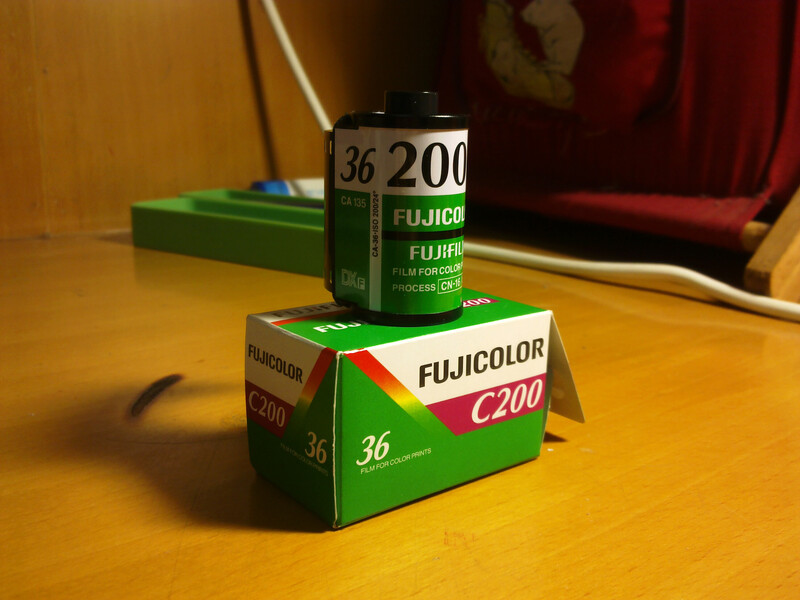
Two companies dominated film photography for most of the twentieth century. Kodak owned America and much of the world; Fujifilm owned Japan and chased Kodak everywhere else. Both watched the exact same wave coming. Digital capture was going to vaporize the film business that paid for everything, and both boardrooms knew it years before the public did. One company reinvented itself into a chemistry and healthcare giant that happens to still make cameras. The other moved too slowly, spent five billion dollars on a pharmaceutical detour that never paid off, and found nothing that earned the way film had. The difference was not luck. It was what each company decided its actual expertise was.
The Camera Kodak Built and Could Not Sell Itself On
The first digital camera was a Kodak invention. In December 1975 a young Kodak engineer named Steven Sasson wired together a Fairchild CCD sensor, a portable cassette recorder, and a fistful of parts into a device that weighed about 8 pounds and captured a single black-and-white image at 0.01 megapixels. It took 23 seconds to write that image to tape and needed a custom playback rig to show it on a television. It was crude, and it was also the future.
Sasson has told the story many times. When he demonstrated the thing to Kodak executives, the response he later gave the New York Times was that it was filmless photography, so management's reaction was, "that's cute, but don't tell anyone about it." That line has hardened into legend, and the legend usually goes: Kodak invented digital, got scared, and buried it. The record is messier than that. Kodak patented Sasson's work, and over the following decades it poured real money into digital, built early professional digital SLRs, and for a while sold more consumer digital cameras in the United States than anyone. Snopes has pushed back on the tidy "they hid it" version for good reason.
The problem was never that Kodak ignored digital. The problem was that Kodak made most of its money on film, chemicals, and photo paper, and every digital sale quietly killed a piece of that. A roll of film was a sale you made again and again. A memory card was a sale you made once. No executive wants to be the one who trades a fat, recurring, high-margin business for a thin, one-time, commoditized one, even when the trade is inevitable. So Kodak moved, and moved substantially, but every yard it gained in digital came out of the business that was paying for the move.

Kodak's Five-Billion-Dollar Detour
When Kodak did try to diversify, the biggest bet was Sterling Drug. In 1988 it bought the pharmaceutical company for $5.1 billion, reasoning that it knew chemistry and drugs were chemistry. On paper that was not absurd, and Kodak really did have deep organic and fine-chemicals capability, which is the same argument Fujifilm would later make about skincare. What Kodak did not have was everything downstream of the molecule: clinical development, regulatory affairs, and a drug sales force are not adjacent to coating emulsion. The fit never materialized. Six years later, in 1994, Kodak dismantled the whole thing, selling Sterling Winthrop's pharmaceutical business to Sanofi for $1.675 billion in cash plus Sanofi's stake in their over-the-counter alliance, and its consumer health business to SmithKline Beecham for $2.925 billion in cash, with Bayer picking up the U.S. rights to its own aspirin name in the shuffle. The cash came close to covering what Kodak had paid. What it did not get back was six years of management attention, or any of the strategic fit it had bought the company for.
It also let go of the one asset that would prove the most durable. On the last day of 1993 Kodak spun off its bulk chemicals arm as an independent company, Eastman Chemical, mainly to shed debt. Eastman Chemical went on to thrive. Today it pulls in many times the annual revenue of the shrunken Kodak that remains. Kodak kept the film and shed the chemistry, and the chemistry turned out to be worth more.
By January 19, 2012, the arithmetic had run out. Eastman Kodak filed for Chapter 11 bankruptcy in the Southern District of New York, listing roughly $5.1 billion in assets against $6.75 billion in debt. A company that had been synonymous with photography for over a century emerged the following year as a much smaller commercial-printing and specialty-chemicals business, one that most people would struggle to describe.


Fujifilm's Second Founding
Fujifilm faced a scarier version of the same math, and it knew it. In 2000, photographic products still made up around 60 percent of the company's sales and as much as 70 percent of its profit. Within a decade, digital cameras had gutted that business almost entirely. Shigetaka Komori, who became president in 2000, later described the loss of film demand as an event that would have flattened the company if it did nothing.
What Komori did was ask a different question than Kodak did. Instead of asking how to protect film, he asked what Fujifilm was actually good at underneath the film. The answer was chemistry, optics, and nanotechnology, the same disciplines that go into coating a strip of plastic with light-sensitive layers thinner than a human hair. He also had a cushion Kodak lacked. In 2001, with Xerox in trouble, Fujifilm raised its stake in their Fuji Xerox joint venture from 50 to 75 percent and consolidated it, folding in Fuji Xerox's document business, which sits today inside a Business Innovation segment that still out-earns healthcare on revenue. In 2004 he launched a six-year turnaround plan called VISION 75, built on structural reform, new growth businesses, and tighter management. The company laid off thousands, wrote down its film infrastructure, and went shopping. Over the following years Fujifilm spent on the order of $9 billion acquiring roughly 40 companies to build out new divisions. Inside the company, people started calling it the second founding.
The most quietly brilliant move was cosmetics. A key ingredient of photographic film is gelatin, a protein derived from collagen, the same protein that gives human skin its structure. Fujifilm had spent 70 years learning how to keep that collagen from degrading, how to stop oxidation from fading a photograph, and how to engineer particles at nanometer scale so an emulsion behaves. Someone realized those are the exact problems a good anti-aging serum has to solve. In 2007 Fujifilm launched the Astalift skincare line, built around the antioxidant astaxanthin and its own nanoemulsion delivery. A film company started selling face cream, and it worked, because it was never really a leap. It was the same chemistry pointed at a new market.
Where the Money Actually Comes From Now
Skincare was the eye-catching example, but healthcare became the real engine. Fujifilm pushed hard into medical imaging, endoscopy, ultrasound, diagnostics, and medical IT, then into drugs. Its Diosynth Biotechnologies arm is now a major contract manufacturer of biologics, the outfit other pharmaceutical companies pay to actually produce their medicines at scale. During the pandemic that infrastructure mattered in ways a film plant never could.
The scoreboard tells the story. In the year to March 2026, Fujifilm Holdings reported 3.36 trillion yen in revenue. Healthcare accounted for 1.10 trillion of that, just under a third, running second to Business Innovation, the segment holding the old Fuji Xerox document business alongside IT services and commercial printing, at 1.17 trillion, with imaging at 627 billion and electronics materials at 456 billion. Operating profit reorders the list entirely: imaging earned the most at 160 billion yen, ahead of electronics at 101 billion, with healthcare and office documents close to tied near the bottom at roughly 64 billion each. So the company that sold you film takes in more revenue from keeping people healthy than from taking pictures, and still earns more operating profit from imaging, a segment that covers Instax and photo printing as well as cameras, than from any other part of the company. That is not a pivot. That is a different company wearing a familiar name.
The Cameras Came Back
The survival story gets more satisfying for photographers from here. Fujifilm did not abandon cameras. It got selective and it got good. In 2010 it showed a retro-styled fixed-lens compact at Photokina, and in 2011 it shipped the X100, a camera with a hybrid optical-electronic viewfinder, real dials, and the look of a 1960s rangefinder. It was the first of the X-series, and it landed with a specific kind of photographer who was tired of black plastic blobs. In January 2012, the same month Kodak filed for bankruptcy, Fujifilm announced the X-Pro1, its first interchangeable-lens mirrorless body, built around a homegrown 16-megapixel APS-C sensor Fujifilm called X-Trans, whose unconventional color filter array let it skip the anti-aliasing filter.
The timing is almost too neat. As one film giant was being processed through a bankruptcy court, the other was launching a camera system that would define a decade of enthusiast photography. Fujifilm leaned into color science, the one thing it had earned over ninety years of making film stocks like Velvia and Provia, and baked those looks into its cameras as film simulations. It gave photographers a digital camera that felt like a deliberate object instead of an appliance.
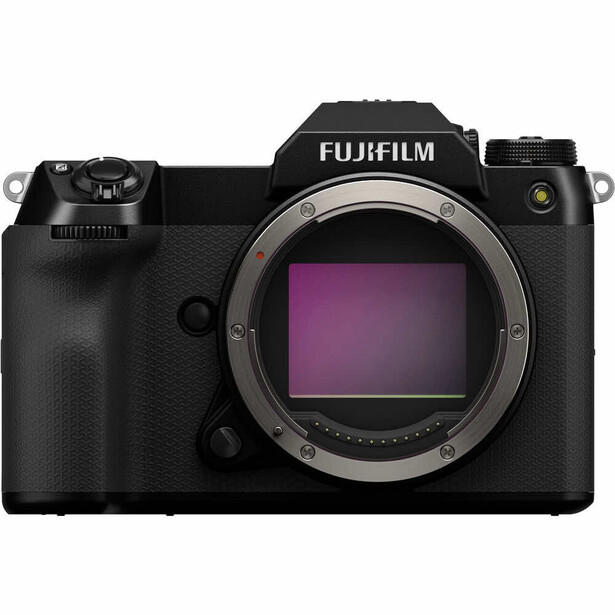
Then in 2016 it went bigger. Fujifilm announced the GFX 50S, a mirrorless medium format camera with a 51.4-megapixel sensor measuring 43.8 by 32.9mm, considerably larger than full frame, and put it on sale in early 2017 for $6,499 body-only. That price was still a lot of money, but it undercut traditional medium format by a wide margin and dragged the format toward something a working photographer could actually justify. The GFX line has grown from there, and a modern GFX body sits near the top of many landscape and studio shooters' wish lists. If you want to see how far the survivor traveled, compare the reach of the GFX 50S against a company that spent 2012 selling off its own history.
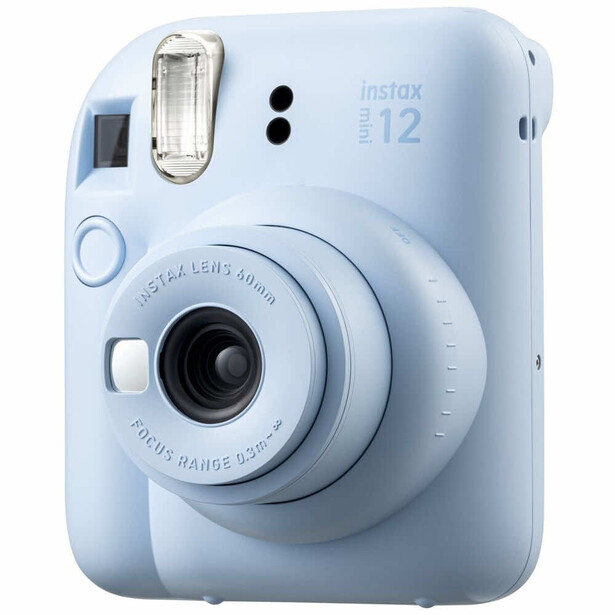
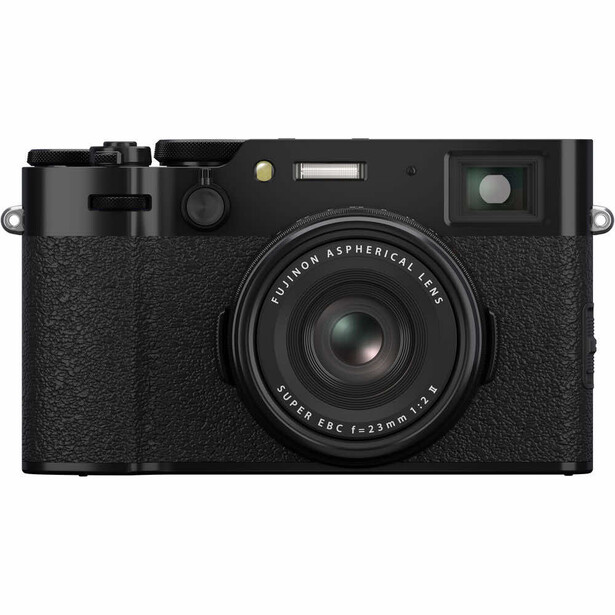
Fujifilm also did something Kodak famously fumbled: it kept instant photography alive and turned it into a cash machine. Instax cameras and their proprietary film packs sell in the tens of millions in strong years and hold the overwhelming majority of the instant-camera market, a razor-and-blades business built on exactly the recurring-consumable model that film once was. Meanwhile the compact that started the comeback has become a genuine cultural object; the current X100VI spent much of its life sold out and trading above list price. A grab-and-go Instax Mini and a high-resolution medium format system now come from the same company that nearly went the way of its rival.
The Lesson Underneath the Cameras
It is tempting to say Kodak died because it missed digital, but that is not quite right, and the neat version does a disservice to what actually happened. Kodak invented digital, saw it clearly, and even sold plenty of digital cameras. What it could not do was find anything that paid the way film had. Kodak did commit to digital, and in 2005, for the first time in its history, more than half its revenue came from digital products and services. It moved into commercial printing on the back of a graphic-arts business it had run for decades, buying Creo, Kodak Polychrome Graphics, and NexPress to carry prepress and plates across from analog. That was a reasonable extension of what it knew. It just never threw off film's margins. And the pharmaceutical years ran alongside the digital build rather than delaying it: Kodak's own milestone list puts the Sterling and Sanofi joint-venture agreement and the introduction of its professional DCS camera in the same year, 1991. Fujifilm decided it was a chemistry company that had been expressing itself through film, and once you frame it that way, cosmetics and biologics and camera sensors are all the same business.
The next time you pick up an X-series body and turn a real aperture ring, you are holding the output of that decision. The company that made it is alive because, when the ground gave way, it was honest about what it actually stood on.
Lead image: Fujifilm X100V. 昼落ち, CC BY-SA 4.0. Source.

Join the Fstoppers community for free
-
Post comments and join in the discussions
-
Browse the site ad-free
-
Share your work and get featured in the community
-
Compete in the photo contests for fun and prizes
2 Comments
Reason #1: management. Kodak tried to stem the digital tide, Fuji embraced it. There's a rumor that the Kodak CEO said "how do we kill this digital thing?"
A very interesting analysis and comparison. Thank you.
Another company that Kodak acquired in pursuit of extending film in the digital era was Applied Science Fiction. They're mostly remembered today for the "Digital ICE" software that can restore faded and damaged negatives during scanning. I don't know if ASF pioneered the IR channel or just built on it. But--and I may be getting a couple of things confused since it's been 25 years--they were also working on an all-in-one system that would develop film, scan the negatives, and return a disk with the scans but no negatives, the idea being that it would be a kiosk in a drug store.
I also vaguely recall--and, again, I may be mis-remembering--that they were working on a digital sensor that would fit inside a 35mm film camera, with the electronics in the cartridge area, to help preserve film SLRs in the digital era. This idea lost steam as DSLRs rapidly decreased in price from $10K to less than $2K. I saw a kickstarter for something similar a year or two ago, for the film SLR resurgence.