Photography Business

Being a great photographer is only part of running a photography business. The other part is knowing how to price your work, attract and retain clients, write contracts that protect you, and build something that's financially sustainable. This section covers the business side of photography with the same seriousness that Fstoppers applies to technique — practical, honest, and grounded in real experience.

Why Leica Is Suddenly the Best-Positioned Camera Company

Nobody buys a Leica because of its autofocus. Nobody chooses a Leica M11-P over a Sony a7R V because the spec sheet wins. The M11-P uses a manual rangefinder mechanism that was functionally mature by the 1960s. In any feature comparison against a modern mirrorless camera, the Leica loses on nearly every measurable axis: autofocus speed, burst rate, video capability, lens versatility, weather-sealing, and especially price-to-specification ratio.

How to Build a Photography Portfolio That Gets You Hired

The gap between "good photographer" and "hired photographer" is almost never about skill. It is about presentation. Thousands of talented photographers never get paid because their portfolio does not communicate what they do, who they do it for, or why someone should trust them with a job. Meanwhile, photographers with less raw ability but a focused, well-curated portfolio book steadily because clients can look at their work and immediately understand what they are going to get.

How to Stop Losing Bookings: 5 Business Fixes That Actually Work

Booking weddings consistently is one of the hardest parts of running a photography business, and most of the problems aren't about your camera or your shooting skills. They're about how you're running your operation, and the fixes are more straightforward than you might expect.

Dear Lisa: I’m Fully Booked and Still Broke

A photographer can shoot 30 weddings a year, stay booked months in advance, and still feel a quiet dread every time an unexpected expense hits the account. This advice-column piece tackles that disconnect — why so many working photographers are fully booked and still broke, and what actually fixes it.

Why Niching Down Is the Single Most Profitable Decision Many Photographers Never Make

The photography business has a strange relationship with specialization. Almost every working photographer starts as a generalist. The first few years of paid work are a scramble: weddings on weekends, headshots during the week, a real estate gig when a friend asks for a favor, some product work to pay for a lens upgrade, maybe a few corporate events when the calendar is thin. The logic is obvious and reasonable. Early in a career, any paying work is better than no paying work, and saying yes to every request builds both experience and cash flow. That first phase of generalist scrambling is not a mistake. It is how most photographers who become successful actually learn their craft. The mistake is staying there.

OM System Survived Its Split From Olympus: Who Expected This?

When Olympus sold its imaging division to Japan Industrial Partners on January 1, 2021, the new company was called OM Digital Solutions. The OM SYSTEM product brand arrived later, announced in October 2021 as the name the company would put on its cameras going forward. Most of the photography press wrote the obituary in advance of either event. The division had been unprofitable for years. Olympus itself, after more than eighty years of making cameras, was exiting the business. Micro Four Thirds had lost the sensor-size argument in the public imagination to APS-C and full frame. The buyer was a private equity firm, not a camera manufacturer. The standard expectation was managed decline: a few years of catalog padding, a thinning lens roadmap, and eventual fade.

Small Town Photographer? Here's Why You're Still Leaving Money Behind

Pricing your work below what the market can actually bear is one of the fastest ways to stall a photography business, and the problem isn't unique to small towns. Whether you're shooting in a rural county or a major metro, the underlying issue is almost always the same: you're pricing for the wrong client.

9 Things I Wish I Knew About Photography Insurance

Insurance is the part of running a photography business that nobody warns you about, nobody teaches you, and nobody finds interesting until the day they need it. Then it becomes the most important conversation of your career, usually too late. Most photographers buy a policy because a venue asked for one, sign whatever the broker recommends, and never think about it again until something breaks, gets stolen, or generates a lawsuit.

Deposits Are Not Optional, and Photographers Who Do Not Require Them Are Working for Free

Most photographers treat the deposit as a courtesy request. A nice-to-have. Something you ask for politely, and if the client pushes back or seems uncomfortable, you waive it because you do not want to lose the booking. This is the standard operating posture of the photography industry, and it is costing working photographers thousands of dollars a year that they never see on their books, because the losses are invisible until you run the math.
The Secret to a Full Calendar Is Answering Your Damn Email

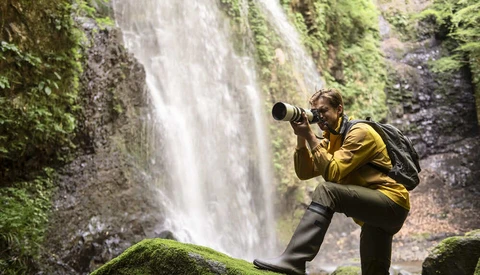
There is an entire industry selling photographers the idea that their booking problems are marketing problems. Instagram strategies, SEO courses, funnel templates, lead magnets, content calendars, brand refreshes, niche-defining workshops, and $2,000 mentorships that promise to "unlock the pipeline." Photographers buy them, implement them, and wait for the calendar to fill. For most photographers, it does not.

Does Turning Your Photography Passion Into a Career Actually Ruin It?

Turning your passion into a career is one of the most debated decisions in creative work, and the answer is rarely as clean as either side makes it sound. Scott Choucino from Tin House Studio has been living this question for years, and his take is more nuanced than the usual "follow your dreams" pitch.

The Problem With How Photographers Talk About Money (and What Needs to Change)

Photography has a money problem. Not a "there is not enough of it" problem, although that is also true for many photographers. A deeper problem: the photography community has developed a set of cultural patterns around money that no other professional industry tolerates, and those patterns are actively suppressing income for everyone in the field.

14 Hidden Costs of Being a Professional Photographer Nobody Talks About

When you calculate whether photography can support you financially, you start with the obvious math: how many sessions per month, times your session rate, equals annual income. That number looks promising. It is also wrong, because it does not account for the dozens of expenses that sit between your gross revenue and the money you actually take home.
16 Signs You Are Ready to Go Full-Time as a Photographer

The question is not whether you are talented enough. Talent got you to the point where going full-time even feels possible. The question is whether the business infrastructure, the financial runway, and the personal support system are in place to survive the transition without collapsing under the weight of it.

10 Things That Go Wrong During a Client Consultation and How to Redirect Each One

The consultation is supposed to be the easy part. The client reaches out, you meet (in person, by phone, or over video), you discuss what they want, you explain what you offer, and you both walk away aligned on the vision, the scope, and the price. That is the theory. In practice, the consultation is where every mismatched expectation, unrealistic budget, and conflicting creative vision reveals itself, and your ability to navigate those reveals determines whether the conversation ends with a booking or a polite "I'll think about it" that means no.

"Fix It in Post" Is Costing You Money: A Mathematical Case for Getting It Right in Camera

You are standing on location. The light is good, the client looks great, and you are in the zone. Then you notice it: an orange traffic cone lurking at the edge of the frame. Your assistant is nowhere to be found. The client is already in position. You could pause everything, walk over, and drag the cone out of shot. Or you could keep the momentum going and mutter those five dangerous words to yourself: "I'll fix it in post."

How to Fire a Photo Client (and When You Should)

Nobody goes into photography hoping to turn away paying work. You spent months (or years) building a portfolio, learning your craft, and figuring out how to convince strangers to hand you money in exchange for images. Every booking feels like validation. Every cancellation stings. So the idea of voluntarily ending a client relationship, of looking at money on the table and walking away from it, feels counterintuitive at best and financially reckless at worst.

How to Land Your First Paid Photography Gig: A Step-by-Step Guide

The gap between "photographer with a portfolio" and "photographer with a client" feels enormous when you are standing on the wrong side of it. You have spent months learning your camera, building a body of work, and editing your images to a standard you are genuinely proud of. But nobody has paid you. And the longer that gap persists, the easier it becomes to convince yourself that the market is saturated, that you are not ready, or that real photographers get discovered rather than having to hustle for their first booking.

If You're Not Doing Spec Shoots, Here's Why You Should

You'll always hear photographers say that you should create the work you want to be paid for. This is a practice I implemented early on but have refined over the years to help me attract new and larger clients, and that is spec shoots.

Are Your Equipment Purchases Really an Investment?

The word "investment" often gets thrown around among photographers whenever new gear is discussed, as if this buzzword gave them some bragging rights that they are somehow financially savvy. It's a comforting word that makes spending large sums of money sound responsible and even borderline strategic. But is your equipment purchase really an investment in the truest sense of the word? Let's take a step back and examine that.

The Real Cost of Photographing Friends and Family

Mixing money and personal relationships is one of the fastest ways to damage both. Nearly half of all photographers say finding new clients is their single biggest challenge, which makes the "start with friends and family" advice feel reasonable on the surface.

Why Mini Sessions Might Be Quietly Killing Your Photography Business

Mini sessions are one of the most common strategies portrait photographers use to fill their calendars, but the math behind them rarely adds up. When you account for travel, setup, shooting, editing, delivery, and client communication, you're often looking at a pittance even before taxes, equipment costs, or software subscriptions.

13 Signs Your Photography Website Is Costing You Clients

Slow load times. No clear pricing page. A portfolio organized by date instead of genre. These are the silent killers that drive potential bookings away before a visitor ever reaches your contact form. Your website might be gorgeous to you, but if it's not converting visitors into inquiries, something is broken, and it's probably one of these things.

How to Thrive by Diversifying Your Photography Income

In 2025, going into 2026, it seems that photography isn't always just enough. You usually need something else on the go or another way to earn income to survive the slow periods between jobs. As a professional photographer for quite some time now, I've developed a handful of income streams built in and around photography that allow me to take a little pressure off when I may not be as booked and busy as I otherwise am.

What Professional Photographers Are Actually Worth in the Age of AI

The question of what a professional photographer is actually worth in 2026, when anyone with a phone or an AI prompt can produce a compelling image, is one that cuts to the core of building a sustainable career behind the camera. If you can't answer it clearly, charging real money for your work becomes almost impossible to justify.

10 Photography Clients Every Photographer Has Had

If you've been shooting professionally for more than a year, you've met all of these people. They aren't bad people. Most of them are perfectly lovely humans who simply have no frame of reference for how professional photography works, what it costs, or why you keep making that face when they ask for "just a few small changes." 

10 Unwritten Rules of Photography That Nobody Teaches You

Photography education has a blind spot. Workshops teach you exposure. YouTube teaches you composition. College teaches you history. But nobody sits you down and explains the professional norms that separate working photographers from talented hobbyists who can't figure out why clients aren't coming back. These aren't technical skills. They're behavioral patterns, the kind of knowledge that usually arrives the hard way, after a mistake you can't undo. Here are ten of them, collected so you don't have to learn each one at your own expense.

Real Estate vs. Architectural Photography: What Pays More

Architectural and design photography pays more than standard MLS listing work and runs on a completely different mindset. If you are tired of tight timelines, volume pricing, and rushing from house to house, this shift changes who hires you and how you get paid.

Struggling With Focus? Here's What Actually Works

Running a wedding photography business with perfectionist habits and ADHD tendencies can wreck your focus fast. If you struggle to finish edits, send invoices, or stick to one task, this will feel familiar.

OWC Express 4M2 USB4 Review: Flexible NVMe Storage Done Right

Getting fast, high-capacity storage has become a bottleneck in modern workflows. Codecs keep getting heavier, and a well-specced internal SSD can feel cramped quickly. Upgrades can be difficult or unreasonably expensive; enter the Express 4M2, a four-drive enclosure that addresses all these issues.

Why Clients Disappear After Seeing Your Prices

When a client says you’re “out of budget” or disappears after seeing your rates, the instinct is to adjust the numbers. That move usually solves the wrong problem.

Stop Booking More Clients Until You Fix Your Average Booking Price

You can hustle for more bookings and still feel broke, especially when every job expands to fill your calendar. This video is about raising your Average Booking Price (ABP) so the same number of shoots can pay like a real business instead of a grind.

Photography as Work: What Defines It Today

Most discussions about photography describe the work of the photographer through technique, timing, or the ability to react quickly. Yet these explanations do not match what actually gives an image its meaning. If the photograph depends on a choice made before the camera is raised, then the work of the photographer is not the moment of capture but the decisions that make the moment possible.

Stop Buying Lenses: 5 Boring Pieces of Gear That Will Save Your Career

You know the feeling. You're scrolling through reviews at 11 PM, convincing yourself that the new 85mm f/1.2 will finally unlock your creative potential. Your current 85mm is perfectly functional, but this one has slightly better autofocus tracking and a new nano-coating that promises reduced flare in situations you encounter maybe twice a year. Before you know it, you're checking your credit card balance and calculating how many sessions it would take to justify the purchase.

What to Do When Clients Ask for Raw Files

When a client asks for raw files, the request can put your deliverables, your editing time, and your reputation on the line. Handle it casually and you risk handing over work that is unfinished, easy to misuse, and hard to control once it leaves your drive.

How Commercial Work Can Replace Wedding Income

There is a common assumption in our industry: if you want to turn your passion into a paycheck, you have to shoot weddings. It’s the "big machine" of the craft. It’s where the money is, sure, but it’s also where the burnout lives. I’ve often sat there—perhaps while nursing a coffee or staring out over a landscape that doesn't pay me back or pay the bills—wondering if there’s a way to be a "professional" without the high-stakes drama of a bridal suite at 8:00 AM.

How to Get Real Estate Clients Without Cold Calling

Landing steady real estate work usually fails or succeeds before anyone sees your images. The difference is whether agents can quickly tell you are reliable, easy to hire, and worth calling back.