




How to Photograph People Who Hate Being Photographed
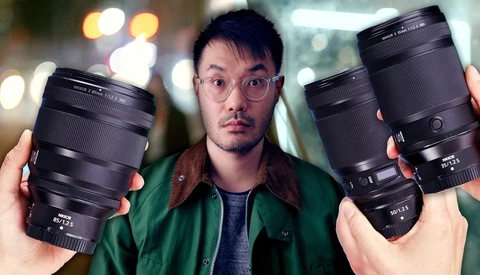
Your best portrait gear does nothing if the person sitting in front of the lens looks stiff and posed. That truth reshapes how you approach every shoot, and it costs nothing to apply.
If you open the main compartment of your backpack during the day, your packing system is working against you. Every zipper you fumble with, every sack you dig through, and every rain cover you peel off burns energy you could spend covering ground.
Getty Images has killed its $3.7 billion merger with Shutterstock, refusing a condition set by UK regulators that would have forced Shutterstock to sell off its entire editorial photography business. The deal had already cleared US antitrust review with no strings attached, which makes the UK objection the single reason two of the biggest names in stock photography will stay separate.
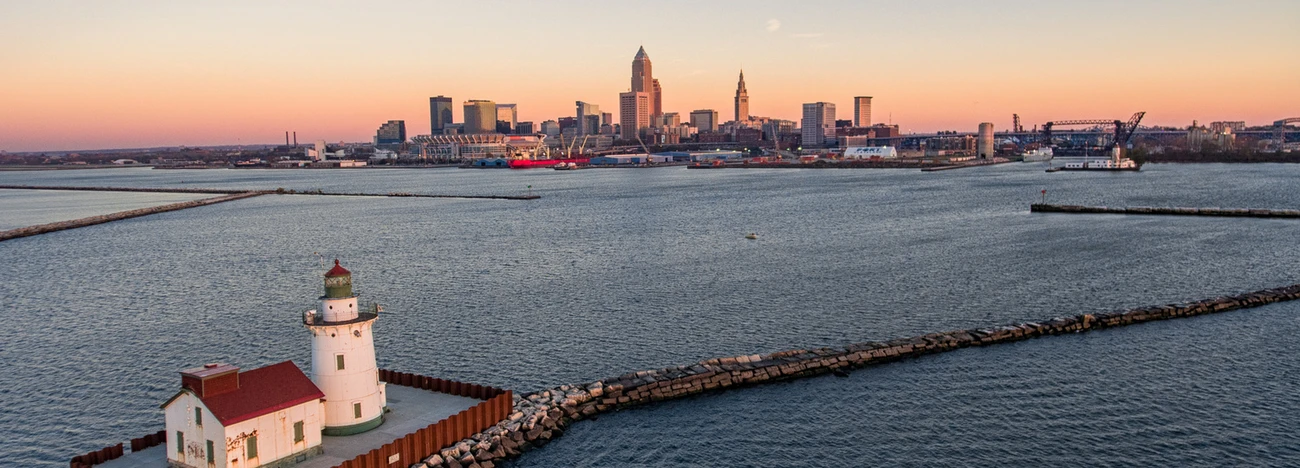
You stand in front of something stunning, a valley flooded with evening light, a city skyline at dusk, and you press the shutter sure you have captured it. Then you look at the file and the magic is gone. The colors are flatter, the sky is blown out or the ground is a muddy mess, the mountain that loomed over you looks like a small bump, and the whole thing feels ordinary. The instinct is to blame the camera, or your skill, or to start shopping for a better lens. Usually none of those is the real culprit. The real explanation is that your eyes and brain were never showing you the scene the way a camera records it, and once you understand the gap between the two, you can start closing it on purpose.
A bull bison charged an older man walking with his grandson at a Yellowstone campground on Friday evening and threw him roughly eight feet into the air. The man landed on his side with serious injuries, and the animal stood over him afterward instead of running off.
A flat, cold panorama of a cloud over farmland becomes a dark, dramatic storm scene using nothing but contrast adjustments. The difference comes down to knowing which sliders control contrast globally and which ones do it locally, then applying each in the right place.
Custom film built to one photographer's exact wishes, coated by hand sounds like a dream, and this version is wildly unusual. Film that behaves this way rejects almost every rule commercial stock follows, and it opens up a way of working most shooters never consider.
GoPro's founder and CEO is lending his own company $20 million to keep it running while its board looks for a buyer. The action camera maker warned last month that it might not survive the next 12 months without new money or a sale.
Meta has removed the feature in its new Muse Image tool that let anyone generate AI images from your public Instagram photos, just three days after switching it on. The company said the feature "missed the mark" and is no longer available.
Landscape photography looks like it should be easy. You find a beautiful place, point the camera at it, and press the shutter. Then you get home, look at the files, and the magic that was right in front of you has somehow drained out of the picture. Almost always, the cause is not your gear or the location. It is a handful of specific, fixable habits that nearly every beginner falls into. Here are 11 of the most common, each with a fix you can apply the very next time you are out.
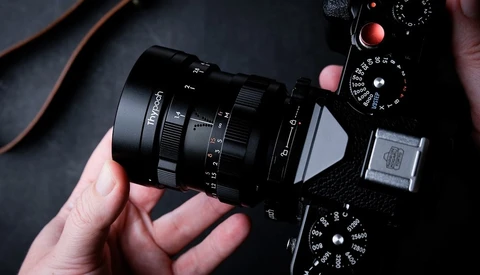
A $200 lens outperforming a Zeiss on corner sharpness is exactly the kind of result that shows how fast optics have moved. The 24mm focal length gives you a wide field of view with just enough drama to hold onto your subject, and paired with a bright aperture, it delivers backgrounds that fall away beautifully.
Most slow shutter advice sends you straight to a tripod, a waterfall, and a 30-second exposure. There's a whole range of shutter speeds you can shoot handheld that keeps part of your frame sharp while letting motion streak through it.
Nikon is reportedly close to launching a fast, high-end, professional APS-C camera, with an announcement expected in the next couple of months. The most talked-about spec is a 45-megapixel stacked sensor in a body built for speed.
Meta's new AI image generator lets anyone pull photos from a public Instagram account and feed them into AI creations, without asking the account owner or telling them afterward. The feature is switched on by default for public profiles.
Roughly 650 freelance photographers who work for The Wall Street Journal have refused to sign a new contract they say could funnel their images into AI training. The fight centers on two changes: who owns the photos you shoot on assignment, and the paper's new right to license those photos to third parties without asking you first.
There is a belief that follows almost every beginner around: that real photographers shoot in manual mode, and that the semi-automatic modes on the dial are a kind of training-wheels embarrassment you are supposed to outgrow as fast as possible. The aperture priority setting even gets the dismissive nickname "A for amateur." It is one of the most persistent myths in photography, and it is wrong. Plenty of working professionals shoot in aperture priority every day and have for decades. The mode you use says nothing about whether you are a pro. What matters is whether you understand what the camera is doing and why.
Editorial work once brought in 75% of one photographer's income. Today it accounts for about 5%, and the shift wasn't forced on him by failure.
Abandoned slate quarries hold more than dramatic scenery. Some hide names carved into stone over a century ago, tools left where workers dropped them, and connections to people you'd never expect.
Twenty years behind a camera can lock you into fixed ideas about what gear delivers the results you want. A long-held bias against Micro Four Thirds is exactly what gets challenged here, and the reasons have less to do with specs than with how you actually shoot.
Three days, two nights, and a mattress thrown in the back of a car with no sheets on it. That's the entire kit behind a photography trip along the northern coast of Spain, where the real work turns out to be finding angles that cooperate.
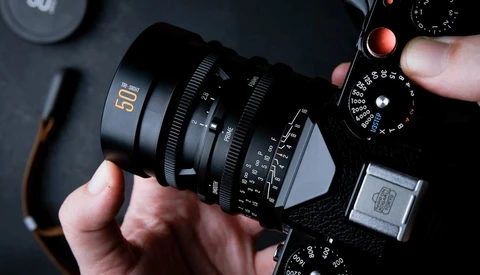
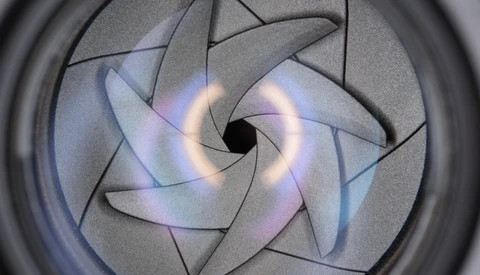
You may have noticed that photography lenses are marked in f-numbers, f/1.4, f/2.8, f/8, while cinema lenses are marked in T-numbers, T1.5, T2.9, and wondered whether they mean the same thing. They are closely related, they sit in the same spots on the aperture ring, and a T-number looks just like an f-number with a different letter in front. But they measure two genuinely different things, and the gap between them tells you something real about how lenses work and why a cinematographer cares about it while a portrait photographer mostly does not.
The Fujifilm X100VI has a cult following for good reason: it packs an optical viewfinder, IBIS, a built-in ND filter, and a fast fixed lens into a body small enough to carry anywhere. The catch is the price, and increasingly, the availability.
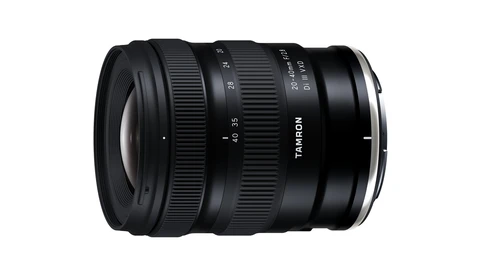
Choosing between a wider aperture and a longer zoom range is one of the most common trade-offs in APS-C lens selection, and few comparisons make that tension as concrete as the Tamron 17-70mm f/2.8 versus the Sigma 17-40mm f/1.8. These two lenses cost $200 apart, share the same weight, start at the same focal length, and yet produce noticeably different results depending on what you're shooting.
Printing the same image twice with two different profiles and then comparing them under controlled lighting is one of the most effective ways to sharpen your eye for print quality. Most people look at a finished print and react to it instinctively, but that habit makes it nearly impossible to diagnose what's actually working or failing.
Lightroom's masking tools are powerful, but there are times when a sky mask or landscape mask alone won't isolate exactly what you need. The intersect tool lets you combine two masks so only their overlapping area is targeted, giving you precise control that add and subtract alone can't match.
Almost every camera has a shutter, the mechanism that controls how long light hits the sensor, but not all shutters work the same way. Among mechanical shutters, there are two main designs, the leaf shutter and the focal plane shutter, and the difference between them is not trivia. It determines how fast you can sync a flash, how quiet your camera is, how big and expensive your lenses get, and which kind of photography each system is best suited to. If you have ever wondered why a small fixed-lens camera can do something your big mirrorless body cannot, the shutter is often the reason. There are electronic shutter modes too, which we will come to, but the mechanical pair is where the story starts.
Choosing between the 7Artisans 135mm f/1.8 and the Viltrox 135mm comes down to a real tradeoff: raw optical and autofocus performance versus a lighter, smaller package at a lower price. At $689, the 7Artisans sits well below the Viltrox, and that gap raises a fair question about what you're actually giving up.
You come home from a trip with hundreds of images, sit down to edit, and feel nothing. It happens more than most people admit, and it usually isn't a gear problem or even a skill problem.
Choosing the right portrait lens for an APS-C system is genuinely hard when the native options are expensive and heavy. The Viltrox 75mm f/1.8 and Viltrox AF 90mm f/2.2 are making a strong case for themselves as lightweight, affordable alternatives for Fujifilm, Sony, and Nikon APS-C shooters.
Window pulls are one of the most technically demanding parts of real estate photography post-processing, and getting them wrong is more obvious than most people expect. A bad blend doesn't just look overprocessed; it can make an entire interior shot read as fake, which undermines the entire purpose of the image.
You frame a landscape with a striking rock in the foreground and mountains on the horizon, you focus on the mountains because that is your subject, and when you get home the foreground rock is soft. Or you focus on the rock, and the mountains go mushy. The scene your eye saw as sharp from front to back will not cooperate. The fix is more than a century old and it is one of the most useful, and most misunderstood, ideas in landscape photography: the hyperfocal distance.
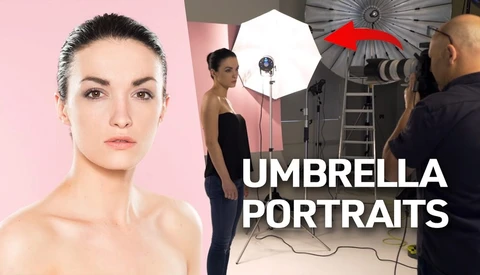
Choosing the right light is one of the most misunderstood skills in portrait photography, and most advice online focuses on the wrong things entirely. Gear and camera settings have almost nothing to do with why certain portraits feel alive while others fall flat.
Choosing between flash and continuous LED lighting is one of the more consequential decisions you'll make when building out a studio kit. The gap between the two has narrowed, but it hasn't closed, and understanding where each system breaks down in real-world conditions changes how you spend your money.
The Canon EOS R6 V is Canon's first full frame V-series hybrid camera, priced at $2,500 body only. It's built for video makers who still need serious stills capability, and at that price, it competes in a range of the market where buyers are making real commitments.
The Leica 35mm Summilux-M f/1.4 ASPH has been around for 16 years, and it was never designed with a 60-megapixel sensor in mind. Whether it holds up on something like the Leica M11 is a real question, and the answer is more nuanced than you might expect.