The advice that stuck with a photographer after 40 years behind the camera has nothing to do with gear or settings. It comes down to a simple rule about what you look at when you're not shooting.
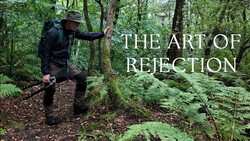
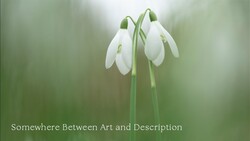
Filmed on a quiet early morning in a Lancashire wood, Simon Booth walks through his approach to intimate landscapes and close-up work while building toward what he calls his four C's: carefully curate the content that you consume. Booth explains that when he started shooting in the 1980s, the images that shaped his eye came from calendars, postcards, magazines, and books, all filtered through photo editors who had good reason to publish only their strongest work. Social media flipped that, feeding an endless stream of low-quality images and AI-generated material that does little to push your own work forward. His point is that the images you feed your brain shape the images you make.
Booth's fix is specific. Rather than relying on YouTube or even photographers' own websites, which tend to sit static for months at a time, he recommends following photographic competitions and signing up for their newsletters. He runs through the ones he tracks for his own genre, including Close-up Photographer of the Year, Nature Photographer of the Year, International Garden Photographer of the Year, Wildlife Photographer of the Year, Natural Landscape Photographer of the Year, British Wildlife Photography Awards, and European Wildlife Photographer of the Year. Because these announce winners at different points across the year, following several means a steady supply of curated, high-standard images rather than a once-a-year dump. Booth is careful to add that the goal isn't to feel demoralized by the benchmark. Over time, the standard sinks in and you start recognizing when you've found something worth shooting.
If you shoot a different genre, this same idea scales easily. A street shooter can follow street awards, a portrait shooter can follow portrait awards, and the principle holds: choose a small set of juried, reputable competitions and let their newsletters do the curating. The reason this works is that competition judging filters out the noise before it reaches you, which is the opposite of an algorithm that rewards volume and engagement. Building a mental library of strong images is a slow, quiet form of training that costs nothing and runs in the background of everything else you do. Treat it like any other habit worth keeping, and check the entry deadlines while you're at it, since entering carries its own lessons for a few pounds.
Between the advice, Booth shoots real examples so you can see the thinking play out. He finds an unusually large cluster of sycamore seeds, the spinning ones many people call spinning jennies, and rather than commit to one tight composition, he pulls back slightly to take advantage of his macro lens and high resolution, then crops in later to isolate the segment he likes. He shoots that frame at f/16, ISO 100, and an eight-second exposure, using a focus stack of five or six images to hold sharpness from the highest seed to the lowest. He later photographs trampled Himalayan Balsam stems fused with fallen sycamore leaves, a concept he's been chasing, shot at f/16, a quarter second, and ISO 100 with the white balance set to cloudy to keep the warm tones alive.
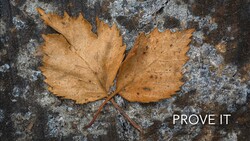
The final section turns into a hands-on exercise you can try yourself. Booth asks you to go find a simple scene of two overlapping leaves and learn to keep the composition clean by going in close, then closer still, until the distracting edges disappear. He steers you toward earthy brown tones over vibrant greens, which he says almost always read better, and he shows why a single leaf shot at this magnification needs a manual focus stack rather than the camera's automatic function. Taking control of your own stacking points, he argues, means knowing exactly what's covered and needing only five or six frames instead of hundreds. He also flags the softening that can creep in between two sharp points even at f/16, which is why he shoots a couple of extra frames in between.
Give the video above a look for Booth's full competition list and the leaf exercise he sets for you at the end.

Join the Fstoppers community for free
-
Post comments and join in the discussions
-
Browse the site ad-free
-
Share your work and get featured in the community
-
Compete in the photo contests for fun and prizes
No comments yet