

Today, let’s get close. Like, really close, with the new Laowa Aksen Ultra Macro zooms.
Oftentimes, the more interesting products to review for someone like me are the products I don’t usually encounter on a daily basis. Most new product launches can pretty much write their own reviews once the specs have been released. And I’ve been shooting long enough to identify a product’s benefit or lack thereof with regard to my workflow inside of a minute. But, as a reviewer, I sometimes get the honor of testing out products outside the boundaries of my daily life.
I am not a macro guy by nature. I like macro shots. I'm just not often commissioned to do them. So my skills in the area are advanced enthusiast at the very best. But, as visual artists, we are spoiled for choice when it comes to arrows we can release from our quivers. In the last couple of years, I’ve been growing more and more fond of the new lenses being released from the Chinese manufacturer Laowa. I’ve gotten to test and review multiple lenses across their line, from larger cinema glass to more special-use-case lenses built with specific tasks in mind. Well, the Aksen 45mm f/2.8 1-5X Ultra Macro APO and the Aksen 17.5mm f/1.7 5-10X Ultra Macro APO fall into that latter category. A unique set of close-focus zooms that allow for a more efficient workflow and a wider variation in approaches than traditional macro lenses on the market.
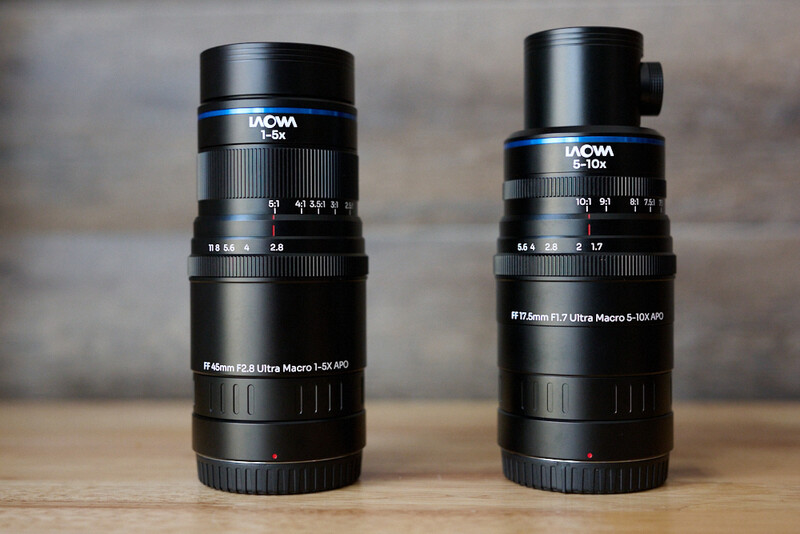
So, first off, what are these lenses all about? Well, as you can probably surmise from the title, these macro lenses are for getting really close to your subjects. Really, really close. We’re talking microscopic detail of a fly’s eye close. But that, in and of itself, is nothing unique. What gives these lenses their added pizzazz is that they are parfocal zooms that, combined, give you everything from 1:1 to 10:1 magnification without constantly readjusting your camera position.
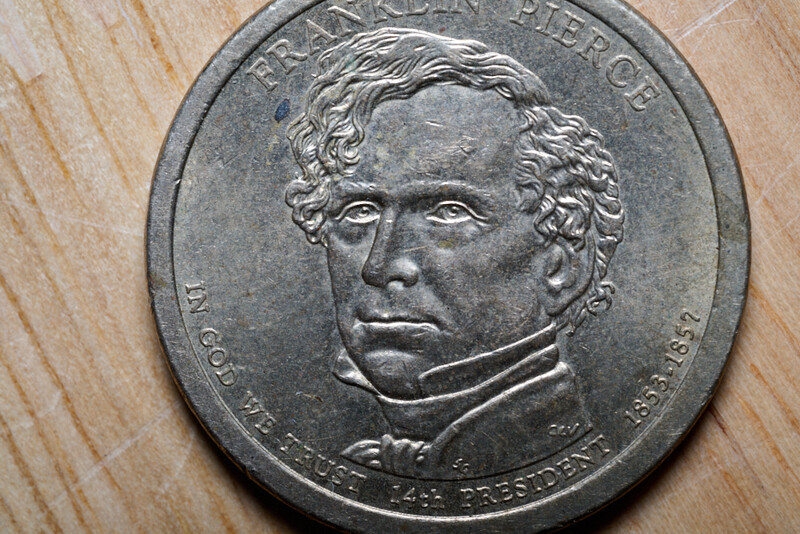
The way this works is that each lens has a set working distance. In the case of the 17.5mm, that’s ~22 mm. In the case of the 45mm, that’s ~40 mm. You don’t pull focus like a normal lens. Instead, that focus distance is fixed and you move your camera relative to the subject to achieve a sharp image. In my own tests, that amounted to setting up my overhead camera to focus on this dollar piece featuring the 14th U.S. president, Franklin Pierce. Not my favorite president, but, hey, a dollar is a dollar. So I laid it flat on the table and lowered the camera down until I was able to achieve focus. That’s where the zooming comes in.
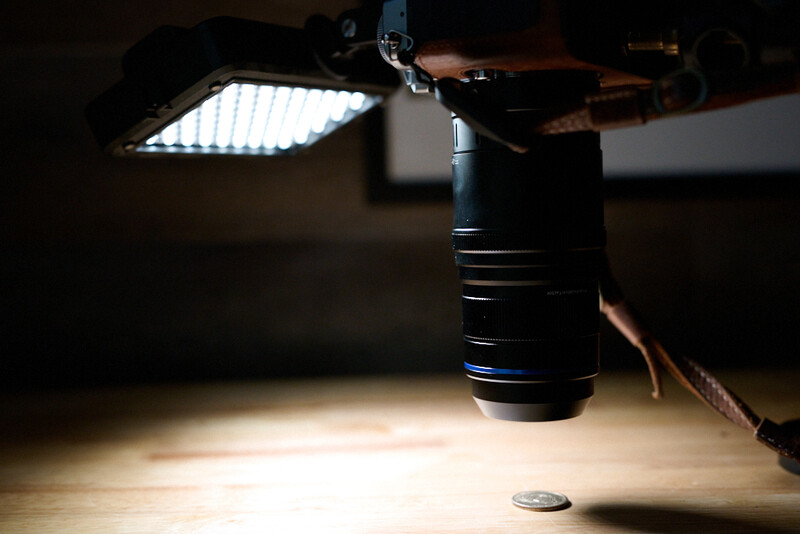
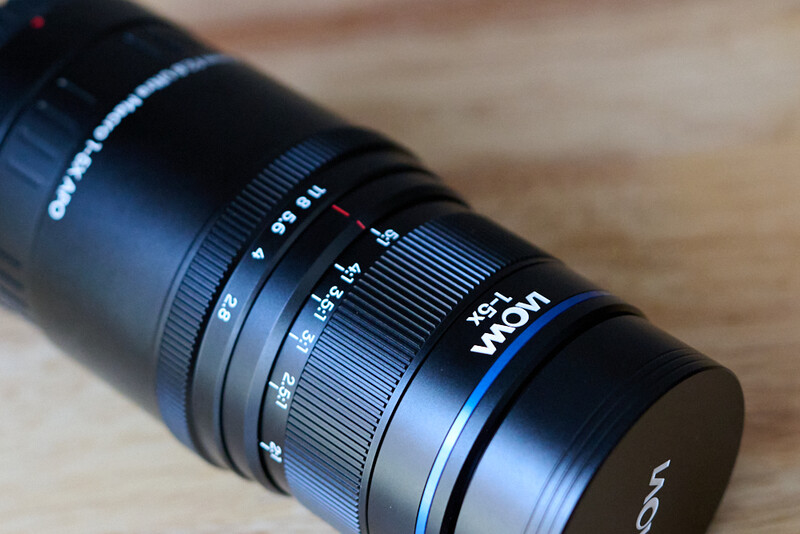
Once set to 1:1 and in focus with the 45mm, I could then gradually move in from 1:1 to 5:1 without moving the camera. The 17.5mm took me the rest of the way from 5x to 10x. So, functionally, I set the camera once, then simply turned the zoom barrel to go in closer. Because both lenses are internally zooming, you don’t have to worry about the extended reach meaning an extended barrel that might collide with your miniature subject.
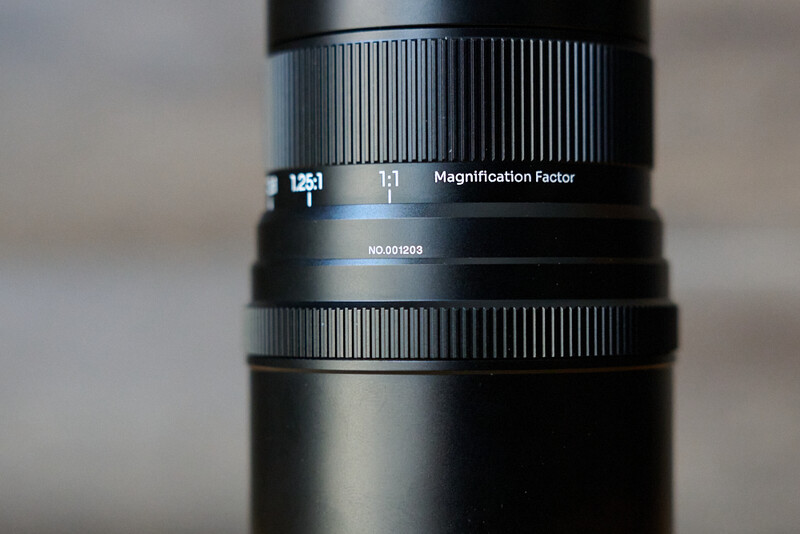
I will admit that getting the exact right height for the camera was its own challenge. Mostly because I’m not set up gear-wise to do a lot of overhead macro work. Not that you have to shoot in that orientation, by the way. In fact, these lenses are so light that handheld is a legitimate option. But, in this particular case, overhead was just the concept I came up with. It did take a bit of finagling for me to set it up initially, but once set, moving through the various zoom ranges was a breeze. The amount of detail I could capture was excellent. Everything from a tight 1:1 frame to more of a cool abstract image of Mr. Pierce.

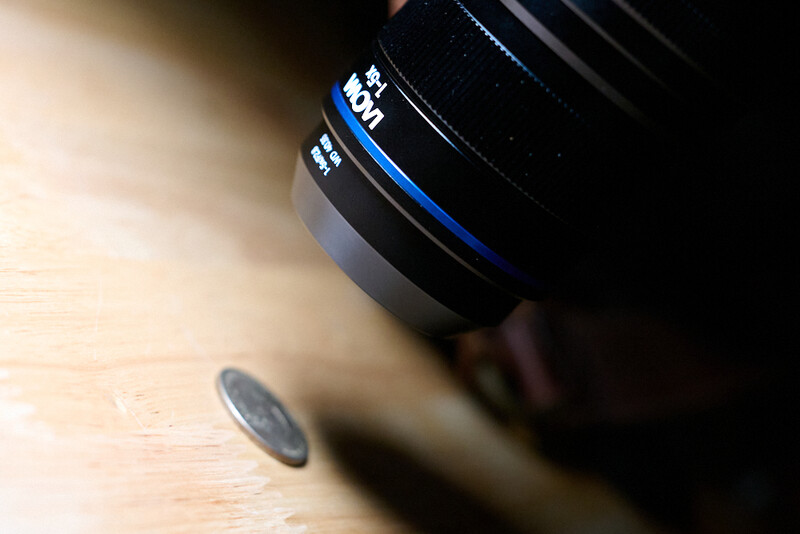
One other feature I wasn’t able to test, but a cool one, belongs to the 17.5mm barrel. You’ll notice in the picture below that the lens itself narrows significantly toward the end (under that round lens cap on top). This makes it possible to attach a coaxial light, which essentially lights your subject on the same axis as the lens. Because you have to get so close to your subject at times to keep them in focus, finding the right lighting angle that doesn't cast a shadow can be a challenge. This narrow barrel on the 17.5mm allows you to fit it with a coaxial light, which avoids any unwanted shadows while filling the details of your image with light. The coaxial light adapter came inside the box, although I didn’t have a light to fully test this feature.
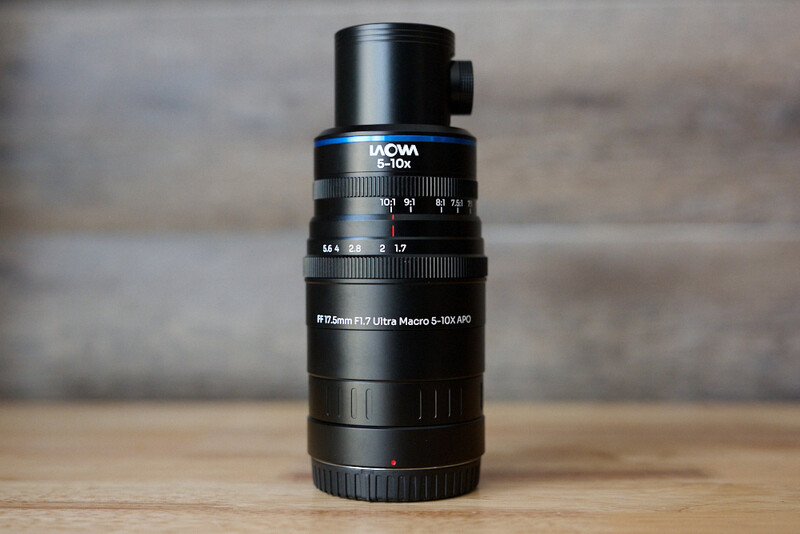
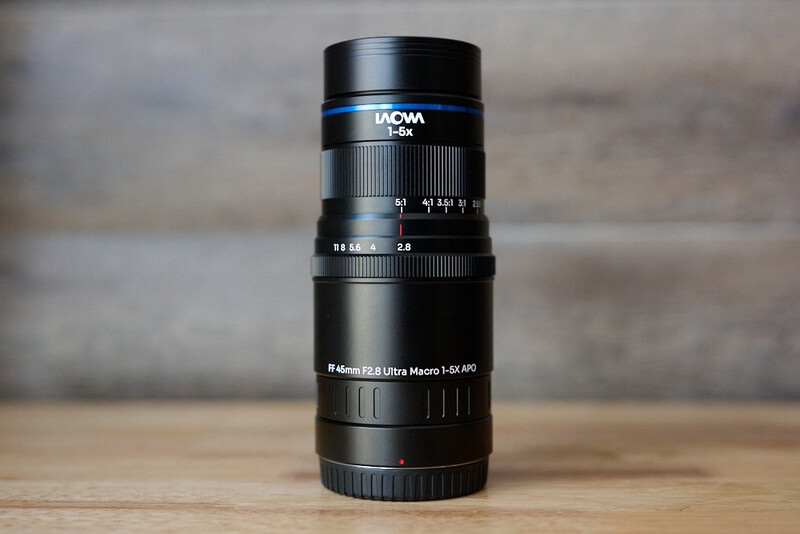
The lenses are built for full frame coverage. The first thing you’ll notice taking them out of the box is that both lenses are incredibly light. As I mentioned before, both lenses are parfocal. So, especially for filmmakers out there, what this means is that you can go through the full zoom range without losing your focus point. The lenses have an APO design intended to address any signs of chromatic aberration.

The lenses I tested were Z mount, but they also come in E, F, RF, EF, L, X, MFT, and PL. The 45mm and 17.5mm will retail for $749 and $849, respectively, with the PL-mount versions of each lens being more. Both photo and cine versions also can be purchased as a bundle for a reduced rate.
Pros
1x to 10x Magnification
Sharp
Light
Multiple Mount Options
Parfocal
Lighting Design Options (17.5mm)
Internal Zoom
Cons
Takes a Second to Nail Distance for Focus
Conclusion
For serious macro lovers who are looking for a more portable option with an internal zoom range, the Aksens make for an intriguing choice. A lens that focuses on very small things but could potentially make a very big impact.
And if you'd like to build up your own close-up skills, check out Mastering Macro Photography.




Join the Fstoppers community for free
-
Post comments and join in the discussions
-
Browse the site ad-free
-
Share your work and get featured in the community
-
Compete in the photo contests for fun and prizes
No comments yet