
Every camera owner has their own list of things they wish their camera could do—features that seem easily achievable with a simple software update. Normally, that list dies quietly the moment a camera leaves the manufacturer's support cycle. Take the Nikon D3 as an example: unless you take matters into your own hands, nobody at Nikon is going to allocate resources to add new features to a flagship body from 2007. This is where I stumbled upon Marcus Low's firmware experimentation. He was kind enough to document and share his thoughts and the technical process of how he got there.
How Marcus Got There
He was completely upfront about his methodology: he didn't write this patch by hand. What he did have was a strong understanding of what current AI coding agents can actually achieve, utilizing them to reverse-engineer the Nikon D3's firmware and change what he needed. The division of labor went roughly like this. The AI (Claude Code, in this case) did the heavy lifting: disassembling the firmware, tracing how the shutter release and focus logic operate, and writing the patch. His role was acting as the director—picking what to build, determining acceptable risk levels, flashing test builds to the camera, and reporting back on the real-world results.
As he noted, that final testing phase mattered far more than he expected. Early builds were based on incorrect assumptions and simply didn't work. Testing on the actual camera was crucial to sorting out these bugs, ultimately resulting in a patched sub-CPU firmware that added a feature he had wanted for a long time, running natively on his own Nikon D3.
The idea of altering camera firmware didn't start with Nikon for him. His initial experiment was with the Sigma DP2x, a compact camera with a large sensor and a lens that extends every time it is switched on and retracts when switched off. To him, that essentially meant unnecessary trips for the lens motor and gear train per power cycle, regardless of whether a picture was taken. On compacts with extending lenses, that mechanical sequence can be a point of failure. The dreaded "lens error" is one way these cameras can meet their end.
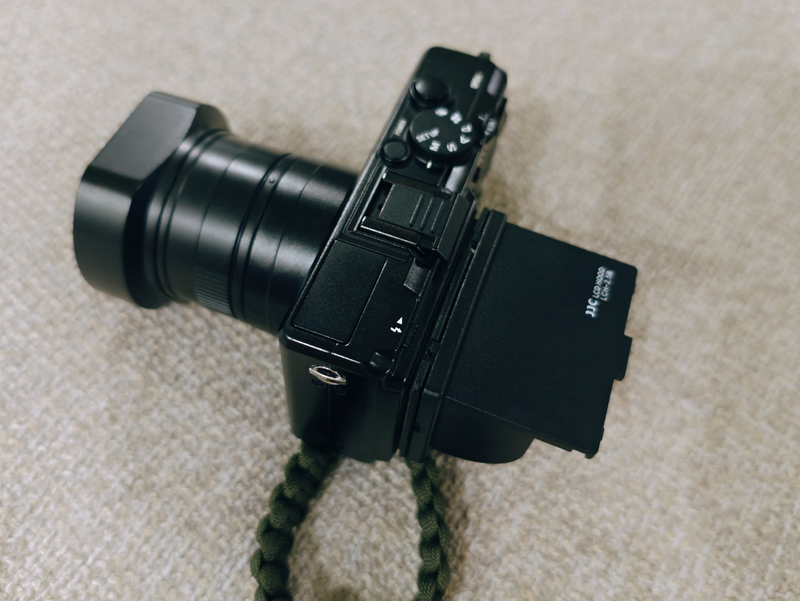
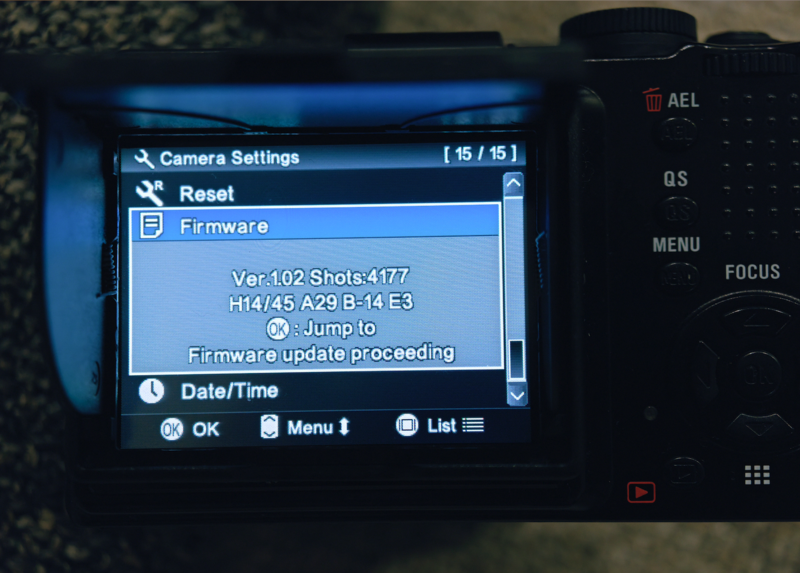
That was his first AI-assisted project: modifying the DP2x firmware to keep the lens extended when the camera turns off. If the lens is already out at power-on, it simply doesn't need to extend again. The logic is straightforward: fewer trips mean less physical wear on the mechanism that could potentially fail. Although he couldn't objectively prove the longevity gain on a single camera, reducing the number of extension and retraction cycles could potentially reduce wear over time. The firmware doesn't eliminate all lens movement, however; the focus motor still initializes at startup, and the lens can retract under certain conditions. Along the way, he also added a shot counter and a handful of other modernizing tweaks, publishing the project as the DP2X Longevity Firmware Update.
This led me to think about the obvious next candidate: the Ricoh GR series. My own previous resurrection plan for my GR II failed miserably, so this hits close to home. For context, the Ricoh GR series features a retracting lens that can suffer from mechanical failures after years of use. Yet, anyone who has seriously shot with one understands that it occupies an irreplaceable spot in a photographer's heart—fostering a true love-hate relationship among its cult following. I genuinely hope Marcus gets his hands on one to test some experimental firmware.
Following the DP2x project, he noticed that the camera runs on a Fujitsu FR-family processor, an architecture also used by the Nikon D3's sub-CPU. This meant that some of the disassembly tools, annotation scripts, and AI-assisted mapping techniques from the DP2x project could potentially be carried over to the Nikon. Since he owned a Nikon D3, the next logical step was Project "Trap Focus."
What Trap Focus Does
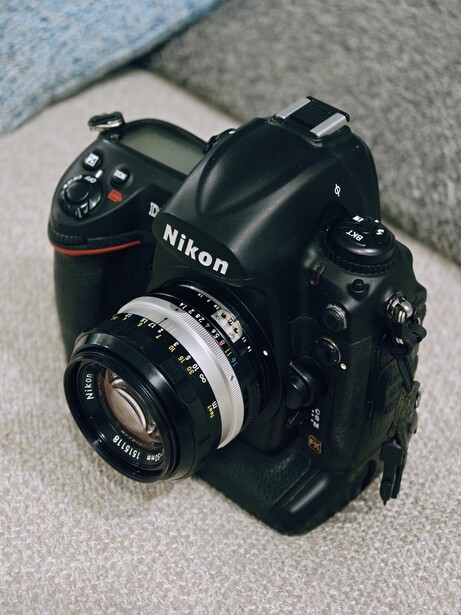
Project "Trap Focus" was named after the feature built to catch focus automatically for manual lenses. The idea is to make the experience of shooting manual-focus glass on a DSLR significantly more intuitive. Once the firmware is installed and configured, all you need to do is hold the shutter release down completely, turn the focusing barrel, and when the in-focus indicator lights up in the viewfinder, the camera triggers the shutter without requiring another button press. The patch requires effective manual-focus mode, Custom Setting a2 (AF-S priority selection) set to Focus, and release mode S, CL, or CH. Setting a2 to Release disables the feature.
He clarified that this isn't a groundbreaking new concept, nor does he claim it to be. Pentax has shipped essentially this exact feature for years as "Catch-in Focus," a custom-menu option on many of its K-mount DSLRs. The frustration lies in the fact that it is an established, proven feature that one manufacturer deemed worthy of inclusion, while others didn't offer the same dedicated functionality for manual lenses despite having much of the hardware capability. That is exactly the kind of operational gap that firmware modding can fill.

Four Reasons He Thinks It Matters
1. It Takes Human Reaction Time Out of the Loop
Without trap focus, the mechanical sequence is: you fiddle with the focusing ring until the dot lights up, you visually process it, you make the decision, and your finger moves to depress the shutter. Simple visual reaction time is commonly measured at around 200 to 250 milliseconds—and that is before the finger has even traveled. Is a quarter of a second really a problem? At shallow depths of field, absolutely. A 50mm lens at f/1.4, focused at 1.5 meters on a full frame camera, yields a total depth of field of roughly 7 to 8 centimeters under conventional depth-of-field assumptions. A subject breathing, or your own bodily sway, can shift the focal plane a meaningful fraction of that in a quarter of a second. With trap focus, the camera reacts directly to its own focus-confirmation signal, triggering the shutter when the sensor reports focus without waiting for the photographer's reaction.
Disclaimer: The camera isn't instantaneous either. The focus sensor has to measure, the firmware has to see the result, and the D3's normal shutter lag still applies. So the actual gain is really to eliminate the delay in the human part, not everything. And if your subject and camera are both perfectly still, there's little to gain here at all.


Actual test images shot with Nikon D3 (loaded with Focus Trap) and 50mm f/1.4
2. No Last-Moment Press, So Potentially Less Shake
With trap focus, the release is already fully depressed when focus arrives, removing the need for a final, physical button press at the exact moment of exposure. That downward jab can be a source of camera shake at slower shutter speeds, which is precisely why cable releases and self-timers exist. This is particularly relevant for this generation of DSLRs. The D3 lacks in-body image stabilization (IBIS), and many of the vintage manual-focus primes you would typically adapt to it have no optical stabilization. With nothing in those lenses or the camera body to correct for motion, anything that removes a source of micro-jitter is highly welcome.
3. The Focus Sensor Is Probably a Better Judge Than the Screen
Bright DSLR focusing screens are optimized for a bright viewing experience with autofocus lenses, not necessarily to display accurate depth of field with very fast glass. A well-known optical side effect is that they can fail to show the true, razor-thin depth of field of very fast lenses. At apertures wider than roughly f/2.8, what you see in the optical viewfinder can look sharper than what is actually rendered onto the sensor. Combine that with dim lighting or less-than-perfect eyesight, and judging critical focus by eye becomes considerably harder. This firmware utilizes the D3's existing phase-detection AF module and its viewfinder focus-confirmation dot to determine when to release the shutter. It is worth noting that the AF dot has a tolerance window—at f/1.2 or f/1.4, that window can actually be wider than your true depth of field, and it inherits any calibration errors your specific AF module might have. Trap focus simply hands the decision-making over to the dot; it doesn't fundamentally make the dot more accurate.
4. It Extends the Life of a Capable Camera and a Huge Lens Catalog
The Nikon F-mount boasts one of the deepest manual-focus lens catalogs in existence: AI and AI-S Nikkors, Series E glass, and premium manual lenses from Zeiss and Voigtländer. Much of this optical catalog is now relatively affordable on the used market. The D3 is a rugged, full frame body that can also be found for reasonable money. This Trap Focus firmware makes pairing the two more user-friendly, potentially increasing the practical value of both. At the same time, this is just one feature—it doesn't alter the D3's 12-megapixel sensor, its hefty weight, or its focusing screen. Flashing unofficial firmware also carries genuine risk. While the patch includes a software kill switch (Custom Setting a2 = Release) and Nikon's stock firmware files are provided for reverting, a bad flash can still leave a camera unusable. Reverting is only possible if the camera can still boot and run its firmware updater.
So Why Didn't Nikon and Canon Build It?
It is important to note that everything in this section is pure speculation. Marcus has no inside knowledge of how Nikon or Canon plan their firmware roadmaps, and anyone claiming absolute certainty probably doesn't either. These are educated guesses informed by his dive into the camera's code.
One thing the experiment demonstrates is that the D3 has the hardware and existing firmware functionality needed to implement this feature. The D3 can already achieve a form of trap focus with autofocus lenses using the classic back-button AF setup (AF-ON only, single-servo AF, focus priority). The patch builds on existing focus-confirmation and shutter-release logic already inside Nikon's firmware, extending that behavior to manual-focus operation. And, as Pentax has proven, a manufacturer can offer this as a supported feature. With that in mind, here are a few plausible reasons why the industry giants didn't offer the same dedicated functionality:
- Pro cameras are expected to fire: A flagship body that refuses to fire when the shutter button is pressed can feel broken, especially if a working photographer forgets they left a custom setting on. That leads to missed shots and angry support calls. "Always fire with manual lenses" is the safest, most conservative default. Smaller brands targeting niche enthusiasts may have more leeway to take those UI risks.
- Manual focus was not a growth market: By the late 2000s, commercial R&D was increasingly focused on autofocus motors, optical stabilization, and new lens designs. Improving the user experience for decades-old manual glass doesn't necessarily sell new hardware. Pentax, conversely, made backward compatibility with vintage K-mount lenses a core part of its brand identity, potentially altering its financial calculation.
- Canon's situation was different: Canon replaced the FD mount with the EF mount in 1987, breaking direct physical compatibility with its older FD lenses. This meant EOS bodies didn't have a native, legacy manual-focus lens catalog in the same way Nikon and Pentax did. Many adapted manual-focus lenses also required chipped adapters for electronic focus confirmation, giving Canon less incentive to develop the feature specifically for legacy manual-focus glass.
- The dot isn't a promise of sharpness: As mentioned, the focus indicator operates within a tolerance window. A feature that implicitly promises to "fire when sharp" could draw complaints every time it misfired slightly with a fast lens shot wide open. Omitting the feature entirely avoids that potential customer-service headache.
- Mirrorless changed the question: Once focus peaking and magnified live view became widely available, the approach to shooting manual lenses shifted toward live view and, eventually, mirrorless bodies. Later DSLR firmware updates often focused on bug fixes and lens compatibility, leaving less incentive for experimental quality-of-life features.
Any of these theories could be wrong. The reality is likely a mix of them, or something as mundane as the feature simply never making it onto a product manager's to-do list. Either way, the result was the same: the underlying capability was already present in the camera's hardware and firmware, waiting to be put to another use.
The Bigger Point
Trap focus is merely the first feature, not the final destination. Once you have the ability to read and rewrite the firmware, the "I wish it could…" list transitions from a grievance into a tangible to-do list. Marcus has already developed an experimental main-CPU patch that displays the shutter count on the firmware version screen and builds Nikon's D2X Mode 1, 2, and 3 Picture Controls directly into the D3. Be warned that this specific patch hasn't been flashed to a physical camera yet and should be treated as untested on actual hardware. At the time of writing, he was also working on custom color profiles.
Beyond the D3, he is looking into porting these firmware mods to the D3X and the D700. Both cameras share aspects of the D3's generational architecture, potentially providing a head start, though he does not intend to publish those modifications until they have been verified on physical units.
Whether any of this is worth the effort depends entirely on how much you value breathing new technical life into vintage digital cameras, weighed against the very real risk of bricking your gear with unofficial code. If nothing else, it shows that "the manufacturer won't add it" no longer has to be the end of the conversation.
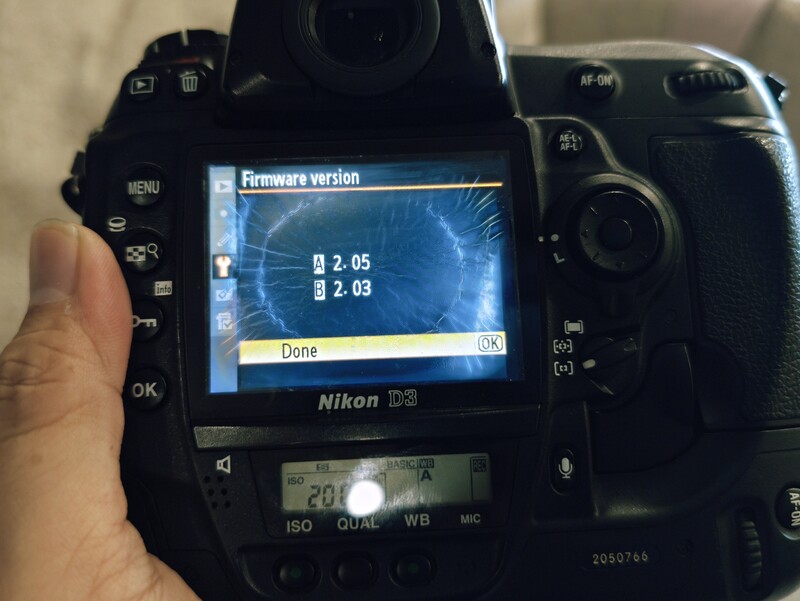
Disclaimer: These files are unofficial, modified firmware. They are not affiliated with or endorsed by Nikon or Sigma, and flashing modified firmware can brick your camera. Use at your own risk. The authors take no responsibility for any damage. Trap focus was tested on a Nikon D3 with patched sub-CPU firmware A 2.05 and stock B 2.03. The experimental main-CPU patch has not been tested on a physical camera. Reverting to stock firmware requires a camera that can still boot and access the firmware updater.






Join the Fstoppers community for free
-
Post comments and join in the discussions
-
Browse the site ad-free
-
Share your work and get featured in the community
-
Compete in the photo contests for fun and prizes