
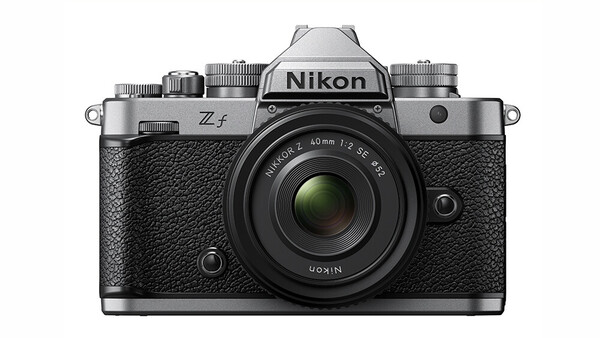
In today’s article, I am going to shamelessly beg Nikon to add one very specific feature to what is already my favorite camera body.
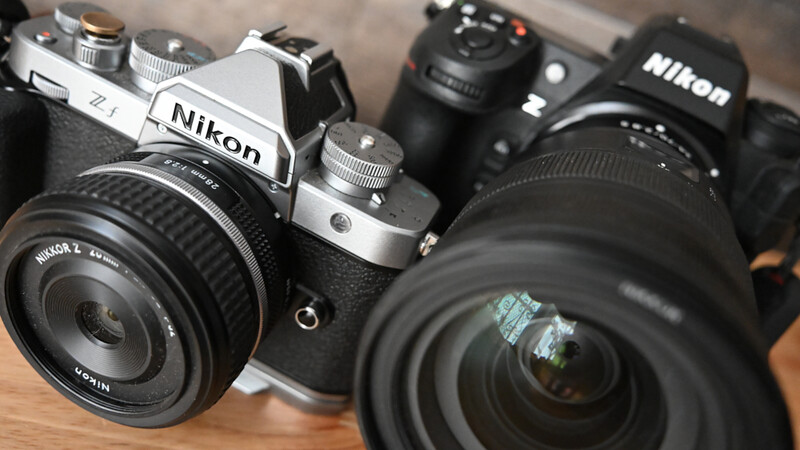
I love my Nikon Zf. I know, I know. It’s an inanimate object and the word “love” might be a bit overboard, but I’m using that term for a very specific reason. The Nikon Zf is the only camera in my collection that has no logical reason to be there. I’m a professional director/DP and photographer. My Komodo handles most things on the professional video side. My Z9 handles everything on the pro-still side (plus low-budget video and/or hybrid work). I have a C70 whose main job is doing interviews or direct-to-camera pieces. I have all the tools I “need” for my specific use case as a working artist.
The Zf, on the other hand, does absolutely zero of my professional work. Not because it’s incapable of being a professional camera. Rather, its 24 MP is less than my genre of high-end advertising work demands. It shoots way better video than people give it credit for, but the other tools I listed above simply offer more purpose-built tools for the more professional jobs. So, if I were being wholly objective, there’s no reason why I would need to own a Zf in the first place.
Yet, lately, as I’ve been trying to decide what elements of gear I’m using the least and considering trading in a few things to redesign my camera lineup, the Zf remains the camera that is most logical to sell, yet least desirable to let go. My connection to the camera isn’t via my mind; it’s via my soul.
To explain this, I should describe why it is that I have a Zf in the first place.
It may seem as though being a professional filmmaker or photographer would be a gearhead's dream. When you use these tools to generate income, that must give you license to spend as much as you want on the latest and greatest cameras whenever the urge strikes you, right? Well, not so fast. When you’re a working professional, those tools become investments. And, like any other investment, the wisdom of the investment is only valuable in relation to the income generated by the acquisition. In short, professional tools need to generate income.
Now, I can 100% describe professional use cases for the Nikon Zf, and I will often bring it to set with me as a BTS camera or use it when scouting locations. But, in reality, the Zf was acquired for a far less practical but no less important reason: to keep me connected to the love of the art itself.
That may sound funny. That may even be funny. But what I mean by that is that cameras like the Z9, unequivocally the best camera I’ve ever owned, go on the field, game in and game out, and deliver time after time. They are essential to me being able to do what I do on a professional level. But, because my mind so intimately associates my Z9 with professional work, I very rarely reach to pick it up just to shoot for fun. It’s like my fingers know that that particular shutter button means business. And it should only be pressed when the prospect of creating the best image I’ve ever taken is on the line.
For years, I only had professional tools. Again, logically, this makes sense. I’m a professional. My tools are investments. They need to generate a measurable benefit. But when the only cameras available to you trigger a work-first mindset anytime you pick them up, they can lose some of that joy and sense of play. The Zf may not be the tool I’ll use to shoot my next commercial. But it is the tool I pick up when I want to create just for the love of art itself. And without those moments of connecting to my art form on a noncommercial basis, I would, oddly enough, never be able to improve the quality of the product I’m delivering my clients on a professional basis.
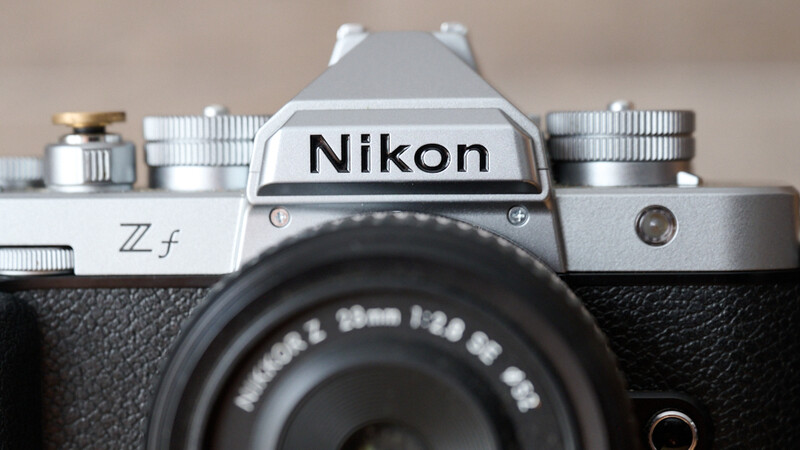
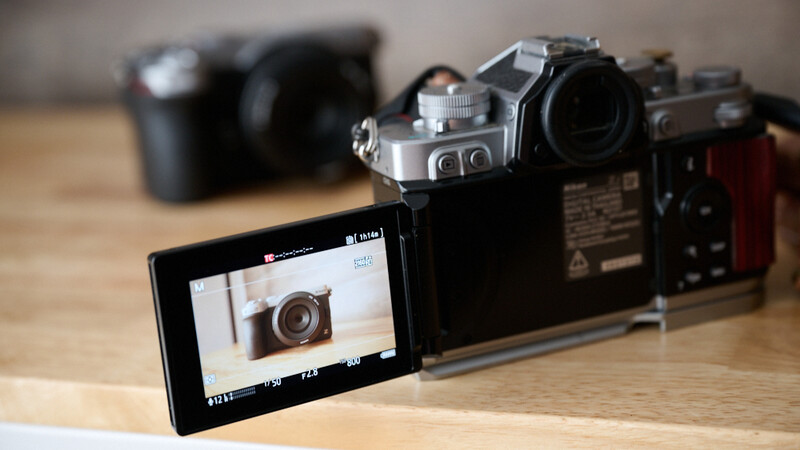
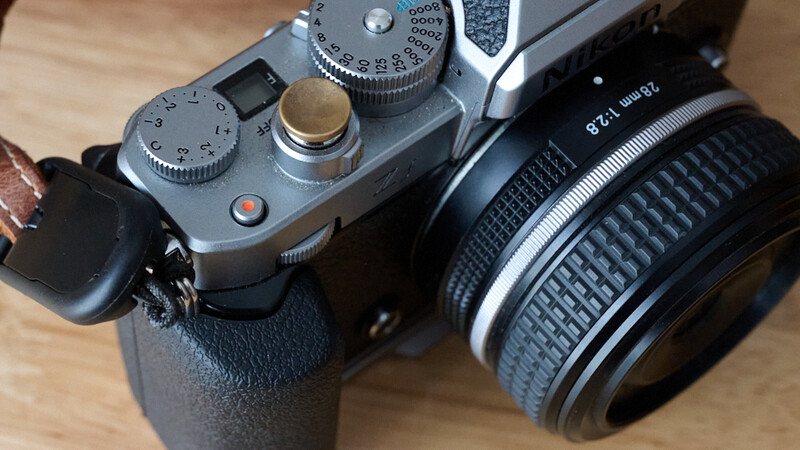
All of which explains why, when I bought the Zf, I wasn’t too hung up on tech specs and was instead more focused on the intangible benefits the camera could provide. The 24.5 megapixels are more than adequate for fun photography. The 4K H.265 footage with N-Log was, at the time, the first Nikon camera in that price bracket to offer internal N-Log without having to strap the camera to an external recorder. Since then, other Nikon cameras have exceeded the Zf, which I’ll address in a moment, but, at the time of release, this was a breakthrough. And, of course, the main reason I got the Zf? You guessed it. It’s pretty.
But even that retro aesthetic had primary benefits beyond just accessorizing my outfit. The look of the camera allowed me to carry the camera more because it doubled as a piece of jewelry as much as a photographic tool. The retro look is nonthreatening to strangers or building security guards. Where I might think twice trying to take my Z9 into a public space, nobody seems to care when you walk in with the retro-looking Zf. Whereas the Z9 inspires security guards to want to kick me out of the museum because they are afraid I’m up to something nefarious, the only conversations the Zf inspires are inquiries from curious strangers wondering what it’s like to still be shooting on film in 2026 (and often confused when they realize the Zf is, in fact, a digital camera).
Because of this practical stealth factor, I find I use the Zf all the time as my everyday personal camera. Not my team captain when it comes time to go to work. But my first choice when I want to both have a tool to create art and simultaneously enjoy living my life with minimal disruption.
As hinted at before, to get this level of convenience, I have had to make a few exceptions. Going from my usual 45 MP sensor to a 24.5 MP sensor is a trade-off, but one that seems acceptable given this camera’s role in my lineup. The vast majority of other trade-offs, like the speed and resolution benefits provided by my more expensive Nikons, aren’t really missed in this role either. I define an “everyday personal camera” as one with the minimal viable specs for my personal workflow that allows me to create the best work my mind can imagine, but just might give us some creature comforts to get there. 4K versus 8K. 24.5 MP versus 45 MP. Shorter battery life. But not missing anything essential to creating art at the most basic level.
There is one very specific thing, however, that I would like to formally beg Nikon to add in the next firmware update.
Nikon has an incredible line of options between the $1,000 and $2,500 marks. The Z6III, the king of that particular cohort, has very few limitations beyond stills resolution. The Z5II pretty much has it all in an entry-level body. The Z5IIC has all the things the Z5II has aside from a second card slot and, most notably, an EVF. And both of those cameras are essentially the same as the Zf minus the Zf’s very specific retro physical appearance. And that, right there, is where my request begins.
Because I love the Zf so much, I am constantly looking for ways to bring it more and more into my formal production workflow. Even though, as discussed, I bought it for purely personal reasons, my enjoyment of the camera can’t help but arouse curiosity in me about how I can further integrate it into my “real” work. To this point, there is exactly one thing that has prevented me from doing this. The absence of N-RAW video in the Zf.
All of the other mid-tier Nikons I listed earlier have internal N-RAW video recording. Because of my Z9s, I’ve grown very accustomed to this awesome codec in recent years, and it makes up a major part of my workflow. Even when I owned the ZR, I would usually shoot in N-RAW instead of R3D NE if it wasn’t a job that was shooting alongside my Komodo. N-RAW is an excellent format and one that is often overlooked among filmmakers.
That’s why I was so excited to see it included in both the Z5II and Z5IIC. The two least expensive full frame cameras in the Nikon lineup provide internal raw video at entry-level prices. That got me to thinking. Because the Z5II, Z5IIC, and Zf all share the same sensor, could Nikon give Zf shooters internal raw video via a firmware update?
I’m not an engineer, so it’s possible I’m overlooking something. But it seems like, if the two entry-level models can do raw internally, the Zf should be capable as well? Granted, the Z5II and Z5IIC N-RAW is not exactly the same as that inside my Z9. But, as this quick video test I did can attest, in well-lit and well-exposed situations, the footage from those two entry-level cameras I think can easily hold up as a B- or C-cam option to the Z9, Z8, Z6III, or ZR when needed.
https://www.youtube.com/watch?v=2-xurTdZMus
The Z5II and Z5IIC can only record N-RAW at up to 4K 30 fps instead of the higher-speed and higher-resolution variants of their big brothers, although both cameras can shoot 4K 60 fps in H.265 with a DX crop. But, let’s face it, when was the last time you had to deliver in more than 4K? And, as someone who firmly believes 60 fps or more is only a narrative tool that should be used for specific reasons as opposed to a default setting, it is very rare an occasion, even on a professional job, that I would need to shoot anything beyond 4K 24 fps. That’s not to say it would never happen. But it does mean that the N-RAW the Z5II and Z5IIC are already capable of would be more than adequate for 95% of my professional use case (while I also personally already own Z9s which could pick up the slack if needed).
And this is why I am submitting this formal request to Nikon to add 4K N-RAW to the Nikon Zf. I know my photo-first brethren out there probably couldn't care less. But, selfishly, for someone like myself who is a true hybrid shooter, having even the base-level 4K up to 30 fps N-RAW video in my “everyday personal camera” that I always have with me suddenly turns my fun camera into a realistic professional option. At a bare minimum, it can now serve as a B- or C-cam on days where my Z9 is my primary video tool. On personal outings, when I’m collecting footage just for fun or B-roll, I can now capture that in the same format that I’ll eventually be shooting my main footage with the Z9 or other high-end Nikon body.
In short, adding N-RAW video to the Zf takes it from a fun hobby camera to a fun hobby camera that can also double as a professional tool for video.
Now, will Nikon ever actually do something like this? That, I couldn’t tell you. The original Zf came out three years ago. There’s some business logic to holding such capabilities until a potential Zf II and collecting the upgrade price from people who really want the feature (by the way, I’d even be willing to pay for an N-RAW upgrade if that’s what it took). But, having absolutely zero inside knowledge on this topic, I’m not sure that the upgrade path for the Zf maps as easily as, say, the upgrade path of the other Nikon workhorse bodies. I think the Zf is more a specialty item for them and may not be updated nearly as regularly as the three- to four-year cycle of their other cameras. So while I would be interested in a Zf II, I’m not 100% sure one is coming any time soon. Again, I have no inside info on the topic.
There is, of course, the other argument that adding N-RAW to the Zf would cannibalize the other cameras in the Nikon lineup. But the Zf is already priced relatively high within that mid-tier structure. The Z5II and Z5IIC cameras I mentioned earlier are both about half the price of the Zf. So there’s little reason to fear that the more expensive Zf would cannibalize their market appeal. If anything, Nikon would suddenly be doubling their revenue per unit sold. The Z6III could be less appealing simply because of the look of the Zf, but, in this scenario, the Z6III would still have 6K with the higher level of N-RAW and be the better work-efficiency tool. So it’s unlikely people who need the Z6III as a workhorse would be unsettled by a more feature-rich Zf.

In short, there’s no real reason that Nikon shouldn’t add N-RAW to the Zf via firmware. The Z5II and Z5IIC seem to prove it is technically possible with that sensor. And the price point of the Zf protects the rest of the Nikon line from competing with itself.
So, Nikon, if you’re reading this, help a brotha out. I’m already in love with your daughter. Now, I just want to be able to take her to the big dance.

Join the Fstoppers community for free
-
Post comments and join in the discussions
-
Browse the site ad-free
-
Share your work and get featured in the community
-
Compete in the photo contests for fun and prizes