
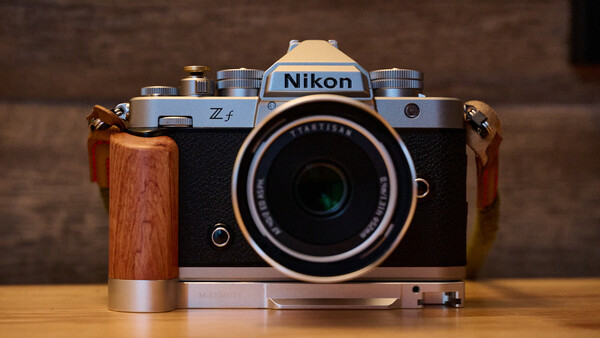
I realize that articles about older cameras don't trend nearly as hard as shiny new toys. But my recent purchase of the Nikon Zf has paid off in more ways than I could have ever imagined.
There's no reason I should own this camera. I have been a professional filmmaker and photographer for a long time now. My gear closet is filled with just as many professional-level workhorse cameras and flagship tools as my profession would suggest. And even in my little side hustle writing gear reviews for you fine folks, I am well known to drone on and on about how gear is an "investment," and how you should shop with your head and not your heart. So why oh why has a retro-styled camera with, objectively speaking, far fewer features than any other camera in my collection become one of my most valuable possessions?
Well, perhaps we should back up a moment to talk about how the Nikon Zf even came into my possession in the first place. As I mentioned, my professional camera kit has been settled for some time now. I own two Nikon Z9s. As I've written about previously, even five years after their release, those two continue to be pretty much all I need for my professional work on the stills side. And, on the video side, they've proven themselves to be my secret weapon on more than one occasion.
For more serious video, I own a RED KOMODO. That camera is worthy of its own article, but long story short, it handles all of my commercial work and indie filmmaking. I still will rent larger systems when necessary. But the KOMODO takes the lead on the majority of projects.
Then, I own the new Nikon ZR. I'll have a more in-depth long-term review of that camera coming soon, so I won't dwell too much on its pros and cons in this article. But, since the purchase of the ZR is what led inadvertently to the purchase of the Zf, it's worth taking a short beat to explain why I invested in the ZR in the first place.
As I mentioned before, I am both a filmmaker and a professional photographer. So I love camera bodies that can perform multiple duties. I am also, ahem, shall we say "not as young as I used to be." When you're a young filmmaker or photographer, you're all about "how can I carry the most possible camera I can?" When you're getting older, the question slowly becomes "how can I continue to deliver the high quality of product my clients demand, but, at the same time, physically carry the least amount of gear possible?"
The ZR posed an interesting solution to my particular use case. It was a tiny, walkabout-sized camera with a codec to match my KOMODO. That meant I could use it as a B-cam or even potentially an A-cam for filmmaking in certain circumstances. Furthermore, because it had the same internals as the Z6III, it should, in theory, also be able to serve in a less business-critical but still desired role as a personal "walkabout camera" for taking still photos on vacation or just for fun.
I used to own a personal walkabout camera. I used to own a few, actually. Most recently it was the pint-sized Nikon Zfc. But, over my heart's protestations, my head, with slight nudging from a dwindling bank account, had made the decision to sell all of those cameras over the years. I didn't sell the Zfc because I didn't want it. I sold it because money was getting tight and, from a business perspective, I couldn't justify an expenditure that essentially only provided me personal joy but was providing very little in terms of client billing. This sale was necessary at the time. But, selling off my last remaining "personal" camera was… a mistake. More on that in a moment.
So, when the ZR arrived, it promised to solve two problems at once. It gave me a smaller and more portable alternative to using my KOMODO when a full camera rig wasn't necessary. And, it could hopefully give me back that joy that I had lost when I sold off my Zfc. It's true. I could totally use the Z9 for fun walkabout photography. But, one, the sheer size of the Z9 makes it hard to really blend in in public. It's not exactly inconspicuous. And, two, because the Z9 is my king of the hill professionally, my mind simply has a hard time separating its use from "work." When I take out the Z9, my mind goes into game-time mode. It's time to produce my best work, either for a client or for my portfolio. It's the camera you grab when the game is on the line. And I love it for that.
But a walkabout camera is supposed to be just the opposite. Hopefully you get some great photos, but the experience should always count just as much as the result. It's a way of reconnecting myself to the time when I first fell in love with photography in the first place. Long before my images paid my mortgage. Back when I was just in it for the love of the game. When the sheer act of taking my camera out and walking down the street was a reward in and of itself.
So, when the ZR arrived, my hopes were high on more than just a professional level. Well, two things became immediately apparent when I started using the ZR. One, the R3D files are every bit as amazing as people say. Totally worth the investment. And, two, I absolutely hated using it to shoot stills.
Now, let me be perfectly clear. The stills the ZR produces are spectacular. As I said, it shares the same internal organs as the Z6III. So the image is beautiful. But the ZR is meant for cinema, as they make clear on the name badge. And for the way I like to shoot, taking photos, even just for fun, was just not an enjoyable process. For one, there's no EVF. I knew this going in. And, given my proclivity to reflexively mutter angrily beneath my breath every time I see someone framing a photograph with the LCD instead of an EVF, I have no idea how I was able to convince myself that I was ever going to derive enjoyment from taking photos in that same way. I guess I tricked myself into thinking I could adjust or that it wouldn't matter that much because these photos were just for fun. But, no, clearly I am too old at this point to change. These days, an EVF is less of a preference and more of a demand when it comes to stills. And because I hate the process of using an LCD for photos so much, the inherent frustration in that process was always going to serve as a direct deterrent to me being able to draw actual joy from the process. Compound that with the fact that, again understandably, the ZR's button layout is optimized for video and not stills, and the whole thing adds up to a frustrating experience for me. And, of course, since the entire point of going on a photo walkabout in the first place is to give me joy, shooting with a tool that actively denied me joy just didn't make sense.
Again, terrific image quality. Just not a pleasant experience for how I like to take photos.
All of which left me in an unexpected position. As expected, the ZR more than delivers on the video image quality front and earned its place on the film side of things. But part of my anticipation when waiting for my ZR preorder to be filled was that it would also fill the joy gap that had been caused when I sold off my Zfc. Of course, my head will tell you this is not a big issue at all. But my heart? My heart wouldn't shut up about it.
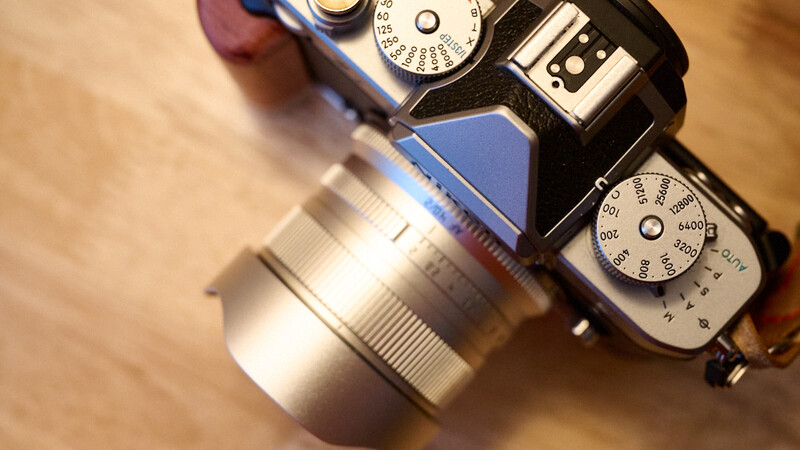
Enter the Nikon Zf
I'd shot with the Nikon Zf before. I'd reviewed it upon its initial release and its charms were not lost on me. The compact size. Solid construction. Full frame. Coming from the Zfc, the Zf was a clear upgrade. Were it not for its release coming during an intentional gear fasting period where I was determined not to spend money, I might have bought the Zf long ago. But, again, there was my head reminding me that investing money purely for personal joy could never actually pay off in the long run. So I kept my powder dry and continued on without a personal camera to speak of. As I said, in theory, I could just strip down my Z9 on the weekends and use that for fun. In reality, what happened is that I just had stopped taking photos for fun at all. The only images that rolled off of my camera were for "serious" photography purposes. Fun walkabout shots or casual images of my dog in various states of napping were relegated to iPhone snaps. They preserved the memories, but I wouldn't exactly call the process of snapping iPhone pics particularly fun or rewarding. It's hardly the kind of process that stokes your fire for the art form.
So there I was, about four or five months ago, about to do the unthinkable. Googling sale prices or used offers for Zf bodies. Once again, I was in the market for a fun camera.
Unlike the ZR, when the Zf arrived, I had very few expectations at all. In fact, with that voice in my head constantly nagging me about spending unnecessary money, I still wasn't 100% sure that I'd made the right decision. But, in the months that have followed, I've come to understand that purchasing the Zf was not only the right decision, but what could have been considered a frivolous purchase has ultimately helped remind me of what's really important in the life of an artist. Both personally and professionally.
You probably know the Zf by its key feature: the retro style. Aesthetics are always a subjective thing, but, for my money, I don't think there's a better-looking camera on the market today. Some of that feeling may be personal nostalgia. While modern cameras are technological beasts capable of feats we could have once only dreamed of, I do think we've lost something over the years when it comes to the aesthetics of the cameras themselves. Many of those boxy, awkward, and decidedly analog film cameras I grew up with may have been lacking in terms of modern tech, but were overflowing with style. Kinda like comparing a classic '65 Ford Mustang convertible to a Tesla. Sure, the Tesla has lots of tech. But which would I really rather be driving down the Pacific Coast Highway on a Sunday afternoon? Apologies to Tesla owners, but, honestly I'd take the Mustang any day of the week.
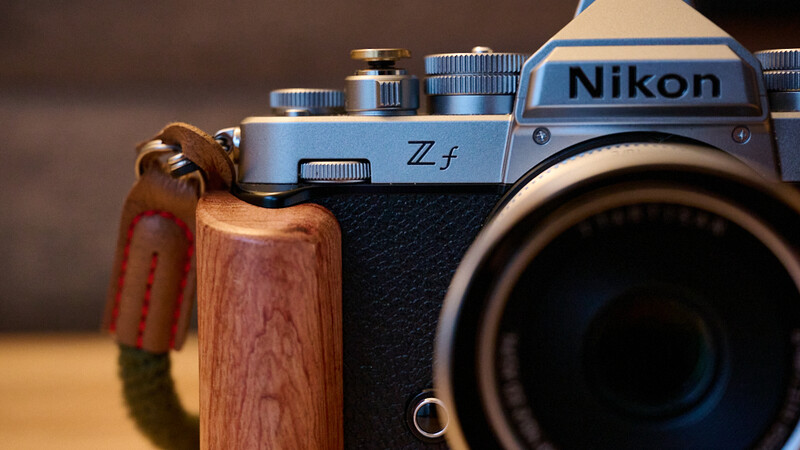
So, without doubt, a large percentage of the Zf's value is in the look of the camera itself (as evidenced by the large number of grips below which I alternate between based on my outfit). But that subjective benefit has a surprising number of objective benefits.
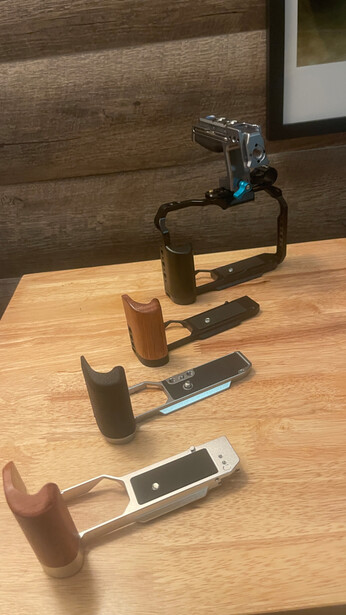
I mentioned that the main use case for the Zf for me was as a personal camera. Both as a camera I take with me on intentional photo safaris around town and as the type of camera I'd want to just have with me on a regular basis for no reason in particular. The best camera is always the one you have with you. And, if a camera isn't something you want to have with you, it's not very useful, regardless of the specs. The Zf's retro style not only brings on nostalgia, but the look itself means that I don't mind wearing it around my neck in casual, non-photocentric situations. If I leave the house in casual clothes to go to the mall with a full professional camera body and a 24-70mm f/2.8 lens, I may be well suited to get great images. But I'm also going to stick out like a sore thumb. Conversely, the style of the Zf allows it to be worn as a fashion accessory as much as a camera. So, in that same mall scenario, having a small Zf with a compact prime lens alongside whatever outfit I deem cool that particular day doesn't immediately brand me as the camera nerd who is treating his trip to Foot Locker like an African safari. Wearing the Zf is just like wearing a cool necklace or a very specific type of hat. It's just a fashion accessory. One capable of taking amazing pictures. But not one that is going to ostracize you from social situations. So the cool styling becomes more than simply a subjective advantage; it becomes a feature that reduces your reticence to bring the camera with you. That means you have it on you more. That means you use it more. That means it's more valuable.
But, were the Zf's charms to be limited to its physical appearance, there'd be little reason for me to write this article. In fact, while the retro style will lead every review, one other aspect of the Zf is often overlooked. Completely aside from the looks, the Zf is an incredibly capable camera.
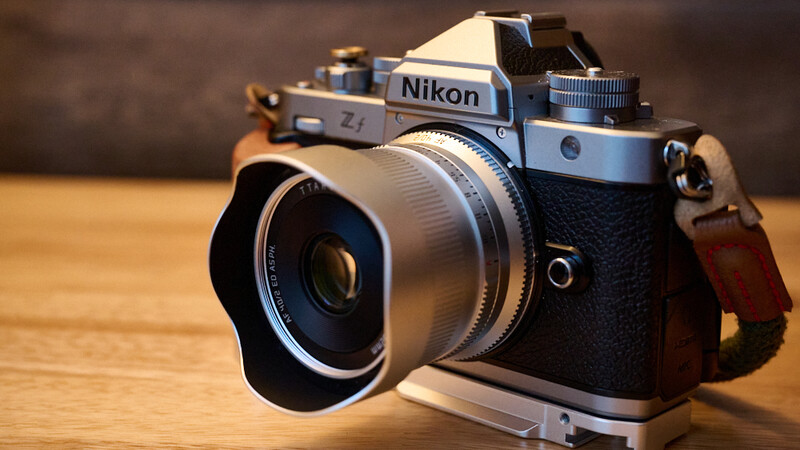
As I mentioned earlier, the insides of the Zf are very similar to the Z6III. The Z6III is still the better purely professional tool. It has better native ergonomics. And the video codecs available in the Z6III far exceed the Zf. But, short of that, there is very little separating the two bodies that actually matters in terms of performance. And, when normalized for use case, the space between the two bodies is not quite as cavernous as you might expect.
A quick comparison:
- They share the same sensor size, though the Z6III has a partially stacked sensor
- The Zf is slightly lighter, but the difference is negligible
- They share the same processor, and autofocus speed is comparable
- The Z6III has additional Raw and ProRes HQ recording format options for video
- The H.265 in the Zf is comparable
And this is where, for me, the Zf has, much to my surprise, actually become the most useful content creation camera in my arsenal. While I don't consider myself to be a native content creator — most of my work still follows a very traditional team-based workflow — it is impossible to be any kind of visual artist in the modern day without some form of solo-operator content creation being required of you. By "content creation," I mean that kind of photo-video hybrid work where you are creating material mainly for social media or digital platforms. The turnaround is fast. And quantity often supersedes quality. That's not to say that it can't be quality as well. Rather, as opposed to my normal workflow of shooting a limited number of very carefully curated takes, in a content creation scenario I may be more tempted to just let the camera keep running to maximize the amount of footage I have to choose from.
If you're a photographer looking to expand into video production, Introduction to Video: A Photographer's Guide to Filmmaking is a great place to start.
Now, from a technical standpoint, the Z9 remains my best tool for content creation. But, again, there's that size thing. If content creation takes the form of more casual travel work or everyday capture, outside of a planned set, the size can limit the number of times I would have the Z9 with me. The Z6III is a smaller option with similar benefits. Its smaller 24.5 MP sensor is still plenty for content creation level photography which will reside largely online. So I'm not giving up much in terms of stills while retaining terrific options for video. But, again, the more utilitarian appearance of the Z6III means I'm less likely to have it on me every day than the living fashion accessory that is the Zf.
True, the Zf doesn't have any Raw recording formats for video. But, remember when I mentioned that content creation is often more quantity over quality? Well, one thing that you will quickly learn when you shoot with that beautiful R3D codec in the ZR is that your data storage requirements will very quickly go through the roof! The images are awesome, but the extra cost of hard drives is not. Now, when I'm using the ZR to shoot a film project or a commercial with short takes, the added file size is not an issue at all. But in content creation, at least as I've just described my version above, shooting hours and hours of footage in R3D means literally spending serious cash to house the results.
So, when it comes to digital-first content, I've started shooting H.265 more and more. Does it have the same post-production latitude as Raw video? No. But, do I really need that latitude for a YouTube video or a standard talking-head interview? Probably not.
https://www.youtube.com/watch?v=FDRblgBXfDs
Still, you might say, why don't I just shoot H.265 on the ZR? Well, the ZR has a lot of strengths. Its H.265 is not one of them. It is perfectly capable of being used for digital content. But the rumors you may have heard about the H.265 on the ZR being "soft" are sadly quite true. I'd expect Nikon to quickly fix this issue with an upcoming firmware update, so hopefully this is only temporary. After all, the ZR and Z6III share a sensor. So there's no practical hardware reason why the H.265 from the ZR should be so much worse than the H.265 from the Z6III. But, as of this writing, there is a notable difference.
So much of a difference that it inspired me to run my own non-scientific side-by-side test between my Z9, ZR, and Zf shooting in H.265 so I could see the comparison myself. I was surprised to see that, in my own controlled tests (same lighting, same lenses, same subject), the H.265 from the Zf was just as good if not better than what I was getting from the ZR.
Honestly, I was pretty shocked by the results. But, more than shocked, the realization spurred another thought. Why not just shoot my social content with the Zf? If the H.265 is just as good if not better than the ZR and they negate each other in terms of small camera size benefits, then there's no objective benefit to the ZR in H.265 (aside from 32-bit float audio). And, because the Zf has a built-in EVF, it provides me a significantly better shooting experience when I need to flip from video to stills. Sure, it limits me in terms of Raw video recording. But, for this specific use case, that really isn't an issue because the smaller file sizes of the H.265 are actually a feature in this situation, not a bug. Add to that technical realization the practical benefits of me actually liking to carry the Zf around all the time that I mentioned earlier and suddenly, I realized that I had landed on more than just the perfect retro-styled nostalgia camera. Instead, I had quite accidentally impulse bought my ideal everyday camera. A tool that has all the necessary specs for casual shooting, but can be integrated into higher-end work under specific circumstances. Honestly, even for my professional work, if Nikon were to ever offer a 45 MP version of the Zf, well, I'd have some serious thinking to do.
Yet, perhaps even more important than either of those points, the Zf is a tool that gives me joy. And that's the one thing that my head never really understood that my heart could actually feel. Joy is hard to quantify. It's hard to say that one extra smile is worth X dollars and try to fit its value onto a spreadsheet. But one thing that I've learned over a long career as an artist is that, if you're not having fun, it's really not worth it.
The long journey as a professional filmmaker or photographer is a marathon of ups and downs. If you're lucky, you'll get some wins to make it all worthwhile. But if you only get joy from results, you're in for a long haul. You have to love the process as much as the product. And while we do need to pay attention to specific specs that are required to provide service to our clients, we must also pay equal attention to our own joy throughout the process.
I know it sounds frivolous, but this is a tough journey. And you're going to need to hold onto as many things as possible that make you happy in order to sustain along an often arduous path. The Zf is by far my least feature-rich tool. But, it is the one that makes me happiest to use. From the cool styling to the therapeutic sound of the click every time I press the shutter, the camera, simply put, makes me happy.
Because it brings me so much joy, I actually want to use it. Because I want to use it, I find myself actively looking for more and more ways to take it off the shelf. That means I shoot more. That means I get better. That means, on an emotional level, I stay more connected to my passion for my craft. And the value of that is more than just nostalgia. It's a reminder, even when the chips are down, just how much I still love the game.

Join the Fstoppers community for free
-
Post comments and join in the discussions
-
Browse the site ad-free
-
Share your work and get featured in the community
-
Compete in the photo contests for fun and prizes
14 Comments
Well said. The heart wants what the heart wants, doesn’t it? My favorite camera (of all time, actually) is my Fuji X-T3. It’s been dropped more times than I’ll admit to, and has accompanied me all over the world. When paired with my Fuji 35mm F1.4, it does exactly what I need, without needing anything else. Fits well my hand, beautiful color, the shutter just slaps, and it just meets my needs. I have several other, better and more capable cameras, but I reach for that one the most.
I used to own the X-T3. Loved it.
I perfectly understand the point of enjoying the process ! For me, as I'm 66 now, was to find also my "toy" after trying so much gears. It's an expensive toy, of course, but just a marvel in the hand and also with the results. I sold all my GFX system for the founds. Closing the suspense : Leica SL3 reporter ! So much more than a spec sheet.
I haven't shot with the SL3 yet, but I want to.
Ah! I can relate, aging well too , hybrid photo-videographer, 2 x Nikon z8 as main bodies, 1 ZR (great for recording talking head in 32 bit float :) but my little friend is the Nikon Z50ii with the DX 16-50mm f/2.8 VR , so light and compact :)
The Z50ii is a cool piece of kit.
I'll say this if this camera had 42 megapixels I would buy it but sorry. 26 doesn't cut it for cropping. It just doesn't the standard now is 40s megapixels are above for most cameras. I'm sorry but 2016 Nikon D7200 had 26 megapixels...... I'm also not a fan of the screen either. It's a photography camera. No one's using this camera for video yet you put a video screen on it. I'll say it again. Nikon designers are Muppets. They really don't have any idea and I'm really sorry but people at work at Nikon you are Muppets grow a brain. You design a photography first camera and you put a stupid flip out screen on it ...LOL DUMB and DUMBER
I am just a hobbyist myself but I got myself a Z fc after over a decade away from the hobby, mainly because the Z f was a bit too expensive for my current budget. I have a working Nikon D40 and F55 but I wanted an upgrade. I carry my Z fc all the time. I love it. The aesthetic and the dials on top make it a joy to use and the camera is inspiring. It pushes me to try out new things, it is fun to shoot with it. It was a perfect way to reignite my love for the hobby. I imagine the Z f would've done the same. Maybe I'll get it in the future.
I like the Zfc. I used to own that as well. Great camera.
I'm really enjoying my Zfc. The quick access to all the knobs makes shooting so intuitive, rather than having to find some electronic menu to make changes. I do wish the f-stop had a knob, too, though.
A knob or a control ring on the lens for the f-stop with visible markings. That would be absolutely fantastic and the camera would be even more enjoyable than it already is.
They really should have released a 24, 50 and 85 with aperture ring along with this camera.
Tis a great camera! I love mine! The performance the Zf has in such a tiny package is truly a miracle of engineering. I did drop Mine and it broke the EVF. The EVF screen still works fine but the problem is if i press any button on the camera the EVF will turn off until I restart the camera. Luckily the camera still works perfectly through the rear screen but I really want to get my EVF fixed. Sending it to Nikon is not an option as they want over $1k to fix it. If it was like $300 Then I absolutely would send it in but at 1k It's neither worth sending in or buying a new one. What I would like to do is find the EVF module it self and do the replacement my self. I am not new to electronic device repair and I have fixed several other cameras and electronic devices before this one like my D700 and D800 by replacing their memory card slots because they had bent pins. If any one knows where I might be able to find an EVF module for this camera I would be ever grateful!
Are you using the large dials to set shutter and ISO? My problem with the camera is that it has those large dials, but then Nikon makes it possible to just ignore those dials and operate the camera just as you would a Z8. Whenever I see someone with the Zf they have it set to disable to the large dials.
I also don't like the way you turn the shutter dial one direction to add light, but you roll the ISO dial in the opposite direction to accomplish the same task. It makes operating the camera more complicated than it needs to be. On a Leica M10, both dials turn in the same direction to add or take away light.
Finally, I think the Zf should have been manual exposure only, or maybe manual exposure and Aperture priority. I don't see why the supposed stripped down camera has as many exposure modes as every other Nikon z camera.
Oh, one more thing. If you're going to train users to use the manual shutter and manual ISO dial, then you really should create lenses with aperture rings for consistency. Had Nikon done that, it would have been a great student camera for teaching photography.