

The most common question beginners ask after buying their first camera is some version of "what should I upgrade to next?" The answer they expect is a better camera body. The answer that will actually improve their photographs is almost always a better lens.
This is not a philosophical claim about skill mattering more than gear (it does, but that is a separate conversation). It is a practical, observable fact about how cameras and lenses contribute to the final image. The camera body determines burst rate, autofocus speed, video resolution, and high-ISO noise performance. The lens determines sharpness, background blur, how much light reaches the sensor, and the fundamental look of the image. For most beginners shooting in decent light, the lens is the bottleneck, and the body is already doing more than enough.
A $200 lens upgrade on an existing body produces a bigger visible change in the final image than a $1,500 body upgrade with the same lens. That math is worth understanding before spending money.
Upgrade 1: Kit Zoom to a Fast Prime
This is the single most impactful lens upgrade a beginner can make, and it is also the cheapest.
Most entry-level mirrorless cameras ship with a variable-aperture kit zoom: a lens like the Canon RF-S 18-45mm f/4.5-6.3 IS STM, the Nikon Z DX 16-50mm f/3.5-6.3 VR, or the Sony E PZ 16-50mm f/3.5-5.6 OSS II. These lenses are compact, versatile, and optically adequate, but they share a fundamental limitation: the maximum aperture is narrow, often around f/3.5 to f/6.3 depending on the lens and focal length. In dim light, this forces the camera to raise ISO (introducing noise) or slow the shutter speed (risking blur). In any light, the narrow aperture produces deep depth of field, which means the background stays relatively sharp and cluttered rather than dissolving into a smooth blur behind the subject.
A 50mm f/1.8 prime changes both of those things immediately. The Canon RF 50mm f/1.8 STM, the Nikon Z 50mm f/1.8 S, and the Sony FE 50mm f/1.8 all offer apertures roughly three stops wider than a kit zoom at the same focal length. Three stops is eight times more light. That means the camera can use an ISO eight times lower (dramatically less noise) or a shutter speed eight times faster (dramatically less blur) or some combination of both. The background blur at f/1.8 is visibly, obviously different from anything a kit zoom produces: the subject separates from the background in a way that immediately looks more professional.
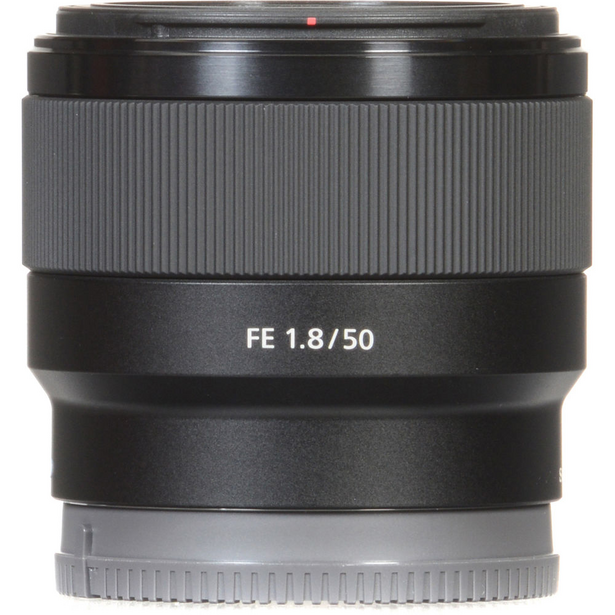
On Canon's APS-C bodies with the 1.6x crop factor, the RF 50mm f/1.8 behaves like an 80mm equivalent, which produces flattering compression for portraits and head-and-shoulders framing at a comfortable working distance. On Nikon's DX bodies (1.5x crop), a 50mm behaves like 75mm equivalent. On Sony's APS-C bodies (1.5x crop), the same. The focal length is naturally suited to the portraits, family photos, and people photography that most beginners want to improve.
The cost of this upgrade is roughly $200 to $250 for the Canon and Sony options, roughly $470 for the Nikon (which is optically a tier above the other two and priced accordingly). Compare that to the cost of upgrading the camera body: a move from a Canon EOS R50 ($680) to a Canon EOS R7 ($1,499) costs roughly $800 net after selling the R50, and the images shot with the same kit zoom will look almost identical at normal viewing sizes. The R7 adds IBIS, faster burst, better autofocus tracking, weather sealing, and dual card slots, all of which matter for specific use cases. None of them change the fundamental look of the image the way a three-stop aperture improvement does.
Upgrade 2: Kit Zoom to a Quality Standard Zoom
If the kit zoom's aperture is the first bottleneck, its optical quality is the second. Kit zooms are designed to be small, light, and affordable. The optics are adequate, but they are not sharp across the frame at every focal length, and the rendering (the way out-of-focus areas, contrast, and color are handled) is functional rather than refined.
A quality f/2.8 standard zoom replaces the kit lens with optics that are sharper, faster, and more consistent across the zoom range. The Tamron 17-70mm f/2.8 Di III-A VC RXD (available for Sony E and Fujifilm X) covers a wider range than most kit zooms while maintaining a constant f/2.8 aperture, which is roughly two stops faster than a kit zoom at the telephoto end. The Sigma 18-50mm f/2.8 DC DN Contemporary (Sony E, Fujifilm X, L-mount, and Canon RF) is even more compact and offers the same constant f/2.8 at a lower price point. For Canon RF shooters, the situation is improving as Sigma and Tamron expand their APS-C RF-mount offerings, and the Canon RF-S 18-150mm f/3.5-6.3 IS STM is a versatility upgrade even if it does not provide a constant fast aperture.
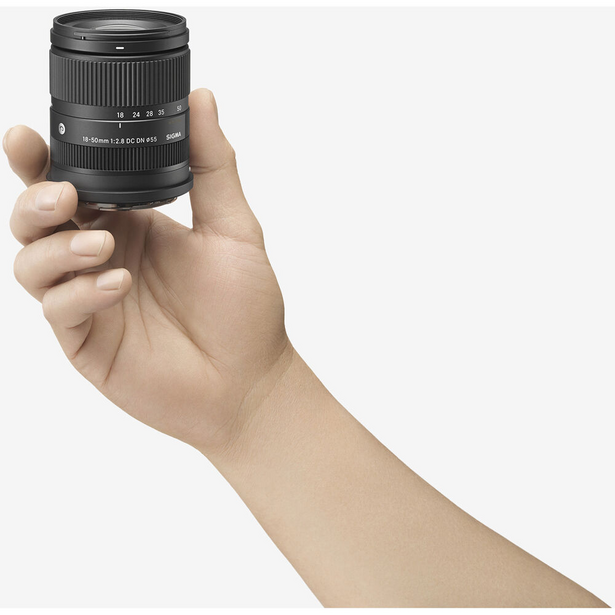
The visible improvement from this upgrade is less dramatic than the kit-zoom-to-prime jump (the aperture difference is about two stops instead of three, and you do not get the extreme subject separation of f/1.8), but the consistency improvement is significant. A quality f/2.8 zoom produces reliably sharp results at every focal length and every aperture, which means fewer throwaway images from corner softness, focus inconsistency, or the optical compromises that kit zooms make to hit their size and price targets.
Upgrade 3: Consumer Telephoto to Quality Telephoto
Many beginners buy a second kit lens for reach: the Canon RF-S 55-210mm f/5-7.1 IS STM, the Nikon Z DX 50-250mm f/4.5-6.3 VR, or the Sony E 55-210mm f/4.5-6.3 OSS. These lenses are light, affordable, and long enough to photograph birds, sports, and distant subjects, but their variable apertures (typically f/4.5-6.3 or f/5-7.1) limit them in anything less than bright daylight.
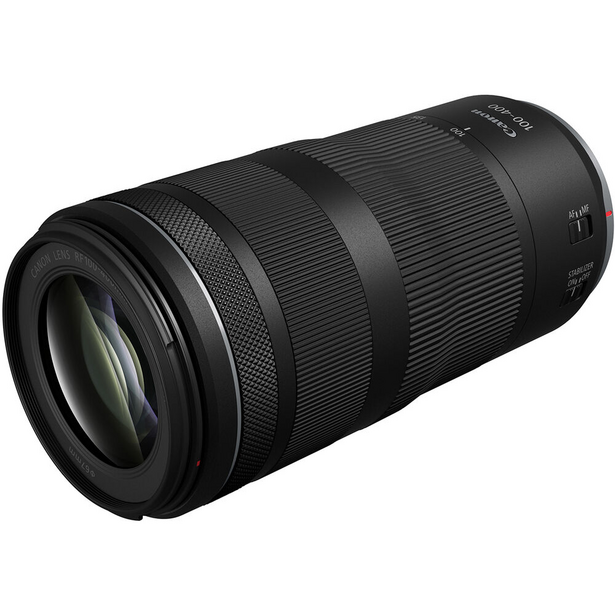
A quality telephoto zoom transforms this category. The Tamron 70-300mm f/4.5-6.3 Di III RXD (Sony E and Nikon Z) offers a similar aperture range but with dramatically better optical quality, faster and more reliable autofocus, and a full frame image circle that means it will work on both crop and full frame bodies. The Canon RF 100-400mm f/5.6-8 IS USM extends the reach to 400mm (640mm equivalent on APS-C) at a weight of just 635 grams and a price of roughly $650. Neither of these lenses has the f/2.8 aperture of a professional telephoto, but both produce images that are in a different league from the consumer kit telephoto they replace, particularly in autofocus speed, corner sharpness, and contrast.
Upgrade 4: No Flash to One Speedlight
This is not a lens upgrade, but it belongs in the same conversation because it addresses the same principle: changing what light reaches the sensor produces a bigger visible improvement than changing the sensor itself.
A beginner who has never used flash is limited to whatever light exists in the scene. Indoors, that means overhead tungsten or fluorescent fixtures that produce unflattering downward shadows on faces, mixed color temperatures, and dim conditions that force high ISO and slow shutter speeds. A single speedlight bounced off a white ceiling transforms the same room: the light becomes soft and even rather than harsh and direct from overhead fixtures. The color temperature becomes consistent. At lower power levels, flash duration can be extremely short (1/1,000 s or faster on many speedlights), which helps freeze subject motion provided the ambient exposure is controlled. At full power, flash duration is longer and less effective at stopping motion.
A capable TTL speedlight from Godox, Neewer, or Yongnuo costs $100 to $180. The improvement in indoor portrait quality, event photography, and family gathering documentation is immediate, dramatic, and visible to people who know nothing about photography. If a friend looks at your photos and says "these look professional," the flash is probably why.
When the Body Upgrade Is the Right Call
There are specific scenarios where the camera body is the genuine limitation and upgrading it is the right decision. These are worth knowing so you can distinguish them from the far more common scenario where the lens is the bottleneck.
- You need stabilization across all your lenses and your body does not have IBIS. Optically stabilized lenses can reduce camera shake on their own, but if you shoot multiple unstabilized primes in low light, a body with IBIS provides stabilization regardless of what glass is mounted. For photographers who rely on fast primes without built-in stabilization, the body upgrade to one with IBIS may be the better investment.
- You need video capabilities your body cannot deliver. If your work requires 4K 60p, log profiles, or extended recording times and your body caps at 4K 30p with a recording limit, no lens solves that. The body is the constraint.
- You need autofocus tracking your body cannot provide. If you shoot fast action (sports, wildlife, children) and your body's autofocus cannot keep up, a sharper lens on the same body will produce sharper images of the wrong subject. The AF system is the limitation, and the body upgrade is the fix. You should make sure you've properly customized your autofocus first, however.
- You need environmental protection your body does not offer. If you regularly shoot in rain, dust, or extreme cold and your body is not weather-resistant, a weather-sealed lens on an unsealed body does not protect the system. The body needs to match the conditions.
In each of these cases, the body is the bottleneck because the photographer needs a capability the current body physically cannot provide. But notice the pattern: these are all capability gaps, not quality gaps. The photographer is not upgrading because the images are not sharp enough or the colors are not good enough. They are upgrading because the camera cannot do something the photographer needs it to do. If the images themselves are the problem (not sharp enough, not enough background blur, not enough light, not enough reach), the lens is almost always the answer.
The Longevity Argument
There is one more reason to prioritize lens upgrades over body upgrades, and it is financial: lenses hold their value longer than bodies.
A camera body depreciates significantly the moment a successor is announced. Used prices on current bodies routinely drop when upgrade rumors circulate, and every generation follows the same pattern. Technology advances, new sensors replace old ones, and last year's flagship becomes this year's used bargain. A body purchased today will be worth substantially less in three to five years.
A quality lens depreciates more slowly. The Canon RF 50mm f/1.8 STM has been available since 2020 and its used price has remained relatively stable because the optical formula does not become obsolete the way a sensor does. Resale values vary by mount, condition, and market timing, but lenses generally retain a higher percentage of their purchase price than bodies do. Lenses that are sharp today will be sharp on the next body you buy, and the body after that, and the body after that. Every dollar invested in glass compounds across multiple body generations. Every dollar invested in a body depreciates with one.
Buy the lens first. The body can wait.
If you are building your understanding of how lenses, aperture, and focal length affect your images, the Fstoppers Photography 101 tutorial covers those fundamentals in depth. And if you want to see how working photographers across multiple genres choose and use their lenses to produce professional results, The Well-Rounded Photographer covers eight disciplines with eight instructors, each making different gear decisions for different creative goals.






Join the Fstoppers community for free
-
Post comments and join in the discussions
-
Browse the site ad-free
-
Share your work and get featured in the community
-
Compete in the photo contests for fun and prizes
3 Comments
A lot of so called budget lenses are actually very good and more than adequate for most people.
I 100% agree with this. I have lenses that are over 15 years old and they are still performing as they did day one; the camera bodies, on the other hand, are not
Great coverage of different brands/makers good info.
My input for Sony, I started back in 2014 and yes got a 35mm f/2.8 and then many more latter.
Lesson learned as long as you get a like A7/R/S mod 2 you get IBIS and all telephotos have IS/OSS.
Remarkable lenses to me is
1. The Sony 2013 APS-C E 10-18mm f/4 OSS (15-27mm in 35mm) the key is it can be used in Full Frame mode at 12mm-18mm (removing the rear light shield) and it has threads up front for filters. This lens before 2017 of the FE 12-24mm f/4 (no IS/OSS). Best for landscape or Astro Milky Way's with pin point stars in upper corners and perfect horizon. I used at first on the A7SM1 for astro MW and better than any lens that was hyped in those years, like a f/2.8 etc. The other big point is it is so small and light that with it and camera on top of a panorama rig with degree stepper at base all knobs do not have to be tightened real tight like when using the FE 12-24mm f/4 or f/2.8 both big heavy lenses that also require filter holders and big glass filters, to much sugar for a dime! Today the MW Arch is the thing to capture and with 12mm a June, July or August Arch top can be up over your head so in portrait view you get more stars above the arch so when all are combined you will get a almost normal size looking image. With todays mirrorless and modern ISO noiseless cameras rarely ever above 6400.
2. The 2015 FE 24-240mm f3.5-6.3 OSS that in APS-C mode it is 36-360mm a great range for the unexpected. Many will say you need a f/1.8 or wider for the DOF or bokeh that can be capture also for it is the focus mode like little little square on a focus point no need for a f/1.4 or what.
These two lenses on on my whenever and whatever time cameras and small bags. No disappointments using with the A7RV as far as sharpness or AF speed/tracking.
A great range to have in your bag, Yes some that are less telephoto or even prime will do for that planed capture also.