

Most photographers approach lens purchases with a familiar mental checklist. They identify a problem, usually something technical, and then shop for a solution. The logic seems airtight: if the images aren't sharp enough, buy a sharper lens. If the background blur isn't creamy enough, buy something with a wider aperture. If the autofocus hunts too often, upgrade to the newest generation with better motors and tracking algorithms. That's wrong.
This instinct feels rational because it follows the same pattern we use for most consumer purchases. Find the weak link, replace it with something stronger, and enjoy the improvement. But photography isn't most purchases, and this approach fails more often than it succeeds. The lens upgrade that actually transforms your work rarely addresses the problem you think you have.
The Upgrade Path That Feels Right
There's a predictable trajectory to how photographers think about lens purchases, and it almost always follows the same pattern. You bought a kit zoom when you started, then graduated to a faster midrange option, and now you're eyeing the professional version that costs three times as much but promises that last increment of optical perfection. Or maybe you own an f/1.8 prime that's served you well for years, and you've convinced yourself that the f/1.4 version will finally unlock the images you've been visualizing. Perhaps you're looking at the newest generation of a lens you already own, seduced by promises of improved coatings, better weather sealing, and redesigned optical formulas. These upgrades feel logical because they represent clear, quantifiable improvements. The MTF charts look better. The reviews confirm sharper corners and reduced chromatic aberration. The sample images show marginally cleaner bokeh. Everything points toward a genuine step forward in image quality.

What Actually Changes Your Photography
The lens that transforms your work almost always solves a problem you didn't know you had. It addresses invisible constraints rather than obvious technical limitations. This sounds mystical, but it's actually quite practical once you understand what's happening. Technical upgrades optimize within your existing creative framework. A sharper lens makes your current approach yield slightly cleaner results. A faster aperture gives you a bit more flexibility with the same compositions you were already attempting. These upgrades polish the surface without touching the foundation. The lens that actually matters does something different: it forces you to build a new framework entirely.
This usually manifests in one of three ways, and understanding each can help you identify what you actually need rather than what marketing has convinced you to want. The first is a focal length that demands different physical relationships with your subjects. The second is optical simplicity that removes decision fatigue from your shooting process. The third is a form factor that eliminates friction from your workflow. None of these improvements show up on specification sheets, and none of them will be obvious when you first mount the lens and take test shots in your backyard. But any of them can fundamentally alter how you make photographs in ways that a technical upgrade never will.
The Power of Unfamiliar Distance
Most photographers settle into comfortable focal lengths early in their development and never leave. If you learned on a 50mm, you probably think in 50mm compositions. If you cut your teeth on a 24-70mm zoom, you likely default to that middle range without consciously choosing it. There's nothing wrong with having preferences, but familiarity breeds repetition. You know exactly where to stand with your go-to focal length. You know how the compression will render. You know what will fit in the frame and what won't. This knowledge is valuable, but it's also a prison. You've optimized so thoroughly for one way of seeing that you've stopped exploring others.
The solution isn't a sharper version of what you already own. It's a focal length different enough to feel genuinely uncomfortable. If you love 35mm, don't buy the premium 35mm. Buy a 28mm or even a 24mm. If 85mm is your portrait staple, skip the upgraded 85mm and try a 135mm. The point isn't that these alternative focal lengths are objectively better. They're not. The point is that they demand different physical positioning, different compositional strategies, and different relationships with your subjects. A 28mm forces you closer than feels natural. A 135mm makes you step back farther than seems reasonable. Both options will feel awkward initially, and that awkwardness is exactly the point. It disrupts the autopilot that's been flying your photography for years.
Simplicity as a Creative Advantage
Photographers dramatically underestimate how much cognitive load affects their work. Every decision you make while shooting draws from a finite pool of mental resources, and creative decisions compete with technical ones for that limited attention. When you're working with a zoom lens, you're constantly making micro-decisions about focal length, usually without realizing it. Should this be tighter or wider? What if I zoomed in just a bit? Maybe I should back up and compress more? These choices feel minor, but they accumulate. They fragment your attention and pull focus away from timing, expression, gesture, and all the other elements that actually make photographs compelling.
A single prime lens eliminates an entire category of decisions. There's no choice to make about focal length because you only have one option. This sounds limiting, and in a purely technical sense it is. But constraints generate creativity far more reliably than endless options do. When you can't zoom, you move. When you can't choose between five compositions, you commit to one and refine it. The mental bandwidth you recover from eliminating focal length decisions gets redirected toward the stuff that actually matters. You notice moments earlier. You anticipate movement better. You react faster when something interesting happens. Your hit rate improves not because your lens is sharper, but because you're more present while shooting.
This principle extends beyond just primes versus zooms. Any simplification that removes decisions from your shooting process pays dividends in attention and timing. A camera body with fewer customizable buttons means less fumbling during crucial moments. A constant-aperture zoom means your exposure settings hold steady as you change focal lengths. The photography industry pushes relentlessly toward more options, more customization, more features. But the photographers who make the strongest work often move in the opposite direction, stripping away choices until only the essential ones remain.
When the Practical Matters Most
Sometimes the upgrade you need has nothing to do with optical quality or creative forcing functions. Sometimes the best purchase is simply the lens that removes friction from your process. This category of upgrade gets dramatically undervalued because it's not exciting. Nobody writes breathless reviews about a lens being slightly lighter than the competition. No YouTube video goes viral because a lens balances better on a particular body. But these practical concerns determine how often you actually shoot, and shooting frequency matters more than any specification.
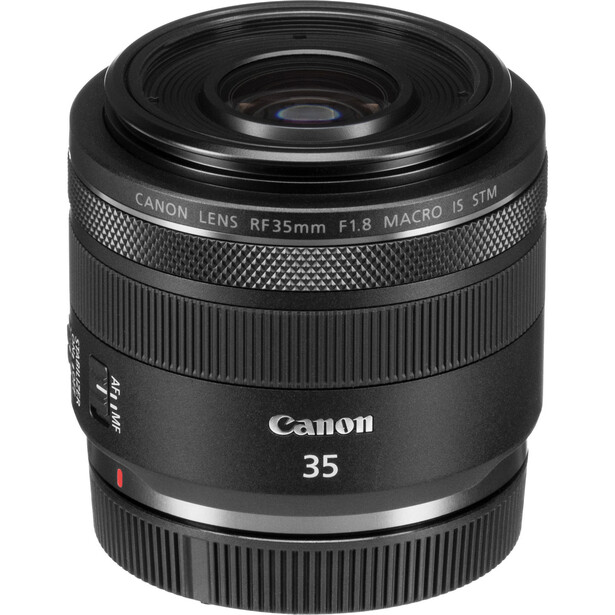
Handling speed falls into this category as well. A focus ring that falls naturally under your finger gets adjusted more often than one that requires repositioning your grip. An aperture ring with positive click stops invites experimentation in ways that menu diving doesn't. Manual focus that feels smooth and well-damped encourages the kind of careful precision that autofocus sometimes misses. None of these qualities appear in specification comparisons. None of them affect resolution tests or bokeh analyses. But all of them influence how you interact with your equipment over months and years of use, and that interaction shapes your photography more than any optical formula.
The Uncomfortable Diagnosis
Here's the part of the lens upgrade conversation that nobody wants to have: most of the time, the problem isn't your equipment at all. When photographers say they need more sharpness, they usually mean their compositions lack clarity of purpose. Technically sharp images with muddled visual hierarchy still fail to communicate. When photographers say they need better bokeh, they're often struggling with distance control and background selection. The smoothest rendering in the world can't save a portrait shot against a cluttered, distracting backdrop. When photographers complain about autofocus speed, they frequently need to develop better anticipation and timing discipline. Even mediocre autofocus systems perform well when you're ready for the moment rather than reacting to it.
This diagnosis stings because it places responsibility squarely on the photographer rather than the gear. It's much more pleasant to believe that a purchase will solve the problem than to acknowledge that deliberate practice is required. But the diagnosis also offers something valuable: it means improvement is possible without spending money. You can work on composition with the lenses you already own. You can practice distance control and background awareness without buying anything new. You can develop timing through repetition rather than technology. The path is harder but the results are more durable. Skills transfer across every lens you'll ever own. Technical specifications only apply to the one in your hand. If you're looking for structured guidance on developing these foundational skills across multiple disciplines, The Well-Rounded Photographer tutorial brings together eight instructors teaching eight genres, which can help you build the kind of versatile visual thinking that no single lens purchase ever will.
The Long Game of Meaningful Upgrades
The best lens purchases share a curious quality: they feel underwhelming at first and transformative months later. This is the opposite of typical gear acquisition syndrome, where new equipment generates immediate excitement that fades over time. When you buy a sharper version of what you already own, you experience a spike of enthusiasm during the unboxing and testing phase, followed by gradual normalization as the novelty wears off. When you buy something that actually challenges how you work, you experience confusion and frustration initially, followed by gradual revelation as new possibilities emerge.
This timeline makes meaningful upgrades hard to identify in advance and hard to appreciate in the moment. You might buy a focal length that forces new distance and spend three weeks wondering if you made a mistake. You might switch to a prime and miss your zoom constantly for the first month. You might choose a lighter lens over a sharper one and second-guess the decision every time you pixel-peep at 100%. The discomfort is part of the process. It indicates that you're actually being forced to adapt rather than simply continuing your existing patterns with slightly better output.
Patience matters enormously here. Evaluate a lens purchase at three months and six months rather than three days and six days. Look for changes in your behavior rather than improvements in your files. Are you standing in different places than before? Are you shooting more frequently or more confidently? Are you making decisions faster and with less hesitation? These behavioral shifts indicate a lens that's actually working on you, reshaping how you approach photography rather than simply optimizing what you were already doing. They're harder to measure than MTF curves, but they determine whether a purchase genuinely mattered far more reliably than any technical specification ever could.



Join the Fstoppers community for free
-
Post comments and join in the discussions
-
Browse the site ad-free
-
Share your work and get featured in the community
-
Compete in the photo contests for fun and prizes
6 Comments
I would have never been able to communicate all that, but yes that is exactly what I went/go through when I first change lenses. When I carry my 135 for street photography instead of my 50, I am mentally fried at the end of the day, and generally frustrated just like you mentioned, but I can attest that those pictures are some of my favorites to look back at.
Alex describes my experience, too. I planned to sell a 24mm f/1.7 DX lens (36mm FF equivalent) because I simply didn't use it. At a family event, I pulled the camera out and forgot I had left the lens mounted. My photos were more interesting and after some additional practice it has become one of my favorite lenses.
Very Good info and to play with, everyone learns by playing with the camera of choice matched with the many lens all ready with. One thing is first you will play with all your lenses to see out comes of each.
There is one thing also few ever play with but that is editing software. There are more now for lower prices so you can check out comes more doing different. I say this only for one reason few photographer understand there is more to a RAW image that they open and start moving sliders meaning the image captured does not come out like seen. In that area lenses used different times and different ways knowing a possible out come before pressing the shutter button will help with the use of a lens no matter prime or telephoto. A person may be new or old to photography but continued training will help in training those eyes that see light and movement no one else sees at a moments notice or the in the waiting game.
In my case I stated back in the 70's with film and you had to wait for photos to come back sometimes not remembering if i even took them for even a month later I had been in a couple of different countries and only a log book of film and data worked. But today a decade or so into digital when I am driving somewhere or going into a store or even on a walk in a park my eye will catch something even off to the side, unknowingly I scan in every direction most times stopping to capture and yes at times it may take awhile to get some where and with a small shoulder carry bag with a camera of choice for the day and a selected lens (not knowing what or where) and a couple extra lenses for different things my eyes have it and I start seeing what other do not.
If I may add something most are drawn to and that is fast glass, the software today even Lrc has a section for the bokeh affect this may save you some $ also and you can use old film lenses with adapters to get a feel of the faster glass and train you hand to MF also.
A capture using my knew 200-600 while driving back to a campsite on a road far away.
Walking out by door and looking over to the left seeing a moon aglow drove a few miles and just above the bridge, my camera and bag were ready.
A prison? I think that, on the personal side, shooting with one focal length is much more challenging than shooting with zoom lenses and therefore a much more valuable experience. Having discipline and challenging yourself is a good thing. Obviously on the job side though you have to use whatever lens is necessary to do whatever specific thing you are trying to accomplish.
I do a lot of theatre photography and I am too heavily invested in DSLRs to concern myself about mirrorless cameras. This a good thing for me as I have to "put up" with old cameras and lenses which is also a good thing. Being a theatre worker I don't have any control over my positioning, the light, subject movement especially the unpredictable. I had a SLR with a 2.8 70-200 lens then dropped it due to the darkness in the theatre righting off both. Not being able to afford a new or second hand f2.8 lens I had to buy an f4 70-200 and use another older DSLR that I already had. In every sense everything has worked out well with no discernable difference.
I like primes and use them regularly. Zooms are far more flexible for certain things. Choose the right tool for the job. Limited room to move feet, take a zoom, maybe more than one. Shooting inside a cavern with artificial light, take that F1,4 50mm prime. Doing a long road trip, take the big bag with a selection of favorites and spares and a small one for daily use.