

Bokeh is one of those words you hear constantly in photography and almost never hear defined. People use it to mean "blurry background," they use it to mean "expensive lens," and they use it as a compliment without being able to say what they are complimenting. So let us clear it up, because once you understand what bokeh actually is, you can stop chasing it blindly and start using it on purpose.
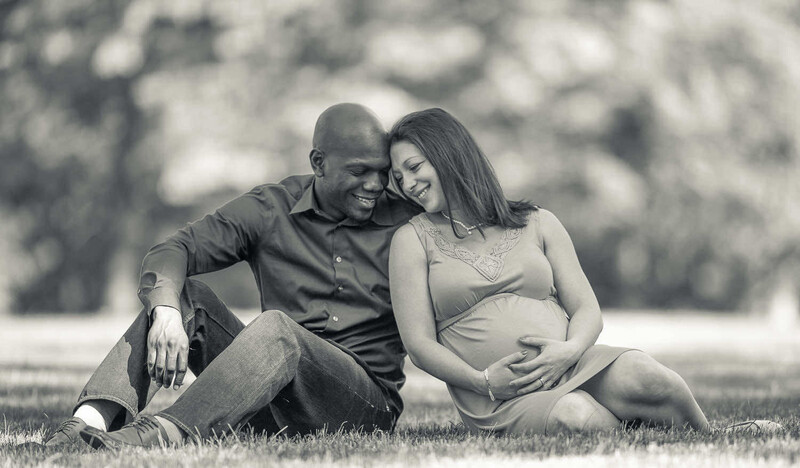
The word comes from the Japanese "boke," meaning blur or haze, and in photography it refers to something specific: the aesthetic quality of the out-of-focus areas of an image. That last part matters. Bokeh is not the amount of blur. It is the character of the blur. A photo can have a heavily blurred background with ugly, distracting bokeh, or a modestly blurred background with beautiful, smooth bokeh. Confusing the two is the single most common mistake beginners make with the term.
Blur Quantity Versus Blur Quality
Think of it as two separate questions. The first is how much the background is blurred, which is just depth of field. The second is what that blur looks like, which is bokeh. They are related but not the same, and the distinction is the key to the whole topic.
Depth of field, the amount of blur, is controlled by a few things you already have levers for: a wider aperture (a smaller f-number like f/1.8) blurs more, getting closer to your subject blurs more, and moving your subject farther from the background blurs more. Longer focal lengths come into it too: they often make backgrounds appear more blurred, especially when you keep similar framing and the background sits well behind the subject, because the longer lens magnifies what is behind your subject and lets you shoot from farther away, which makes the perspective appear compressed. Stack these together and even a modest lens produces a lot of background separation.

Bokeh quality, on the other hand, is strongly shaped by the lens design itself, specifically how its optics render those out-of-focus areas. This is why two lenses used at the same aperture, with similar framing and similar blur quantity, can still produce blur that looks completely different. One looks creamy and smooth; the other looks busy and nervous. Same quantity, different quality. That said, the scene matters too: the same lens can look smooth against distant lights or broad areas of even tone and nervous against bare branches, chain-link fences, lettering, or other high-contrast background detail. Your choice of background, and how far it sits behind the subject, affects the result as much as the glass does.
What Makes Bokeh "Good"
Photographers describe pleasing bokeh as smooth, creamy, or soft, and there are concrete optical reasons behind those vague words. A few specific things separate good bokeh from bad.

The shape of out-of-focus highlights is the most visible factor. When a bright point in the background, a streetlight, a sparkle on water, a gap in foliage catching the sun, falls out of focus, it spreads into a disc. In good bokeh, those discs are round and clean. The roundness comes from the aperture: lenses with more blades, and especially rounded blades, keep the opening more circular, so the highlights stay round. A lens with few straight blades renders those highlights as hard-edged pentagons or heptagons, which reads as harsher and more mechanical. This matters most once you stop down a little, since wide open the blades are largely retracted and the disc shape is governed more by the lens design and vignetting; close the aperture even one stop and the blade shape starts to show.

Clean illumination across the disc matters too. The most pleasing highlights avoid harsh bright rims, hard edges, and visible internal texture. Less pleasing renderings show a bright ring around the edge of each disc, sometimes called soap-bubble bokeh, or concentric rings inside the disc, called onion-ring bokeh, which is commonly associated with the fine surface pattern left on precision-molded aspherical lens elements during manufacturing, though not every such lens shows it. These effects are not objectively wrong, and some photographers deliberately seek soap-bubble rendering for a vintage or stylized look, but they are more attention-grabbing than neutral, smooth blur.

Smooth tonal transitions are the last piece. In good bokeh, the background melts gradually from sharp to soft with no harsh edges or doubled lines. Photographers call the area just outside the plane of focus the transition zone, and a lens can render deep background blur beautifully while still looking nervous right there in the transition zone. In poor bokeh, edges in the background render as nervous double-lines, a look photographers sometimes call "busy" or "harsh," which keeps pulling your attention away from the subject.
What Makes Bokeh "Bad"
Bad bokeh is essentially the inverse of all of the above, and it has recognizable signatures worth knowing so you can spot it in sample images before you buy anything.
Cat's-eye bokeh is when the round highlights toward the edges of the frame get squashed into lentil, oval, or cat's-eye shapes instead of staying circular. It is caused by the lens barrel physically clipping the light path at the edges, an effect called optical vignetting, and it is most visible wide open. A little of it can actually look attractive, creating a swirly effect, but a lot of it looks distracting.
Color fringing in the blur is another common flaw, and one that especially haunts fast, budget-friendly primes. Known as longitudinal chromatic aberration, or bokeh fringing, it shows up as a green or magenta tint around out-of-focus highlights and edges, green behind the focus plane, magenta in front. It immediately undercuts the clean, creamy look you are trying to achieve, so it is worth looking for in sample images of any cheap fast lens you are considering.
Harsh, polygonal highlights, from a lens with too few aperture blades, turn every background light into a hard geometric shape. Onion rings and bright-edged discs, as described above, make the background feel cluttered. And nervous, double-lined blur in busy backgrounds, like a tangle of bare branches, can turn what should be a soft wash into a jittery mess that competes with your subject.

The important thing to understand is that "bad" bokeh is not about quantity. A background can be heavily blurred and still look bad if the blur has these qualities. That is why simply buying the fastest lens you can afford does not guarantee beautiful results.
One more wrinkle most beginners never hear: background bokeh and foreground bokeh are not always the same. Out-of-focus areas between the lens and your subject can render differently from the blur behind it, because of how a lens corrects spherical aberration. A lens may smooth the background beautifully while rendering foreground blur harshly, or the reverse, and harsh foreground blur is especially distracting because it sits right in front of your subject. This is one reason real sample images tell you far more about a lens than its spec sheet does. Blade count, aperture, and aspherical elements are clues, not guarantees, so when a lens's bokeh matters to you, look at photos taken with it rather than trusting the numbers.
One last thing worth knowing, since it is where most people first meet the word: the "bokeh" your phone produces in portrait mode is often not optical at all. Most phones have small sensors and short lenses that cannot blur a background much on their own, so they fake it in software, building a depth map and computationally blurring whatever it decides is "background." When it works, it looks convincing. When it fails, you get the telltale artifacts: a chunk of blurred hair, a sharp edge slicing through soft blur, glasses or fingers that the software could not figure out. Those are depth-map errors, not lens flaws, and they are a different problem from the optical bokeh this article is about. A real lens blurs continuously and physically; a phone guesses where the edges are.
How to Get Good Bokeh as a Beginner
Here is the encouraging part: you do not need an expensive lens to get pleasing background blur. You need to understand the levers and pull them together.
Start with technique, which is free. Open your aperture as wide as your lens allows, but back off the very widest setting by a fraction if your subject needs it, since extreme apertures can leave one eye sharp and the other soft. Move closer to your subject. Put as much distance as you can between your subject and the background. And if you have a zoom, zoom in when the composition allows, because longer focal lengths make background blur look stronger by magnifying what is behind your subject. Do all of this and even a humble kit lens will surprise you.
A simple mental model helps here: background blur depends heavily on how far the background sits relative to your subject, not just on whether it is technically behind the subject. If your subject is five feet away and the background is ten feet away, you get modest blur, since the background is only twice as far as the subject. If your subject is five feet away and the background is a hundred feet away, that background melts completely. But if your subject is fifty feet away and the background is sixty feet away, almost everything stays sharp, because the background is barely farther than the subject even though it sits well behind it. That relationship between subject distance and background distance is one of the biggest reasons the same lens can look dramatically different from one scene to the next.
When you are ready to buy a lens specifically for this look, the affordable fast prime is the classic move, and you do not need to spend a fortune. The "nifty fifty," a 50mm f/1.8, is the traditional first bokeh lens for exactly this reason: it is cheap, light, and its wide aperture produces lovely separation. On Canon's RF mount the Canon RF 50mm f/1.8 STM is the budget standard at around 160 grams, and on Sony the Sony FE 50mm f/1.8 plays the same inexpensive role. Nikon Z shooters have a slight wrinkle: the Nikkor Z 50mm f/1.8 S is superb, but it is a premium S-line lens that costs noticeably more and weighs more than twice as much as a typical nifty fifty, so the more natural budget entry point on the Z mount is the lighter, cheaper Nikkor Z 40mm f/2 at about 170 grams. On Fujifilm the Fujifilm XF 35mm f/2 R WR frames like a 50mm equivalent and renders beautifully. And if you shoot a Canon or Sony APS-C body rather than full frame, the equivalent budget move is a fast 30mm or 35mm such as the Sigma 30mm f/1.4 DC DN, which gives you a roughly normal field of view on a crop sensor instead of the tight, indoor-unfriendly framing a 50mm produces on those bodies.
A word on sensor size, since it quietly shapes all of this. A larger sensor makes shallow depth of field easier to achieve at a given framing, which is why full frame has a reputation for effortless background blur. That Fujifilm 35mm sits on an APS-C body, so at matched framing it will not blur quite as aggressively as a full frame 50mm f/1.8. And the same lens mounted on a crop body versus a full frame body gives you a different field of view; once you adjust your position or focal length to get the same framing, the format affects how much background separation you see. None of this means a smaller sensor cannot produce lovely bokeh, it absolutely can, but it is worth knowing that the format under the lens is part of the equation.
If portraits are your real goal, a short telephoto blurs backgrounds even more thanks to the longer focal length, and an 85mm prime is the genre's classic. The Sony FE 85mm f/1.8 and the Canon RF 85mm f/2 Macro IS STM are both affordable, beginner-friendly ways into that look without the cost of the f/1.2 professional glass. Specialized high-end portrait lenses, especially those with defocus-smoothing or apodization designs and carefully rounded aperture blades, can produce especially refined bokeh, but they are a destination, not a starting point.
Bokeh Is a Tool, Not a Trophy
The last thing worth saying is that good bokeh serves the photo; it is not the point of the photo. Background blur exists to separate your subject from distractions and direct the viewer's eye where you want it. When beginners discover shallow depth of field, the temptation is to blur everything to oblivion on every shot, but a background that is recognizable can add context and story, and not every image is better with the world melted away behind it. Use bokeh to solve a problem, a cluttered background, a weak sense of depth, a subject that is not standing out, rather than as an effect applied for its own sake.
Understanding the difference between the amount of blur and the quality of blur puts you ahead of most people who use the word. Pull the free levers first, buy an affordable fast prime when you are ready, and judge a lens by the character of its blur, not just how much of it there is.
If you want to put this into practice in the genre where bokeh matters most, Peter Hurley's Perfecting the Headshot covers portrait work where subject separation is everything, and for a broader foundation across genres, The Well-Rounded Photographer: 8 Instructors Teach 8 Genres of Photography is a strong starting point. If your interest runs toward landscapes, where you often want the opposite of bokeh, Photographing the World: Landscape Photography and Post-Processing covers getting everything sharp front to back.




Join the Fstoppers community for free
-
Post comments and join in the discussions
-
Browse the site ad-free
-
Share your work and get featured in the community
-
Compete in the photo contests for fun and prizes
4 Comments
“The last thing worth saying is that good bokeh serves the photo; it is not the point of the photo.”
This is an extremely useful observation.
“Bokeh” seems to be a topic over which photo aspirants obsess excessively, at the expense of all the other considerations that go into making photos effective. Thinking back over the hundreds or thousands of historically significant photos that I have studied over the years, I can’t think of a single one that relied on shallow depth of focus. What I do recall is that at the beginning of my interest in photography I was highly influenced by the imagery all around me in our culture, and I thought that becoming a better photographer meant becoming better at mimicking the images I saw every day. However, as I studied the work of photographers like Ansel Adams, Eugene Smith, Eugene Richards, and my favorites, Josef Koudelka and Manuel Alvarez Bravo, I noticed that they did not look anything like the advertising and postcard images that reached out from billboards, magazines and souvenir postcard racks to claim my attention. Rather than direct the viewer’s attention to a single subject by throwing everything else out of focus, they carefully organize and integrate the various visual elements in a scene in a way that provides context for the subject.
I do have large-aperture primes that I use in low light and occasionally for shallow depth of focus in my paid event work. But, in the travel and landscape photos I make for fun, I almost never rely on this tool, instead using position, timing, and focal length to build compositions that lead viewers to the subject rather than beat them over the head with it.
It is not having expensive tools that makes a pro a pro or an amateur effective. It’s skills and insight.
…
Bokeh is a thing: https://en.wikipedia.org/wiki/Bokeh
Think of it not as "blurry" but "selective" focus.