

Mirrorless tech has finally killed the "Prime vs. Zoom" debate. Here is why working pros are trading their lightweight primes for heavy f/2 glass.
For three decades, the professional photographer's kit list read like scripture. You carried the Holy Trinity: a 16-35mm f/2.8, a 24-70mm f/2.8, and a 70-200mm f/2.8. These were the lenses that separated the weekend warrior from the working pro, the glass that insurance companies recognized and clients expected to see hanging from your neck. And if you needed something faster than f/2.8 for that dimly lit reception or that creamy portrait bokeh, you reached into a second bag filled with prime lenses. A 35mm f/1.4 here, a 50mm f/1.8 there, an 85mm f/1.4 for the money shots. This was the way things worked, and nobody questioned it because the physics of lens design simply did not allow for anything better.
That rulebook is now being rewritten in real time. We are living through what I have started calling the f/2 Renaissance, a period where lens manufacturers have collectively decided that the old compromises no longer apply. Canon, Sony, and Sigma have all released zoom lenses that deliver f/2 or faster across their entire focal range, and these are not exotic prototypes or limited-edition curiosities. These are production lenses sitting on store shelves, being purchased by working photographers who have done the math (myself included) and decided that the old way of doing things no longer makes sense. The implications of this shift extend far beyond simple spec-sheet comparisons. We are witnessing a fundamental change in how professional photographers approach their craft, trading the friction of lens swaps for the weight of heavier glass and discovering that for many shooting scenarios, that trade is absolutely worth making.
The Technology That Made This Possible
The obvious question is why this is happening now. Photographers have wanted faster zoom lenses since the zoom lens was invented, so what changed? The answer lies in the transition from DSLR to mirrorless camera systems, a shift that unlocked optical possibilities that were physically impossible with the old mirror-box designs.
DSLR cameras required a significant distance between the rear element of the lens and the image sensor because a mechanical mirror had to swing up and down in that space. This flange distance constrained lens designers in ways that most photographers never fully appreciated. When Canon introduced the RF mount and Nikon launched the Z mount, they were not just removing the mirror. They were creating optical playgrounds with shorter flange distances and wider throat diameters that allow light to hit the sensor at much steeper angles. This sounds like marketing speak until you realize that those steeper angles are precisely what enable faster apertures without the lens growing to absurd proportions. The f/2 zooms we are seeing today would have been physically impossible to build for EF or F mount DSLRs, at least not without making them so large, heavy, and expensive that no human being would want to carry them.
The second factor is the maturation of zoom lens optical quality. There was a time, not so long ago, when the phrase "prime quality" meant something specific and measurable. Primes were sharper than zooms, period, and if you cared about image quality you accepted the inconvenience of fixed focal lengths. That gap has effectively closed. A modern Sony G Master zoom or Canon RF L zoom tested on a 45-megapixel sensor produces results that are genuinely indistinguishable from a standard prime at any viewing size that matters for professional work. The pixel-peepers can still find differences at 400% magnification, but nobody is printing poster-sized images from the corners of their frames. For real-world commercial and editorial applications, the quality argument for primes has significantly shrunken.
The third factor is sensor technology. Five years ago, shooting a wedding reception at ISO 6,400 was a calculated risk. Today, cameras from every major manufacturer produce clean, usable files at ISO 6,400 and beyond. This changes the aperture calculus entirely. We used to need f/1.4 primes because we needed every photon we could capture in challenging light. Now that high ISO performance has improved so dramatically, f/2 provides more than enough light-gathering capability for virtually any professional scenario. What f/2 still offers, and what f/2.8 cannot match, is depth-of-field control. That extra stop of aperture separation between your subject and background remains valuable even when you no longer need it for exposure purposes.
The Current Contenders
Three lenses define this new category, and each takes a slightly different approach to the same fundamental concept.
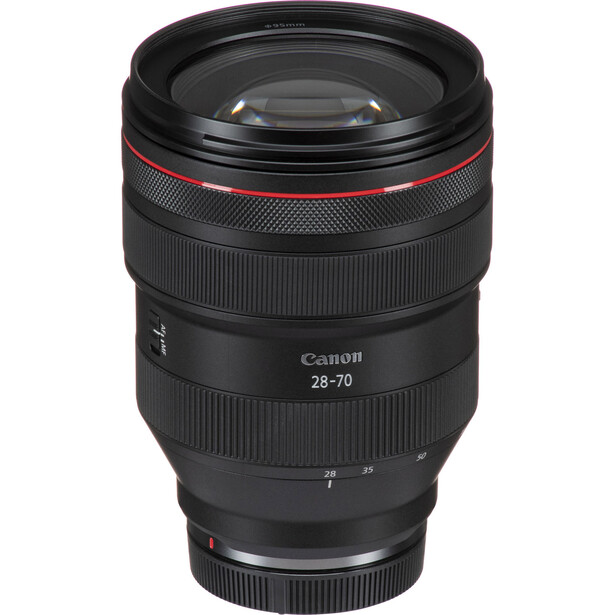
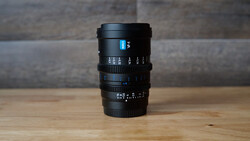
Canon arrived first with the Canon RF 28-70mm f/2L USM, a lens that announced its intentions through sheer audacity. At 1.4 kg and with a price tag that made accountants weep, the Canon made no apologies for what it was: a bag of prime lenses compressed into a single barrel. The marketing copy practically wrote itself, promising that professionals could leave their 35mm, 50mm, and 85mm primes at home and never miss them. The reality proved more nuanced than the marketing suggested, but the lens accomplished something remarkable nonetheless. It demonstrated that working photographers would accept extreme weight and extreme cost if the convenience proposition was compelling enough. Wedding photographers who shot with the RF 28-70mm f/2 reported that they simply stopped thinking about lens changes during ceremonies. They got wide shots and tight shots and everything in between without ever lowering the camera from their eye. For a certain type of shooter working a certain type of event, that continuity was worth every gram. I've personally replaced several primes with one.
Sony responded with the Sony FE 28-70mm f/2 GM, a lens that took Canon's proof of concept and refined it in predictable Sony fashion. The Sony version is lighter, focuses faster, and benefits from the enormous E-mount ecosystem that surrounds it. Where Canon's lens felt like a statement piece, Sony's feels like a mature product designed for daily professional use. The significance of Sony entering this market cannot be overstated. When the company with the largest mirrorless market share decides that f/2 zooms deserve the G Master treatment, they are signaling that this category has moved from niche curiosity to mainstream professional tool. Wedding and event photographers who shoot Sony now have a first-party option that their Canon-shooting colleagues have enjoyed for years, and the competitive pressure this creates will only accelerate development across the industry.
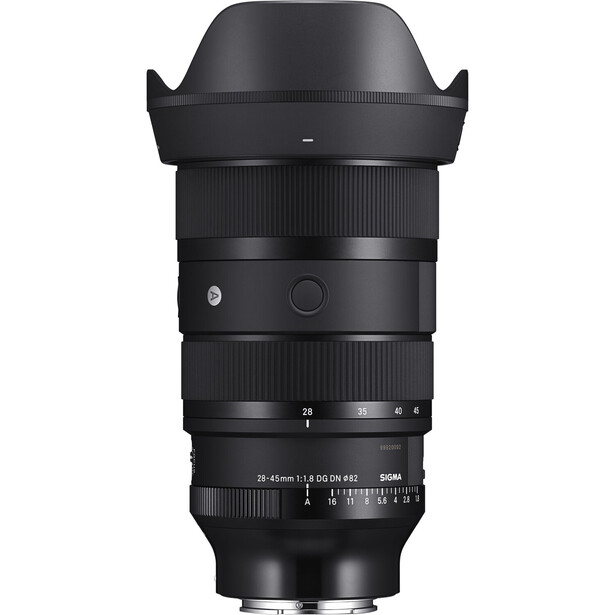
Sigma took a different path with the Sigma 28-45mm f/1.8 DG DN Art, sacrificing telephoto reach for even faster aperture. This is a lens designed with video shooters in mind, professionals who prize that constant f/1.8 aperture for maintaining exposure consistency during documentary-style shooting. The reduced focal range matters less when you are filming interviews or B-roll than it does when you are trying to capture unpredictable moments at a wedding. But for hybrid shooters who move fluidly between stills and motion, the Sigma represents an intriguing proposition. It effectively eliminates the need for a 35mm f/1.8 prime entirely, providing zoom flexibility at an aperture that matches or exceeds most standard prime lenses. For photographers looking to expand into video work, Fstoppers also offers Introduction to Video: A Photographer's Guide to Filmmaking, which covers the fundamentals of hybrid shooting.
And now that we've seen the standard zoom focal lengths (and variations thereof) established at f/2 apertures, we're seeing further expansion in lenses like the Sony FE 50-150mm f/2 GM, Tamron 35-150mm f/2-2.8 Di III VXD, and Samyang 35-150mm f/2-2.8 AF. We're getting closer and closer to a full f/2 trinity.
The Real Trade-Off: Weight Versus Friction
Every discussion of these lenses eventually arrives at the weight question, and critics are not wrong to raise it. These are heavy lenses by any standard, glass that your wrist will feel during an eight-hour wedding day. But the weight conversation often misses the more important comparison.
Consider the alternative. If you want f/1.8 or faster coverage from 28mm to 70mm using prime lenses, you are carrying a 35mm f/1.8, a 50mm f/1.8, and an 85mm f/1.8 at minimum. Combined weight for a typical set of those primes runs around 3 lbs, not dramatically less than the f/2 zoom options. You also need a bag or pouch to carry the lenses you are not currently using, and you need to account for the mental overhead of managing multiple pieces of glass throughout your shoot. The zoom is heavier on your wrist at any given moment, but the total system weight is surprisingly comparable.
The more significant factor is shooting friction, the accumulated cost of all the small interruptions that lens changes create. Every time you swap glass, you break your connection with the scene in front of you. You look away from your viewfinder. You fumble with lens caps and camera bags. You miss moments that happened while your attention was elsewhere. For certain types of photography, this friction is acceptable or even beneficial. Landscape photographers can take their time. Studio portrait shooters control their environment completely. But for event photographers working in chaotic, unpredictable situations where moments happen once and never repeat, friction is the enemy of great images.
The f/2 zoom eliminates that friction entirely. You get the wide environmental shot and the tight emotional reaction shot without ever lowering the camera from your eye. You follow the action continuously rather than in interrupted bursts. You stay in the moment rather than managing your equipment. For photographers who have made this switch, the weight penalty feels trivial compared to the creative freedom they have gained.
Winners in the f/2 Era
Not every photographer benefits equally from this shift, and understanding who wins and who loses clarifies when these lenses make sense.
The clearest winners are event and wedding professionals who work in unpredictable environments with unrepeatable moments. If your job involves documenting a ceremony where the first kiss happens exactly once, you cannot afford to be changing lenses when that moment arrives. The f/2 zoom simplifies your mental stack and lets you focus entirely on composition and timing rather than focal length logistics. Photographers in this category who have adopted f/2 zooms report that they feel liberated in ways they did not anticipate, freed from a layer of technical management they had simply accepted as part of the job.
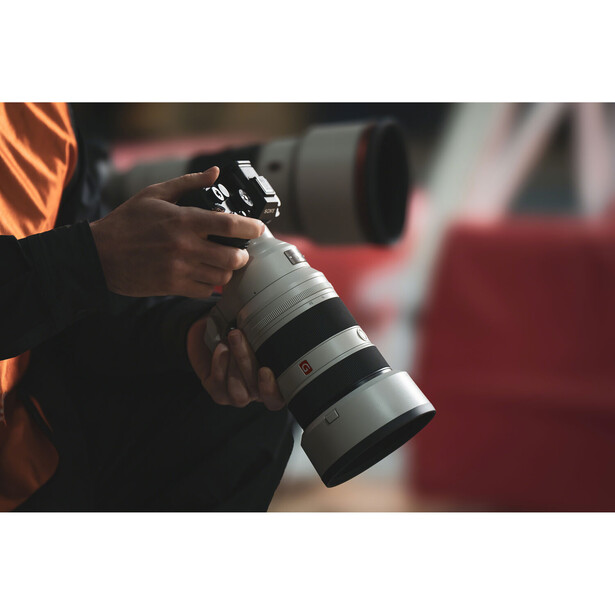
Hybrid video shooters represent another category of clear winners. Video work punishes lens changes even more severely than still photography because every swap requires rebalancing gimbals, checking focus calibration, and potentially adjusting exposure settings. A constant f/2 aperture across a zoom range means you can shoot an entire documentary interview setup without touching your lens. The consistency this provides extends beyond convenience into the realm of visual coherence, giving your footage a unified look that would be difficult to achieve when cutting between multiple prime lenses.
Travel and landscape photographers are likely less favored by these lenses. If you measure every gram in your pack because you are carrying it up a mountain, the weight penalty of an f/2 zoom is genuinely punishing. These photographers rarely need f/2 apertures for their work anyway. Landscapes are typically shot at f/8 or f/11 for depth of field, and travel photography prioritizes versatility and portability over low-light capability. An f/4 zoom that weighs half as much makes far more sense for these applications.
The Future We Are Entering
What does this mean for the broader lens market? The f/2 zoom does not kill every prime lens category. The glamour glass still has a place. Portrait photographers will continue buying 85mm f/1.2 and 50mm f/1.2 lenses because those tools offer capabilities that no zoom can match. The extreme background separation, the distinctive rendering, the artistic control these lenses provide remains valuable for photographers who build their visual identity around those characteristics.
What the f/2 zoom does seriously wound is the standard utility prime. The 35mm f/1.8, 50mm f/1.8, and 85mm f/1.8 lenses that populated so many camera bags existed because photographers needed something faster than their f/2.8 zooms for specific situations. They were compromises, cheaper and lighter than the f/1.2 and f/1.4 options but fast enough to get the job done when the zoom could not. The f/2 zoom renders these lenses redundant for most professional applications. Why carry a 50mm f/1.8 that offers one third of a stop more light than your zoom? The convenience factor has flipped entirely. Granted, the new f/2 zooms are far more expensive, but if you're a professional using these lenses regularly, they make sense.
We are entering the era of the one-lens professional, at least for certain categories of work. It is heavier than the old way. It is more expensive than the old way. And for photographers who have made the switch, it is absolutely the future. The 24-70mm f/2.8 is not suddenly a bad lens. It remains an excellent tool that will serve photographers well for years to come. But it is no longer at the top of the professional zoom category.




Join the Fstoppers community for free
-
Post comments and join in the discussions
-
Browse the site ad-free
-
Share your work and get featured in the community
-
Compete in the photo contests for fun and prizes
7 Comments
Rather than lug these weighty beasts for 10 hours at a conference or wedding, I'm increasingly adding a third body and mounting lighter, brighter primes on two or three of them, with another in a pouch on my utility belt. This is much easier on my shoulders and upper back. A 20-40mm/2.8 zoom doesn't need to be as bright due to the slower action-stopping shutter speeds for a wide field of view, and Crop Mode gets me to 60mm. This nicely complements the 85/1.4 and 135/1.8 on the other two bodies. If I don't need the reach, I'll go with a 24, 35 and 85, using Crop Mode to get 52 and 130. These trios are much less fatiguing than my 20-40 on one body and my 35-150/2.0-2.8 on another, especially if they allow me to forego flash.
I tried weddings with primes... way too difficult for me.
For us mere mortals, a nice f4 Trinity works just fine.
Weekend warrior here—no heavy gear for weekend shoots! Superzooms & fast primes are my picks. Constant f/2 zooms? Rent-only, never buying.
f/2 zooms are in no way becoming "standard". They certainly provide an option for anyone willing to deal with the cost and heft of using them. But it is absurd to suggest that pros or amateurs are flocking to these lenses. They are not. These are simply halo products to show what's possible. Just like the old 50mm f/1.0 used to be in SLR days. People love to oogle them. But few actually use them in daily work.
The Sony F2 only added extra weight to my bag, I think F2.8 is just fine and if you take something like the f2.8 70-200 it is light with exceptional optics.
The weight of your wallet compensates that. :)