There's a particular joy in slinging a mirrorless camera over your shoulder and realizing it barely tugs at the strap. That feeling multiplies when you glance down and see the lens sitting almost flush with the body, transforming what should be a serious photographic tool into something that looks more like an oversized point-and-shoot. Welcome to the world of pancake lenses, where compactness isn't a compromise but a deliberate design philosophy.
Pancake lenses have experienced a quiet renaissance in recent years. As mirrorless camera bodies have grown increasingly sophisticated while maintaining relatively slim profiles, photographers have started asking why their lenses couldn't follow suit. The major manufacturers listened, and what was once a niche category dominated by a handful of options has blossomed into a diverse ecosystem spanning every major mount system. Whether you're a street photographer who wants to remain inconspicuous, a traveler counting every gram in your bag, or simply someone who appreciates elegant engineering, there's likely a pancake lens that fits your needs.
For this roundup, I've assembled 15 options that represent the full spectrum of what's currently available, from major manufacturer offerings to budget-friendly third-party alternatives and even a few wildcard choices that push the boundaries of what a "pancake" can be.
What Actually Makes a Lens a Pancake?
Before diving into specific recommendations, it's worth establishing what separates a true pancake from merely a compact prime. The term lacks an official industry definition, but the photography community generally considers any lens shorter than about 30-40 mm in length to qualify. The most extreme examples barely protrude beyond the lens mount itself, looking more like body caps with glass elements than traditional optics.
This compactness demands engineering trade-offs. Most pancakes feature modest maximum apertures, typically f/2.8 or slower, because faster glass requires larger optical elements that simply won't fit in such constrained housings. Autofocus motors must be miniaturized, sometimes at the expense of speed or near-silent operation. And the focal lengths tend to cluster around the moderate wide angle range, where optical formulas can be simplified without introducing excessive distortion or aberrations.
Yet within these constraints, lens designers have achieved remarkable results. Modern pancakes often deliver optical quality that rivals or exceeds much larger alternatives, proving that good things genuinely can come in small packages.
Canon RF: Two Compelling Choices
Canon entered the pancake game relatively late with its RF mount system, but the company has since built a compelling compact lineup. Both of its pancake options share the same $299 price point at B&H Photo, making them among the most accessible premium pancakes on the market.
The
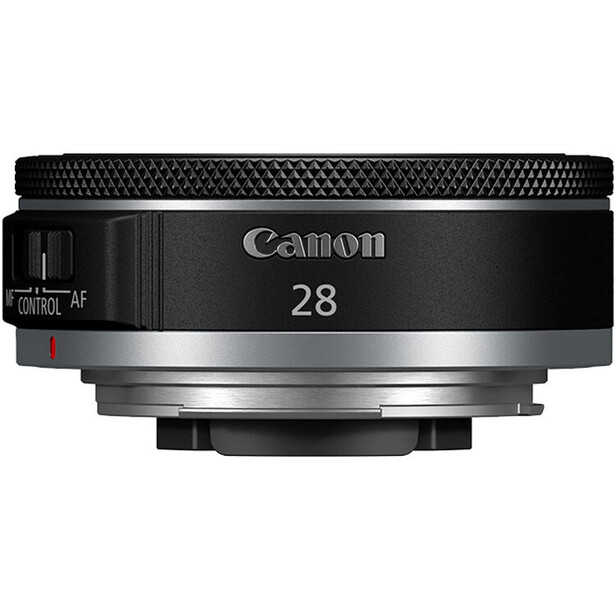
Canon RF 28mm f/2.8 STM represents Canon's first true pancake for its full frame mirrorless system, and the company clearly understood the assignment. At just 24.7 mm long and weighing only 120 g, this lens transforms cameras like the EOS R8 or R6 Mark II into genuinely pocketable systems. The 28mm focal length hits a sweet spot that works across multiple genres, wide enough for environmental portraits and street scenes but not so extreme that perspective distortion becomes problematic. It's the kind of lens you mount and forget about, leaving it attached for weeks at a time because it never feels like the wrong choice.
For those who prefer a wider perspective, the
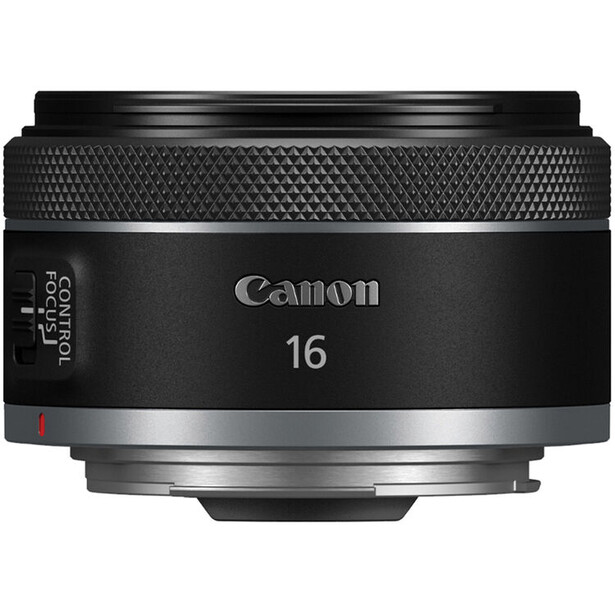
Canon RF 16mm f/2.8 STM stretches the pancake definition slightly at 69 mm long but delivers something remarkable: an ultra-wide prime at a price point that undercuts the competition by hundreds of dollars. This lens has become a favorite among vloggers and content creators who need that expansive field of view without the bulk of traditional ultra-wide zooms. The optical quality is strong, with well-controlled distortion and surprisingly good corner sharpness for such an affordable optic. If you shoot architecture, landscapes, or any content where fitting more into the frame matters, this lens deserves serious consideration. For those looking to develop their landscape skills further, Fstoppers offers
Photographing the World: Landscape Photography and Post-Processing, which pairs beautifully with compact travel setups like these.
Nikon Z: The Thinnest of Them All
Nikon took a slightly different approach with its pancake offerings, prioritizing absolute slimness in its full frame option while delivering surprising speed in its crop-sensor alternative.
The
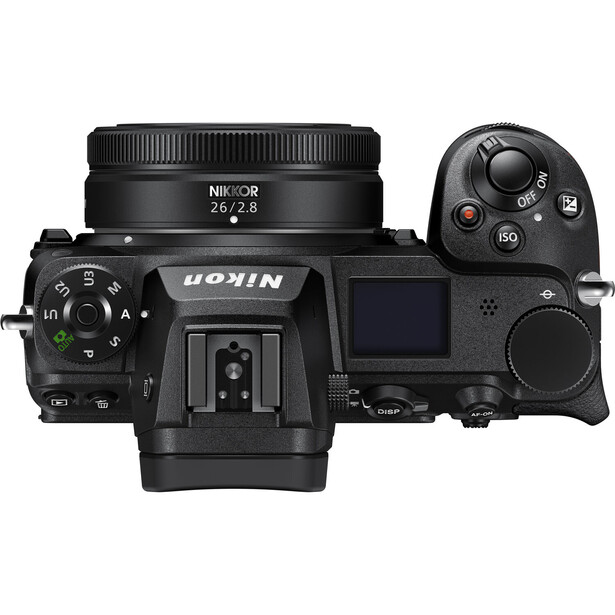
Nikon NIKKOR Z 26mm f/2.8 holds the distinction of being the thinnest autofocus lens in Nikon's entire Z-mount lineup, measuring just 23.5 mm from mount to front element. This matters enormously for cameras like the Zf and Zfc, where the retro-styled bodies practically beg for compact glass that maintains their rangefinder-inspired aesthetics. At $446.95, it's positioned at a premium compared to Canon's offerings, but the optical quality and build justify the investment. The 26mm focal length provides a slightly wider perspective than the classic 28mm, which some photographers prefer for documentary and street work.
What really should catch your attention, however, is the
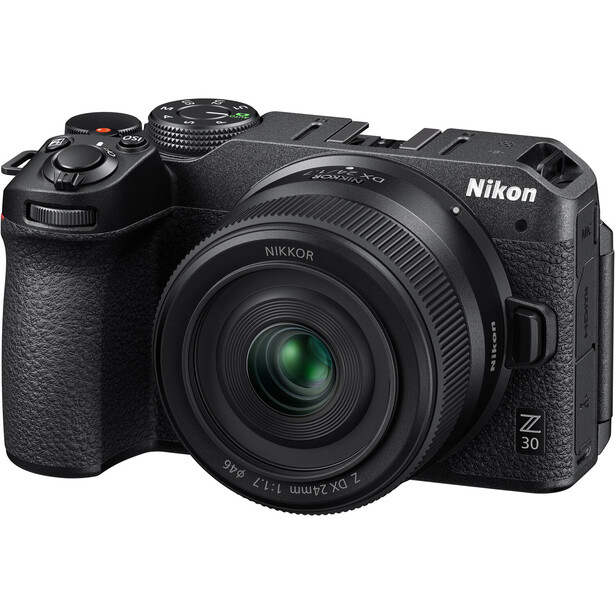
Nikon NIKKOR Z DX 24mm f/1.7, priced at $266.95. This compact crop-sensor prime stretches beyond traditional pancake dimensions at 40 mm long, but it breaks the mold by offering a genuinely fast maximum aperture in a still-portable package. That f/1.7 specification means you can actually achieve meaningful background separation and shoot confidently in lower light, capabilities that true pancakes simply can't match. On APS-C bodies, the 36mm equivalent field of view approximates the classic documentary focal length, making this an ideal choice for Z50 and Zfc owners who want a single versatile prime that doesn't sacrifice speed for size.
Fujifilm X: Character Meets Compactness
Fujifilm has cultivated a reputation for building lenses with distinctive rendering characteristics, and their pancake options embody this philosophy while adding professional-grade features that competitors often omit.
The
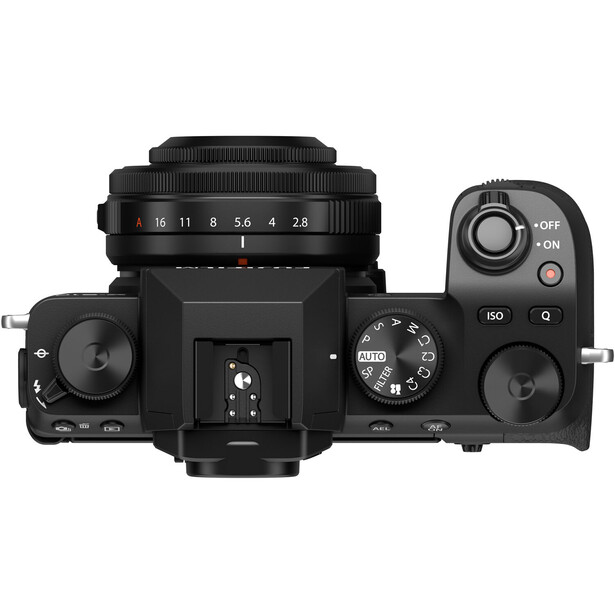
XF 27mm f/2.8 R WR stands as my top recommendation for X-mount shooters seeking a pancake lens. At $449, it's not the cheapest option in Fuji's lineup, but the feature set justifies every dollar. Weather resistance means you can shoot confidently in light rain or dusty environments, a rarity among lenses this small. The aperture ring provides direct, tactile control that integrates beautifully with Fuji's exposure compensation dials, enabling a fully manual shooting experience without ever entering a menu. And at just 84 g with a length of 23 mm, it practically disappears on bodies like the X-E4 or X-T5.
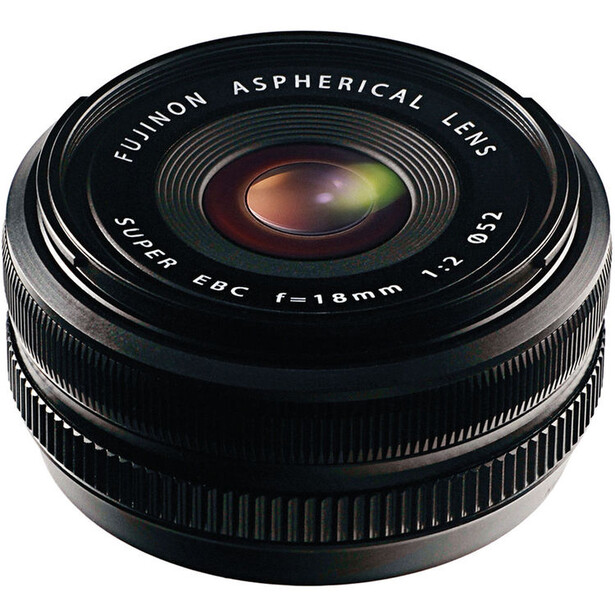
Fujifilm also offers the
XF 18mm f/2 R at $699.95, though this lens occupies a peculiar position in the lineup. It's one of the original X-mount lenses, and its optical formula reflects the priorities of that era. Modern reviewers sometimes criticize its corner softness and slower autofocus, but these characteristics have earned it a devoted following among photographers who appreciate its vintage-inspired rendering. Images from this lens have a quality that's difficult to quantify but immediately recognizable, a certain smoothness in the transitions and gentle falloff that more clinically perfect modern optics don't replicate. Consider it if you prioritize character over absolute technical perfection.
Sony E-Mount: Compact Options Across the Lineup
Sony was an early adopter of compact mirrorless primes when it launched the NEX system in 2010, following the trail blazed by Micro Four Thirds a year earlier. The company offers options for both crop and full frame shooters, though the selection remains smaller than competitors.
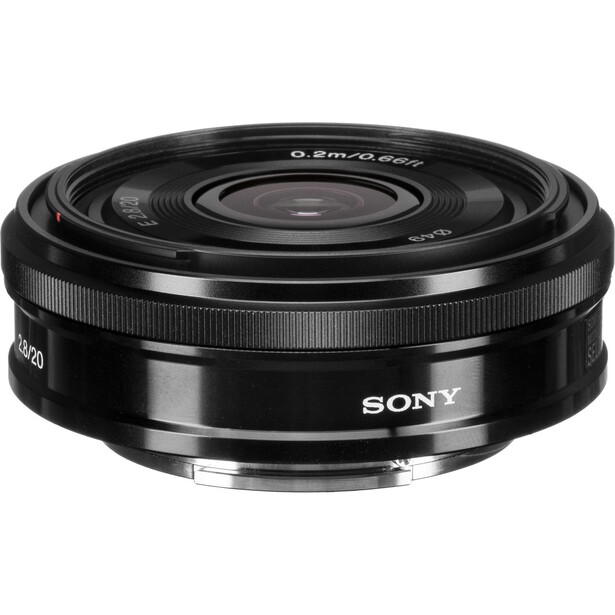
The
Sony E 20mm f/2.8, at $378, remains one of the thinnest native lenses for Sony's APS-C cameras, measuring just 20.4 mm long and weighing only 69 g. Mounting this lens on an a6700 or ZV-E10 creates a package that genuinely fits in a jacket pocket, something few interchangeable lens cameras can claim. The 30mm equivalent field of view works well for casual shooting, travel documentation, and vlogging applications. Sony also offers the E 16mm f/2.8, another compact wide angle option for crop-sensor bodies that rounds out the APS-C pancake selection.
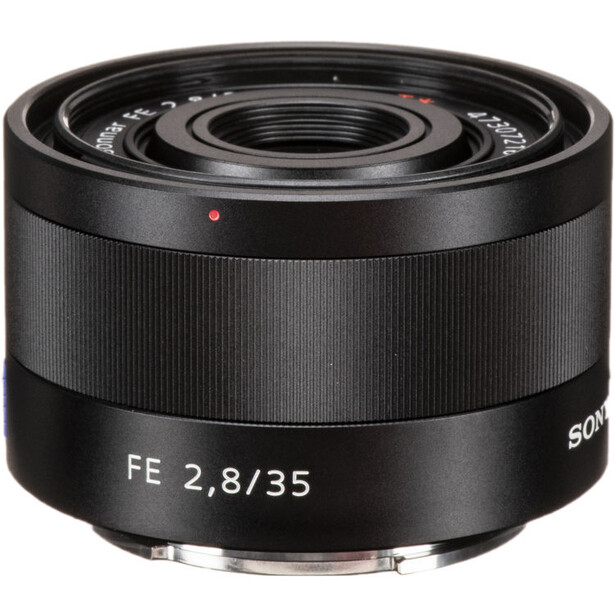
For full frame shooters, the
Sony Sonnar T* FE 35mm f/2.8 ZA provides a compact prime option at 36.5 mm long. While not as slim as the APS-C pancakes, it transforms bodies like the a7C into remarkably portable packages. The Zeiss optics deliver excellent rendering with that characteristic Sonnar look.
Micro Four Thirds: Pancake Paradise
If compactness ranks as your highest priority, Micro Four Thirds remains the system to beat. The smaller sensor format allows for proportionally smaller optics, and both Panasonic and OM System (formerly Olympus) have embraced this advantage with enthusiasm.
The
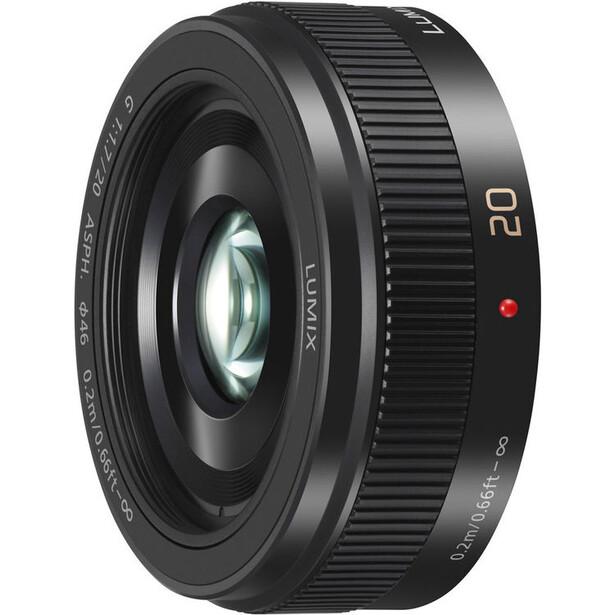
Panasonic Lumix G 20mm f/1.7 II ASPH has achieved legendary status among MFT enthusiasts. This $397.99 lens delivers exceptional sharpness across the frame while gathering enough light at f/1.7 to create pleasing background blur, a combination that seems almost impossible given its 25.5 mm length and 87 g weight. The 40mm equivalent focal length works beautifully for portraits, street photography, and general-purpose shooting. If I owned an MFT system, this lens would live on my camera permanently.
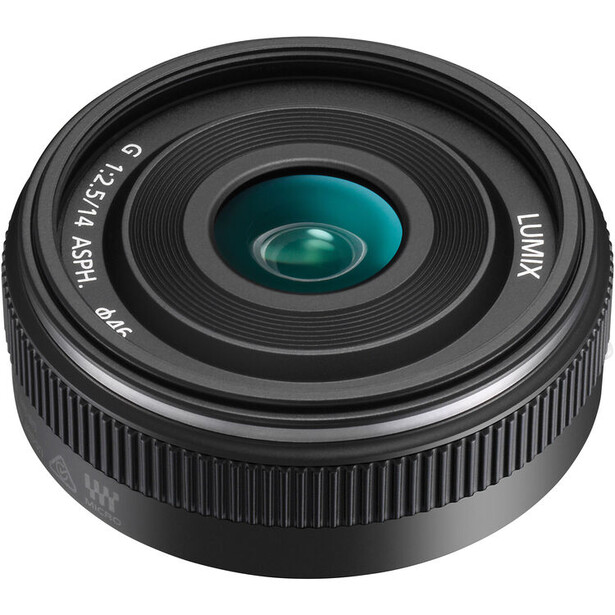
Panasonic's other pancake, the Panasonic Lumix G 14mm f/2.5 II ASPH, presents a different value proposition. At just 55 g and 20.5 mm long, it creates possibly the most portable wide angle setup available on any interchangeable lens system. The 28mm equivalent field of view suits documentary and environmental work perfectly. Unfortunately, this lens has become difficult to find new at retail, though the used market typically offers examples around $230.
For those who need zoom versatility without sacrificing pocketability, the
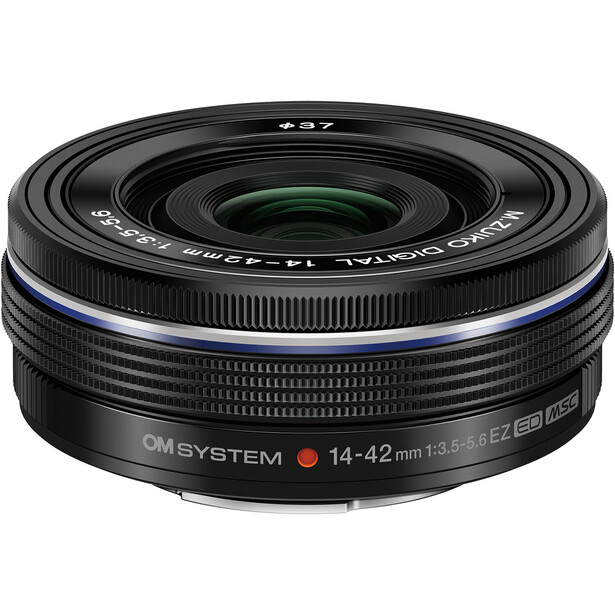
Olympus M.Zuiko Digital ED 14-42mm f/3.5-5.6 EZ at $299.99 performs a neat trick. This powered zoom retracts to just 22.5 mm when the camera powers down, collapsing into a true pancake profile. Turn the camera on, and it extends to provide a 28-84mm equivalent range that covers most everyday shooting situations. It's not as sharp as the prime pancakes, and the variable aperture limits low-light capability, but the convenience factor is undeniable.
The Wild Cards: Ultra-Budget and Ultra-Specialized
Beyond the mainstream options, several third-party manufacturers have created pancake lenses that push boundaries in interesting directions.
The
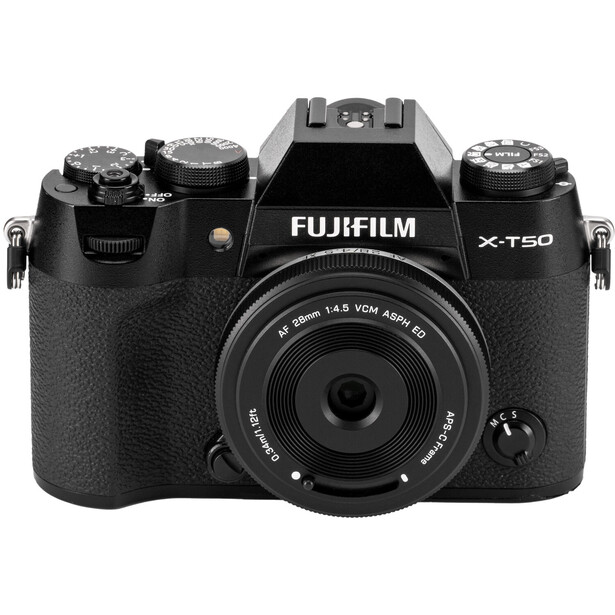
Viltrox AF 28mm f/4.5 deserves special mention for achieving what seemed impossible: a $99 autofocus pancake that's just 15.3 mm thick. Available for Sony E, Nikon Z, and Fujifilm X mounts, this lens looks like a body cap with pretensions. It lacks a manual focus ring entirely, relying on a VCM coil motor for all focusing duties, and the fixed f/4.5 aperture limits versatility. But for photographers who want an emergency lens that adds virtually no bulk to their bag, or who simply appreciate the engineering audacity on display, it's a remarkable achievement.
The
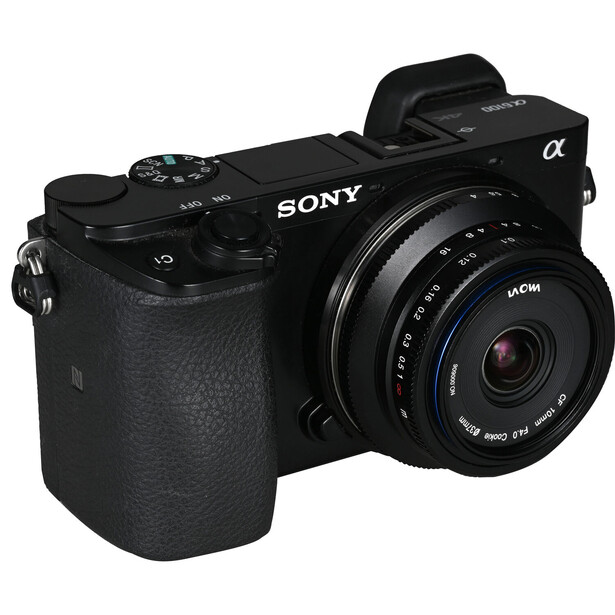
Laowa 10mm f/4 Cookie at $299 claims the title of world's widest rectilinear pancake for APS-C cameras. That 15mm equivalent field of view opens up architectural and real estate applications that no other compact lens can address. Unlike fisheye alternatives, it maintains straight lines, making it genuinely useful for professional work. Available for Canon RF, Nikon Z, Sony E, Fujifilm X, and L-Mount systems, it's a compelling option for photographers who occasionally need extreme width but don't want to carry a dedicated ultra-wide zoom. If architectural photography interests you, Mike Kelley's
How to Photograph Real Estate and Vacation Rentals offers comprehensive guidance on maximizing results from wide angle lenses in interior spaces.
For L-Mount full frame shooters, Panasonic created something deliberately playful with the
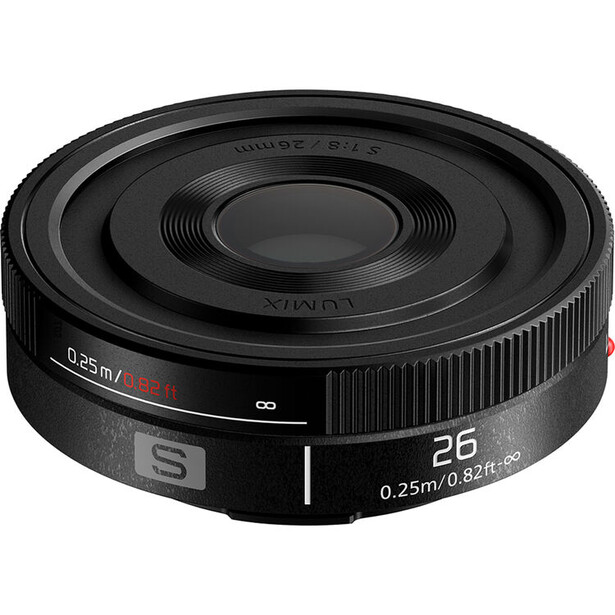
Panasonic Lumix S 26mm f/8 at $199.99. This manual-focus, fixed-aperture lens strips away virtually every modern convenience, leaving you with something that operates more like a vintage snapshot camera than a precision instrument. The f/8 aperture means everything from a few feet to infinity stays in focus, eliminating the need for autofocus entirely. It's not a lens for serious work, but it excels at encouraging a looser, more spontaneous shooting style.
Finally, the
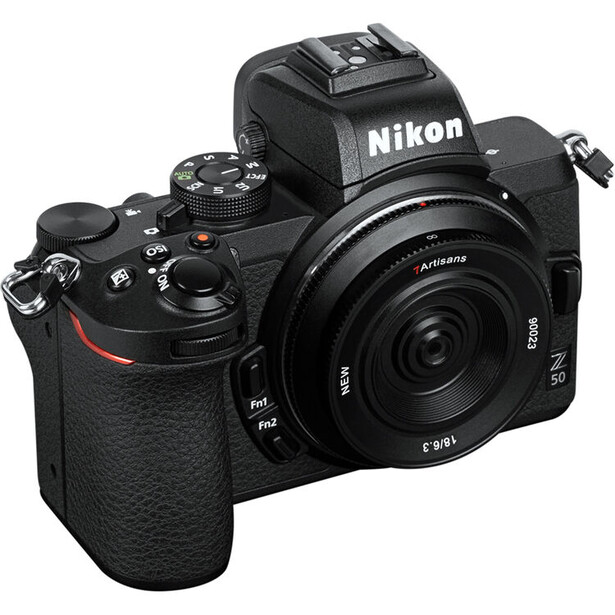
7Artisans 18mm f/6.3 UFO at just $59 represents the absolute floor of the pancake market. This tiny manual lens features fixed focus and a fixed aperture, operating essentially like the lens from a disposable film camera. Image quality is soft and heavily vignetted, but that's rather the point. It's a toy for photographers who want to experiment with lo-fi aesthetics without committing serious money to the endeavor.
Making Your Choice
Selecting the right pancake lens depends heavily on your priorities and shooting style. If optical quality and versatility matter most, the major manufacturers' offerings from Canon, Nikon, and Fujifilm provide the best balance of performance and compactness. Budget-conscious photographers should look closely at the Viltrox and Canon options, which deliver remarkable value. And those who prioritize absolute minimum size above all else will find the Micro Four Thirds ecosystem most accommodating.
Whatever you choose, adding a pancake lens to your kit changes how you think about your camera. Suddenly, bringing it along stops feeling like a commitment. The psychological barrier between leaving your gear at home and having it ready for unexpected moments drops dramatically. And in photography, the best camera is famously the one you have with you. Pancake lenses make that wisdom easier to practice. For photographers looking to build versatile skills across multiple genres with portable gear, The Well-Rounded Photographer offers instruction from eight professionals covering everything from street to landscape work.






3 Comments
Worth a mention, the two so-called "body cap lenses" that were produced by Olympus.
I'm sure they are smaller, lighter, and cheaper than anything on this list, but they are less capable, too, with no auto-focus or auto-aperture.
I found the 15mm ƒ/8 to be pretty soft, but the 9mm ƒ/8 fisheye is credible. I'll often slip it into some pocket when I want to travel light and have the option of super-super wide.
The 15 is no longer in the OM SYSTEM catalog, but they still sell the 9.
I can't believe the smc PENTAX-DA 40mm f/2.8 XS, that shipped with their K-01 mirrorless cam (but mounts on any Pentax K-mount cam).
That's a great lens, and it makes a "pancake" look fat.
If the EF 40 pancake was available for my R6 (an RF40 pancake) I would buy it tomorrow