
From copyrighted light bulbs to illegal selfies, here are the strangest regulations governing your shutter button. Most photographers operate under a simple assumption: if your eyes can see it, your camera can capture it. Point, shoot, done. Nobody can tell you otherwise. Except they absolutely can.
In some parts of the world, pressing that shutter button at the wrong time or place will get you fined, sued, or thrown in jail. The global patchwork of photography laws includes everything from well-intentioned safety measures to corporate copyright claims that sound like they were drafted by someone who hates fun. Whether you are a travel photographer planning your next international trip or just someone who enjoys collecting absurd legal trivia, these 10 laws prove that pointing a camera at the world is sometimes more complicated than you might think.
1. The Eiffel Tower's Copyrighted Light Bulbs
Here is a fun fact that complicates your Parisian vacation photos: using images of the Eiffel Tower at night for professional or commercial purposes can require authorization from the tower's management company. Not the tower itself, mind you. Gustave Eiffel died in 1923, which means his architectural masterpiece has long since entered the public domain. You can photograph the iron lattice structure all day long without a single legal concern.
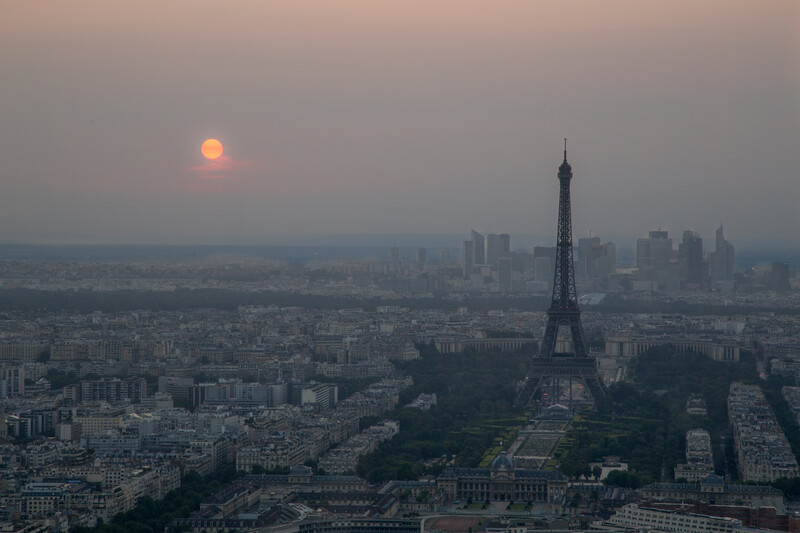
The key distinction is between taking a photo and exploiting it commercially. Snapping a nighttime selfie for Instagram is not going to land you in legal trouble. The tower's operators explicitly focus on professional and commercial use cases, not casual tourist photography. But if you want to sell stock photography of the illuminated tower, use those images in advertising, or incorporate them into commercial productions, you may need to seek authorization. Enforcement against individual photographers is essentially nonexistent, but the underlying intellectual property claim is real enough that stock agencies and commercial users need to be aware of it.
2. Wyoming and Environmental Evidence
In 2015, Wyoming passed a law that criminalized something called "data trespass." The concept sounds technical and boring until you understand what it actually targeted: people collecting "resource data," including photographs, with the intent to submit that evidence to government agencies. The law was even stranger than it initially appeared, because it could apply to data gathered on public land if the person crossed private property to get there.
The backstory involves a long-running conflict between agricultural interests and environmental activists. Ranchers and industry groups were frustrated by citizens who documented things like polluted waterways, sick cattle, and damaged ecosystems, then reported their findings to regulatory bodies. The state's solution was to criminalize this documentation when it was intended for government submission. The "intent to submit" element was crucial to how the law operated; it was not just about trespassing, but about the purpose behind collecting visual evidence.
Environmental groups immediately challenged the law, arguing it violated First Amendment protections. Federal courts agreed, striking down the data trespass provisions as unconstitutional in 2018. The specific photography-related elements of the law are no longer enforceable. But the law's existence in the first place reveals something uncomfortable about how powerful interests respond to photographic evidence.
3. The Phones That Cannot Shut Up
If you have ever purchased a smartphone in Japan or South Korea, you have encountered one of the most distinctive regional requirements in consumer electronics: mandatory shutter sounds. Domestic-market phones in these countries are generally configured so the shutter sound cannot be disabled, even when the device is set to silent mode.
The legal basis differs between the two countries. In Japan, this is technically industry self-regulation rather than statutory law. Manufacturers and mobile carriers collectively agreed to implement non-disableable shutter sounds to prevent government legislation after hidden camera crimes became a serious concern on crowded trains. In South Korea, the requirement stems from an industry association standard backed by the regulatory environment, making it somewhat more formal than Japan's voluntary agreement.
4. Mumbai's Deadly Selfie Zones
India held an unfortunate distinction for several years: the country recorded more selfie-related deaths than any other nation on earth. People fell from cliffs, were struck by trains, drowned in rough surf, and met various other preventable fates while attempting to capture the perfect self-portrait in dangerous locations.
Mumbai's response in 2016 was remarkably direct. Police identified sixteen specific locations across the city where the combination of selfie-seeking tourists and hazardous conditions had proven particularly lethal, and they designated these spots as official No Selfie Zones. Taking a photograph of yourself in these areas carried a fine of 1,200 rupees, roughly 15 US dollars at the time. The banned locations included seawalls, rocky coastlines, and other spots where momentary distraction had historically led to tragedy.
The initiative represented an interesting philosophical approach to public safety. Rather than simply posting warning signs and hoping people exercise good judgment, authorities attached financial penalties to risky behavior. Enforcement has varied over the years, and the current status of specific zones depends on local police priorities. But the underlying concern remains valid: that perfect shot is not worth your life, and some locations are genuinely dangerous regardless of how good the lighting looks.
5. The Very Specific Rules About Photographing Money
Most people know that counterfeiting currency is illegal. Fewer realize that simply photographing money for legitimate purposes involves navigating a surprisingly specific set of federal regulations. In the United States, reproducing images of paper currency requires following rules that feel almost arbitrary until you understand their purpose.
The key restrictions involve size. Any photographic reproduction of US currency must be either smaller than 75 percent of the original bill's linear dimensions or larger than 150 percent. Reproductions at or near actual size are prohibited because they could potentially be cut out and passed as real money by someone sufficiently desperate and foolish. Additionally, you can only reproduce one side of the bill at a time. Printing both sides, even at wildly different scales, crosses a legal line. There is also a requirement that many photographers overlook: any plates, digital files, or other materials used to create the reproduction must be destroyed after the final use. You are not supposed to keep high-resolution currency scans sitting around on your hard drive indefinitely.
Perhaps more interesting is the technological enforcement built into modern software. Some image editing programs, including Photoshop, implement a Counterfeit Deterrence System that can refuse to open or work with detailed banknote images. The system's detection methods are more sophisticated than the commonly cited "EURion constellation" pattern, and behavior varies depending on the specific image, software version, and settings. Your legitimate graphic design project involving money imagery may require creative workarounds, such as photographing currency at angles or in conditions that do not trigger automated detection.
6. Hungary's Permission-First Street Photography
Street photography occupies legal gray areas in most countries. The general rule in much of the Western world is that you can photograph people in public spaces without permission, though you may need consent to publish those images commercially. Hungary's 2014 civil code changes took a notably different approach.
The law as originally interpreted seemed to require photographers to obtain permission before taking someone's picture in public, not just before publishing it. If a random tourist walked through your carefully composed architectural shot, you had technically committed an infraction. Early coverage described it as perhaps the strictest street photography regulation in Europe.
Subsequent constitutional court decisions and case law have created important exceptions, particularly around public events and public figures. The law's practical application is more nuanced than initial reporting suggested, and enforcement against casual photography remains essentially nonexistent. But the underlying legal framework still creates theoretical liability that does not exist in neighboring countries, and professional street photographers should be aware that Hungary's approach differs significantly from Western European norms.
7. New York City's "Exclusive Use" Confusion
Here is a persistent myth that refuses to die: the moment you set up a tripod in New York City, you need a permit. Photography forums repeat it endlessly. YouTube tutorials warn about it. Security guards cite it when hassling street photographers. The problem is that it is not actually true, and the real rules are both more reasonable and more complicated than the myth suggests.
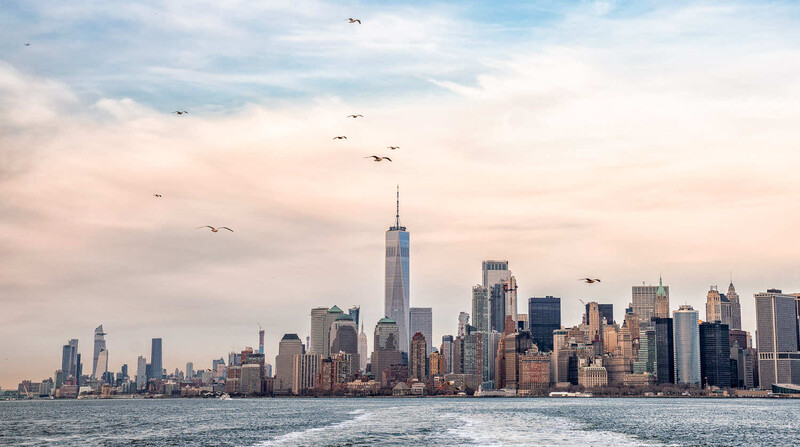
The permit requirements kick in when productions involve vehicles, stunts, prop weapons, lighting equipment that creates hazards, or crew footprints large enough to interfere with public access. The distinction is about impact and obstruction, not specific equipment. This means the "monopod workaround" you may have heard about is solving a problem that does not actually exist. You can use a tripod in NYC without a permit. You just cannot use it to block the sidewalk.
8. Germany's Intimate Privacy Protections
Section 201a of Germany's Criminal Code protects what is called the "highly personal life sphere," originally targeting violations of intimate privacy such as photographing people in protected spaces or capturing intimate images without consent. Penalties include fines or imprisonment of up to two years.
In 2020, Germany expanded this same statute to specifically address "gaffer" behavior at accident scenes, adding provisions that criminalize capturing unauthorized images of accident victims or deceased persons in a grossly offensive manner. These amendments reflect cultural concerns about privacy and human dignity that go beyond what exists in American law.
American photographers often find this framework bewildering. Press freedom traditions in the United States generally protect the right to photograph newsworthy events, including tragedies. The German approach reflects different cultural values. Photographers traveling between these legal environments should understand that their normal practices may be viewed very differently in Germany, particularly regarding intimate situations or accident scenes.
9. The Gulf States' Infrastructure Restrictions
Qatar, the United Arab Emirates, and several other Gulf nations maintain strict prohibitions against photographing government and economic infrastructure. Airports, bridges, embassies, military installations, and various official buildings fall under these restrictions.
Unlike many entries on this list, these restrictions are actively enforced. Travel advisories from multiple countries warn that photographing airports, bridges, government buildings, or military sites can result in questioning, detention, confiscation of equipment, fines, or prosecution. Plane spotting, a beloved hobby in aviation-friendly countries, is treated with particular suspicion. What looks like an interesting architectural subject to a tourist might turn out to be a ministry building or other sensitive facility.
The safest approach in these jurisdictions is to photograph only obvious tourist attractions and to be prepared to delete images if security personnel raise concerns. The consequences of getting this wrong can range from an uncomfortable conversation with security to far more serious legal problems, and "I did not know" is not a reliable defense.
10. The National Parks Filming Rules
For years, the rules around commercial filming in US National Parks created genuine confusion. The National Park Service required permits for commercial video production regardless of scale, which theoretically meant a solo YouTuber with a smartphone faced the same bureaucratic requirements as a Hollywood production crew. Legal challenges followed, court decisions went back and forth, and photographers spent years trying to figure out what they could actually do without paperwork.
The good news is that this confusion has largely been resolved. Current NPS guidance, updated in 2025, establishes that permits and fees are generally not required for filming, still photography, or audio recording when you have eight or fewer people, use only hand-carried equipment, do not assert exclusive use of any location, and do not create impacts requiring monitoring. Congressional action through the EXPLORE Act has further shaped the regulatory landscape for commercial creators on federal lands.
The practical upshot is that solo photographers and small crews can now work in National Parks without permits in most situations. The permit requirements still exist for larger operations or anything involving exclusive access. But the days of theoretical permit requirements for every vlogger with a camera are over.
The Complicated Reality
Photography feels like a simple, universal act. Press a button, capture a moment. But the legal frameworks surrounding that act vary wildly across jurisdictions, reflecting different cultural values, historical incidents, and political pressures. The camera may not lie, but the rules governing what you can do with it are far more varied than most photographers ever realize.
Join the Fstoppers community for free
-
Post comments and join in the discussions
-
Browse the site ad-free
-
Share your work and get featured in the community
-
Compete in the photo contests for fun and prizes
7 Comments
Several years ago (late 90's) I had the opportunity to travel to Beijing for the 1st time for some business discussions. Obviously this was a good chance to capture some images with my SLR camera I had brought for the trip. I had no issues photographing the city and many of the famous areas. Except one. The McDonald's fast food chain had recently opened their 1st store in China, and my host took me there to see it and get lunch. It was the biggest hamburger store I had ever seen, and the kitchen (which you could see) looked like an assembly line factory with dozens of personnel working continuously. I stood up to take a photograph and as soon as I lifted my viewfinder to my face, many guards I had not seen rushed out from wherever they were and stopped me from capturing an image. For some reason they did not want me to take a picture of the store operations. I immediately stopped and sat back down realizing it was not worth it to me or anyone to cause an incident or a regrettable issue. We finished our meal (so-so) and left.
It's always a hard decision as to how far you want to press your rights. I can appreciate in a foreign country that you probably want to be as respectful and obedient as possible. I don't even try pushing back much when traveling in my own country. Nobody wants to spend their precious time on vacation in a police station.
On the other hand, I tend to push back when confronted locally. I was taking pictures at a VA hospital construction site, at the request of a subcontractor who was standing along side of me, in a safe place and wearing hard hats, when a security officer of the hospital hauled us into their administrative office. The person there demanded that I turn over the camera to her. I politely refused. I was thinking I'm in my town and if she calls the police, at least there's a decent chance I might know one of them. But there was no way in hell anyone in my town, short of gunpoint, was gonna separate me from my camera. Anyway, I convinced her that I would erase the images and she could see for herself, and she agreed to that. For kicks though, I recovered some of the images using a disc utility program, but decided not to give them to my customer so as to keep us from getting into another and bigger mess. Sometimes just a partial win is okay.
What an interesting article, Alex!
So many articles are just rehashed versions of existing articles. Like all the inane blabber about how you don't need an expensive camera to produce great images ..... blah, blah, blah. Already read that stuff gazillions of times, and so has everybody else.
But in this article you used a bit of originality and told us about things that we do not read about often, or may not have known previously, and I really appreciate that. So instead of my only recourse being to argue with the article, I am actually reading it and getting info that is of value to me. Thanks for that!
Solid, well researched article Alex. A most enjoyable read!
A list could probably be made a mile long of instances where photographers have been told they could not take a picture. I can remember several others besides the commercial photography project that I described above:
Security on a ferry from Corpus Christi, Texas told me not to take pictures. This was a couple years after 9/11 when security was heightened. The website for that ferry now says photography is encouraged.
At a NHL hockey game in Denver, I was approached by security within minutes and told I could not take pictures, from the upper balcony nose-bleed seats no less. Of course nobody with a cellphone is told that.... only those with a long lens who the team suspects of taking professional photos and, horror of horrors, make a dollar from it.
The Denver Botanical Garden has a strict policy against taking pictures without a permit, not just for weddings or other events where you'd be interfering with other people's enjoyment of the gardens, but pictures taken for any sort of commercial use at all, like selling on a website. Can't have that... It could potentially boost my income into the range of minimum wage.
I was walking around with my camera at a local carnival and told by security that I could not take pictures. The timing of that incident felt like some parent was afraid I had sinister motives for photographing children on a ride. If they only knew how little interest I had in their kids beyond 1/125th of a second. I guess there's sensible judgment, and paranoia too... hard to tell which is which these days.
A park ranger at Yosemite approached me and asked if I had a permit for photography. Turns out he was just kidding me. But anyone in a security job with a sense of humor is hard to find.
Park rangers in the Colorado National Monument by where I live are mostly friendly. However, rules are rules. On one occasion, I had driven my Jeep 4WD into the park just before sunrise after a fresh snowfall. Park regulations don't allow stopping other than in designated parking areas, but you know how some pictures call out to you despite being in the wrong place? Thinking that at that time of morning, and snow plows hadn't even made it into the park, it would be safe to stop in the road and take a quick picture. Nobody could possibly be within ten miles. I thought wrong, for no sooner than I had set up my tripod and camera, a park ranger rounded the corner and gave me a lecture about stopping my vehicle in the road.
Police are people though....
I was taking pictures in downtown Denver one summer night after dark, when a policeman approached me. Here we go again, I thought. But instead of grilling me over why I was taking pictures, he stopped and asked for any tips I could help him with for taking better pictures at his kid's football game.
I suppose all of that is why I generally prefer making pictures as far away from other humans as possible. They can just take so much fun out of it and make you feel like a criminal.
I used to enjoy shooting in downtown LA, it was a good time to get background plates of streets and buildings for other projects. Bored security guards getting paid $17 an hour often tried to claim ownership of a city block or building and any photos I took of it. Or "you can't stand there" was also popular. To be fair sometimes there is a set back where the building mgr has some authority over part of the sidewalk (and there is a plaque in the sidewalk). Usually there was a LAPD car roaming around downtown at the end of their shift and were more than happy to tell the guard to leave the photographer alone.
I was told it is illegal to take photographs of government buildings in Nairobi too!