A 24–105mm zoom that stays at f/2.8 the whole way is the kind of lens idea people talk about for years, then hesitate to buy the moment it exists. If you shoot weddings, events, portraits, or travel on a Canon RF body, this specific range can replace a two-lens routine, but only if the real-world tradeoffs work out.
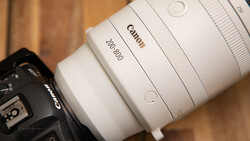
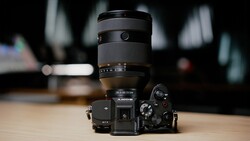
Coming to you from Dustin Abbott, this long, practical video looks at the Canon RF 24-105mm f/2.8 L IS USM Z as a tool you actually have to carry, not just a spec-sheet flex. The first reality check is the $3,299 price, and Abbott frames it against the familiar alternative, the Canon RF 24-105mm f/4 L IS USM, which costs far less. The second reality check is size: about 199 mm long, roughly 1,300 g, and it takes 82 mm filters. A lens like this changes what “small kit” means when it’s on the camera from morning to night. You also get a tripod collar, and Abbott points out the foot does not have built-in Arca-style grooves, so a plate becomes part of the setup.
Abbott spends a lot of time on handling choices Canon made that will either fit your workflow or irritate you every day. The aperture ring is de-clicked only, and he shows how easy it is to bump it while walking with the camera on a strap, which can quietly push you off f/2.8. On some bodies, he says the aperture ring behavior depends on whether you’re shooting stills or video, which can feel messy if you switch modes often. The lens is internally zooming and internally focusing, so the barrel length stays fixed while you zoom, and that helps balance on support gear. There’s also a focus limiter that can block anything closer than 1 m, plus three stabilization modes that change how the viewfinder feels when you’re moving. Abbott demonstrates just how far the stabilization can be pushed at 105mm, but he doesn’t treat it like magic, and you can see the conditions where it works cleanly.
The “Z” in the name is where the lens starts to split into two different purchases depending on what you shoot. Abbott covers Canon’s power zoom accessories, including the Power Zoom Adapter PZ-E2 and the Power Zoom Adapter PZ-E2B, and the prices are high enough that most people will pause. He also mentions that while the lens is not truly parfocal, it can behave close to it when autofocus is engaged, which matters if you zoom during a take. On the image side, he shows that sharpness is not the problem, especially in the center, even wide open. The tension comes from what you don’t see until corrections are off: heavy distortion and dark corners that the camera and software are expected to fix automatically. He also flags some color fringing in certain situations, and a bokeh highlight look that can get a bit onion-like when bright points are in the background. Check out the video above for the full rundown from Abbott.



Join the Fstoppers community for free
-
Post comments and join in the discussions
-
Browse the site ad-free
-
Share your work and get featured in the community
-
Compete in the photo contests for fun and prizes
3 Comments
Great lens.
While I love the idea of this lens , it too big to be practical ......... for me
I brought one the day it hit the store. It's absolutely perfect for what i shoot, marathons and cycling. I'm on a mono pod so the built in collar and mount are, well, amazing. The extra range has allowed me to get those extra shots. Now I'm really keen on a 50 to 150 f2.8