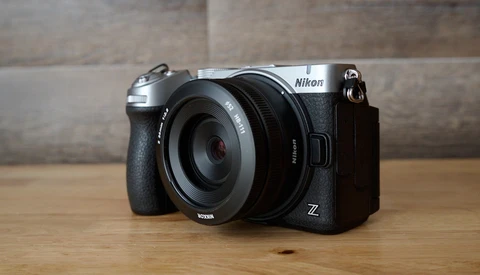
Hands-On With the Nikon Z5IIC: A Z5II Without the EVF
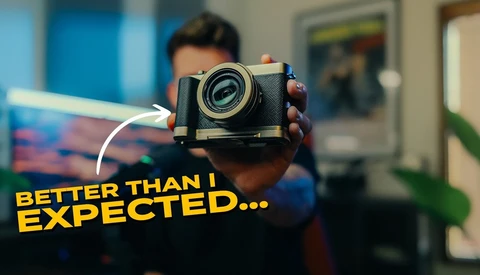
Today, I’ll give you my initial hands-on impressions of Nikon’s new entry-level mirrorless camera, the Z5IIC.
Fstoppers gear reviews are written by photographers who actually use the equipment — not benchmark testers looking at spec sheets. This section covers cameras, lenses, lighting, accessories, bags, software, and everything else in a working photographer's kit. The goal is always the same: give you an accurate picture of whether something is worth your money before you spend it.
Today, I’ll give you my initial hands-on impressions of Nikon’s new entry-level mirrorless camera, the Z5IIC.
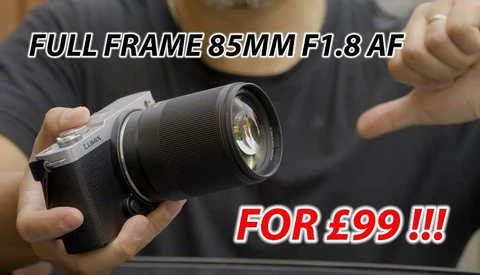
Native 85mm f/1.8 lenses from the major camera makers commonly run several hundred dollars, and that cost keeps a dedicated portrait lens out of a lot of starter kits. The TTArtisan AF 85mm f/1.8 Neo lands far below that range with full autofocus on full frame mirrorless bodies, which makes it fair to ask how much gets cut to reach that price.
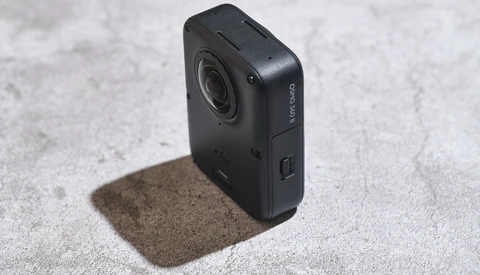
Getting my hands on the new DJI Osmo 360 II was an interesting experience, largely because the first generation was already so well-built. The original gave us solid specs that made it a serious contender right out of the gate. Because it set that bar so high, a quick glance at the Osmo 360 II’s spec sheet might initially feel like a letdown.
Canon has released a wave of new RF primes since the RF 35mm f/1.8 Macro IS STM arrived, including a fast 35mm in its VCM line and an inexpensive 45mm f/1.2. That raises a fair question about whether the older, cheaper lens still deserves to be the first one you put on an RF body.
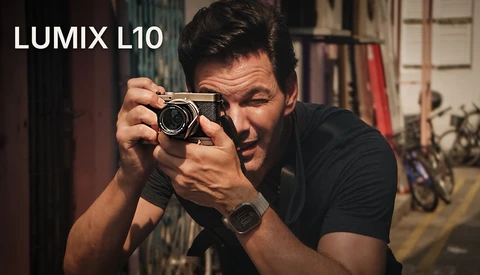
Panasonic's Lumix L10 puts a Micro Four Thirds sensor and a fixed zoom into a body small enough for a jacket pocket, and it sells for $1,500. A fixed-lens camera at that price asks you to give up a lot of flexibility, so how it holds up after months of daily use tells you more than a launch-week impression can.
Fisheye lenses have usually forced a choice between a circular image and a frame-filling one. Sony's FE 8-14mm f/3.5 G does both in one small zoom for $1,600, so deciding to buy it comes down to how often you'd actually use a lens this specialized.
Compact fixed-lens cameras have been getting more and more popular in recent years, and the Leica Q series holds a spot at the top of that category. While the Q3 is already more than a couple of years old, there are some updates to the camera that make it more enticing.
At $168, the Viltrox AF 20mm f/2.8 Air is likely one of the cheapest full-frame 20mm autofocus lenses on the market. L-mount shooters now have it as an option, part of a batch of four affordable Viltrox primes arriving for the system this week.
For a long time, I considered myself a manual focus purist—not because manual glass should strictly be used manually, but because there simply wasn't a way for me to autofocus it with my existing systems. It really isn't much of an issue; with constant practice, gauging distance and nailing critical focus can become second nature.
Digitizing film at home has always been a fiddly, annoying, time-consuming process, so discovering a system that makes it simpler has been a breath of fresh air.
The VALOI easy35 v2 is a system that simplifies the process of digitizing slides and negatives at home using your existing digital camera.
The long-awaited expansion of the Viltrox Air series lenses has finally arrived for L-Mount users. Marketed on the promise of "Lightweight & Masterful Image Quality," the Air series has already built a solid reputation in the photography community.
Since the inception of the L-Mount Alliance, there has been a gap in the market for affordable ultra-wide angle lenses. With the available options, you could either purchase an affordable lens that completely lacked autofocus or invest in an autofocus lens that was decidedly not cheap. The launch of the Viltrox AF 14mm f/4 for L-Mount drastically changes that landscape.
The Mac mini with M5 Pro chews through 4K footage and reads from its SSD in an instant, from a silver box 5 inches square that never once became audible on my desk. It is the fastest small desktop Apple has built, and for photo and video work, it is the best value in the entire Mac lineup.
When it comes to wireless microphones, there are already some very strong options available, so when a new system comes along, it needs to offer something more than simply being another wireless microphone.
Since Apple's keynote I have made two videos about the iPhone 18 Pro's new variable aperture lens, and in both of them I made predictions about how it would actually perform. Both phones are now sitting on my desk. I shot the same scenes on the 17 Pro and the 18 Pro, indoors and outdoors, at every aperture the new lens offers, then pulled all of it into Lightroom and zoomed to 400 percent.
Laptops have finally gotten fast enough to be true desktop replacements. The one problem is that no laptop can connect to everything on your desk. A MacBook might only give you two or three USB-C ports, so you are going to need a dock.
Today, Canon announced a new full frame body added to the EOS lineup, the Canon EOS R8 Mark II camera. And I got my hands on one for an early look.
Does the REEL Paper 8 from Vintage Visual really let you make prints up to 12x16 inches from virtually anywhere? I took this unassuming photographic tool into the heart of the Nantahala National Forest to find out.
I suppose life is full of “what ifs” and “could’ve beens.”
Shooting wildlife from the passenger seat of a car usually means wrestling with a massive lens that takes up half of the cab. I recently took a slow cruise through the Lake Apopka Wildlife Drive to put two new, unreleased Sony GM lenses to that very test.
Reliable and well-engineered gear is something all landscape photographers rely on. This is especially true when we consider investing in the accessory that keeps our cameras secure and stable.
Today, I wanted to take a break from discussing the cameras that capture our images and look at one of the tools used to make those images better. Let’s have a look at the Peak Design Travel Tripod.
Sigma is adding an interesting new option to its full frame mirrorless standard zoom lineup: a lens that combines a 20mm wide angle starting point with a compact, lightweight design. The idea was to create a versatile zoom that can stay on the camera most of the time, reducing the need to carry multiple lenses or constantly stop to change them.
What if you could replace your heaviest ultra-wide rig with a single, highly specialized piece of glass that fits in the palm of your hand?
Leica is in a tricky position when it comes to creating a new M camera. The fanbase welcomes new models, but Leica knows that if they stray too far from the essence of the M, users may reject the new model. The M5, introduced in 1972, made dramatic changes from the design of the previous M4 model and met relatively weak demand.
In the age of AI editing and retouching, high-resolution pen display tablets still offer an irreplaceable user experience. This one from a brand called GAOMON checks a lot of the boxes of what we look for.
If you had a camera that only shoots in black and white, would you be satisfied with it? Let’s talk about what such a camera can actually bring to the table.
A good monitor is hard to appreciate until you have used a bad one. While we spend decades arguing over which camera has better color rendition, we don’t pay as much attention to the screens we view these colors on. If the screen is wrong, everything is wrong.
It’s been over a year since we reviewed the AGO Film Processor from Vintage Visual. Is this mobile film processor still a good buy in 2026? I’ll show you the good, the bad, and even the ugly about the AGO.
This budget-friendly zoom lens is currently doing something that Sony didn't even do with its own version. I'm talking about the Thypoch Voyager 24-50mm f/2.8.
When Sony released its 24-50mm G lens, a lot of creators were excited about the compact size and versatile focal range. But it features an extending barrel when you zoom, and that became a point of complaint for me.
Many photographers have felt the need to produce content in order to become more visible online and, consequently, to more potential clients. If you haven’t tried using a 360 camera, it can be the easiest solution for capturing behind-the-scenes footage.
I'm some kind of glutton for punishment. I've reviewed all manner of cheap cameras, and then even cheaper cameras, all so you, the reader, can get a good laugh. I went into this review of the Chuzhao Mini TLR thinking that I was going to provide more entertainment by lampooning the camera, but alas, I can't.
Brightin Star launched a solid brass manual focus 28mm f/2.8 pancake lens last year, painted in gloss black lacquer. My first impression when I saw the publicity photos wasn’t its incredibly small size. It should have been, but I was distracted somewhat by that high-gloss black lacquer with gold and red engraving. It looked a little garish.
The FX2 has been one of Sony’s most discussed cameras since its launch. So today, I got my hands on one and decided to take it for a spin.
For those who like long exposures, a variable ND filter is often not the best choice. If you're filming, the variable ND is a must-have. It allows full control of the exposure. Unless your camera has a built-in ND filter, the Haida X in 1 filter set can be a great choice. I took a closer look.
67 megapixels at 30 frames per second used to be a contradiction. That combination now sits inside a single full-frame body that also handles portraits, landscapes, and wildlife without asking you to change tools.
There's an advantage to a small camera that doesn't call attention to itself: you can become the gray man. Not invisible or undercover; not some photographic ninja.
You've pitched camp at the perfect spot, gear unloaded, base set for the next few days. And now you're waiting — for the fog to lift, the light to change, or an elusive animal to step into frame.
I’ve done separate review articles on both the Nikon ZR and the Laowa Sunlight 2x Full Frame Anamorphic Zooms in the past. Today, I thought it might be helpful to talk less specs and more process after using the combination on my latest film.
For the last couple of months, I’ve been trying out the Nikon 28-135mm PZ lens to see how it might fit into my workflow. Here’s what I found.
Sony E-mount shooters have waited a long time for an affordable way to reach 400mm, and now there's a lens built specifically for that job. The catch sits right in the name: a maximum aperture of f/5.6 that darkens to f/8 as you zoom in.
Only three companies make an 85mm f/1.2 lens for mirrorless right now, and the price gap between one of them and its slower sibling runs about $2,000. That number alone forces a question every portrait shooter eventually faces: how much aperture is worth paying for?
Traditionally, shooting with an anamorphic lens has always come with its set of hurdles. While having the cinematic squeeze is nice, battling with the size and weight can be rather unpleasant. Not to mention the need for diopters just to reach a decent close-focus distance.
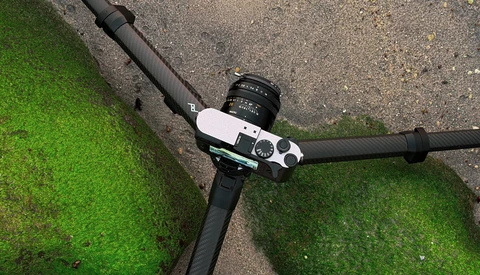
A 55mm lens with an aperture ring solved a workflow problem on the Nikon Z f that had annoyed one wedding shooter for years. That single feature, plus a focal length that sits just past the standard 50mm, is worth a look.
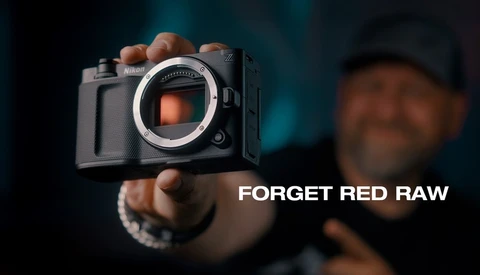
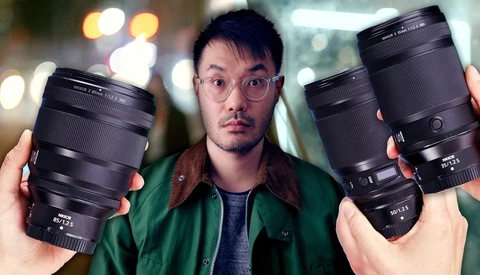
Sony's new FE 100-400mm arrives with an f/8 aperture on the long end, and that single number will push a lot of shooters to walk right past it. That aperture is also the reason the lens exists, because it lets Sony build a 400mm you can carry all day and handhold without a second thought.
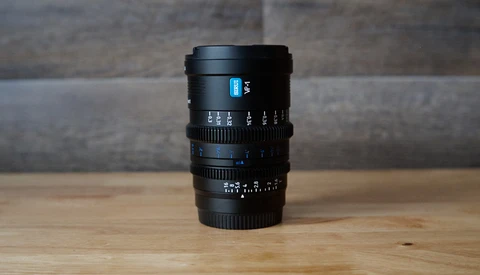
The Vision Prime 1 (VP-1) series full frame cine lenses were originally launched by Sirui back in February 2025, with the first batch of lenses covering all the mid-range focal lengths: the 24mm T1.4, 35mm T1.4, and 50mm T1.4.
Canon's RF 24-105mm f/2.8 L IS USM Z carries a price near $3,000 and a body large enough to reshape what you pack. Deciding between this lens and the more familiar RF 24-70mm is one of the harder calls a Canon shooter faces right now.
A constant f/1.8 mid-range zoom on an APS-C body gets you close to the look of a 24-70mm on full frame, with less weight and a smaller footprint. That kind of flexibility is exactly what keeps pulling shooters back.
A monochrome-only camera that costs more than its color twin sounds like a hard sell, until you see what a dedicated black and white sensor actually does to an image. The Ricoh GR IV Monochrome strips out the color filter array entirely, and the results push well past what a converted color file can offer.
The Lumix S9 launched as one of the smallest full-frame mirrorless cameras you can buy, and then sat there without a lens small enough to prove the point. Now a metal pancake the size of a lens cap has arrived in L-mount, and it fills that gap.
The Fujifilm X-H2 packs a 40-megapixel sensor, in-body stabilization, and a modular design that accepts a cooling fan and a broadcast-level file transfer grip, yet it sits in the shadow of the cheaper X-T5. That gap says a lot about who each camera is actually for.