Artificial images are moving into places that once depended on real shoots, real light, and real decisions, and that shift is already changing how work gets commissioned and valued. If you make images for clients or personal projects, the pressure to compete with fast, cheap AI output is no longer abstract.
Coming to you from Karl Taylor, this blunt video lays out a clear position on AI-generated photography and what it replaces when it becomes the default. Taylor is not arguing against tools like Photoshop or CGI, and he draws a line between human-led craft and machine-led generation. His issue is with systems that let someone skip knowledge, skip intent, and still output something that looks acceptable. He frames a lot of AI output as imitation built from other people’s work, not a new idea made with constraints. His bigger claim is that the images often end up technically polished yet emotionally flat.
He also discusses our recent Fstoppers coverage on AI, using it as an example of how far the technology has already advanced. Taylor points to our recent examinations of AI in fashion and product imagery as evidence that these tools are no longer theoretical or fringe. The demonstrations are treated seriously, as proof that AI can now generate images convincing enough to disrupt working assignments. He even notes that past real-world work can be absorbed into this ecosystem and re-emerge altered, detached from its original intent. Taylor’s take isn’t that the results are useless or that our reporting is overblown. He concedes that some of what’s being produced is convincing, especially when the goal is a quick, serviceable image. But he insists there is still a tell, a dreamlike wrongness that many serious clients will notice even if they can’t name it. He’s not claiming a guaranteed human victory either, which is what keeps this section from turning into a pep talk.
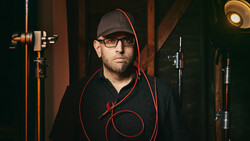
Where the video becomes more concrete is in Taylor’s comparison between AI efficiency and an actual shoot. He describes a four-hour session built around experimentation, improvisation, and collaboration, using simple lighting setups and in-camera techniques. The emphasis stays on process rather than gear or spectacle. Ideas evolve in response to the person in front of the camera, not a prompt box.
He also raises concerns about what happens when AI wipes out the lower and middle tiers of creative work. Established names may survive, but new voices often grow through exactly the kinds of assignments now being automated. If those pathways disappear, future excellence narrows before it has a chance to develop. He keeps circling back to a simple standard: real people, real places, real moments. Check out the video above for the full rundown from Taylor.




Join the Fstoppers community for free
-
Post comments and join in the discussions
-
Browse the site ad-free
-
Share your work and get featured in the community
-
Compete in the photo contests for fun and prizes
2 Comments
I wholeheartedly agree with Karl. Thirty years ago, I started my journey in photography and my mentor would say, "the race to the bottom is fast and swift". We spend years developing a style, a range of lighting techniques and perspectives that express our own vision and personality.
Those AI images generally look like a bland Corporate style that resembles vanilla ice cream, they believe that everyone likes vanilla ice cream and it's the "safest" choice. I'd wager that budgets will still be required but maybe the client would rather pay the AI provider rather than the creative person.
I agree with Karl, and even if I detest AI, my clients are still bricked up harder than ever over it.
One of my biggest clients, a global brand, is having me do "ground-truth plates" because since last year, they're AI'ing their product into stills and imagery both for ads, and packaging.
It's incredibly depressing to be shooting myself out of business with them. Times are good now, but I can see on the horizon that I will be replaced with the machines, and there's nothing I can do about it with them.