
Your camera is too good. I mean that as a genuine problem, not a humble brag about your gear. That $2,500 mirrorless body sitting in your bag can identify human eyes at 30 meters, track a subject across the frame while firing 30 frames per second, and deliver usable images at ISOs that would have been science fiction a decade ago. It is, by every measurable standard, a miracle of engineering. And it might be making you a worse photographer.
I'm not here to tell you to sell your modern camera and buy a Leica. I'm not going to wax nostalgic about the good old days of film, because those days included a lot of expensive mistakes and missed moments. What I want to suggest is something more nuanced: that the very ease of modern photography has removed something valuable from the process, and that occasionally reintroducing difficulty, what I'll call "friction," can sharpen both your images and your instincts.
When Easy Becomes the Enemy
Here's a scene that might feel familiar. You're at a family gathering, and your niece is doing something adorable. You raise your camera, half-press the shutter, and the autofocus system springs to life with the confidence of a machine that has analyzed ten thousand faces. It locks onto your brother-in-law's ear. You tap the joystick, recompose, and it snaps to a vase in the background. By the time you've wrestled control back from the algorithm, the moment has passed. You got twelve frames of the aftermath, technically sharp images of a child who is now picking her nose instead of laughing.
Or consider the opposite failure mode. You're walking through a city with your camera set to continuous high, because why not? Storage is cheap and you can always delete later. You fire off 200 frames in an afternoon, get home, and scroll through what amounts to a flip-book of your own indecision. Nothing is composed with intention. Everything is a hedge against commitment. You captured everything and photographed nothing.
When the act of capture becomes effortless, something strange happens to our standards. We stop curating at the moment of exposure and defer that judgment to the editing room, where we're tired and less connected to what we felt in the field. The camera becomes a net cast wide rather than a spear thrown with purpose. We catch more, but we aim less.
The Psychology of Effort
There's a well-documented phenomenon in behavioral economics called the IKEA Effect, named after the furniture company that convinced millions of people to pay good money for the privilege of assembling their own bookshelves. The finding is simple: we assign greater value to things we helped create, even if our contribution was modest. A cake from a box mix tastes better to the baker than an identical cake purchased from a store. The labor creates attachment.
Photography operates on the same principle, but the effect runs deeper than mere valuation. When you struggle to make an image, you encode that struggle alongside the visual memory. A photograph you fought for carries weight that a photograph you harvested cannot match. You remember the light because you had to read it yourself. You remember the framing because you made deliberate choices under pressure. You remember the moment because you were fully present in it, not monitoring a preview screen for confirmation that the machine got it right.
The spray-and-pray approach creates images. Intentional friction creates experiences you carry with you. Think about your own archive. The photographs that mean the most are rarely the ones that came easily. The images that stick with you, that you can recall the making of years later, tend to be the ones where something was difficult: the light was failing, the subject was unpredictable, the equipment demanded attention. The struggle encoded the memory alongside the photograph.
The Optical Viewfinder Paradox
Let me be clear about something: this is not an argument that optical viewfinders are superior to electronic ones. EVFs offer real advantages. Exposure preview, focus peaking, histograms overlaid on the scene. If you're working professionally, these tools can be the difference between getting the shot and explaining to a client why you didn't. But there's a subtle cost to all that information, and it's worth examining.
An electronic viewfinder shows you what the sensor is recording. This is useful, but it changes your relationship to the scene. You stop looking through the camera and start looking at a small television that happens to be pressed against your face. Your attention shifts from the world to a representation of the world, from the moment to a preview of its capture. You're reviewing instead of seeing.
An optical viewfinder, by contrast, shows you only light. No histogram, no clipped highlights warning, no focus confirmation. You have to imagine what the sensor will record based on your understanding of exposure, your knowledge of your film or digital response curves, your practiced intuition about how this scene will translate to a two-dimensional frame. That act of imagination keeps you engaged with the actual moment rather than its digital proxy. You're forced to predict rather than confirm, and prediction requires presence.
The same principle applies to rangefinder cameras, which don't even show you the exact framing you'll capture. There's a reason so many street photographers swear by them despite their obvious limitations. The slight disconnect between viewfinder and lens forces you to think spatially, to hold the final image in your mind as an act of visualization rather than verification. They also offer the ability to anticipate action outside the frame. Whether that tradeoff makes sense for you depends on what you're shooting and what you're trying to develop in yourself. But it's worth understanding what you gain and lose with each approach.
The Manual Focus Question
Autofocus is an algorithm. A very good algorithm, increasingly enhanced by machine learning, but an algorithm nonetheless. It makes decisions based on probability: which object in the frame is most likely to be your intended subject, based on size, position, proximity, and (now) category recognition. Most of the time, it guesses correctly. But guessing correctly is not the same as expressing intent.
When you turn a manual focus ring, you're answering a question that autofocus can only approximate: what matters most in this frame? You're not delegating that decision to a probability engine. You're making it yourself, with your hands, in real time. The difference is philosophical as much as practical. One approach treats focus as a problem to be solved. The other treats it as a creative choice to be made.
There's a meditative quality to manual focus that is difficult to replicate with autofocus, no matter how sophisticated the system. The physical act of turning the ring connects your body to the image in a way that pressing a button does not. You feel the plane of focus move through space. You can rack between subjects and sense the shift in emphasis. It's slower, certainly. You'll miss shots you would have nailed with a modern AF system. But you'll also make shots you never would have conceived, because the limitation forced you to consider options the algorithm would never have offered.
Learning to Wait
Here's a number that should give you pause: 30 frames per second. That's what flagship cameras offer now, and some exceed it. At that rate, you can hold down the shutter for one second and capture every phase of a gesture, every microexpression, every instant of a peak action moment. You don't have to anticipate anything. You just have to be pointing in approximately the right direction when something happens, and statistics will deliver at least one good frame.
The appeal is obvious. High-speed burst modes work. But there's a cost to relying on them too heavily. You stop reading body language because you don't need to. You stop anticipating peaks of action because the buffer will catch them anyway. You stop feeling the rhythm of a scene because you're not trying to sync with it. You're just documenting, not deciding.
Cartier-Bresson's famous "decisive moment" wasn't about luck or reaction time. It was about anticipation, about learning to read the visual flow of a scene and release the shutter at the instant when all the elements aligned. That skill atrophies when you don't need it. The 30 fps shooter captures a moment. The single-shot discipline teaches you to capture the moment, the one that matters, the one you felt coming before it arrived. There's a difference, and it shows in the work.
The Necessary Exception
I want to be careful here, because this argument can curdle into something unhelpful if taken as dogma. Friction is a training tool, not a mandate. There are contexts where the most technologically advanced camera is exactly the right choice, and pretending otherwise is romantic nonsense.
Sports photography demands reliability. Wildlife demands reach and speed. Weddings demand consistent delivery under chaotic conditions where you don't get a second chance. Photojournalism in conflict zones or breaking news situations requires every advantage modern technology can provide, because missing the shot isn't a growth opportunity. It's a failed assignment, a story untold, potentially a danger to yourself or others. When you're being paid to deliver results, you use the tools that guarantee them.
The argument I'm making here is about practice, not production. It's about what you do when the stakes are low and the goal is development rather than delivery. Friction belongs in your training regimen the way interval sprints belong in a distance runner's routine. It's not how you race. It's how you build the capacity to race better.
Cameras Built for Friction
If this philosophy resonates with you, a few current cameras are worth considering. They're not relics or compromises; they're deliberate design choices that prioritize engagement over convenience.
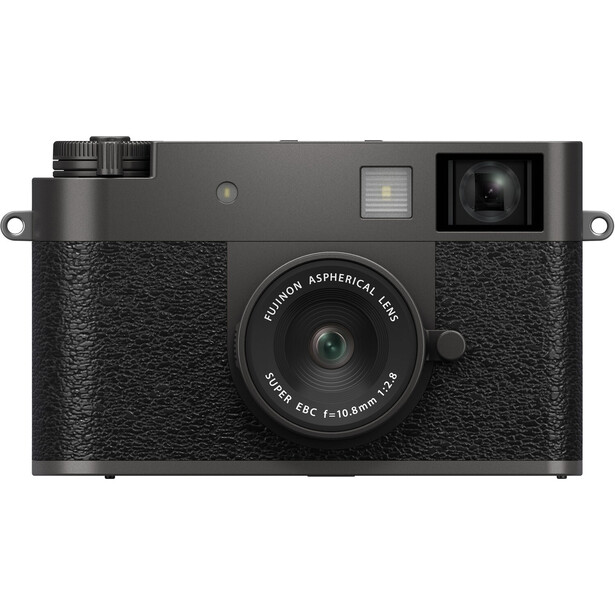
The Fujifilm X half is perhaps the most aggressively friction-forward camera released in years. Inspired by half-frame film cameras, it features:
- A vertically oriented 1-inch sensor
- A fixed 32mm-equivalent f/2.8 lens
- A Film Camera mode that prevents image review until you've finished your "roll"
- A frame advance lever
You can't spray and pray with this camera because the design actively resists it. At $649, it's positioned as a fun camera rather than a serious tool, and that's precisely the point. Sometimes the best training equipment is the one that doesn't take itself too seriously. I liked it so much after testing a review unit that I bought my own.
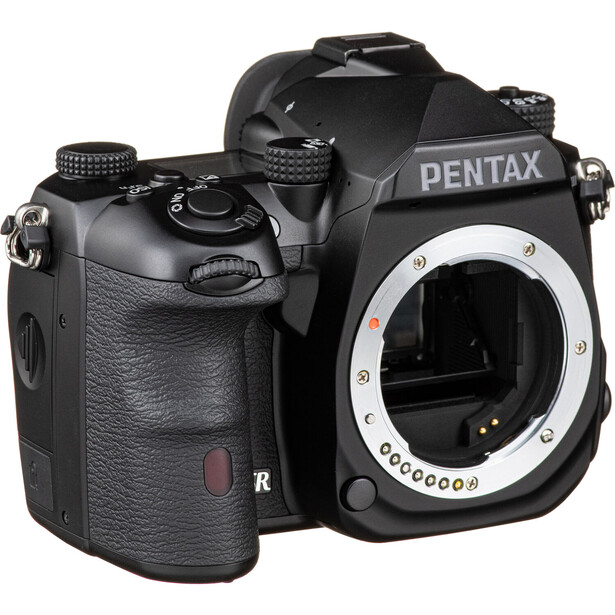
For those who want the full optical viewfinder experience, the Pentax K-3 Mark III remains one of the few DSLRs still in active production. Its pentaprism viewfinder offers 1.05x magnification at 100% coverage, delivering a view that rivals full frame cameras despite its APS-C sensor. Looking through it is a fundamentally different experience than using an EVF: you're seeing light, not pixels, with no lag and no refresh rate. Pentax has committed to continuing DSLR development, making this camera less a nostalgic holdover and more a statement that some photographers genuinely prefer the optical viewfinder experience.
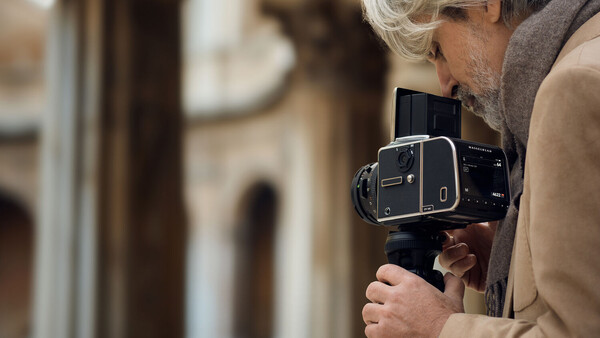
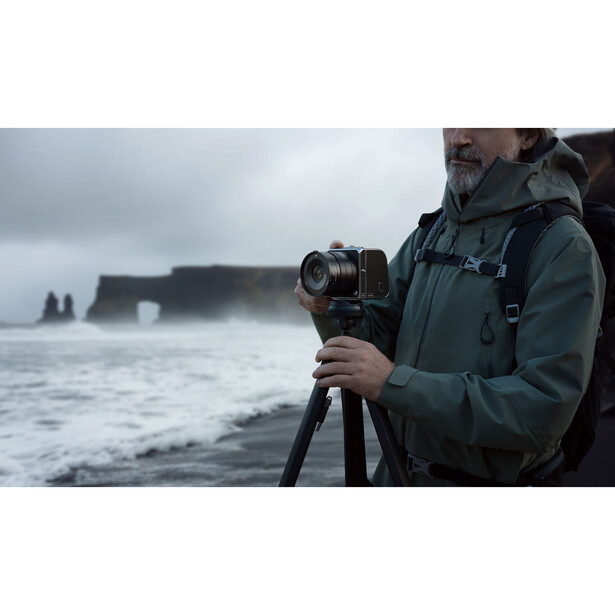
At the opposite end of the budget spectrum, the Hasselblad 907X and CFV 100C combination offers friction through deliberate, meditative shooting. The waist-level viewfinder forces you to look down into the camera rather than through it, changing your physical relationship to the scene. The modular design means you can mount the 100-megapixel digital back onto classic Hasselblad V-system film bodies from as far back as 1957, though you'll be limited to manual focus. This isn't an impulse purchase, but for photographers who want to slow down with medium format and shoot with intention, it represents a different kind of value proposition entirely.
An Invitation, Not a Judgment
You don't need to buy different gear. You don't need to cosplay as a mid-century photojournalist or convince yourself that newer is worse. What I'm suggesting is simpler and cheaper: occasionally turn things off. Switch your camera to single-shot mode for a weekend. Tape a piece of cardboard over your LCD so you can't chimp after every frame. Set your lens to manual focus and leave it there for an afternoon. Give yourself a shot limit, 36 exposures like a roll of film, and see how it changes your decision-making.
Convenience can become the enemy of creativity. When we let the camera do everything, we risk doing nothing. Not because the technology is bad, but because our reliance on it might be dulling the instincts that made us pick up cameras in the first place.
Treat friction as a gym for your photographic reflexes. You don't lift weights because carrying groceries is too easy. You lift weights so that everything else becomes easier, so that capacity exceeds demand. The same logic applies here. Struggle with manual focus for a month, and autofocus will feel like a superpower when you return to it. Shoot single-shot until your timing improves, and burst mode will become a choice rather than a crutch. If you're looking for a structured way to rebuild those fundamentals, Photography 101 is a solid starting point for getting back to basics with intention.
The goal isn't to make photography harder for its own sake. The goal is to make yourself a more capable, more present, more intentional photographer. And sometimes the best way to do that is to let the shot get a little harder to make.


Join the Fstoppers community for free
-
Post comments and join in the discussions
-
Browse the site ad-free
-
Share your work and get featured in the community
-
Compete in the photo contests for fun and prizes
9 Comments
I agree 100%! I recently dug my X-Pro 1 out of a drawer and started shooting with it and a 50mm 1.2 manual focus lens. I’m having a ball shooting stuff with it. Would I want to shoot a hockey game with it? Nope but for shooting stuff that isn’t moving it’s a lot of fun and it makes you really think about what you are doing.
"Cartier-Bresson's famous 'decisive moment' wasn't about luck"? Do some research. He wasn't even looking through his viewfinder when he took his most famous picture. He had no idea what he'd captured.
Solution looking for a problem, I find I use the phone more than my camera and it is in my pocket, just my opinion, not meant to correct. This one is not perfect but I like it. It shows you can grow and flower even in concrete.
Personally, I don't believe the level of difficulty in the use of a camera has anything to do with its picture quality, no more than having a camera with all the bells and whistles does.
You point is well taken. Although a certain amount of "friction" can be created on any modern camera depending on how you use it. There is a happy and useful medium between a full auto 100fps mirrorless computer and an 8x10 view camera.
I use cameras that are capable of far faster and more automated action than I normally use. As I've said many times before, if you can't get the shot at 10fps, 20 or 30fps isn't going to help.
I shoot my A7CII in full manual, with manual lenses and certainly pick the moment when to press the shutter. This is just how I like to photograph and having started my photography on an old Pentax film camera, I just carried that mindset across to digital. I also find the more photos I shoot, the more I'll hate having to wade through tonnes of RAW files when editing them which I find a real pain. Capturing 20+ photos on any given day is a lot for me. It is definitely much more satisfying to anticipate a moment rather than firing off a burst, hoping one will be 'the decisive moment'. When I shoot, there is the possibility I may miss the moment altogether which just makes nailing the shot all the more satisfying. When I do miss the moment, it just encourages me to practice and get better at it the next time I go out. Yes it definitely makes people better photographers when they learn to shoot 'the hard way' rather than relying on camera automation. Besides, there isn't a single camera feature that can help photographers to see a moment worth photographing in the first place. That has to come from the photographer.
Yet you would think from certain users that the most important thing in photography is the sensor format and whether you can use hold the shutter button down for 150 shots and without engaging the brain have 149. You can see them trolling often on Fuji boards. I think everyone should own or at one MF only lens and learn to shoot fully manually with it.
This suggestion seems not unlike letting half the air out of the front left tire of your car in order to make driving more difficult in ways that put you in closer touch with your steering wheel.
It depends. I've been shooting for 4 decades. I tried slowing down with a medium format camera a few years ago but I ended up using my phone to preliminarily take a shot before using the film camera! Now I simply know what I want when I see it. The digital screen lets me know instantly if I have the shot I want and I can adjust instantly. Digital cameras have made me a much better photographer because of that feedback.