
The internet has a long memory, and nowhere is that more apparent than in the used camera market. Cameras that launched to scathing reviews, forum outrage, and YouTube takedowns carry that baggage for years, even when the original criticisms have become largely irrelevant. The result is a fascinating opportunity for photographers who can separate genuine limitations from outdated grievances: cameras with professional image quality selling for a fraction of their original price because the collective hive mind decided they were failures half a decade ago.
What's changed since 2018 or 2019? Storage media that was prohibitively expensive is now standard. Features that seemed essential for everyone turned out to matter only to specific niches. And most importantly, the relentless pace of camera releases means that perfectly capable bodies get abandoned the moment something newer appears. If you're a photographer who actually knows what you need rather than what the internet tells you to want, these five cameras represent some of the best values in the used market right now.
Canon EOS R: The Unfairly Maligned Pioneer
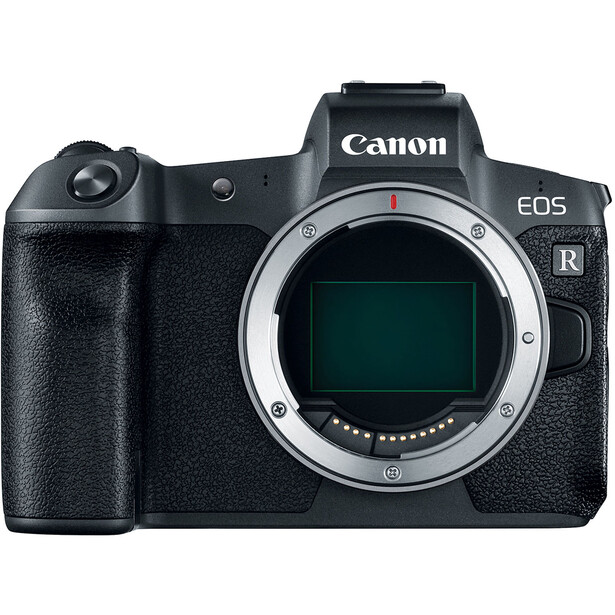
When Canon released the EOS R in 2018, it was immediately dismissed as a public beta test for the RF mount. The criticism was relentless: a launch price that felt aspirational for what you got, a 4K video mode with a crop so severe it bordered on absurdist comedy, the baffling touch bar that nobody asked for, a single SD card slot, and the absence of a joystick for focus point selection. Reviewers treated it less like a camera and more like a proof of concept that Canon had mistakenly put on store shelves.
Here's what those reviews failed to mention, or at least failed to emphasize: the EOS R contains essentially the same sensor that powered the 5D Mark IV, a camera that professionals trusted for years and that still produces files capable of holding their own against anything in its class. The color science is pure Canon, which means skin tones that flatter without heavy editing and a rendering style that countless photographers have built their entire aesthetic around. The autofocus system, while not competitive for tracking fast action, remains remarkably competent for portraits, events, landscapes, and the vast majority of photographic situations that don't involve chasing children or wildlife.
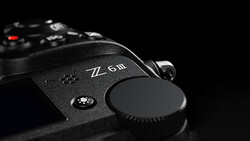
Nikon Z6 (Gen 1): The Card Slot Controversy That Aged Poorly
No camera in recent memory generated more forum fury over a single specification than the original Nikon Z6. The outrage wasn't about image quality, build construction, or ergonomics. It was about card slots. Specifically, the fact that Nikon included only one, and that one slot accepted XQD cards, a format that was expensive, relatively obscure, and incompatible with the SD cards sitting in every photographer's bag. The internet declared the camera dead on arrival. Wedding photographers announced they could never trust it. The discourse was so intense that it overshadowed everything the Z6 actually did well.
Time has been remarkably kind to this camera. A firmware update enabled the Z6 to accept CFexpress cards in its XQD slot, and CFexpress has become common across many higher-end bodies from multiple manufacturers. Prices have dropped dramatically, and the cards themselves are faster and more reliable than the SD alternatives that critics demanded. The single slot concern, while not entirely without merit for certain professional applications, turned out to be a non-issue for the overwhelming majority of photographers who never actually needed redundant recording in the first place.
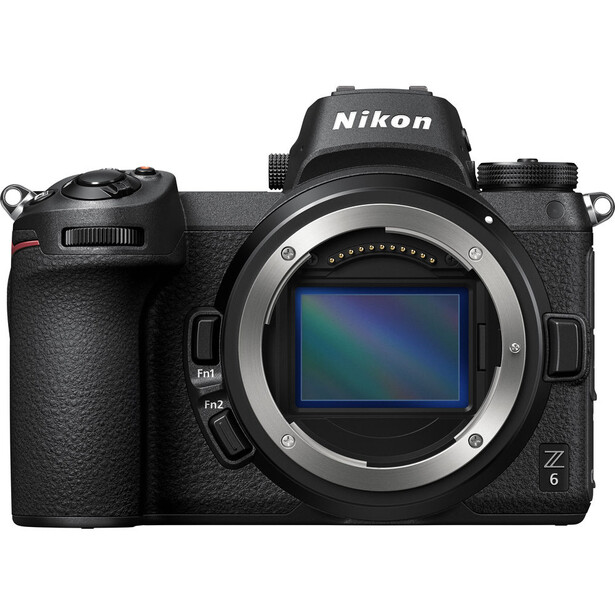
For enthusiasts and working photographers who don't require dual card slots for contractual or psychological reasons, the original Z6 represents an absurd value in 2026. You're getting a professional-tier body with outstanding image quality, robust construction, and access to Nikon's excellent Z-mount glass for prices that barely register as significant purchases.
Fujifilm X-H1: The Flagship That Time Forgot
The Fujifilm X-H1 might be the most tragic case of bad timing in camera history. When it launched in early 2018, it represented Fujifilm's most ambitious effort yet: their first X-series body with in-body image stabilization, a larger grip designed for extended shooting sessions, a top LCD panel for quick settings reference, and build quality that signaled serious professional intent. It was the flagship that X-series enthusiasts had been requesting for years.
Then, mere months later, Fujifilm announced the X-T3 with a new sensor and processor that offered substantial improvements in autofocus performance, video capabilities, and overall speed. The X-H1 was instantly relegated to clearance bins. It felt obsolete before most photographers had even handled one in a store. The battery life concerns that emerged in reviews only accelerated its abandonment, and the camera became a cautionary tale about the risks of buying any tech product before the next generation arrives.
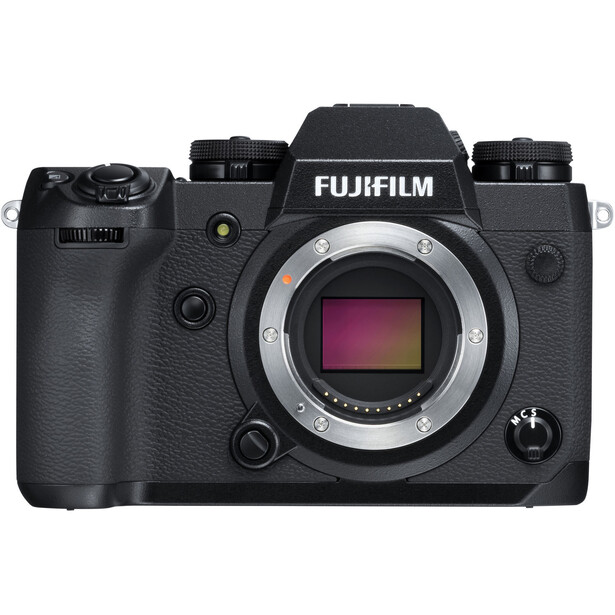
And here's the thing about that X-Trans III sensor everyone dismissed as outdated: 24 megapixels remains entirely adequate for the vast majority of photographic applications, and the files it produces have a character and rendering quality that Fujifilm has spent years perfecting. The X-H1 makes images that look like photographs rather than clinical technical exercises. In 2026, you can find these bodies for prices that seem almost disrespectful to what they offer, making them arguably the best entry point into Fujifilm's exceptional lens ecosystem for photographers who value tactile experience and image quality over spec sheet supremacy.
Panasonic LUMIX S1: The Misunderstood Giant
The Panasonic LUMIX S1 arrived with a weight problem and an autofocus problem, and the combination proved fatal in the marketplace. The body is genuinely massive, built to a standard of ruggedness that feels almost militaristic, with an EVF housing that protrudes like a submarine periscope. More damaging was the Depth from Defocus contrast detection autofocus system, which worked perfectly well for still photography but produced a visible pulsing effect during video recording that made it unsuitable for the vlogging and content creation applications that drove so much of the mirrorless conversation.
YouTube reviewers, many of whom evaluate cameras primarily as video tools for their own productions, were brutal. The S1 became synonymous with outdated autofocus technology, and buyers fled to Sony bodies that could track faces without hunting. Panasonic's reputation for professional video tools couldn't overcome the perception that they had released a camera fundamentally unfit for modern content creation. The used market reflects this verdict: S1 bodies sell for a fraction of their original price, abandoned by an industry that had already moved on.
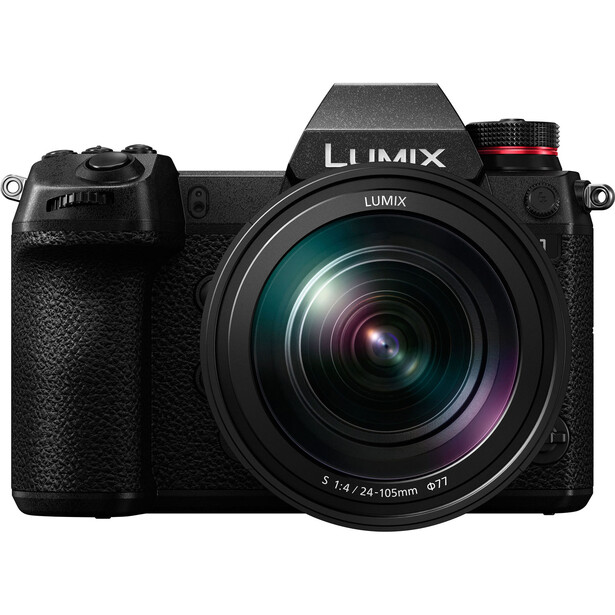
If you don't shoot video, or if you shoot video in controlled situations where manual focus or slower autofocus isn't problematic, the S1 is a professional-grade body selling at enthusiast prices. The same qualities that made it "too much camera" for content creators make it exactly enough camera for serious photographers who appreciate robust tools built without compromise.
Sony a7C (Gen 1): The Compact That Confused Everyone
When Sony released the original a7C, reviewers struggled to understand who it was for. The viewfinder was smaller than the a7 III, a camera it supposedly supplemented. The front control dial was missing. The menu system was the old Sony interface that everyone complained about rather than the redesigned version arriving in other bodies. It seemed like Sony had taken a capable camera and systematically removed features to justify a lower price point, except the price wasn't actually lower.
The criticism missed the fundamental value proposition entirely. The a7C put a full frame sensor into a body roughly the size of competing APS-C cameras. For photographers who prioritize portability above all else, who want to carry a capable camera everywhere without the bulk and weight of traditional full frame bodies, nothing else on the market offered the same combination of sensor size and physical compactness.
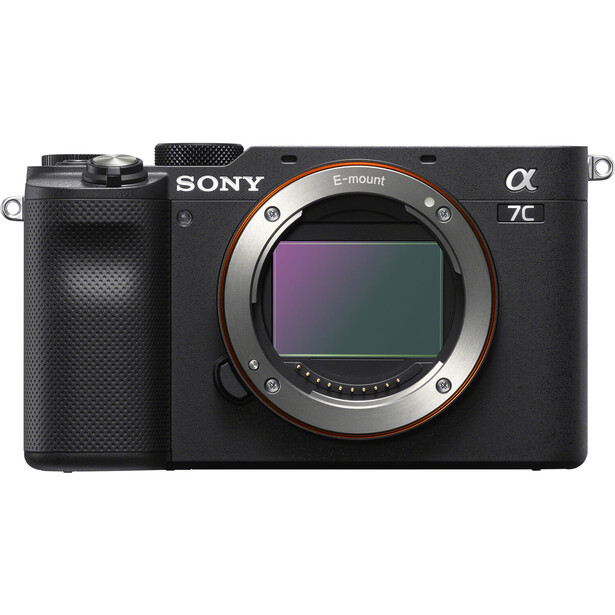
For street photography, travel, documentary work, or any application where the best camera is the one you'll actually carry, the original Sony a7C remains difficult to beat.
Stop Reading 2018 Reviews
The used camera market in 2026 is defined by a simple truth: yesterday's "flawed" professional camera is still better than today's "perfect" entry-level option. These five bodies were judged harshly at launch, sometimes fairly and sometimes not, but the criticisms that shaped their reputations have largely faded into irrelevance. Storage media got cheaper. Essential features turned out to be optional. And the fundamentals that actually determine image quality remained exactly as capable as they were on release day.
If you're shopping for used gear, ignore the consensus that formed years ago. Evaluate cameras based on what you actually need rather than what reviewers told everyone they should want. The internet's memory might be long, but your photographs don't care about forum arguments from 2018.



Join the Fstoppers community for free
-
Post comments and join in the discussions
-
Browse the site ad-free
-
Share your work and get featured in the community
-
Compete in the photo contests for fun and prizes
16 Comments
You can pick up a Sony a7RIII for less than a Panasonic S1. 42MP, exceptionally low noise at high ISO, very capable AF for general use. That's my vote for best general-purpose used camera under $1000.
Never understood the problem with the old Sony menu. I certainly got used to it with my A7III and used the custom menu and buttons/dials to control my most used features anyway. The new menu on my A7CII confused me more at first simply as I was less familiar with it.
I use an EOS R and I’m very pleases with it. For the work I do it is just enough. I’m tempted by the R6 III
I’m not convinced that Canon’s RF lenses are the best "any manufacturer has ever produced in terms of optical quality”. From the reviews I’ve read of their latest ‘L’ series RF lenses, it looks like a lot of them suffer badly from distortion, vignetting, or both. It sounds like a compromise in optical quality to me, when you have to rely on software to correct defects.
I have a Canon EF 35mm f/1.4L II USM. I would argue that the newer RF version is not better than mine. I’m sticking with the older lens.
Correct all points.
I picked up a used Z6 about a year ago and it is a lot of fun to shoot street with at night and not worry about it too much. The card reads so fast it's insane compared to SD on my Zf. The only issue I have with this camera is that live view in EVF appears about 1-2 stops brighter than the resulting exposure. I will just bump it up in LR but it's kind of annoying.
Is there no way to adjust the brightness of the EVF?
you can, hard to explain but there is a noticeable discrepancy between the rear LCD and the EVF in terms of exposure independent of brightness. Final exposure seems to be closer to the rear LCD. Kind of a pain if you like shooting with EVF.
I knew the Z6 would make this list. Still my workhorse approaching 10 years later. You can get them for like $500 which is crazy. IBIS and sensor sharpness makes it better than the D750 IMO.
The real lesson is that lenses make photos, not cameras. If people worried more about glass and less about camera, they'd be far better off.
For the Sony everyone complains about the menus like forever but never say what they should be like also about battery life - your not out all day and night there is a charger. I stated with the A7SM1 and used to go all night doing Astro Milky Ways and always had power doing many captures most times going to many locations.
Remember it is you who uses a camera and learns every inch as well as what is inside and it will last many years just do not let the should of or could have and looking for better the get the better of you all the negatives are to sell other makes of cameras. It took almost 5 years for others to go mirrorless but Sony users were fat and happy more so than Canon and Nikon that had to give up all they collected when the went mirrorless!!
As a former owner of the EOS R, I just disagree with 1 point: "The color science is pure Canon". No, it isn't. Although sharing the same sensor, the colors of the R don't look a bit like the 5D4. For whatever reason, Canon didn't use their generally warm tones here but went with slightly greenish tones. Looks great for nature and wildlife photos, but absolutely horrific regarding skin tones. Which is the main reason why I sold it.
Maybe a custom camera profile made with an X-rite Color Checker would help.
I spent a lot of seat time behind the EOS R and I love the images out of it, and the autofocus is still great. I do hate how the control setup feels a bit like a beta test (because for the RF mount, it basically was) but if you set the screen up to be a target pad for autofocus with your eye to the viewfinder, it functions pretty well. A real steal if you can find one at a good price.
My Lumix S1 is still my go-to for Wedding, Event, and Portraits. I recently picked up the S5ii for hybrid work and was going to sell my S1 but can't bring myself to do it. The AF isn't nearly as bad as the YouTubers and reviewers made it out to be and I absolutely love the images that sensor produces. Mine also has the VLOG upgrade so it's basically a mini cinema camera. Heaven forbid you learn to manual focus for some video work.
The EOS R got a bad rap because the initial firmware was slow, and the controls were, well, somewhat odd. Future firmware updated greatly improved the AF, and added he ability to repurpose certain controls. In the end it's an excellent camera...still.