
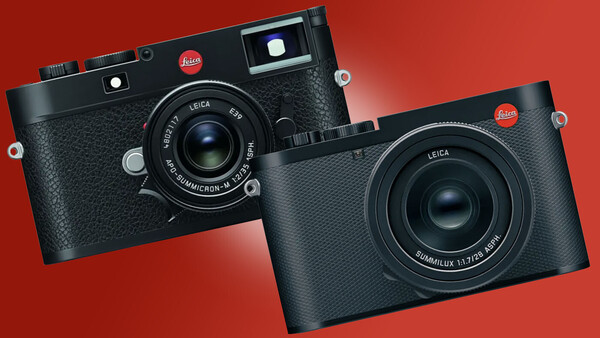
Leica is famous for its fully manual rangefinder cameras that are based on technology first introduced in 1954. In recent years there’s been what appears to be a huge surge of interest, particularly from younger YouTubers and influencers, all using rangefinders and gushing about them on social media. Some have a digital M, some have a film M, and a large number actually own both. Therefore, one would think that this antiquated system is in huge demand. YouTubers are waxing lyrical about Leica M cameras being “the” camera to own, particularly if street and travel photography is your main interest, and you want a bit of street cred. But all is not what it seems.
This week Leica’s VP of global marketing and communications, Andrea Pacella, shared what to many was some very surprising news in an interview with Digital Camera World. He confirmed the fixed-lens Q series sells “twice as much, or even more, than the entire M system.” This means the Leica most people now buy is an autofocus compact, not the manual-focus icon the brand was built on. Leica also says it sells every Q it can make.
The Cost of Entry to the M System Is Much Lower Than It Used to Be
Before we discuss the Q series, allow me to share one thing I’ve noticed, which I believe is part of the lack of new M camera and lens sales. We now have so many third-party M-mount lenses entering the market, and more new brands making classic Leica replicas are popping up seemingly on a monthly basis. They cost a fraction of what one would pay for a genuine Leica equivalent.
There is undoubtedly a huge and growing interest in the M system from those who can’t afford to simply buy a new M camera and Leica M lenses. These people aren’t buying a new M, they’re going onto platforms like Facebook Marketplace and buying a 17-year-old M9 or 14-year-old M240. Prices are lower than in previous years, because all the original owners of the earlier models have now sold them to buy the latest models. There’s a big selection of used older M cameras to choose from now.
Paired with a third-party M lens, you can now be part of the desirable Leica tribe for the cost of a new mid-range mirrorless camera kit. You only need to spend as little as $3,000, instead of going the new M camera and lens route, which will cost in excess of $20,000 if you’re pairing a new M11-P with a couple of current Leica primes.
While the legendary M rangefinder remains the symbolic heart of the brand, the Q series is outselling it for many practical reasons. And probably cost has something to do with it too.
M System Versus Q System Costs
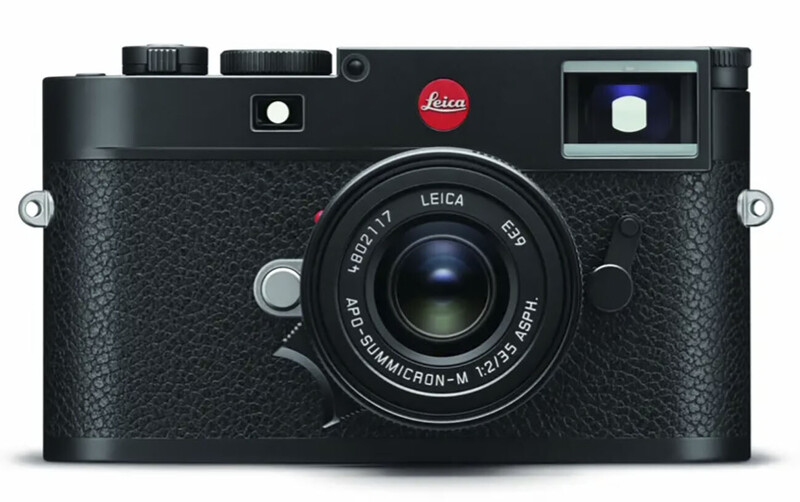
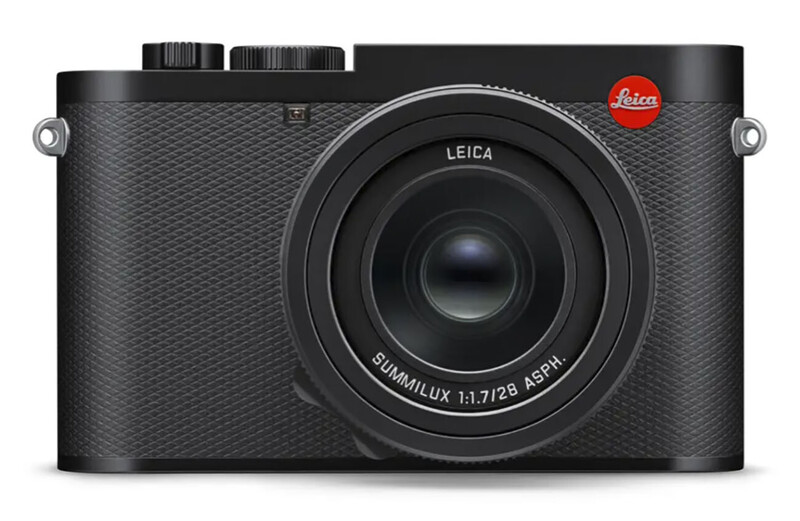
I was talking to a long-term M user recently—a friend of mine—who told me he ditched his M system and moved to buying a Q3 and Q3 43 as his travel/everyday kit, because it was much cheaper than buying a new M11 and a couple of equivalent lenses. He also mentioned the convenience of autofocusing when the situation warranted it. After I heard this, I had to look at the numbers.
- A Q3 with 28mm f/1.7 ASPH Summilux costs $7,350
- A Q3 43 with 43mm f/2 APO-Summicron costs $7,950
- Total $15,300
- A new M11-P costs $10,400
- A 28mm f/1.4 ASPH Summilux-M costs $8,555
- A 50mm f/2 APO-Summicron-M (there is no 43mm version) costs $9,945
- Total spend is $28,900
That’s $13,600 in savings going the Q route. That’s a lot of savings!
Another bonus is no GAS. Once you have your Q, you can’t be distracted with thinking about Gear Acquisition Syndrome if a new lens comes out. You’ve got what you’ve got, and you get on and use it. With an M system, that’s not the case!
The Main Reason Q Outsells M Is Practical, Not Emotional
An M camera is as basic and traditional as a camera can get. A purist’s camera. Leica says “It allows creatives to seize the magic of the moment, unhindered by the distractions of technical complexity. Manual control elements and iconic design foster a focused, conscious creative process.”
The marketing is geared towards nostalgia and brand legacy. I’m convinced many photographers buying an M in 2026 are making an emotional decision, not a practical one. Am I guessing here? No. I’ve owned a Q2 for a few years now, and recently bought a digital M (M10). Buying it makes no practical sense, if I’m honest. Holding and operating an M is a wonderful experience, it oozes quality and feels good to be using something whose ancestor was born in 1954, with earlier iterations having been used by the masters of the craft.
But using a Q feels just as good and reassuring, with the bonus of features that make your photography much more practical.
Autofocus
The Q series features fast, modern autofocus which makes nailing a photo that’s in focus much easier. It really shines when you’re shooting wide open. Try capturing a child running at f/1.4 on an M11.
Image Stabilization
You can shoot handheld in low light without a tripod. Very convenient for travel photography. Try getting a photo of a sharp subject with movement all around, with an M handheld.
Weather Sealed
A Q2 or Q3 has an IP52 rating, which means the body is protected against dust and against dripping water at up to a 15-degree tilt. That’s not a rating for a downpour, but it does mean a bit of drizzle or a dusty street won’t end your day. Something that is very unwise to risk with an M. This translates to getting shots which you wouldn’t otherwise be able to capture with an M.
EVF/WYSIWYG
An electronic viewfinder shows you exactly what you’re going to get in the frame, and what the exposure and depth of field will look like before you press the shutter. An EVF allows you to have things like the histogram displayed for maximum control.
Another huge bonus with the Q’s EVF is focus assist when using the camera in manual focus. This is the main reason I prefer grabbing my Q2 over my M10 when shooting with a shallow depth of field.
Macro
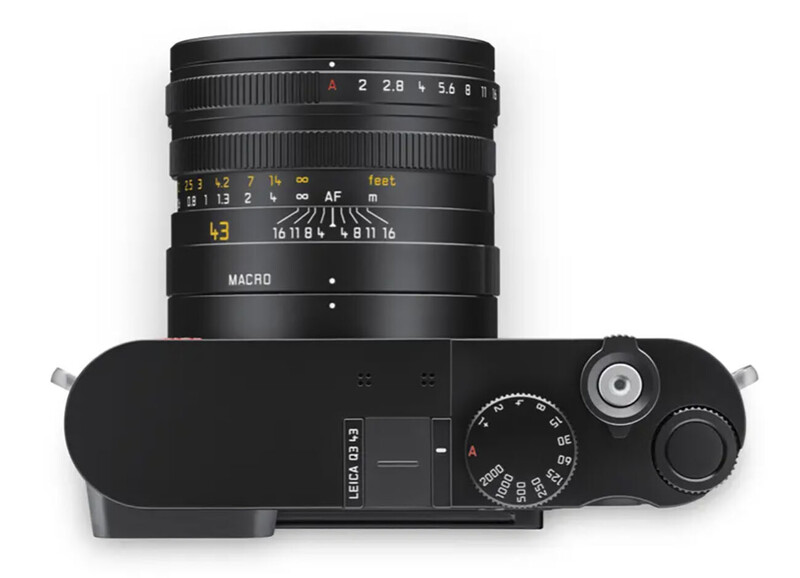
All Q models have a macro setting, with a simple twist of the macro ring on the lens barrel. Most M lenses only allow you to shoot as close as 0.7 m (2.3 feet). A Q3 in macro mode allows you to shoot at 17 cm (6.7 inches), and the Q3 43 is 27 cm (10.6 inches).
Video
The Q series all have video capabilities, up to 8K on the Q3—but who buys a Leica for video?
Conclusion
Having said all that, I don’t regret buying an M. I love it. I’d buy another—maybe the M EV1. I think the bottom line is the M system is a fabulous choice for things like street photography when you’re using zone focus and f/11, or you’re strolling around taking your time, shooting inanimate scenes. That’s what I do, but I realize most photographers want to shoot anything and everything—family, pets, activities, travel—and want to do it with as little fuss as possible, in a compact, easy-to-use form factor. If that’s you, The Well-Rounded Photographer: 8 Instructors Teach 8 Genres of Photography covers the ground a one-camera kit has to handle.
In a marketplace where “point-and-shoot” compact cameras are growing in popularity, the Q system does this better than any other camera I can think of.
As an owner of both systems, it comes as no surprise to me that Leica is selling twice as many Q cameras as their legendary M rangefinders, as Pacella told Digital Camera World. Practicality is overshadowing emotion and nostalgia. And for many, cost.
I have to wonder how things may change at Leica over the next few years. A Q camera offers so much, with the only limitation being a fixed focal length. The M cameras are a pure joy to use yet have so many limitations compared to modern mirrorless cameras.
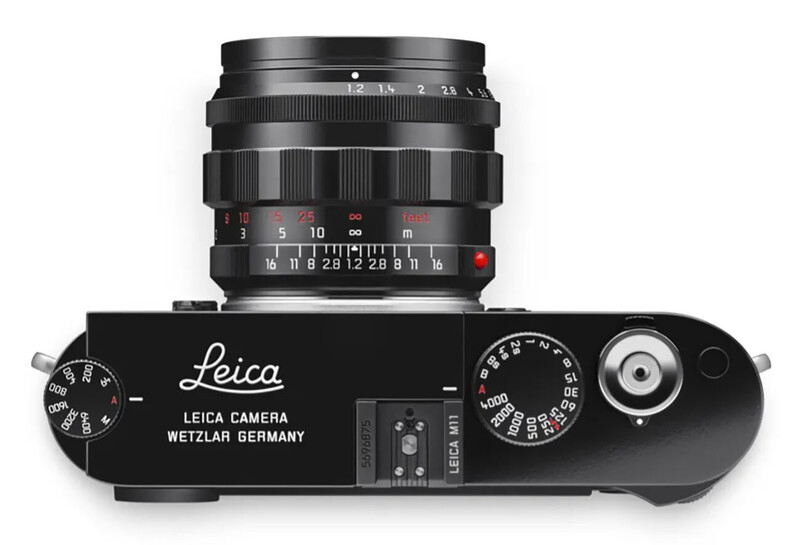
I believe the answer is the development of M EV1. It only solves one of the four things above—the viewfinder—and you still get no autofocus, no stabilized body, no sealing, and no macro. But it’s the first M that borrows from the Q instead of resisting it, and that direction is the one I’d like to see Leica keep taking. But what do you think?



Join the Fstoppers community for free
-
Post comments and join in the discussions
-
Browse the site ad-free
-
Share your work and get featured in the community
-
Compete in the photo contests for fun and prizes
13 Comments
.
You forgot an important factor. Most buyers of Leica's new cameras are in their 50s or older, and their eyesight is not good enough for rangefinder focusing. Additionally, precise rangefinder focusing is much more difficult with today's M11 cameras, which have 60 MP sensors that make any slight misfocus immediately visible.
And according to the diffraction tool I used, with a 60MP full frame sensor, you get diffraction softening at around F/5.6.. so theres also that to deal with making matters worse.
Diffraction is an issue on any larger sensor, it's not just Leica issue. But you're getting into pixel-peeping here.
Respectfully disagree. Shots at f/8 are noticeably softer viewed fit to screen on a 16” MBP in C1 than shots at f/4. At f/8 the circle of confusion is 3x pixel size for a 60MP mm sensor. The issue is directly related to pixel pitch (indirectly related to sensor size).
I'm a photographer and I take / make photos. my goal is to have people feel something. I'll leave all the pixel-peeping science stuff stuff to you.
I’m an engineer and my goal is to help people understand the world around them so they can make the most of their gear while correctly understanding what its limitations are. One can still be a creative and understand the science behind the craft; it makes one more efficient in creating their vision.
When I first started thinking about getting a Leica, I had my eye on the Q2. But I realized that if I spent the money on it, I’d regret not buying an M instead. So, in the end, I went with the M11, and I haven’t regretted it once. I ended up paying more than twice as much, but I got so much more in return.
I think you missed one other factor. Manual focus on the Q cameras is just as satisfying as on the M. The feel is incredibly similar to a genuine M lens with non of the 'mushiness' of an AF lens. Given that it is in fact an electronic focus system, this is quite remarkable.
I mentioned the Q's focus assist when manually focusing, something I find more satisfying than focusing with a rangefinder. This would have been worth noting, I agree.
The idea that the M-system is "accessible" is laughable. That anyone would pay several thousand dollars for a 20 year old digital camera is mind boggling. Nothing about the Leica market reflects actual photographic quality. The cameras are purely status symbols.
I thought the same as you for many years, and one day I was introduced to the Q series. From there, I got the chance to use M lenses on my Nikon system which I really enjoy because of the size and rendering of them. I finally bought an M3 and an M10, and have found the user experience to be unrivalled. My Nikon Z6iii can do far more than my M10, it's a much cheaper and more practical camera to own, offering much more flexibility. I grab it when I need to get a job done. But for pleasure, when there's no rush, I only want to grab the M10. You don't understand until you use one. Mine has the Leica logo removed, it's nothing to do with status symbols.
I grew up shooting MF cameras because that is all there was. AF systems did not really exist except in a couple of very esoteric instances (Contax had a system that actually moved the film plane rather than the lens!) so if you wanted SLR images, you learned to use manual focus for most things, trap focus for high speed moving things and so on. Go back an look at the Olympics images from the 70's and 80's- all manual focus 35mm film.
In the mid 90's I saw an advert for a Leica M6 and thought it looked nice. I bought one and about 4 lenses. The camera cost £1,000 or so.
I shot that all round the world and then it seemed that digital was taking off and that Leica were not going to make an M digital. I sold the lot and bought Nikon. Shot that for work for a decade then stopped shooting for work. Sold all my Nikon gear and via a couple of side roads (GFX and X2D) ended up back with an M11-P.
I have to say I feel as though I have come home. I do not need AF any longer and would rather do it myself. I might get an EV2 if there ever is one. Sometimes I think about getting a couple of Q3 cameras but I don't ever shoot video and hate paying for capability I won't use. A stripped back 'M' version of the Q would get my money immediately.