The camera that ends up in your pocket is the one you actually shoot with, and for the better part of a decade that camera was a phone. In 2026 that has quietly reversed. Waitlists for fixed-lens compacts run for months, secondhand prices on models Sony discontinued years ago have climbed rather than fallen, and manufacturers who left the category for dead are shipping new bodies again. A generation raised on computational photography has decided it wants the opposite: one lens, deliberate framing, and a file that looks like a photograph instead of a composite.
Buying into that world means resolving three tensions. The first is fixed lens versus zoom, which is really a question of whether you want the discipline of a single focal length or the flexibility to reach across a scene. The second is sensor size, where a larger chip buys you low-light performance and shallow depth of field at the cost of pocketability and money. The third, and the one nobody warns you about, is simply getting one, because several of the cameras in this guide are harder to find in stock than they are to justify.
We have sorted these picks by the shooter each one serves rather than by price alone, and we have been blunt about where a beloved camera falls short. Five of the eight entries link our own hands-on reviews or field tests. For the rest, we say plainly that we have not reviewed them and write from verified specs. If you are still weighing a compact against the phone in your pocket, our guide to the best camera phones argues the other side of that case. Availability is volatile here, so treat every "in stock" claim as a moving target.
At a Glance
- Best Overall: Fujifilm X100VI
- Best for Street: Ricoh GR IV
- Best Zoom Compact: Sony RX100 VII
- Best for Travel: Panasonic Lumix L10
- Best for Vlogging and Content Creation: Canon PowerShot V1
- Best Premium: Leica Q3
- Best Large-Sensor Compact: Sony RX1R III
- Best Value: Fujifilm X half
Best Overall: Fujifilm X100VI
- Sensor: 40.2 MP APS-C X-Trans CMOS 5 HR
- Lens: fixed 23mm f/2 (35mm equivalent)
- Stabilization: 5-axis in-body, up to 6 stops
- Viewfinder: hybrid optical and 3.69m-dot electronic
- Autofocus: 425-point hybrid phase detection with subject detection
- Video: 6.2K/30p, 4K/60p, 10-bit 4:2:2
- Weight: 521 g with battery and card
- Price: $1,799 (B&H)
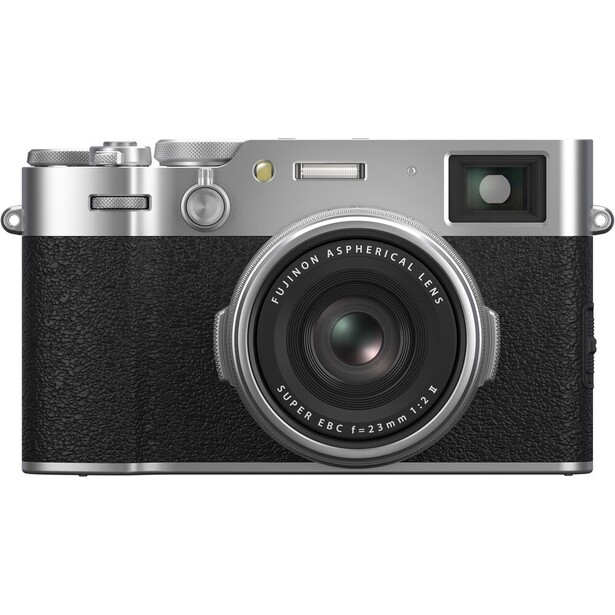
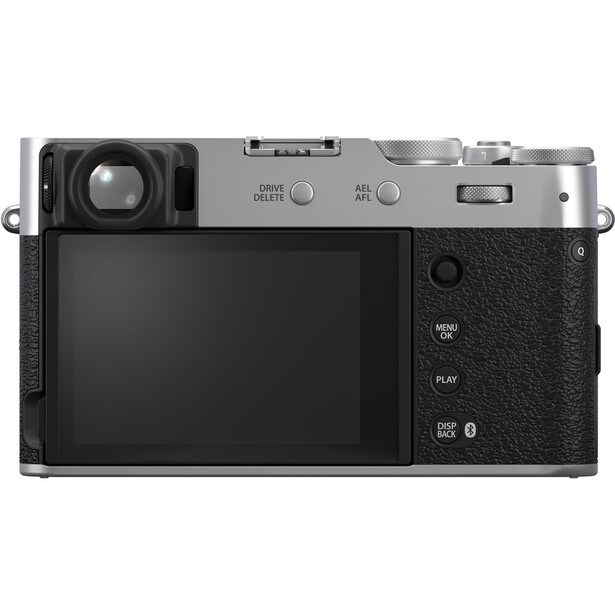
The X100VI is the camera that dragged the entire compact category back to life, and it earns the overall slot because it is the rare fixed-lens body that asks you to compromise on almost nothing. We have not run a full Fstoppers review on this one, so what follows comes from the spec sheet and the camera's documented design. It pairs a 40.2 MP APS-C sensor with a 35mm-equivalent f/2 lens, and it is the first X100 to add in-body stabilization, the single change that turns it from a fair-weather camera into one you can hand-hold at slow shutter speeds after dark. The hybrid viewfinder remains its signature party trick: flick a lever and you switch between a bright optical finder with a live frame line and a full electronic view, so you can shoot the way a rangefinder feels or the way a mirrorless camera works, depending on your mood.
What makes it the default recommendation is that it is fun to carry and capable when you get somewhere worth shooting. Fujifilm's film simulations produce JPEGs you can post straight off the card, the leaf shutter is near silent and syncs with flash at any speed, and the metal body's dial-driven controls teach you exposure instead of hiding it. The 40 MP crop headroom is what makes the fixed lens livable rather than restrictive: you can crop into a tighter framing after the fact and still keep a large, printable file.
Two problems are worth stating flatly. There is no weather-sealing unless you add an adapter ring and a filter, which feels stingy on a camera this expensive. The second is supply. More than two years after launch the X100VI is still routinely backordered, and paying above retail to a reseller is a real temptation you should resist. Autofocus, while much improved over the X100V, still hunts in low contrast in a way Sony's compacts do not. None of that dislodges it. For the person who wants one camera to carry every day and love, this is the one to beat, so check the current price of the Fujifilm X100VI at B&H.
What We Like
- Hybrid optical and electronic viewfinder, unique in the category
- 40.2 MP sensor with real cropping headroom
- In-body stabilization for the first time in the series
- Dial-driven controls and excellent film simulations
What Could Be Better
- No weather-sealing without the accessory ring and filter
- Persistent stock shortages and reseller markups
- Autofocus still hunts in low-contrast light
Also consider the Ricoh GR IV if you want something that disappears into a jacket pocket rather than hanging off your shoulder.
Best for Street: Ricoh GR IV
- Sensor: 25.7 MP APS-C BSI CMOS
- Lens: fixed 18.3mm f/2.8 (28mm equivalent)
- Stabilization: 5-axis in-body, up to 6 stops
- Viewfinder: none, fixed 3-inch 1.04m-dot touchscreen
- Autofocus: hybrid phase and contrast detection with face and eye detection
- Video: Full HD/60p
- Weight: 262 g with battery and card
- Price: $1,596.99 (B&H)
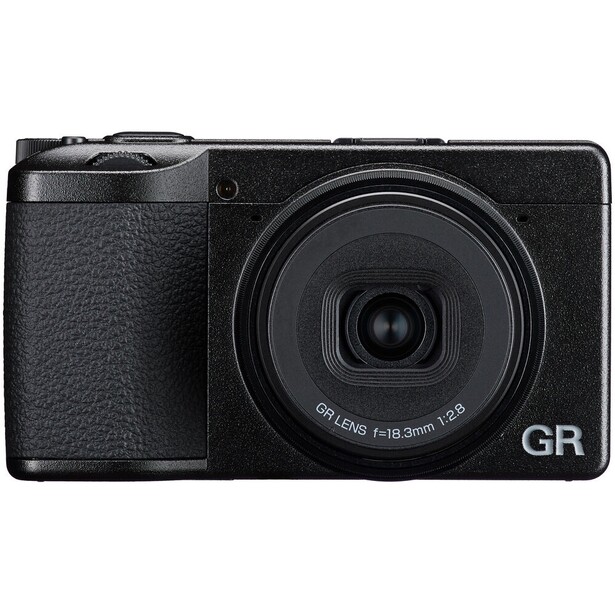
Street photographers have used the GR line for years for one reason: no other camera with a sensor this large vanishes so completely. The GR IV weighs 262 g, slips into a front pocket, powers on and shoots in about a second, and its snap-focus mode lets you preset a distance and fire the instant something happens in front of you. For candid work that immediacy is the whole game. This is another pick we have not reviewed hands-on, so take what follows as a read of the spec sheet rather than a test report. The 25.7 MP sensor, a redesigned 28mm-equivalent lens, and five-axis stabilization rated to 6 stops are real upgrades over the GR III, and the internal 53 GB of memory means you can leave without a card and still shoot all day.
The shooting experience is what converts people. The interface is deep without being fussy, the one-handed controls are laid out for shooting from the hip, and the files have the slightly gritty, contrasty character that street shooters have built entire portfolios around. The result is the most image quality available in a camera this size.
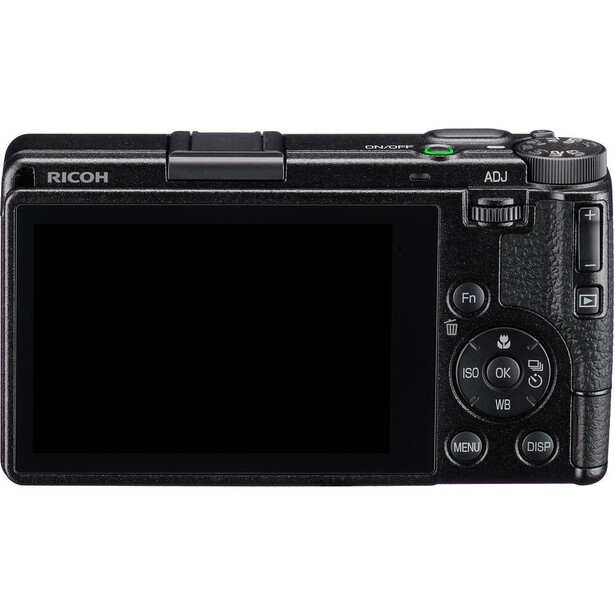
Then there is the list of things Ricoh still refuses to fix, and you have to make peace with all of them. There is no viewfinder and the rear screen does not tilt, so composing in bright sun or at odd angles is guesswork. The autofocus is the weakest of any camera in this guide and will frustrate anyone trying to track motion. The body is not weather-sealed. And the price jumped hard over the GR III, which stings for a camera that leaves so much off. If you shoot deliberately, at a fixed 28mm, and value invisibility over versatility, none of that matters, so check the current price of the Ricoh GR IV at B&H. Anyone who needs autofocus to save them should look elsewhere.
What We Like
- Pocketable to a degree nothing else here approaches
- Snap focus and near-instant startup for candid work
- APS-C image quality with characterful files
- Generous 53 GB of internal memory
What Could Be Better
- No viewfinder and a fixed, non-tilting screen
- The weakest autofocus in this guide
- No weather-sealing, and a steep price increase over the GR III
Also consider the Ricoh GR IIIx if you prefer a 40mm-equivalent field of view for tighter, more portrait-friendly framing.
Best Zoom Compact: Sony RX100 VII
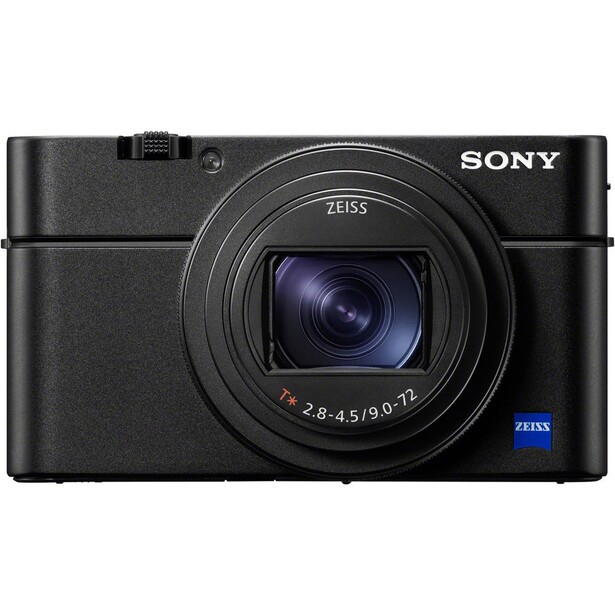
- Sensor: 20.1 MP 1-inch stacked Exmor RS CMOS
- Lens: 24-200mm f/2.8-4.5 (35mm equivalent) ZEISS Vario-Sonnar T*
- Stabilization: Optical SteadyShot, lens-based
- Viewfinder: pop-up 2.36m-dot OLED
- Autofocus: 357-point hybrid, locks in about 0.02 seconds
- Video: 4K/30p, Full HD/120p
- Weight: 302 g with battery and card
- Price: $1,498 (B&H)
Nobody has replaced the RX100 VII, and after more than six years that is starting to look less like neglect and more like the design simply being finished. It remains the only truly pocketable camera that hides a 24-200mm zoom, a sticky autofocus system, and a pop-up viewfinder inside a body you can forget is in your coat. We have not run it through an Fstoppers review, and the specs below come from Sony's current listing rather than a test bench. The reach is the reason to buy it. When your kid is at the far end of a soccer field or a building is across a plaza, no fixed-lens rival can frame the shot, and the 1-inch sensor still pulls far more detail than any phone at the long end.
Autofocus is the other headline, because Sony's real-time tracking trickled down into this body years ago and it holds an eye across the frame with the confidence of cameras several times its size. The 20 fps blackout-free burst freezes action, the pop-up finder means you can shoot at eye level in bright light, and the tilting screen flips up for the occasional piece to camera. It is the one camera here you would hand to a parent shooting youth sports.
The compromises are the ones a small sensor and an old design force. That 24-200mm range is dim at the long end, so low-light reach is limited, and the lens is sharper wide than telephoto. The menus are the old convoluted Sony system, battery life is short enough that a spare is not optional, and there is no weather-sealing. The price has never come down to match its age, which is the hardest thing to forgive on a design that shipped in 2019. Sony has told interviewers the ZV line is not a replacement for it, and no RX100 VIII exists, so this is what the category offers. If zoom flexibility in a pocket is the priority, check the current price of the Sony RX100 VII at B&H.
What We Like
- 24-200mm reach in a genuinely pocketable body
- Fast, sticky autofocus with real-time tracking
- Pop-up viewfinder and tilting selfie screen
- 20 fps burst for action
What Could Be Better
- Dim aperture and softer results at the long end
- Short battery life and dated Sony menus
- Premium price for a design that launched in 2019
Also consider the Panasonic Lumix L10 if image quality matters more than squeezing the camera into a trouser pocket.
Best for Travel: Panasonic Lumix L10
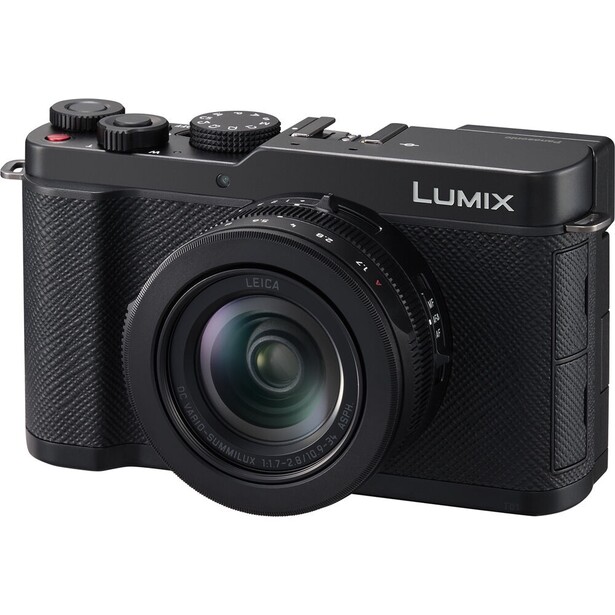
- Sensor: 20.4 MP Four Thirds BSI CMOS
- Lens: Leica DC Vario-Summilux 24-75mm f/1.7-2.8
- Stabilization: optical image stabilization
- Viewfinder: 2.36m-dot OLED, 0.74x
- Autofocus: 779-point phase hybrid with subject recognition
- Video: 5.6K/60p, 4K/120p, 10-bit
- Weight: 508 g with battery and card
- Price: $1,497.99 (B&H)
Panasonic revived the spirit of the beloved LX100 with the Lumix L10, and for travel it hits a balance the pocket zooms cannot. We took the L10 to the Dolomites alongside a Nikon Z 8, and our writer ended up wanting to use it more often than expected. The 24-75mm Leica-branded lens covers the range you actually shoot on a trip, from a cramped alley to a portrait across a cafe table, and it opens to f/1.7 at the wide end, which is two-thirds of the reason to buy this over a 1-inch camera. The Four Thirds sensor is a multi-aspect design, so 4:3, 3:2, and 16:9 keep the same angle of view instead of cropping into the frame.
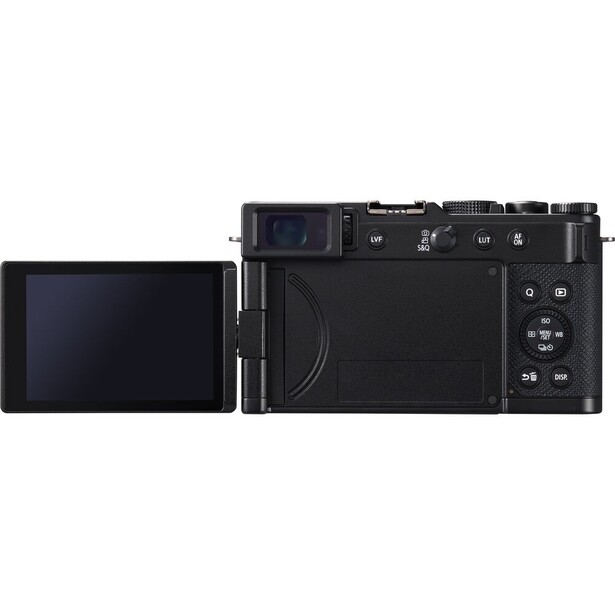
It is also the most complete handling package short of the Leica. There is a proper electronic viewfinder, a fully articulating screen for low angles and vlogging, a machined metal barrel with a manual aperture ring, and a leaf shutter that stays quiet in a church or a market. Video is serious, with 5.6K capture, 4K up to 120p, V-Log, and no recording limit.
Now the costs. The lens does not retract fully flat, so this is a jacket-pocket camera rather than a jeans-pocket one, and at 508 g it has real heft for the class. The Four Thirds sensor gives up shallow-depth-of-field drama and low-light headroom to the full frame options here. As a body that only shipped this year, its firmware track record is unwritten, worth a pause if you need a camera to be dependable on a trip you have already paid for. For a photographer who wants one versatile camera for two weeks abroad, shooting stills and video, this is the most sensible choice in the guide, so check the current price of the Panasonic Lumix L10 at B&H.
What We Like
- Bright, versatile 24-75mm f/1.7-2.8 Leica zoom
- Larger Four Thirds sensor than the pocket zooms
- Viewfinder, articulating screen, and manual aperture ring
- Serious 5.6K and 10-bit video with no recording limit
What Could Be Better
- Too large for a trouser pocket
- Less low-light and background blur than full frame rivals
- Brand-new body with an unproven firmware history
Also consider the Sony RX100 VII if true pocketability outranks image quality for your travels.
Best for Vlogging and Content Creation: Canon PowerShot V1
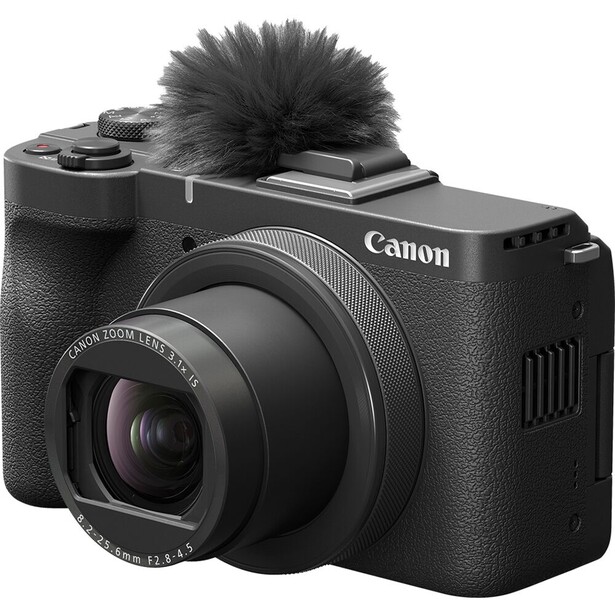
- Sensor: 22.3 MP 1.4-type CMOS
- Lens: 16-50mm f/2.8-4.5 (35mm equivalent) wide angle zoom
- Stabilization: optical and digital IS
- Viewfinder: none, vari-angle touchscreen
- Autofocus: Dual Pixel CMOS AF II with pupil detection
- Video: 4K/30p oversampled from 5.7K, 4K/60p cropped, Canon Log 3 10-bit
- Weight: 426 g with battery and card
- Price: $899 (B&H)
Canon built the PowerShot V1 for the person whose first camera is really a tool for making videos, and it is the most sensibly specified vlogging compact here. Two decisions set it apart. It uses a 1.4-type sensor, larger than the 1-inch chips in most creator compacts, which buys cleaner low-light footage and more background separation. And it starts at a genuinely wide 16mm equivalent, so a handheld piece to camera fits your face and your background without an accessory, where most rivals start too tight for arm's-length filming.
When we spent time with it, what kept coming up was how little the camera asks of you before you press record. The built-in three-stop ND filter meant no bag of filters for shooting wide open outdoors, the power zoom made framing changes smooth enough to keep in a cut, and the active cooling fan separates a camera that stops recording from one that keeps rolling through a full sit-down take. Dual Pixel autofocus with pupil detection held focus on the eye through movement, and Canon Log 3 with 10-bit color gives real grading latitude when you want to color-match footage from a bigger body. Our reviewer's main gripes were the shortage of external dials, which pushes most adjustments into the touchscreen, and the micro HDMI port instead of a full-size one.
Beyond that, there is no viewfinder, so bright-day stills mean composing on the screen, and 4K/60p comes with a crop that tightens your wide framing right when you want it widest. The bigger caveat is availability. Canon has cleared the V1 from its own U.S. store and has said its next PowerShot will not be another V-series body, so this is a camera to buy while retail stock lasts rather than one with a long support runway ahead of it. If you are shopping today and can find one, it is the content creator's best-balanced compact, so check the current price of the Canon PowerShot V1 at B&H.
Read our full review: Hands On With The Canon PowerShot V1
What We Like
- Larger 1.4-type sensor than most creator compacts
- Genuinely wide 16mm-equivalent start for handheld filming
- Built-in three-stop ND filter and a power zoom
- Active cooling fan, Canon Log 3, and reliable Dual Pixel autofocus
What Could Be Better
- Few external dials, so most settings live in the touchscreen
- No viewfinder, and 4K/60p applies a crop
- Cleared from Canon's own store, so availability is shaky
Also consider the Sony ZV-1 II if you want a smaller, cheaper vlogging compact and can live with a 1-inch sensor.
Best Premium: Leica Q3
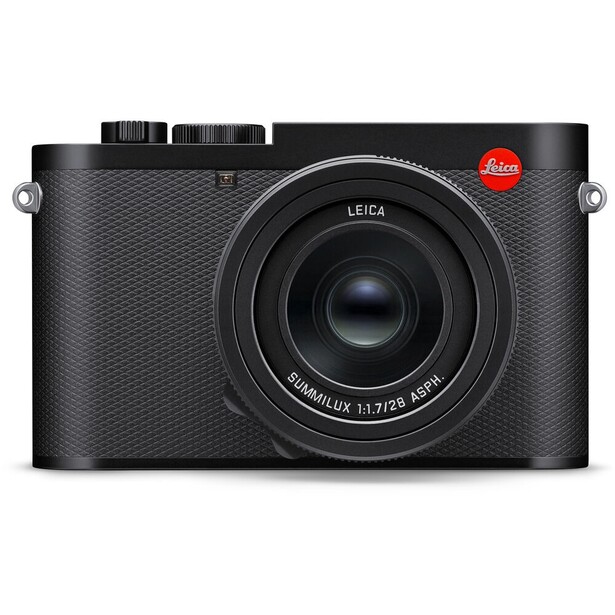
- Sensor: 60 MP full frame BSI CMOS, triple resolution 60/36/18 MP
- Lens: Summilux 28mm f/1.7 ASPH
- Stabilization: optical, in the lens
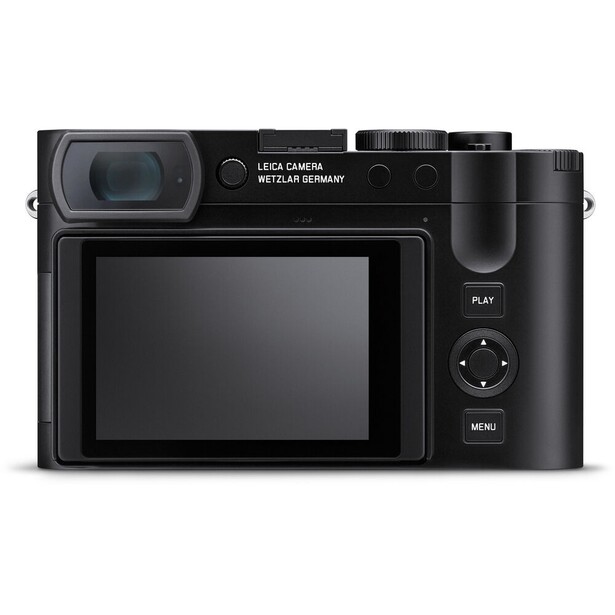
- Viewfinder: 5.76m-dot OLED
- Autofocus: hybrid phase detection with face and eye detection
- Video: 8K/30p, 10-bit
- Weight: 743 g with battery and card
- Price: $7,350 (B&H)
The Q3 is the premium compact other premium compacts are measured against, and the reasons go beyond the red dot. It puts a 60 MP full frame sensor behind a stabilized 28mm f/1.7 Summilux, a lens sharp enough to justify every one of those pixels, and it lets you shoot at 60 MP or bin down to 36 or 18 for cleaner files. Built-in crop modes give you 35mm, 50mm, and beyond from slices of that sensor, so a single prime behaves like a small kit. The focus lever locks in place, the leaf shutter is nearly silent, and the files have a depth no smaller-sensor compact matches.
Our review of the Q3 was, in the reviewer's own framing, beautiful yet questionable, and the questionable half deserves your attention before you spend $7,350. Face and eye detection proved inconsistent at best, locking onto a mailbox or a chair instead of the person in front of it. The battery has no retaining door and pops out if you are careless. The flip-out screen has so little clearance that pulling it away from the body is a small fight. The leaf shutter tops out at 1/2,000 s, so the f/1.7 aperture you paid for is unusable in daylight without an ND filter. Highlights clip earlier than on comparable full frame cameras, so exposing to the right is a habit you will have to break.
None of that stops the images from being extraordinary. At 743 g it is the heaviest body here, 28mm is wider than many photographers want as their only focal length, and you are paying a badge premium on top of the lens and the sensor. For a photographer who wants the finest rendering available in a fixed-lens camera and will keep it for a decade, check the current price of the Leica Q3 at B&H. For everyone else it is a lovely thing to want and hard to justify.
Read our full review: Leica Q3 Review: Beautiful Design, Flawed Function
What We Like
- 60 MP full frame image quality in a compact body
- Superb stabilized 28mm f/1.7 Summilux lens and a locking focus lever
- Class-leading electronic viewfinder and a near-silent leaf shutter
- Crop modes turn one prime into a small kit
What Could Be Better
- Face and eye detection are unreliable
- 1/2,000 s shutter ceiling makes f/1.7 impractical in daylight
- Fiddly screen, a battery with no retaining door, and early highlight clipping
- Heaviest body in the guide, at several times the price of most rivals
Also consider the Leica Q3 43 if you prefer a natural 43mm perspective and an apochromatic lens over the wider 28mm view.
Best Large-Sensor Compact: Sony RX1R III
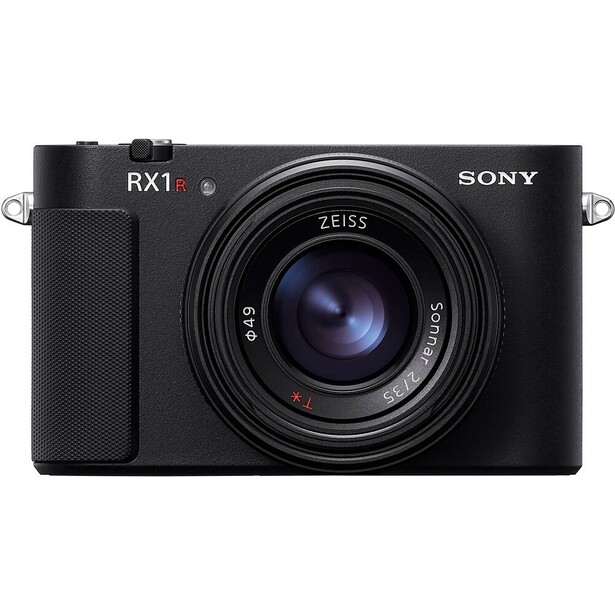
- Sensor: 61 MP full frame Exmor R BSI CMOS
- Lens: ZEISS Sonnar T* 35mm f/2, fixed
- Stabilization: none
- Viewfinder: 2.36m-dot OLED, 0.70x
- Autofocus: 693-point phase detection with AI subject recognition
- Video: 4K/30p, 10-bit 4:2:2
- Weight: 498 g with battery and card
- Price: $5,098 (B&H)
Nearly a decade after the last RX1, Sony finally shipped the RX1R III, and it is the highest-resolution fixed-lens compact you can buy. A 61 MP full frame sensor behind a Zeiss 35mm f/2 in a body under 500 g is a remarkable piece of engineering, and the files reward it: enormous detail, gentle tonality, and enough resolution to crop a 35mm frame into a tight 50mm or 70mm with the Step Crop function. Sony brought its modern autofocus across too, so the AI subject recognition that makes the a7 bodies so reliable now lives in a camera you can palm.
We shot close to 10,000 frames on ours across family days, three portrait sessions, and documentary work, and the camera earned its place in a jacket pocket. The rear thumb nub and textured finish make one-handed shooting genuinely comfortable, which matters more than it sounds on a camera you carry all day. The leaf shutter syncs with flash at any mechanical speed, and our reviewer used exactly that to overpower ambient light in portraits, which is a trick no other 61 MP camera this size can do. He ended up buying the review unit.
He also spent the whole review fighting the battery, which needs charging through an ordinary day out. The rear screen is fixed, a step backward from the RX1R II and a genuine loss for waist-level street shooting. There is no stabilization, so at 61 MP you feel every bit of handshake and need faster shutter speeds than you would expect. Autofocus is occasionally hesitant next to Sony's own a7 bodies, the exposure preview flashes bright and dark when you stop down, and the price sits in Leica territory without Leica's lens reputation. For the photographer who prioritizes outright resolution and a 35mm view in the smallest possible full frame package, check the current price of the Sony RX1R III at B&H. Everyone else should let the missing tilt screen and stabilization talk them out of it.
Read our full review: Sony RX1R III Review: Worth $5,000?
What We Like
- 61 MP full frame resolution, the highest in the category
- Compact Zeiss 35mm f/2 in a sub-500 g body
- Leaf shutter flash sync at any mechanical speed
- Step Crop turns the 35mm into a versatile trio of framings
What Could Be Better
- Battery life is the daily frustration
- Fixed rear screen, a step back from the RX1R II
- No stabilization behind a 61 MP sensor
- Priced with the flagship Leicas
Also consider the Leica Q3 if you want a brighter lens, a tilting screen, and stabilization at a similar price.
Best Value: Fujifilm X half
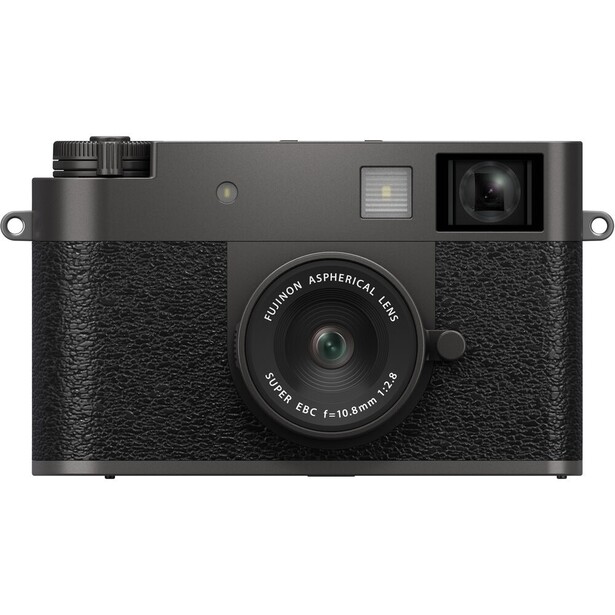
- Sensor: 17.7 MP 1-inch CMOS, vertical orientation
- Lens: fixed 10.8mm f/2.8 (32mm equivalent)
- Stabilization: none
- Viewfinder: reverse-Galilean optical, 90% coverage
- Autofocus: contrast detection with face and eye detection
- Video: Full HD/24p
- Weight: 240 g with battery and card
- Price: $649 (B&H)
The X half is the cheapest way into a charming premium compact, and it earns the value slot by being the one camera here that a casual shooter will carry everywhere and enjoy. We reviewed the X half after several weeks in a jacket pocket, and it gave our reviewer more fun than any camera in years. It is tiny at 240 g, it shoots vertical frames that go straight to a phone, and it leans hard into a playful film-camera idea: a mode that hides the review screen and makes you pull a frame-advance lever between frames, a film-simulation dial, and 26 in-camera filters that turn the JPEGs into finished looks. There is a small optical finder on the front, though it shows nothing but a frame, with no exposure or focus information at all.
For the person who finds a big camera intimidating or a phone uninspiring, this hits a sweet spot neither can. The 1-inch sensor is far larger than a phone's, so the files hold real detail and a low-light grit that reads as character rather than noise. The battery lasts an astonishing 880 shots, and the whole thing costs a fraction of everything else here. It is the camera you hand to someone who says they want to get into photography but does not want a manual. If that description fits you, our guide to the best cameras for beginners covers the interchangeable-lens route if you outgrow it.
Be clear about what you give up for that price. It shoots JPEG only, so there is no raw file to rescue a difficult exposure. The sensor is the smallest here, there is no zoom, and video stops at Full HD/24p. It is a toy in the best sense, built for fun rather than paid work, and anyone expecting X100VI image quality at a third of the cost will be disappointed. Taken for what it is, it is the most joyful and affordable entry point in the category, so check the current price of the Fujifilm X half at B&H.
What We Like
- By far the lowest price in this guide
- Tiny, pocketable, and fun to shoot every day
- Larger 1-inch sensor than any phone
- Exceptional 880-shot battery life
What Could Be Better
- JPEG only, with no raw safety net
- Smallest sensor in the guide and no zoom
- The optical finder shows a frame and nothing else
Also consider the Canon PowerShot V1 if you want the same everyday portability with real video capability behind it.
How to Choose a Compact Camera
Start with fixed lens versus zoom, because it shapes everything else. A fixed prime like the one on the X100VI, GR IV, Q3, or RX1R III forces you to move your feet and see in a single field of view, which most photographers find makes them better and their work more consistent. A zoom like the RX100 VII or the Lumix L10 trades that discipline for reach, which is the right call for travel and family use where you cannot always move closer.
Sensor size is the next axis, and the rule is simpler than the spec sheets suggest. A larger sensor buys low-light performance and shallow depth of field, in that order, and costs you money and pocketability. A 1-inch sensor is plenty for daylight and social sharing. APS-C, as in the Fujifilm and Ricoh, is the sweet spot for image quality against size. Full frame, in the Leica and the Sony, is for photographers who print large, shoot in the dark, or want that specific rendering. Do not pay for it if you shoot in good light and post online.
Two features matter more than people expect. A viewfinder changes how you shoot in bright sun and how steadily you hold the camera, and its absence is the biggest daily frustration on otherwise excellent cameras like the GR IV. Stabilization is the other, because it decides whether a camera is usable handheld after dark, which is where the RX1R III's omission bites. Resist the megapixel race in the other direction: 20 to 26 megapixels prints large and fills a screen, and the only real argument for the 60-megapixel bodies is cropping reach. Watch the shutter ceiling, the spec nobody checks. A leaf shutter that stops at 1/2,000 s, as on the Q3, means the fast lens you paid for needs an ND filter at noon. The last axis, unique to this category in 2026, is whether you can buy the camera at all. Several of these are perpetually backordered or cleared from official stores, so confirm stock before you fall in love. If a compact proves too limiting once you start shooting seriously, our guide to the best mirrorless cameras is where that road leads.
What We're Looking For
Our picks weigh image quality against size, the usefulness of the lens for the shooter each camera targets, the quality of the controls and viewfinder, and honest availability rather than a spec-sheet score. Every specification here was verified against current manufacturer and retailer sources at the time of writing, and prices are the current B&H figure for the body. Five of the eight picks here link a hands-on review or field test by one of our writers. Where we have not tested a camera ourselves we say so in the entry and write from verified specs instead.
Frequently Asked Questions
Are Compact Cameras Worth It in 2026?
Yes, for a specific reason: a good compact gives you a larger sensor, a better lens, and a more deliberate shooting experience than a phone, in something you can still carry every day. The image quality gap over a phone is real in low light and at any kind of zoom. If you want convenience above all, your phone is fine. If you want photographs you are proud of without hauling a full kit, a compact earns its place.
What Is the Best Compact Camera for Street Photography?
The Ricoh GR IV, for most people. It is the only camera with an APS-C sensor that truly disappears into a pocket, it starts up and shoots almost instantly, and its snap-focus mode is built for reacting to fleeting moments. The Fujifilm X100VI is the alternative if you want a viewfinder and can carry something a little larger.
Why Are Premium Compact Cameras So Hard to Buy?
Demand outran supply when the category came back into fashion, and manufacturers build these low-volume bodies in limited runs. The Fujifilm X100VI has been backordered for over two years, and some models, the Canon PowerShot V1 among them, get cleared from official stores as production shifts. Buy from an authorized dealer, join waitlists rather than paying reseller markups, and check stock the day you intend to purchase.
Do I Need a Full Frame Compact Camera?
No. Full frame compacts like the Leica Q3 and Sony RX1R III deliver the best image quality here, but the difference over an APS-C camera like the X100VI is invisible in most real-world use and comes at several times the price. Full frame is worth it if you print large, shoot heavily in low light, or want the shallowest depth of field. Otherwise, APS-C is the smarter spend.
Is a Fixed-Lens Compact Better Than a Zoom Compact?
Neither is better; they suit different shooters. A fixed prime like the one on the X100VI or Ricoh GR IV is sharper, brighter, and encourages more disciplined composition. A zoom like the Sony RX100 VII or Panasonic Lumix L10 covers more situations without moving, which matters for travel and family use. Choose the prime if you value image quality and discipline, the zoom if you value flexibility.
Fstoppers may earn a commission from purchases made through links in this article. Our picks are made independently by our editorial team.