
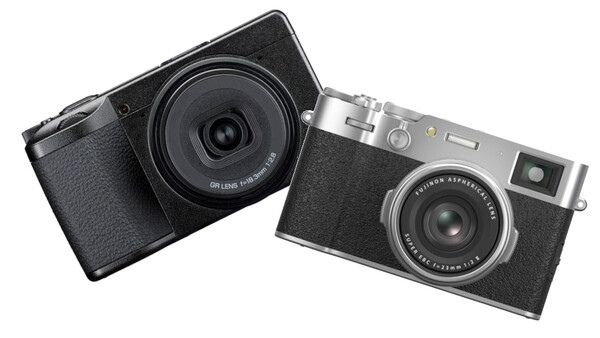
If you've tried to buy a Fujifilm X100VI or Ricoh GR IV in the past year, you already know the frustration. These cameras aren't just hard to find; they're nearly impossible to buy at retail price without waiting months or entering lotteries. The X100VI has been plagued by shortages since its launch, and the GR IV, officially launched on August 20, 2025, immediately followed the same pattern despite its significantly higher price tag.
The conventional wisdom blames a perfect storm of TikTok hype, chip shortages, and scalpers. But which of these factors are actually documented, and which are just educated guesses that keep getting repeated? After reviewing manufacturer statements, retailer reports, and industry coverage from sources like Reuters, The Verge, and specialist photography outlets, here's what we can say with confidence about why these cameras remain out of reach for most photographers.
The Social Media Demand Shock Is Real
For the Fujifilm X100 series, the role of social media isn't speculation. It's explicitly documented by multiple sources as the primary driver of unprecedented demand.
In November 2022, Fujifilm Japan issued an official notice that X100V orders "greatly exceed our plan" and that they would temporarily stop accepting new orders while attempting to catch up. This wasn't a new camera experiencing typical launch demand. The X100V had been on the market for years. The surge arrived well after launch, coinciding precisely with the camera's viral popularity on social media platforms.
A June 2024 Reuters report on Fujifilm's business specifically names the "TikTok crowd" as the catalyst, noting that the retro X100 cameras became a runaway success, particularly among 20-something social media users, and that the company "can't keep up with demand." Bloomberg and Yahoo Tech coverage have explicitly labeled the X100V and X100VI as "viral" on TikTok, directly linking that virality to months-long shortages and inflated secondhand prices.
When Fujifilm launched the X100VI, they were prepared. According to that same Reuters report, Fujifilm doubled the planned launch production volume for the X100VI and still can't keep up with demand. A manager quoted by byThom indicated planned X100VI output of roughly 15,000 units per month, about double the production rate of the previous X100V, with preorders expected to significantly exceed what they were ready to produce. In some regions, including Japan, X100VI sales have been conducted via lotteries instead of normal preorders, with anti-scalper conditions such as purchase history requirements at participating stores.
The Ricoh GR IV follows a similar pattern, though with a different flavor of online hype. Announced in May 2025 and officially launched on August 20, 2025, with general availability from mid-September, the GR IV was positioned as a premium street photography camera with a new 26-megapixel sensor, updated processing, and improved image stabilization. At $1,499.95, it represents a significant price increase over the GR III's sub-$1,000 launch price from 2019.
Before the first units even shipped, according to dealer contacts quoted by PentaxRumors, GR IV preorders were "nearing that of the Fuji X100VI" despite the much higher price, and retailers expected the camera to be out of stock for at least 12 months. By October 2025, just weeks after launch, buyers were reporting two-month delays between placing B&H preorders and receiving shipping notices.
The GR series has long maintained a cult following among street photographers, and the GR IV inherits that reputation with its "ultimate snapshooter" positioning. However, unlike the X100VI, mainstream TikTok coverage is thinner. The hype lives primarily in specialist photography media, forums, and YouTube. Digital Camera World positioned it as "one of the best compact cameras of 2025," while The Verge explicitly framed it as an alternative to the X100VI for photographers wanting a smaller, viewfinder-less option. The demand is real and substantial, but it's driven more by dedicated photography communities than by viral social media trends among casual users.
The Production Strategy: Profitable Scarcity by Design
While demand spikes explain part of the shortage story, they don't explain why manufacturers haven't simply ramped up production more aggressively. To understand that, you need to look at what camera companies are actually saying about their business strategies.
Fujifilm's approach is remarkably transparent if you read their investor materials and executive statements. The company's VISION2030 strategy emphasizes building "global top-tier businesses" with management that "emphasizes profitability and capital efficiency." In fiscal year 2023-24, Fujifilm's imaging division, which includes the X-series and Instax products, contributed 37% of the company's operating profit, up from 27% the year before, according to Reuters.
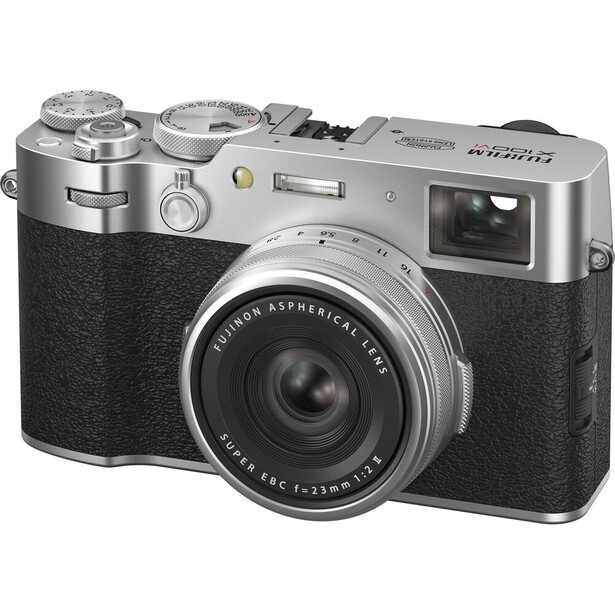
To be clear, Fujifilm isn't necessarily engineering deliberate artificial scarcity in the strictest sense. Arguably, they are getting better at lean production and minimizing the overstock and discounting that plagued the industry in previous years. But from a customer perspective, the practical result is the same. Production is set conservatively relative to demand volatility, especially for hype-driven premium compacts like the X100VI, and the company has stated it's comfortable with that approach.
The post-COVID camera industry operates in a fundamentally different environment than the 2010s. Global dedicated camera shipments have fallen around 90-95% from their 2010 peak. Cameras are now a tiny volume category compared to smartphones and automotive camera modules. The 2020-2023 global chip shortage, which caused tens of billions in lost automotive output and affected over 100 industries according to reports on the crisis, forced many manufacturers across electronics categories to rethink inventory risk. The result has been tighter planning, lower buffer inventory, and more conservative production bets, particularly for niche products.
Ricoh's approach with the GR IV suggests a similar premium positioning strategy, even if not stated as explicitly as Fujifilm's comments. The substantial price increase over the GR III, combined with a launch characterized by limited initial stock and tolerance for long backorders, is consistent with a strategy that favors margin and premium positioning over maximizing volume. Retailer reports indicating 12-plus months of expected stock constraints despite high preorder volumes point to a deliberately controlled rollout rather than an all-out production push.
In the US, this tight-supply, high-demand environment has been further complicated by new tariffs, which led Fujifilm to temporarily suspend US orders for the X100VI and some other models in 2025.
The Component Reality: Cameras at the Back of the Line
Even when camera makers decide they want to increase production, they face structural constraints that limit how quickly they can scale. These constraints are real, though some commonly cited specifics require more careful framing than they typically receive.
The semiconductor landscape has fundamentally shifted in the past few years. The 2020-2023 chip shortage affected everything from automotive production to gaming consoles, creating multi-million-unit reductions in various industries and establishing long lead times that forced companies throughout electronics supply chains to operate differently. While that acute crisis has eased, the underlying allocation dynamics haven't disappeared.
Today, AI and data center chips dominate the high end of semiconductor production. AI and data center applications now drive a huge share of advanced-node foundry revenue and capacity growth. This means foundries and component suppliers prioritize large, long-term, high-margin contracts with companies building AI infrastructure, smartphones, and automotive systems over smaller customers making niche devices.
Dedicated camera bodies fall into an awkward position in this ecosystem. They're small-volume products with mid-range margins compared to the semiconductor industry's biggest customers. When key components like image processors, autofocus chips, or sensors are capacity-constrained, camera makers reasonably sit near the back of the allocation queue. This creates genuine limits on how fast companies like Fujifilm and Ricoh can ramp production for models like the X100VI or GR IV, even when they decide they want to.
Some discussions of camera shortages point to advanced display constraints, particularly micro-OLED panels used in devices like the Apple Vision Pro. Reports from Display Daily and other industry sources note that Sony's OLED-on-silicon production tops out at under a million panels per year, constraining headset output. For cameras with high-end electronic viewfinders using advanced OLED or micro-OLED panels, this could theoretically be part of the constraint picture.
However, this needs context. The Ricoh GR IV has no built-in electronic viewfinder at all, relying instead on its rear LCD and optional optical finders. So, EVF panel shortages are definitively not directly constraining GR IV production. For the X100VI, which does have a hybrid viewfinder, display components could theoretically be part of the constraint mix, but there's no disclosed, model-specific statement from Fujifilm saying "we are delayed due to EVF panel shortages."
The safest way to frame the component situation is this: advanced displays, sensors, and chips are under sustained pressure from much larger markets including smartphones, VR and AR devices, automotive electronics, and AI hardware. That pressure limits how fast companies like Fujifilm and Ricoh can scale production of relatively niche camera bodies, even when market demand would justify it. This is a macro constraint on production flexibility rather than a smoking gun explanation for specific shortage timelines.
Scalpers Make Everything Worse
When structural supply constraints meet high demand, scalpers and the secondary market inevitably become part of the story. For both the X100VI and GR IV, there's clear evidence this is happening, though quantifying the exact impact remains difficult.
Fujifilm has taken explicit steps to combat resellers. In Japan, several retailers sold X100VI units, particularly limited editions, via lottery systems with conditions clearly aimed at preventing scalping. These include requirements for prior purchase history at the store and other restrictions designed to keep units in the hands of actual users rather than pure resellers. Even after Fujifilm raised US prices for the X100VI from $1,599 to $1,799 in 2025, secondary market listings show new or near-new bodies selling substantially above MSRP, with limited editions commanding even steeper premiums.
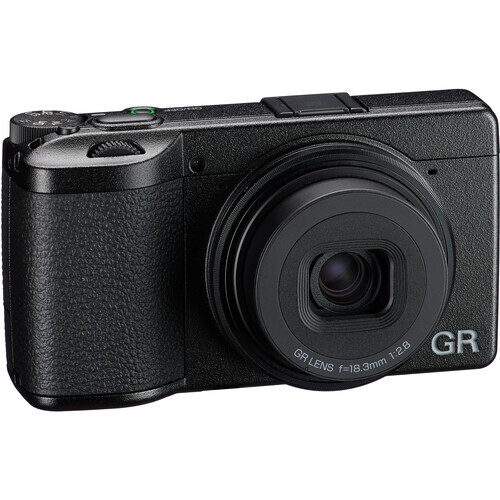
The question of automated bots is harder to pin down. For cameras, there's no official measurement of bot-driven purchases the way there sometimes is for sneakers, GPUs, or gaming consoles. Given the short online stock windows and established bot use in those other categories, it's plausible that some scalpers use automation to grab X100VI or GR IV units during restocks. But this remains inference rather than documented fact, and it's important not to overstate what we actually know.
What we can say with confidence is this: both the X100VI and GR IV face genuine, structural demand that exceeds controlled supply. According to Reuters, Fujifilm doubled the planned launch production volume for the X100VI, and the CEO has said they doubled production capacity specifically for this model, and they still can't meet demand. The company has temporarily suspended or constrained shipments to some markets, including the US, for certain popular models. Retailers reported that GR IV preorders approached X100VI levels despite the significant price increase, and buyers have experienced multi-month delays and persistent backorders.
Scalpers exploit the gap between demand and supply, and they amplify scarcity while pushing up effective prices for end users. But the underlying condition exists independently. There are simply too many genuine buyers chasing too few units, and scalpers are making an already difficult situation worse rather than creating the problem from scratch.
What It All Means
The shortage of the Fujifilm X100VI and Ricoh GR IV isn't a simple story with a single villain. It's the result of multiple factors working together, some clearly documented and others reasonably inferred from available evidence.
Social media, particularly TikTok for the X100 series, demonstrably drove sudden demand spikes that caught manufacturers off guard. This isn't speculation; it's explicitly stated by Fujifilm, Reuters, and multiple other sources. The GR IV benefits from strong enthusiasm within dedicated photography communities, creating similar pressure even without mainstream viral status.
Camera manufacturers, particularly Fujifilm, have been transparent about prioritizing profitability and capital efficiency over maximum production volume. Company executives have stated that current shortage levels are acceptable and even beneficial for brand positioning. This is a deliberate strategy, not an accident or a failure of planning.
Structural constraints in component supply chains, driven by the semiconductor industry's focus on larger, higher-margin markets, limit how quickly camera makers can ramp production even when they want to. Cameras are small fish in a very large pond, competing for components with smartphones, AI infrastructure, automotive systems, and other much larger industries.
Scalpers take advantage of all of this, making the situation worse for actual photographers trying to buy these cameras at retail prices. They're a real factor in why these cameras remain unavailable, but they're exploiting underlying scarcity rather than creating it.
For photographers hoping to buy an X100VI or GR IV in the near future, the news isn't great. Given how long the X100VI has remained backordered and how GR IV preorders are tracking, there's a strong chance they remain supply-constrained into 2026, given how long similar shortages have already persisted so far. The waiting lists, lotteries, and high secondary market prices aren't going away anytime soon. Understanding why that's the case doesn't make it less frustrating, but it does help separate documented reality from speculation and wishful thinking about when normal availability might return. The best you can do is preorder now and get in line.






Join the Fstoppers community for free
-
Post comments and join in the discussions
-
Browse the site ad-free
-
Share your work and get featured in the community
-
Compete in the photo contests for fun and prizes
5 Comments
"The best you can do is preorder now and get in line."
I would only give this advice without reservation for the Ricoh GR VI described. The Fuji X100VI has now been on the market for almost two years. I purchased my copy without any difficulty on February 28, 2024, from my preferred retailer. From a technological perspective, the Fuji X100VI is no longer up to date after two years on the market and at least one year of development. Personally, I would rather wait for the successor than put myself on the waiting list for an older product. At least not at the current retail price.
When a product is in chronic short supply, I completely lose interest. I won't get in line to wait. Products that are in stock get my money instead.
Would love to get a used $800 GR IIIx, but happy to settle for a newer iPhone instead.
The GOP in the USA is the 'real' reason for all the screw ups in the world ;)