

Photography publications, including this one, spend most of their editorial energy on exciting lenses. The fastest aperture in the category. The sharpest optic in the lineup. The new release that leapfrogs last year's model. The GM, the Art, the L-series, the S-Line flagship. These are the lenses that generate press coverage, forum arguments, and YouTube thumbnails with wide-eyed reviewers holding glass that costs more than a used car.
And then there are the lenses that actually produce the most photographs. They are not fast enough to dominate a bokeh comparison. They are not expensive enough to signal seriousness. They are not new enough to justify a review. They sit on camera bodies for months at a time, quietly doing the work while the exciting lenses wait in the bag for the right occasion. They are the most productive lenses in photography, and almost nobody writes about them, because there is nothing dramatic to say.
Here are five of them.
1. Nikon Z 24-120mm f/4 S
The Nikon Z 24-120mm f/4 S is the lens equivalent of a comfortable pair of shoes that goes with everything you own. It is not Nikon's flagship standard zoom (that role belongs to the Nikon Z 24-70mm f/2.8 S). It is not the most versatile (the Nikon Z 24-200mm f/4-6.3 VR covers more range). It is not the fastest (f/4 will not produce the creamy background blur that f/2.8 delivers). It does nothing spectacularly, and it does everything well enough that you stop thinking about the lens and start thinking about the photograph.
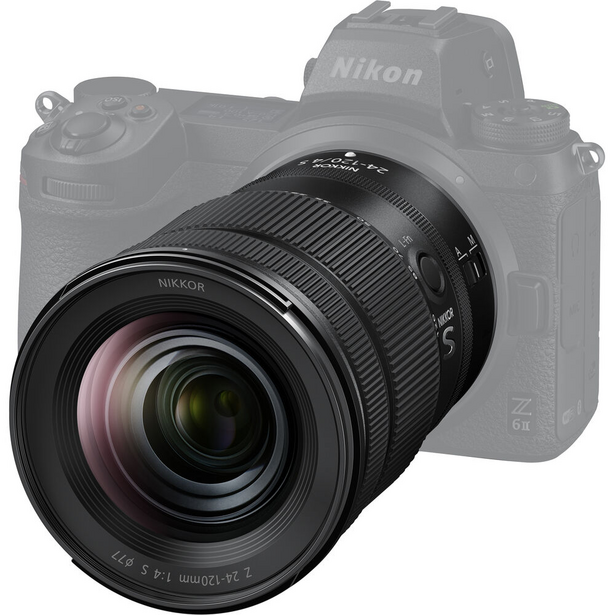
The 5x zoom ratio is the key. At 24mm, you have a genuine wide angle for architecture, interiors, and landscapes. At 120mm, you have enough reach for candid portraits, compressed compositions, and moderate telephoto framing that a 24-70mm cannot touch. Those extra 50mm beyond where the standard 24-70mm stops do not sound like much on paper, but in practice they are the difference between walking closer (and disturbing the scene) and zooming in (and preserving the moment). For travel photographers, event shooters, and anyone who wants one lens that stays on the camera all day, the 24-120mm range is close to ideal.
At 630 grams, it is lighter than both the Canon RF 24-105mm f/4 L IS USM and the Sony FE 24-105mm f/4 G OSS despite reaching 15mm further. It omits lens-based VR; on IBIS-equipped Z bodies, stabilization comes from the camera body. It uses standard 77 mm filters, focuses quietly with Nikon's stepping-motor AF system, and has Nikon's Nano Crystal and ARNEO coatings for flare resistance. It is weather-resistant. It costs around $1,000 to $1,100. Everyone who owns one reaches for it first.
2. Sony FE 50mm f/1.8
The Sony FE 50mm f/1.8 is the least glamorous lens in Sony's catalog, and it may be the most owned. It weighs about 186 grams. It costs roughly $250 at retail and regularly drops below $200 on sale. The build is plastic. The autofocus motor is an older DC type that is audibly slower than the linear motors in Sony's G and GM lenses. There is no aperture ring. There is no weather sealing. The minimum focus distance is 0.45 meters, which is adequate but not impressive. On paper, there is nothing here to get excited about.
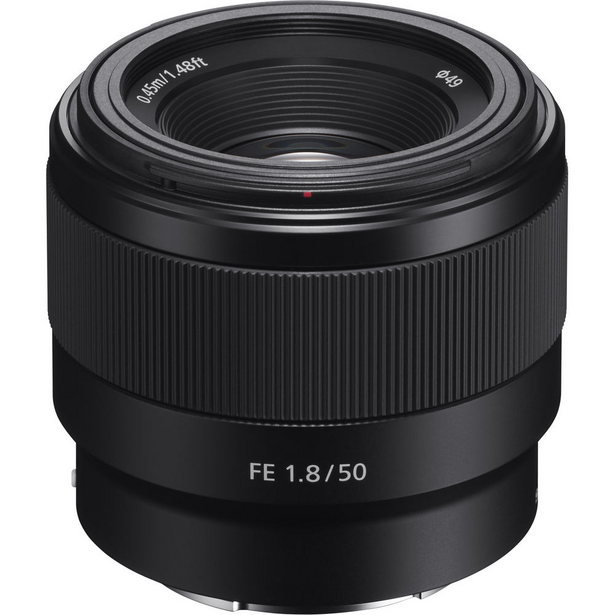
In practice, the Sony FE 50mm f/1.8 takes excellent photographs. The optical formula (a double-Gauss design with one aspherical element, 6 elements in 5 groups) is simple and well-corrected, producing strong central and mid-frame sharpness by f/2.8, with edges and corners improving as you stop down, and clean, pleasant rendering wide open at f/1.8. The seven-blade rounded diaphragm produces smooth background blur that is more than adequate for portraits, street photography, and everyday shooting. The focal length is the most natural perspective for full frame, the aperture is wide enough for genuine subject separation and low-light work, and the weight is so low that the lens adds nothing to the carrying experience.
The Sony FE 50mm f/1.8 is the lens that teaches beginners what a prime can do. It shows them shallow depth of field for the first time. It shows them what a fast aperture means in dim light. It demonstrates why a fixed focal length forces better composition. And then it stays on the camera for months because the results are good enough that upgrading to the $1,400 Sony FE 50mm f/1.4 GM stops feeling urgent. It is one of the most commonly owned lenses in Sony's full frame system. Almost none of its owners consider it worth discussing. That is exactly what makes it one of the best lenses ever made: it disappears into the work.
3. Tamron 28-200mm f/2.8-5.6 Di III RXD
The Tamron 28-200mm f/2.8-5.6 Di III RXD is the lens that proved a superzoom could be genuinely good, and the photography community has never quite forgiven it for that.
Superzooms are supposed to be compromises. The old 18-200mm and 28-300mm lenses that Tamron, Sigma, and others built for DSLRs were convenient and optically mediocre: soft at the edges, heavy on distortion, and visibly inferior to any prime or professional zoom at any focal length. They were the lenses serious photographers used on vacation and felt slightly guilty about. The category had a reputation, and the reputation was not flattering.
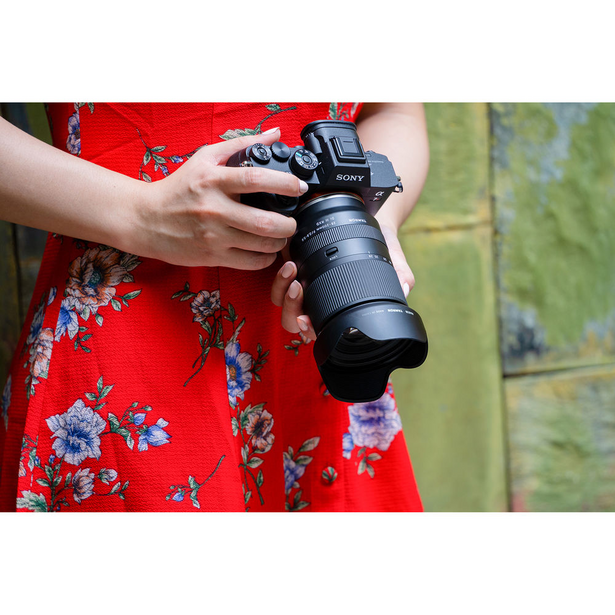
The 28-200mm f/2.8-5.6 changed the math. At 575 grams and 117 mm in length, it is smaller and lighter than most 24-70mm f/2.8 zooms while covering a range from moderate wide angle to serious telephoto. The f/2.8 maximum aperture at the wide end (a world first for an all-in-one zoom of this class at launch, per Tamron) provides genuine shallow depth of field and low-light capability at 28mm. The optical quality is strong enough that the difference between this lens and a dedicated 70-200mm at 200mm is noticeable in a close pixel-level comparison but difficult to spot in normal viewing at social media, web, and moderate print sizes. The RXD stepping motor focuses quickly and silently. The lens is moisture resistant with a fluorine-coated front element. It costs roughly $799 and is available only for Sony E-mount.
The reason nobody recommends the 28-200mm in forums is the same reason it belongs on this list: it replaces two or three "better" lenses with one lens that is good enough. A photographer carrying the 28-200mm does not need a 24-70mm and a 70-200mm. They do not need to change lenses. They do not need a second lens slot in the bag. The purists will point out that a dedicated 70-200mm f/2.8 is sharper at 200mm at f/2.8, which is true and irrelevant to the photographer who left the 70-200mm at home because it weighs a kilogram and the Tamron covers the range in half the weight. The lens that is with you produces the photo. The lens that is at home does not.
4. Fujifilm XF 18-55mm f/2.8-4 R LM OIS
The Fujifilm XF 18-55mm f/2.8-4 R LM OIS is a kit zoom, and calling it that is the reason most photographers outside the Fujifilm ecosystem have never given it a serious look. Kit zooms are disposable. Kit zooms are the lens you replace as soon as you can afford something better. Kit zooms are the training wheels you remove once you learn to ride.
Except this one is not that.
The XF 18-55mm starts at f/2.8 at the wide end, two-thirds of a stop faster than the f/3.5 starting aperture common to most other APS-C kit zooms. That difference translates to more light, faster shutter speeds in dim conditions, and shallower depth of field at 18mm than slower kit lenses can produce. At the telephoto end (55mm, equivalent to 84mm in full frame terms), f/4 is still respectably fast for a kit zoom and sufficient for head-and-shoulders portrait work with visible background separation.
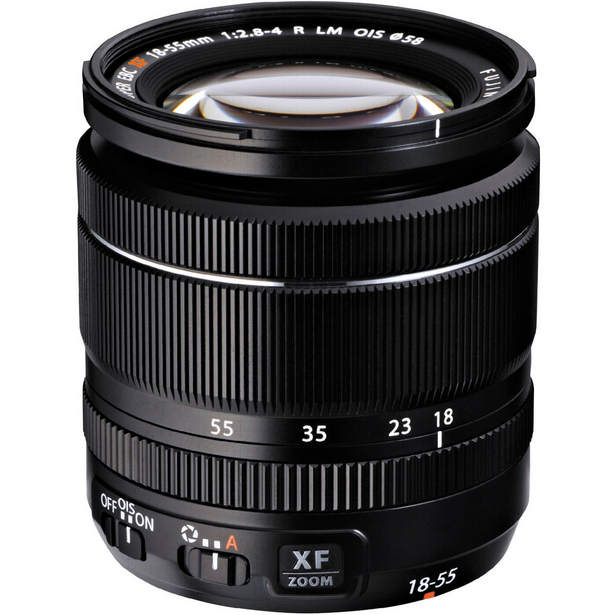
At 310 grams and a collapsed length of 70.4 mm, the lens is genuinely compact. It combines optical image stabilization rated at up to 4 stops with its faster-than-usual aperture range and a physical aperture ring on the barrel, matching the control philosophy of Fujifilm's X-series bodies. The linear motor autofocus is fast and quiet enough for video. The optical quality is competitive with lenses costing two to three times as much.
The XF 18-55mm covers 27-84mm equivalent, which means it handles everything from wide environmental shots to moderate telephoto portraits without a lens change. For the many Fujifilm shooters who bought an X-T2, X-T3, or X-T4 kit with this lens, or who picked one up on the used market alongside a newer body, this one lens produces a complete photographic toolkit at a quality level that most non-Fujifilm kit zoom buyers cannot match. The photographers who know this have been saying it for years. The rest of the industry has been too busy dismissing kit lenses to listen.
5. Canon RF 35mm f/1.8 IS Macro STM
The Canon RF 35mm f/1.8 IS Macro STM was one of the first four RF-mount lenses Canon released alongside the original EOS R in 2018, and it has spent the years since being overshadowed by the lens above it in the lineup. The Canon RF 35mm f/1.4 L VCM is faster, sharper, and carries the L-series badge. It is also larger, heavier, and significantly more expensive. It does not focus to 0.17 meters with 0.5x macro magnification. It also lacks standalone lens-based optical image stabilization, though compatible Canon bodies can still provide body-based or coordinated stabilization.
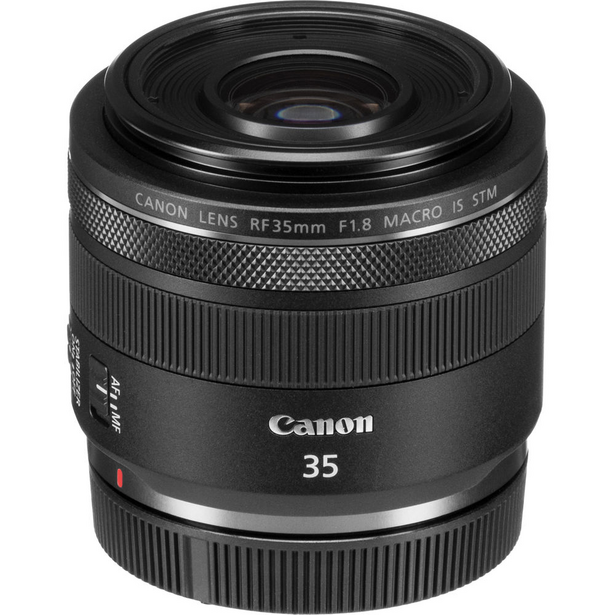
The RF 35mm f/1.8 IS Macro STM does four things in one lens. It is a sharp, compact wide normal prime for street, travel, and everyday photography. It is a half-macro lens that focuses close enough to fill the frame with a flower, a watch face, or the texture of a surface. It has up to 5 stops of standalone optical image stabilization (up to 7 stops when paired with a Canon body that has coordinated IBIS), which means handheld shooting in dim interiors, evening light, and slow shutter speeds that would require a tripod on an unstabilized lens. And at 305 grams and 63 mm in length, it is the kind of lens you leave on the camera and forget about until you look at the images and remember why you bought it.
The STM autofocus motor is not the fastest or quietest Canon offers, and pixel-level sharpness wide open at f/1.8 does not match the L-series prime. For photographers who need clinical edge-to-edge sharpness at maximum aperture, the RF 35mm f/1.4 L VCM is the better tool. For photographers who need a compact, stabilized, macro-capable 35mm that costs roughly $500 and handles four different types of photography without drama, the f/1.8 IS Macro STM is one of the most useful lenses Canon has ever made, and one of the least talked about.
The Pattern
The five lenses on this list have almost nothing in common optically. One is a 5x standard zoom. One is a 50mm prime. One is a 7x superzoom. One is an APS-C kit lens. One is a wide-normal macro prime. They span four camera systems, two sensor formats, and a price range from roughly $250 to $1,100.
What they share is a quality that exciting lenses rarely have: they stay on the camera. These five lenses do not get swapped out because they cover enough range, enough aperture, enough close-focus ability, or enough versatility that changing lenses feels unnecessary. They are the lenses that produce the most photographs not because they are the best at any one thing but because they are good enough at everything the photographer encounters in a day.
That is not a quality that earns awards, generates headlines, or inspires forum debates. It is the quality that fills portfolios, memory cards, and family photo albums. The exciting lenses deserve the attention they receive. But the boring lenses deserve more.
If you are building your lens collection and want to understand how focal length, aperture, and lens selection affect the photographs you make, the Fstoppers Photography 101 tutorial covers those fundamentals in depth.




Join the Fstoppers community for free
-
Post comments and join in the discussions
-
Browse the site ad-free
-
Share your work and get featured in the community
-
Compete in the photo contests for fun and prizes
19 Comments
No one is willingly using the sony 50mm 1.8 lol. Might as well use a vintage mf lens because the autofocus on that lens is useless.
The Fuji lense is often unfortunately soft. Furthermore optics build quality varies. I had to get rid off it.
Should be noted that the Nikon 24-120 is abundant and quite cheap on the second hand market as it's a kit lens, that's how I got mine!
Sony's 28-60/4.0-5.6 fits in this group. Because it is/was bundled, it's widely available on the used market for cheap. It's plastic, and the zoom ring is not smooth. But, it's sharp edge-to-edge at f5.6, it's small, and it's featherweight. A great daytime outdoors walkabout lens for deep-focus scenics.
Interesting how absolutely no Micro Four Thirds lenses made the list...
Yes, but not surprising. There aren't a whole lot of us MFT shooters compared to people using APS-C or FF gear.
Whether a lens is boring or exciting and whether it stays on the camera depends on the photographer. I only have one lens that is roughly equivalent to the ones listed (OM System 12-40mm PRO II). Fantastic lens, but it's actually my least used by far.
I guess I'm lucky. I get to shoot with my exciting lenses (OM System 50-200mm f/2.8 PRO and OM System 90mm f/3.5 Macro PRO) all the time. Adding the 1.4x teleconverter makes them even more exciting. :)
When I was shooting MFT (2014-2020), it was Panasonic's 14-140/3.5-5.6. So small, light and handy. It went on all my travels and alpine day-hikes because I almost never needed to swap lenses, and because it was probably the best 10x zoom of its day.
Well then, the OM M. Zuiko 40-150R "plastic fantastic" (which I call the Jefferson Airplane model) for sure belongs here! Street price under $200, great image quality for the price, weighs almost nothing and quite small.
I bought the Nikkor 24-120 S with my new camera and haven't taken it off once. I keep looking at the 50mm 1.8 S, however, as stated above, it really does do everything you could want it to as a person who doesn't rely on photography for income, so I've yet to pull the trigger just so I can get the bigger bokeh lol.
I often think and write about the Canon RF 24-105mm f/4 L IS USM in other forums. I have a love-hate relationship with this lens. The focal range is intriguing, the aperture is ok and the rendering is (slightly) above average. The thing is: it is "good" sometimes "better than good" but never „great” or "amazing" or anything else. Every F4 L lens in Canons line-up is easily better in terms of sharpness, creative potential and such. On the other hand: this lens is like a "high floor-medium ceiling" player in sports. It never really fails, it always gets the job done, but never really impresses. A very solid lens, but not a great one. But, when reaching for a one-lens set-up it is pretty much unbeatable. That’s the love part about it paired with great ergonomics.
I´d like Canon to update this lens: match Nikons focal range, lower the mfd for more creative framing and maybe put it on a diet. Now that there a great kit lenses for the R8, Canon could easily drop the IS unit to save weight.
I love the RF 35mm F1.8 Macro STM despite its few shortcomings (focussing speed, extending barrel for close focusing). The size is absolutely great, love the ergonomics and it is small enough for a pocketable set-up, a great hiking lens, takes nice landscapes, portraits, close-ups, nightscapes (not series astro work) and half-macro pics. I use the F1.8 aperature only as a "last resort" when I've already pushed the ISO and shutter speed to its limits. F2.2 works great for close-ups, but not for all genres. Once the lens hits f2.8 the IQ is really, really good and for a budget lens almost amazing.
On the R6/ R8 the lens is tack sharp. On the 45mp sensor R5 sensor the lens does show some soft edges now and then, but it is absolutely acceptable.
I loved the Sony 24-105mm f4 when I had the A7RII. It was all just too big and heavy for my tastes - but the photos were great.
One change; I'd pick the Tamron 25-200. At least as good as the 28-200 with better AF.
Tamron 25-200 is my bread and butter for standard corporate event work and daytime parties. Bokeh is not as beautiful as two lenses covering 24-200, but my back thanks me and none of the clients really cares about bokeh.
I have the 24-120 f/4 on my Z8 by default, its really excellent at all focal lengths. Then I also carry the 50 f/1.8 Z lens which is a really great choice for one of the cheaper primes from Nikon. My other main goto lens is maybe not so cheap - but its the 100-400 f/4.5-5.6 and I combine that with the 1.4xTC when needed, this zoom whilst being a bit pricey - is a really portable long range option, great for birds and wildlife and then also shooting insects at near macro from distance (without totally killing my back).
About the title "5 Lenses Nobody Gets Excited About That Produce More Photos Than Anything in Your Bag" of the article:
This was actually true and the case for me for several travels until I started to use a two lens set up (UWA zoom & 70-200mm) for city travels and didn't mind the missing focal length. This has become routine for me and even on other travels such as family trips (where I always, always includes a portrait lens on a two max three lens set-up) hiking and casual day trips. The number of pics taken with the 24-105mm has diminished a lot. So much, I thought about selling it...
Totally agree regarding the 28-200. Since i bought it ibrarely carry the 28-75, 70-180, especially when travelling. It is f4 up to 80 and 4.5 up to 105. IQ is very good abd flexibility is unmatched when in rainy/dusty environments
Roger Cicala comments on my favorite lens - the Zeiss 21mm f2.8 Distagon:
There are several mysteries in life I am just not able to understand: How were the pyramids built? Why does my wife say “fine!” when she means “eat dirt and die!”? And why isn’t everyone lining up to shoot with this lens?
It really is remarkable—the sharpest resolution in a wide angle I’ve ever seen plus superb microcontrast and color. I loved the original for Zeiss 21mm in Contax mount, and this one is every bit as good, perhaps a bit better.
It does have the famous ‘mustache distortion’ seen in the original, so it’s not the best lens for architectural work, but for landscapes and other wide angle shots it’s just amazing
Spectacular lens for the Contax G series of AF rangefinders.