
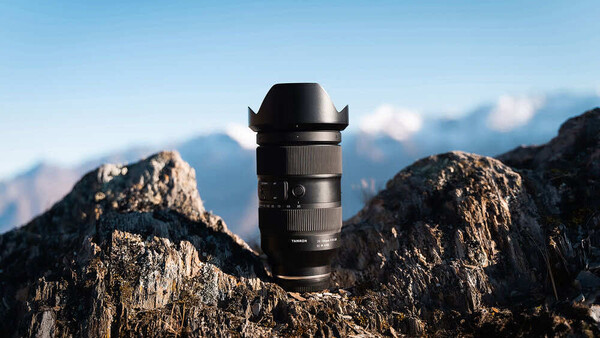
Sony has proposed buying Tamron outright. On July 30, Tamron confirmed it had received a non-binding proposal from Sony to become a wholly-owned subsidiary of the Sony Group, and it has formed a special committee to weigh the offer. Japanese outlet Diamond put the number at around 200 billion yen, roughly 1.2 billion dollars, which sounds enormous until you notice it is less than one percent of Sony's market capitalization. For Sony, this is couch-cushion money.
If you shoot Nikon, Canon, or Fujifilm, your feed filled up within hours with the same fear: Sony is going to buy Tamron and then kill off every Tamron lens that fits a rival mount, choking the affordable third-party glass you depend on. It is a tidy, frightening story.
Here is my honest read, as someone who has bought plenty of Tamron glass and wants the third-party lens market to stay healthy: this move makes complete sense for Sony, it probably changes very little about which Tamron lenses you can buy, and the real things to watch are quieter and more interesting than the panic suggests.
What Is Actually on the Table
This is a non-binding proposal, not a signed deal. Sony already owned 15 percent of Tamron as of the end of last year, so it is not arriving as a stranger. The reported price carries a premium of well under ten percent over where Tamron was trading, which is thin. And Tamron has appointed a special committee to study it rather than saying yes or no.
Sony is no longer Tamron's largest shareholder. A Singapore-based activist investment firm called Effissimo Capital Management quietly climbed to 17 percent, passing Sony. Sony's timing looks less opportunistic and more defensive.
Why This Makes Complete Sense for Sony
Put yourself in Sony's chair. You depend on Tamron, and not just for the more than 20 lenses it has built for your E-mount system over the years. Tamron is a quiet OEM supplier to the industry: lenses built for camera makers to sell under their own brands accounted for 41 percent of its photographic-products revenue last fiscal year, and Sony group companies alone generated about 23 percent of Tamron's total sales, making Sony its largest disclosed customer. That arrangement lets Sony's own engineers chase halo-quality, high-margin G Master glass while Tamron fills the affordable middle of the lineup that keeps ordinary shooters in the ecosystem. Now imagine an activist fund whose entire job is to agitate for change becoming the biggest owner of that supplier. That is a five-alarm problem, and it is reason enough to act.
The offensive case is just as strong. Buying Tamron secures the optical engineering, the manufacturing capacity, and the supply of the very lenses Sony already leans on, and it does it for a rounding error on the balance sheet. Sony is not reaching into a new business here; it is locking down one of its most strategically important supplier relationships. If anything, the surprising part is that it took an activist investor to force the move at all.
The Fear Everyone Has
The viral worry is that Sony will wall Tamron off to E-mount and stop making the Nikon Z, Canon RF, and Fujifilm X versions of its lenses in order to hobble its rivals. It is an intuitive fear. It is also, I think, wrong, and the reason is sitting one division over inside Sony itself.
Sony is the largest image sensor maker on earth, and it happily sells those sensors to Nikon, to Fujifilm, to phone makers, to half the industry that competes with Sony's own cameras. Sony's entire components business is built on the principle that taxing your competitors is more profitable than starving them. The company has decades of institutional muscle memory around exactly this trade-off, and it lands on the same answer every time: take the money.
Apply that logic to lenses. Tamron's own-brand catalog now spans four mounts: at the end of last fiscal year, its mirrorless lineup counted 21 Sony E-mount models next to nine for Nikon Z, four for Fujifilm X, and just two for Canon RF, and the company is targeting ten or more own-brand launches in fiscal 2026 as it continues to build out that four-mount lineup. The rival-mount business is the smaller, newer slice, but it is also the announced growth plan. Killing it would burn that plan to inconvenience rivals who would simply walk across the street to Sigma and Viltrox instead. Sony would eat the loss and gain almost nothing. Companies do occasionally do spiteful, value-destroying things, but Sony's history with sensors tells you which way it leans. My bet is that Tamron keeps making lenses for everyone and Sony quietly banks the margin, exactly as it does with sensors.
What I Would Actually Watch
The first is Tamron's character. Tamron is the value brand, the company that gave us the 28-75mm f/2.8, the 17-70mm f/2.8, and a shelf of do-everything superzooms that punch far above their price. A subsidiary that answers to Sony's portfolio strategy might get more polite. It might price a little higher, or quietly stop building the lens that steps on a Sony first-party option, or lose the slightly reckless value-first streak that made it worth rooting for. That erosion would happen so gradually that nobody would notice until the scrappy Tamron was gone.
The second is what this does to the field. If Tamron becomes Sony, the independent third-party lens world essentially narrows to Sigma, plus a handful of hungry upstarts. That makes Sigma suddenly the most important lens maker many people are not thinking about. Competition is the reason a working photographer can buy a sharp fast zoom for a third of the price of the first-party equivalent. Every independent that gets absorbed thins that competition a little, and that is a real cost to all of us.
The third is whether the deal even closes at this number. A premium under ten percent, with an activist fund sitting as the largest shareholder, is not the setup for a quick handshake. Effissimo's business is maximizing the value of that stake, and activists rarely do that by blessing a thin first offer; it could push for a higher price, demand other concessions, or fight the deal outright. This could drag on, climb well past 200 billion yen, or collapse. The market is already voting that way: on the news, buy orders piled up at the Tokyo exchange's daily upper limit of 1,434 yen, 26.5 percent above the previous close, leaving the shares initially untraded, and that limit price already values the company above the reported offer. Anyone treating the acquisition as a settled fact is getting ahead of the story.
What It Means for Now
In the near term, nothing. Non-binding means nothing is signed, no lens has been discontinued, and no roadmap has changed. If you were about to buy a Tamron lens this week, buy it. If you shoot Nikon, Canon, or Fujifilm, I would not lose a minute of sleep over your Tamron options vanishing, and if anything you should quietly root for this deal to keep Tamron cross-mount, because that is the version of the future where you keep getting excellent glass at prices the first parties refuse to match.
The thing actually worth wanting out of all this is a healthy, competitive third-party lens market. That is the goose that lays the affordable-fast-zoom egg, and it matters a great deal more than whose logo ends up on the box or the corporate filing. Sony buying Tamron is a smart, almost inevitable move for Sony. It probably does not hurt photographers on rival mounts. The quieter costs, a tamer Tamron and a thinner independent field, are the ones I will be watching. And if you take one practical thing away from this, make it this: keep an eye on Sigma. It just became a lot more important than it was a week ago.




Join the Fstoppers community for free
-
Post comments and join in the discussions
-
Browse the site ad-free
-
Share your work and get featured in the community
-
Compete in the photo contests for fun and prizes
5 Comments
To be honest I don't really care who owns what so long as they produce lenses that are good we don't really care. Well I don't anyway I don't care who makes my car so long as it runs well. I don't care who makes what and looks Sony make a bunch of stuff they make senses for most of the cameras on the market. I'm using a Fuji and I like a camera and they have Sony sensors in them so it really doesn't matter.
As a landscape photographer that shoots Nikon, if this means a 10mm S mount lens I am all for it! While I am glad tamron is making a zoom that goes to 12mm for nikons, I wont be buying one. If went to 10mm on the other hand, yes I would be strongly considering buying it. Not that Id use it all the time, just every once in a while with my 14-24 I find myself wishing I had a bit more in certain circumstances. I don’t know if 12mm is enough more to warrant spending the money, but if 10mm was on the table and I only ever went as low as 12mm that is worth it.
Tamron makes my absolute favorite all-in-one travel lens for Fujifilm X mount: the 18-300mm. Sure, the lens is not perfect (what lens is?) but the fantastic reach cannot be beat by any other lens. I used to have the Tamron 150-500mm until I replaced it with the Fujifilm 150-600mm (I wish it were faster...). I fear that Sony will stop making these lenses for the Fujifilm ecosystem were they to successfully buy Tamron. Not that I can do anything about it, one way or another.
Another possibility is that Sony/Tamron could keep producing 3rd party lenses for the other guys but kill the Sony E-mount. Just a thought.
I would hope that IF Sony is successful at buying Tamron, I would hope that your analysis of Sony keeping Tamron doing business as usual hold true. The one way out there thought I have is Sony would then also have rights to the Bronica brand and could eventually dabble in the medium format space, reviving it as an alternative to Hasselblad & Fuji, or using it in the cinema space to offer an alternative to the Alexa LF. I doubt that will happen, but would be neat if it did. Imagine, the Sony Bronica line...