
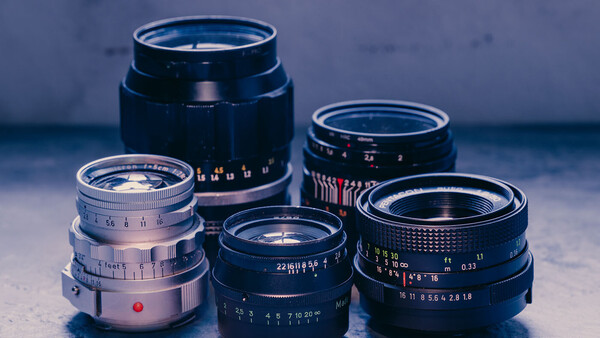
Modern cameras are so good now that they pretty much do all the work for you. Focusing is instant, you get large, detailed files with incredible dynamic range, and the camera has the ability to correct many optical shortcomings of the lens attached in-camera, resulting in technically polished images. How predictable. And boring.
I've spent a lot of time shooting modern digital cameras and the latest and greatest lenses, and there is no doubt that today's lenses are technically superior to the vast majority of their vintage counterparts. They're sharper, control chromatic aberration, are resistant to flare, and generally much easier to use.
Sometimes, though, less perfection makes a more interesting photograph. I’m more interested in character, not technical perfection.
One of the things I enjoy about vintage lenses is that they can change the way a digital camera renders a scene. More importantly, they can change the way I photograph. Manual focusing slows me down, and different rendering characteristics of my little vintage lens collection encourage me to look for different subjects and think about how I can create different looks with my lens choice. Optical imperfections that would once have been considered undesirable can become part of the aesthetic.
Here are five vintage lenses that I think are particularly interesting on modern digital cameras.
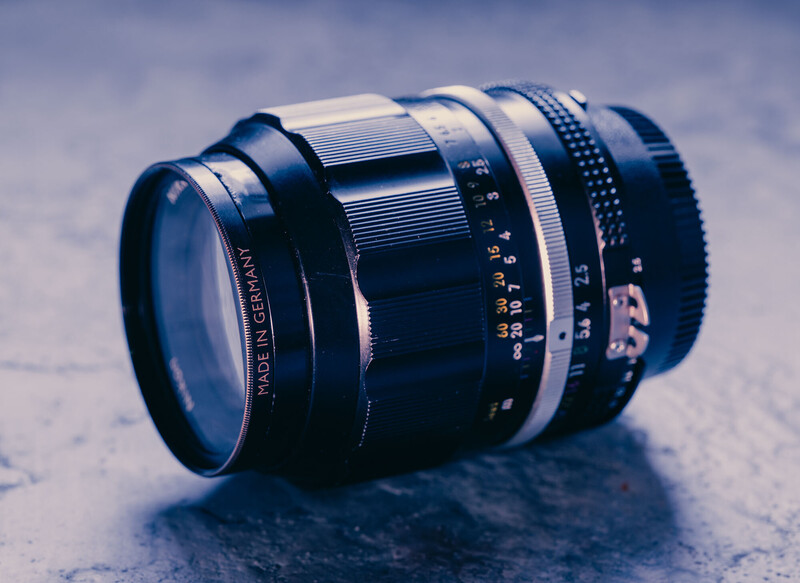
1. Nikon Nikkor 105mm f/2.5
If I could choose only one vintage lens for portraits, the Nikkor 105mm f/2.5 would be very high on my list. In fact, it’s not on my list now; it’s in my camera bag. I bought one, a 1972 model, and love it!
This lens has an extraordinary reputation, and deservedly so. Nikon produced versions of the 105mm f/2.5 for decades, with significant optical changes during its lifetime. What makes the lens particularly interesting today is that it doesn't feel like a novelty lens. It can produce genuinely excellent photographs.
There's plenty of sharpness, but the rendering is different from a modern, clinically corrected portrait lens. The transition from the focused subject into the out-of-focus areas can be wonderfully smooth, and the 105mm focal length gives portraits a flattering perspective without forcing you to stand uncomfortably close to your subject.
It also has an important historical pedigree. The lens was used extensively by professional photographers and is famously associated with Steve McCurry's "Afghan Girl" portrait.
On a modern mirrorless camera, manual focusing is relatively straightforward thanks to focus magnification. I program my front function button (Fn) on my Nikon Z6III to zoom in and out, making nailing focus fast and efficient.
And there's something rather satisfying about pairing a high-resolution modern sensor with a lens that was designed decades before digital photography existed. The result isn't necessarily "better" than a modern 105mm lens, just different. Very often, the look is more organic and film-like.
The big advantage with this lens is that it’s relatively small for a prime lens compared with many modern focus-by-wire lenses.
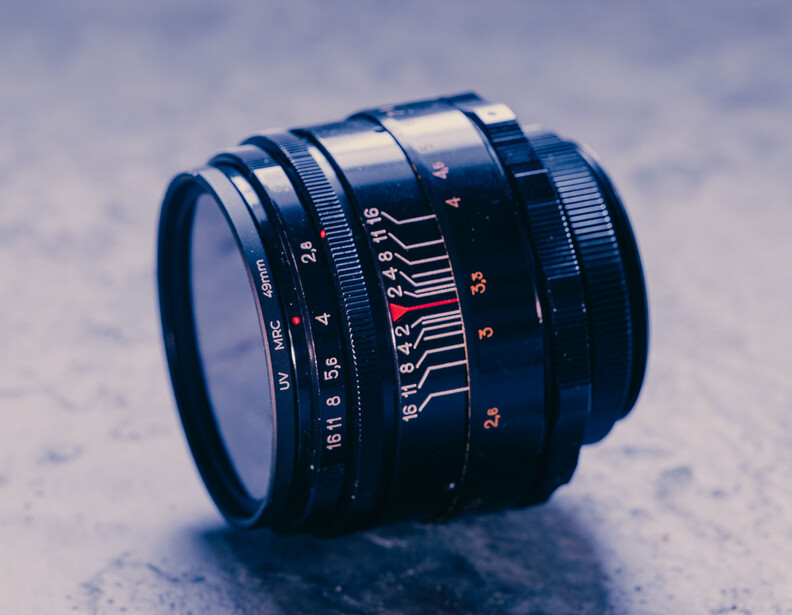
2. Helios 44-2 58mm f/2
While the Nikkor 105mm demonstrates that a vintage lens can still be optically excellent, the Helios 44-2 demonstrates why imperfections can be fun.
This Soviet-era 58mm f/2 lens has developed something approaching cult status, largely because of its distinctive swirling bokeh. The Helios 44 series was based on the Carl Zeiss Biotar 58mm f/2 design. The 44-2 is an M42-mount lens that was produced in huge numbers across multiple factories in the Soviet Union.
Because of this, quality can vary greatly, but if you find a good one and shoot it wide open with the right subject, the background and the out-of-focus areas can appear to rotate around the center of the frame. It’s rather magical.
It's not subtle, and that’s what makes it interesting. The effect is strongest when your subject is relatively close, the background is some distance behind them, and that background contains plenty of detail or highlights.
But I didn’t buy a Helios simply to photograph everything with swirling bokeh; that gets boring very quickly. Instead, I'd regard it as a lens that encourages experimentation. Try it for portraits, flowers, details, woodland scenes, or anything where you can isolate a subject against a busy background.
Because so many were made, the Helios 44-2 is usually inexpensive compared with many other vintage lenses, although prices can vary, and you need to shop around. Because of its popularity, this is the one lens in the lineup here that I've noticed has increased in price over the past couple of years. Yet despite this, it’s still one of the cheaper ways to give a modern digital camera a completely different personality.
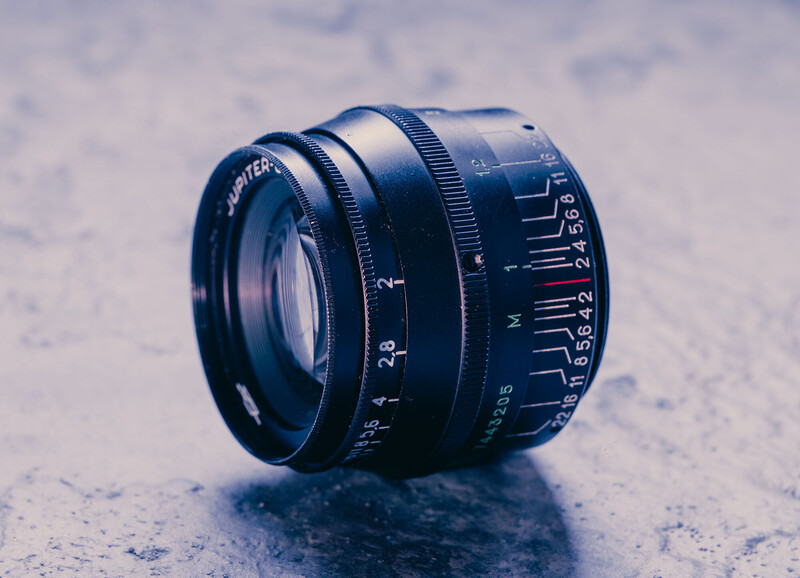
3. Jupiter-8 50mm f/2
The Jupiter-8 is another Soviet classic, and it's one of my favorite examples of why vintage lenses can be so much fun.
Originally produced for the Soviet rangefinder system and based on the Zeiss Sonnar design, the Jupiter-8 is a 50mm f/2 lens that, like the Helios 44-2, was manufactured in huge numbers.
I bought mine attached to a mint-condition Zorki 4K rangefinder for the sum of just $50 for both!
Because it's a rangefinder lens, it's wonderfully compact. Tiny, in fact. That is very appealing. You can put a Jupiter-8 on a modern mirrorless camera and suddenly you've got a small, relatively unobtrusive photographic setup that encourages you to walk around and shoot. I use mine with an adapter on my little Nikon Z50, giving me a full frame equivalent of around 75mm. Perfect for portraits. The setup is no bigger than a point-and-shoot camera.
On a modern mirrorless camera, you get something that feels very different from a contemporary 50mm. The rendering can be softer and more forgiving, particularly at wider apertures, with a lovely falloff and a distinctive character that gives photographs a less clinical appearance.
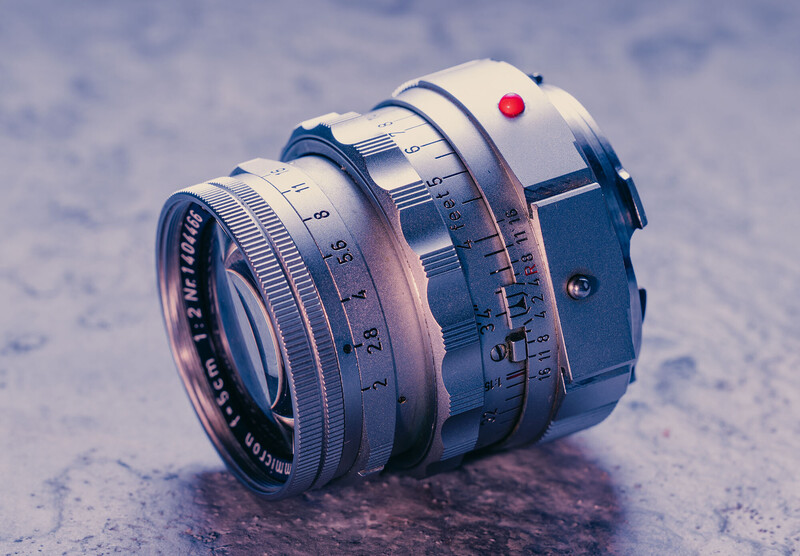
4. Leica 50mm f/2 Dual Range Summicron
If the Jupiter-8 represents the affordable end of vintage rangefinder glass, the Leica 50mm f/2 Dual Range Summicron most certainly sits at the other end of the spectrum.
The Dual Range Summicron was produced for Leica's M system beginning in the 1950s and is particularly interesting because of its close-focusing capability, which uses detachable optical goggles to maintain rangefinder coupling at closer distances.
What really makes it interesting today, used on a modern digital camera, is the rendering. This Leica lens has a beautiful balance between sharpness and character. It can produce very sharp, detailed images without having the hyper-corrected, clinical appearance of some modern optics.
I choose the Jupiter or Helios for shooting wide open, and this lens when I want to shoot stopped down to f/8 or f/11. Resolution and edge-to-edge sharpness rival modern lenses for fine detail and clarity. It’s the lens I use when I’m filling the frame with buildings with lots of detail that needs to remain sharp.
Out-of-focus areas have a gentle, natural feel, and there’s lots of micro-contrast that makes images pop. The color rendering is rich and contrasty. It’s the perfect lens that balances modern rendering characteristics with a nostalgic analog aesthetic.
And then there's the physical experience of this fine chromed-brass beauty. Turning the focus and aperture rings, you're reminded you’re operating a perfectly crafted optical instrument rather than a plastic electronic device.
On a modern mirrorless camera with an adapter, this decades-old lens provides an interesting combination of old and new.
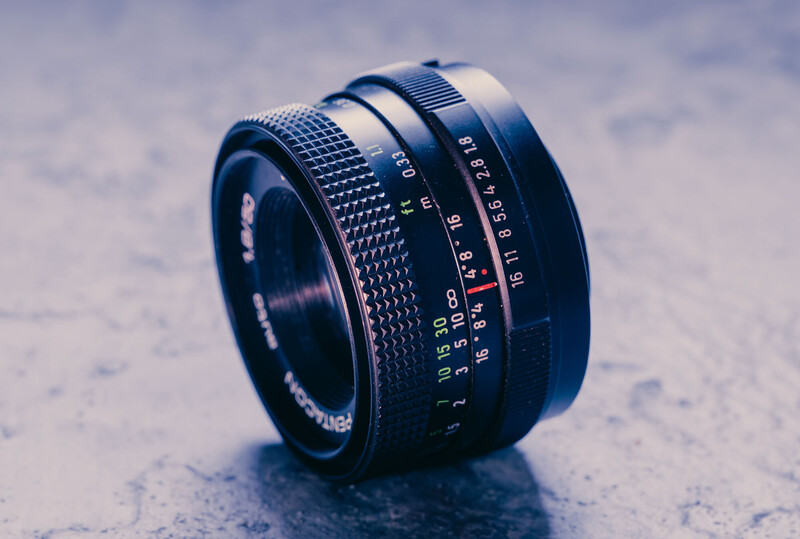
5. Meyer-Optik Oreston / Pentacon 50mm f/1.8
The Meyer-Optik Oreston 50mm f/1.8 is one of those lenses that tends to get overlooked in favor of more famous vintage optics.
Originally produced by Meyer-Optik Görlitz in East Germany, the lens was later produced under the Pentacon name. You'll therefore find it sold as the Meyer-Optik Oreston 50mm f/1.8 or the Pentacon 50mm f/1.8, depending on the version and period of manufacture. It was the standard lens supplied with many Praktica cameras under the Pentacon guise during the 1970s and 1980s and was produced in very large numbers. Because of this—I’ve seen them for as little as $20—it’s a good lens to start your vintage lens journey with.
It's a relatively simple manual-focus lens, but its rendering can be anything but ordinary. Wide open, it can produce a softer, more characterful image than a modern 50mm, with distinctive out-of-focus rendering and a gentle transition between sharp and blurred areas. Stop it down and it becomes considerably more conventional, giving you the flexibility to choose just how much of its vintage personality you want.
Why Bother?
The obvious criticism of vintage lenses is that modern lenses are better. And they're right. If "better" means sharper, more clinical and consistent, better corrected, and more technologically advanced, modern lenses win.
But photography isn't a laboratory test. A technically perfect photograph can still be completely uninteresting. An image with flare, softness, unusual bokeh, or imperfect sharpness can sometimes have far more personality.
That's why I think vintage lenses are worth experimenting with. It’s something different. And that difference can lead to lots of creativity.
There's also something satisfying about taking a modern digital camera and having to engage with the process of photography a little more. There are benefits to being able to zone focus without effort with an older manual lens. It’s satisfying to use the distance markings on the lens rather than rely on AI focus detection.
Ultimately, I use vintage lenses because sometimes a little imperfection is exactly what a photograph needs.
The lenses featured here are ones I own. I've used many others, but these have become my favorites.
There are hundreds of vintage lenses out there that I have yet to discover, but maybe you have. So do comment to let us know if you're using vintage glass on your modern digital camera, and what lenses you've discovered and like the most.



Join the Fstoppers community for free
-
Post comments and join in the discussions
-
Browse the site ad-free
-
Share your work and get featured in the community
-
Compete in the photo contests for fun and prizes
12 Comments
Thank you for writing this article. I couldn't agree with you more about vintage lenses. In fact it's all I shoot with now.
Maybe I missed it in the article, but how do you mount the lens?
With an adapter. These are available in most cases very cheaply, for example to fit a Helios 44-2 to my Fujifilm X-E1, the thread on the lens is M42 so my adapter is M42-FX, FX denoting Fujifilm.
I failed to mention there are adaptors for every mount combination imaginable
Great article, and a great selection.
My favourites are my Asahi Super-Takumar 55mm f2, Helios 44-2 and my Carl Zeiss Jena DDR 135mm f3.5. These fitted to my Fujifilm X-E1 give superb results, full of character, and can be surprisingly sharp. In my opinion they're very worthwhile, and certainly makes you take life a bit slower and concentrate on what matters...
This is a really solid list good stuff!
A couple of notes though on the Helios.
1. While the Helios 44-2 is the one that has become "famous", all Helios 44s share pretty much the same optical formula. My reco to most people is to grab themselves a 44M-4 instead of the 44-2. It has all the same swirly bokeh and character of the 44-2 but the "M" stands for multicoated. The coating handles flare a bit better and offers slightly better contrast.
2. The Helios 81H 50mm F/2.0 is also based on the same Biotar formula as the 44s. It has the same swirly bokeh but is less well known so you can find one for like half the price of a Helios 44 and it is Native on Nikon F mount.
3. If you love Helios 44 rendering but want it in a modern body, Iron glass is the company that rehoused them for movies like Dune and The Batman. The full rehouses are very expensive but they also have an AIR line of rehoused lenses and you can get a 44-2 that has been rehoused to natively support a modern mount and upgraded with a 16 blade aperture and modern coatings. Def not worth it if you just wanna play with some vintage glass, but if you are looking for Helios rendering but want a rugged workhorse capable of delivering modern performance its an awfully sexy package.
I chose the 44-2 because the lack of coatings can give some really interesting light flares and blooming when shooting towards the light. Tonnes of characters and fun!
Good to know about the 81H and the re-housings, thanks. 👍
Vintage meaning the old 35mm film lenses. Back when Sony came out with the first A7 models in 2013 they gave adapter makers the specs needed to make the adapters, also they are 35mm lenses anyway so great for a 35mm or full frame camera. A thing also thought of was Lens corrections, if you feel it is needed and Sony had a Lens Correction app where you could adjust points to correct a lens and save those adjustments with the lens name etc..
Next the lenses are not chipped so no metadata for the image captured, So like in the film day we had a log book for every capture on a roll of film per image with data of the lens and all camera setting- still you need to do this, Why? There is an app you can put in Lrc called "LensTagger" that you add to Plugins section, this lets you put in the lens info as well a lens setting like f/# and mm as well as ISO that is on another page of it. After putting in the info and exiting Lrc and opening Lrc will add the lens name and info to the image to the top under the histogram info and the name and all in the Metadata info.
A little item that few know about is Lrc has always been the main editing program that has most all lens corrections but even the unchipped lenses just select the maker and there will be a list of all lenses the maker of unchipped lens has. Exp. When Astro MW captures started back in 2014 with the A7SM1 and 2 being used the most for there few lenses that where wide like 12 or 14mm and f/2.8 that were chipped. Canon had a FD 14mm f/2.8 but it was Rokinon and Samyang with 12mm and 14mm f/2.8 that everyone was using BUT they had a very bad mustache on the left side horizon and even elongated stars in the upper left and right corners and the only correction was from Rokinon web site that never worked. After two years Lrc made a correction and we all had to go back and reedit long nights of images. So if are using a unchipped lens just look at Lrc LC and put in the maker of the lens.
Few also know about the adapters for most all makes of lenes as well for the camera being used. I still have all my Canon FD and EF lenses and adapters and play with some still.
Using the film is like using Auto mode with the digital camera but one thing also never shown on YouTube edits is the image on the LCD or EDF and the histogram screen is the fact what you see is a Jpeg image and you have the ability to have a starting point by selecting a camera profile in the camera, playing with all selections with one image will let you see what the profile looks like. To make things a little simple in Lrc in the main section here are 4 blocks you can click on that will show all camera profiles for you image that you are about to edit to give you a starting point also the profiles are only for jpegs so when out and about scowling through the profiles will let you see what is being captured by the camera and seeing if you are capturing what you see!
1. using a a Canon FD lens on the A7SM1 of a lunar eclipse in Oct. 2014
Just to add a few favs:
Helios 40 85mm F/1.5 - bokeh monster.
Asahi Auto Takumar 55mm F2.2
Tair 11A 135mm F/2.8 - bokeh monster.
I find it unbelievable how prices for some of these vintage lenses has exploded in the past few years - even though they remain relatively inexpensive.
Edit: In thinking about it, I have to add the Mir 1B 37mm F/2.8. It has some great flare and can be modded to have a very close focusing distance.
Great additions! I've yet to try an Asahi Takumar 55mm, because as you say, the prices on all decent vintage glass has skyrocketed in recent years.
Not heard of the Tair 135mm, will research that one. Cheers!
Of the lenses I listed I think the Tair 11a is most enjoyable and produces amazing bokeh. They can still be found at relatively reasonable prices these days.
I use a 1960s Nikkor 55mm f1.2 and a 1980s 105mm f1.8 on Sony cameras for the look (especially the 55) I had one of the swirly Helios lenses but the swirlyness wore off quickly.