Picking a camera that's always with you is harder than it sounds, and most people get it wrong by chasing specs instead of asking what the camera is actually for. The concept of a "journal camera" reframes that question entirely, and it's one of the more useful ideas you'll encounter if you're trying to figure out which second camera actually makes sense.
Coming to you from Ted Forbes of The Art of Photography, this thoughtful video opens with a conversation that stuck with Forbes for two years: a lunch with National Geographic photographer Sam Abell, who carried a separate camera strictly for personal work. Abell shot a Leica with a fixed prime lens and black and white film, not to publish, but to record his own life. That distinction, between the camera you work with and the camera that documents who you are, is what shapes the entire review of the Panasonic Lumix L10 that follows. Forbes tested the camera after being invited to an early preview in Osaka, and he's been shooting with it since.
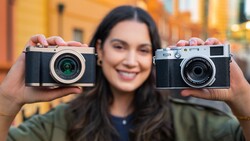
The L10 is compact without being frustratingly small, has a viewfinder that actually works, and the layout will feel immediately familiar if you've spent time with the Panasonic Lumix S9. The leaf shutter in the lens means flash sync at any mechanical shutter speed, which opens up some genuinely useful options for shooting subjects with flash in bright outdoor light. One of the more unexpected features is a four-way selector switch on top of the lens, which can be remapped from aspect ratio control to preset focal lengths on the zoom, letting you snap to 35mm, 50mm, or 75mm equivalents without waiting on the electronic zoom motor to crawl there. Build quality feels premium, and the price comes in below what you'd expect for what's on offer.
What the video gets into beyond the specs is how the camera behaves once you've configured it to your own shooting style. Panasonic cameras tend to require some upfront work remapping buttons to get the controls where you want them, and the L10 is no different. Forbes is candid about this. But there's a point he makes about what happens after that setup is done that's worth hearing directly from him, because it gets at something most gear reviews don't bother with: what it actually feels like to use a camera when the camera stops being the thing you're thinking about. Check out the video above for the full rundown from Abell and the complete breakdown of the L10 from Forbes.



Join the Fstoppers community for free
-
Post comments and join in the discussions
-
Browse the site ad-free
-
Share your work and get featured in the community
-
Compete in the photo contests for fun and prizes
3 Comments
Hi, my own notebook camera is a Leica D-Lux 8 since last july (100 years edition, just for the beauty of the camera). The built, the easy interface, the Leica look, the really good image quality (used with a good software for post-treatment), the size and weight, and the UI (I know that it's the second time I'm speaking about that, but I can't say it enough !, it's really at another level of the other brands) . After a few month, I sold every thing in my kit (Fuji GFX, Sony A7RV, etc..) and went fully on the Leica road (SL3 reporter, M7). Just so much fun with this cameras !
What does the written summary refer to the L10 as the LX10? The LX10 is an older model camera with a 1" sensor.
Because I need more sleep. Thanks!