
I’ve been thinking a lot about why we feel the need to show our photos to the world. Is it really about creating art, or just about getting someone—anyone—to say they like it?
I recently watched a video from a photographer on YouTube who I hold in high regard. He was talking about creating images that stand out and get noticed. He referenced marketing guru Seth Godin, and his book Purple Cow: Transform Your Business by Being Remarkable. In his book, Seth tells a story of a family road trip where they drove past a field of black and white cows, and they were so visually impressive that they remarked how fine those cows looked. After driving past dozens of fields of similar cows, they had seen so many of them at this point, all looking the same, that they stopped remarking about them. Seth had the thought that if they came across cows that were purple, they would be remarkable, because they hadn’t seen purple cows before. The book goes on to offer very solid business advice about creating a brand and products that stand out. I read the book many years ago, and recommend it to anyone building a business.
There’s a problem I have with this thinking, though, when it’s used as an analogy for photography. Most people watching photography on YouTube, or reading articles here on Fstoppers, aren’t building a business and trying to make money. Photography is a hobby, something they enjoy pursuing as a leisurely activity. So, that being the case, why the obsession to create photos that stand out, get likes, and spark the desire for people to remark about them?
Another photographer on YouTube stated that there is no point in doing photography if you’re not going to print images out or at least share them on social media. My first thought was, “What complete tosh!”
My Thoughts About This
I’ve been making a living from creating commercial and editorial photography for a very long time. During this time, I’ve been passionate enough about the craft of photography that I shoot personal projects too. Of course I want my commercial work to stand out and have people remark how much they like it, because if they do, this could lead to being hired.
But in my personal photography over these past four decades, I’ve had no real interest in printing or sharing. Before social media, I never did anything with my images. The point of traveling and exploring places through my lens was purely for my own satisfaction and enjoyment. I feel much of it is akin to sports hunting or fishing. The excitement of seeking and hoping to catch something is the enjoyable part, and the reason to do it. I’m in my zone when I stand on a mountainside or in an ancient European city backstreet. Just looking—really looking—and soaking in the view and the atmosphere. Feeling the spiritual presence of the place—that is a thrill, a high. Rick Rubin says of this, “Without the spiritual component, the artist works with a crucial disadvantage. The spiritual world provides a sense of wonder and a degree of open-mindedness not always found within the confines of science.” Coming home with great photos is thrilling too, to reaffirm my trip and know my looking, seeing, and thinking resulted in something tangible to keep. But once I satisfied myself, I had little desire to show others and see what they thought. My photography is created for me. When I was young, my parents always said, why do I never show my photography to them? In later life, my wife said the same thing. She still does. People couldn’t understand why. And I thought that was really strange—that they would think that.
It was only a few years ago when I started a YouTube channel that I set up social media accounts on platforms like Instagram and Facebook, and started posting images. The sole purpose was to post images that featured in my YouTube channel, to help get views. You may be wondering why, after many years of keeping my photography to myself, I suddenly started making videos and using social media to seek likes. Because I was getting more requests for video work, which was ending up on YouTube. So I needed to use YouTube so I could really understand it from the perspective of a practitioner, and talk to clients with actual firsthand experience. YouTube was—is—a playground to try different things and become an expert in social media–centric video production. And it worked. My little channel wasn’t focused or consistent, because the point wasn’t to try to build it up, monetize it, and make a living from it. Over the past couple of years it’s become a little more popular, so now I find myself with an online presence because I suppose I’m slowly entertaining the idea of building a personal photography brand. But—a big but—this hasn’t changed my thoughts about what, or more importantly, why I photograph.
Let’s Talk About That ‘Why'
We need to ask ourselves, why do we need to show people what we shoot? Do we really need to know that other people like our photography? Do we need to be part of a community, and to feel part of that community we need our work to be validated through a certain amount of likes or comments?
I came across the Royal Photographic Society website last year, and thought of applying for an RPS certification. I began to put a body of work together and then started to think really hard about what I was doing—and more importantly—why I was doing it. So I stopped. I didn’t need to do it. For a brief moment and a rare lapse in confidence, I thought some validation might be needed, now that I have a growing online presence. But then I saw sense and realized I don’t need a bunch of my peers to tell me what they think of my work, and tell me it meets their self-imposed criteria. I looked at some of the “expert” judges’ websites and wasn’t particularly impressed with their work. Most of it wasn’t remarkable, so why the heck should I have them tell me what they think of mine? Even if they loved it and gave me a Fellowship certificate, so what. I’ve ended up spending good money for people to tell me what I already know.
I hope that doesn’t sound arrogant; there’s a good reason I say this. If we’re pursuing photography as an art form, we need to be the judge of our own work, not others. And certainly not pay others. If we do create photos that are true to our authentic self, that communicate how we see, then believing in ourselves is all that matters.
Imagine if the first impressionist painters had actually listened to the harsh criticism they received from the artistic establishment and ridicule from the media. At the time, the Académie des Beaux-Arts and the Paris Salon were the gatekeepers of “serious art.” They valued historic painting that featured dramatically lit portraits of the powerful—painted with tight detail and idealized realism. The likes of Monet and Degas had the resolve to ignore it all, and kept on doing what they believed in.
That Rick Rubin quote I referred to earlier—allow me to quote it again: “Without the spiritual component, the artist works with a crucial disadvantage. The spiritual world provides a sense of wonder and a degree of open-mindedness not always found within the confines of science.” The confines of science, in photography, is the obsession with pixels, lens sharpness, and physical image quality. We’re letting the science lead our photography, and the thoughts of others who are typically led by the science also.
Rubin also says, “Zoom in and obsess. Zoom out and observe. We get to choose.” Too many photographers aren’t zooming out. They look at pixel clarity, not artistic expression.
Something else to add is a thought that came to mind this past week: If we rush to create photos—cutting corners and using AI technology to speed up the process so we can continually have images to post on social media—we’re surely only creating images for novelty and instant gratification? If so, we come back to the question: why? I’ve said in previous articles that a renewed interest in film cameras is in part driven by nostalgia. But maybe it’s not. Maybe slowing down is an attempt to reclaim meaning. Maybe we need to resist the urge for instant gratification with commodity-like production, and put more effort into making art that reflects us and the way we see the world. Slowing down to make photos for ourselves is not only a creative choice, but an act of resistance. I need to quote Rick Rubin one last time: “In terms of priority, inspiration comes first. You come next. The audience comes last.”
The problem with social media is to make it work, we’re told to post as much as we can, as often as we can. This strategy is true, and can be done if you have a massive body of good work to share. But many photographers don’t have that body of work.
External vs. Internal Validation
Photographers who seek external validation, needing others to approve of what they do for it to feel valuable, are doing themselves a huge disfavor. Social approval dilutes and even destroys creativity. Creative expression gets replaced with photography that is done for a like from some random stranger online. That’s insane.
It’s imperative that I create a body of work for me, that expresses something meaningful to me, and not you. Internal validation, not external validation. It’s great if you like it, but if you don’t, that doesn’t put me off or change the way I approach my photography. I suppose the big question is: how do we create a mindset that is resistant to criticism or lack of likes on social media? I don’t have the answer, other than I’m stubborn and have a degree of confidence in my abilities from doing photography for so long, and don’t need external validation. Or maybe I‘m simply getting old and don’t care anymore.
One thought is I’ve spent my life looking at the world’s best photography in art galleries, museums, and books, and have built up a visual library in my mind of what good photography actually is, which provides a benchmark from which to self-judge my own work. Yes, now I’ve typed this out, it makes sense. This is the closest thing I have to an answer. We need to learn to self-judge our own work. And believe in what we do, and why we do it. Period.
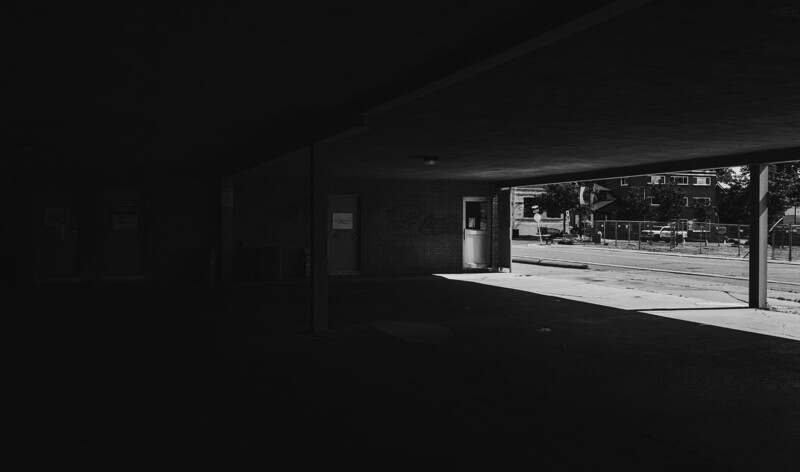
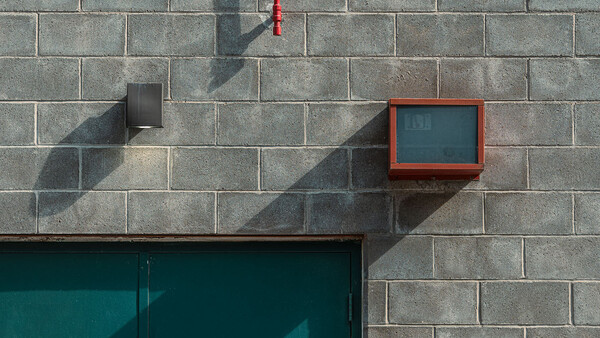
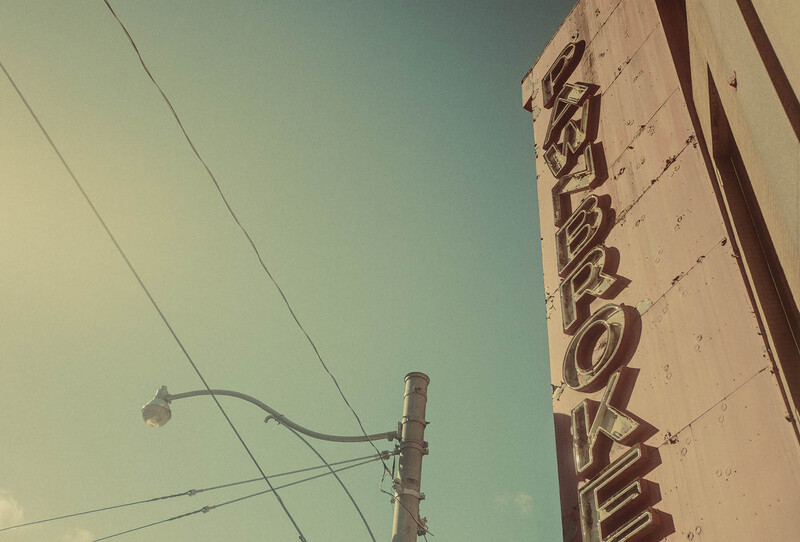
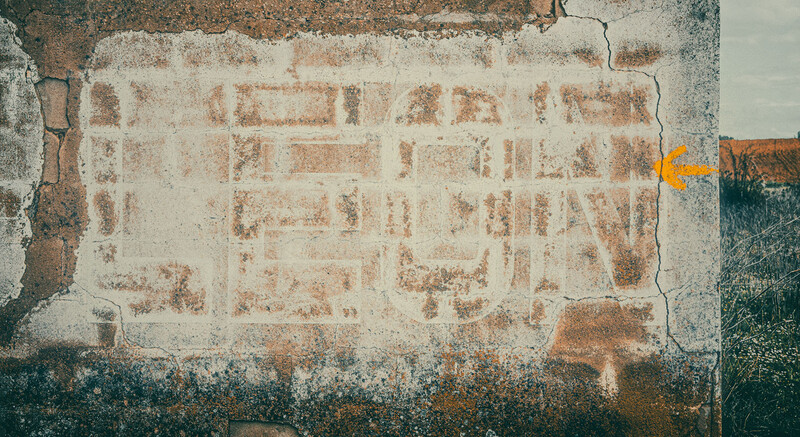
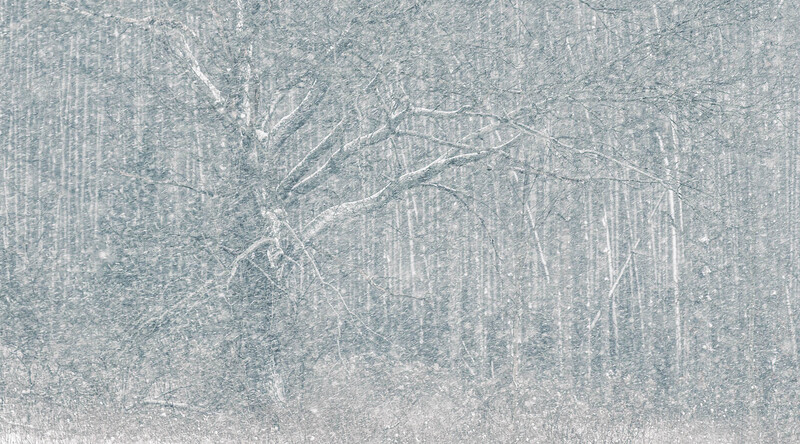
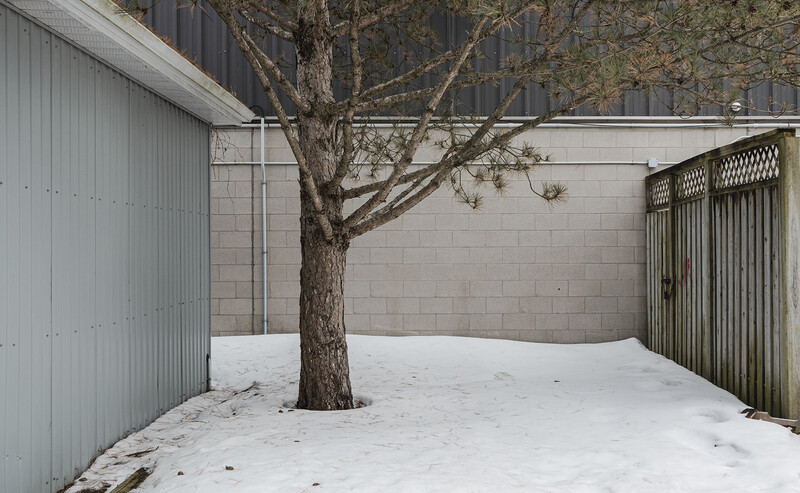
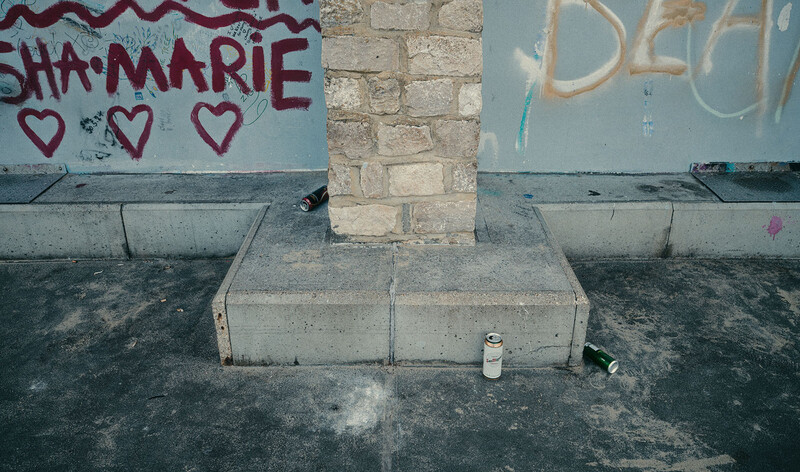
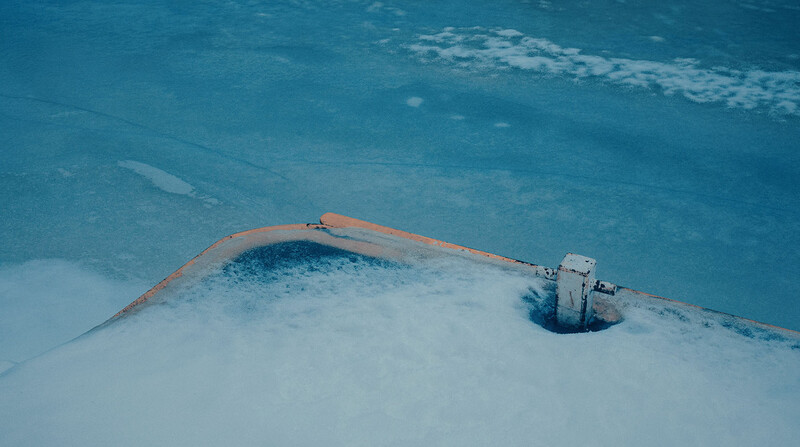
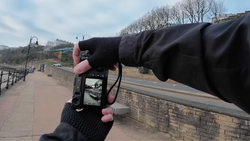
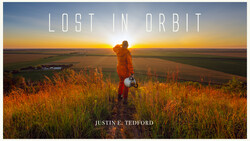
If you look at my Fstoppers profile page, you’ll see images that have commercial or editorial value. Photos that are pleasing and are created, for the most part, to be appealing and liked. The photos in this article are from my own personal collection, images that I shoot for me. Images that I prefer to shoot. When these get posted on social media, they rarely get many likes. But these are what I enjoy shooting, so I will continue to do so.
I don’t have a way of neatly ending this article. I’m sitting here typing some thoughts that have been on my mind of late, trying to figure things out as I write. I’d love to know your thoughts and discuss this further in the comments.

Join the Fstoppers community for free
-
Post comments and join in the discussions
-
Browse the site ad-free
-
Share your work and get featured in the community
-
Compete in the photo contests for fun and prizes
47 Comments
Simon Burn asked,
"Why Are We Obsessed With Creating Images That Stand Out and Get Likes?"
It is hard to answer that question because it is based on a premise that is not true. I am not obsessed with creating images that stand out and get likes, so how can I answer why I am obsessed with something if I am actually not obsessed by it.
When questions are asked of the readership here on Fstoppers (particularly those in article titles), I like to answer those questions in an honest and detailed manner. But I really can't answer this one, except to say, "does not apply".
I am obsessed with creating images that appeal to ..... me! When I am out shooting, or planning a shoot, I am thinking about images that I will like, images that will mean something to me and appeal to my sense of aesthetics. I don't really care about how much other people will like the images I take. I actually have trouble understanding why "likes" matter to people. What tangible, material benefit do oodles of "likes" provide to the creator of the image? Good photographers and secure individuals are already validated within themselves, so external validation should mean little to nothing.
EDIT: Simon, I most fully relate to everything that you wrote in the 2nd paragraph of the section subtitled "My Thoughts About This". We are kindred spirits in that regard.
I also fully relate to what you wrote in the 2nd paragraph of the section subtitled "Let’s Talk About That ‘Why'"
Thanks Tom, it's good to know there are others out there who think the way I do.
Simon wrote:
"The photos in this article are from my own personal collection, images that I shoot for me. Images that I prefer to shoot."
I love that you posted these images! Three of them are particularly appealing to me:
The 2nd image - I love the color pallette! Reminds me somewhat of Eggleston's work, inasmuch as the subject matter, composition, and colors are concerned.
2nd to last image - I love that you used the color wheel in this image, with blue and orange being exactly opposite one another.
Last image - the way it is framed draws me in and causes me to look closely at everything. I want to know what those objects in the left side of the frame are - vending machines? I wonder why there is a chain-link fence across the street - perhaps a park is behind it? And I look at the post near the center of the image, and the door in the background, and I notice that the left edge of the door frame is right in line with that post, and that causes some aesthetic tension within me, I think that if I had been photographing that scene, I would have wanted to move a bit to my right, so that there would be a bit of brick wall between that post and the edge of the door, but then I realize that if I moved a bit to the right, the space between that center post and the post behind it would decrease, and then that would look awkward and throw the entire geometry of the shot out of whack, so I realize that you positioned the camera in the place that yields the most pleasing view, despite the lack of space between the post and the door behind it.
Thanks for the comments about the photos.
2nd to last image: I prefer black and white photography usually, but when I do shoot color, I like to really use it. Having an image predominantly one color, and a small ht of a complementary color in the frame, is my favorite way to work with color.
The last image was a challenge to compose. I had a choice to move to the left and not include the pillar. Or move to the right and place the pillar more comfortably within the frame. Neither worked as well as what I ended up with. I think this is because where the dark wall and lighter door meets the bright street, it's the focal point and sits nicely on the right third. moving to left or right wasn't quite working as well.
The book, Purple Cow, was about building a brand, not individual products. So, the notion that all photographs one takes have to look different is as solid as the idea that all the Coke bottles have to look different on the shelves. The Coke brand is the "purple cow," not the bottle of Coke. Seth Godin also argued that you have to be on the edges of the highway. At a conference, I reminded him that without the center, no road has any edges. The point is to distinguish building a brand from producing products in that brand.
I have written extensively on related subjects on my website, from fine art photography to ways of looking at photographs, to seeing. The current trend of being liked on social media does not necessarily improve one's photography.
(BTW, I taught marketing for over 40 years.)
Yes, Seth talks about building a brand, but to do that, you have to create remarkable things that stand out. This principle applies to photographers as well as coke bottles on a shelf. What you create and what you stand for influences how people perceive you and what they think about you. That's what a brand is, what others think of you.
The coke brand, how they position themselves, what they say, and their packaging—it's all the same, it's all brand. Apple is the best example. They built their brand through creating computers that looked completely different from anything else. They were remarkable. And then they backed this up with a narrative that focused on what was possible with their products, instead of listing facts like memory and storage numbers. Emotive story over cold emotionless facts. They dared to be different.
For a photographer who wants to build a business, to stand out they need to have something unique to say, and they communicate that through their work. Copying others is not the way to do that, but sadly too many photographers do do that. Photographers need to dare to be different.
Whatever marketing strategy works for you.
It works for everyone, that's how you build a brand.
“So, that being the case, why the obsession to create photos that stand out, get likes, and spark the desire for people to remark about them?”
Trying to create images that stand out from the crowd is a fool’s errand. That may have been possible 50 years ago when the pool of photography was much smaller. These days, there probably are a legion of images of purple cows. Besides, it doesn’t matter… I make photographs which appeal to me foremost, regardless of whether they’re perceived as cliché or unique. Photography is an emotionally driven activity, and some subjects for which I point my camera are more inspirational than others. I make that choice every day, and nobody is gonna ever tell me what I should make a photo of. However, making images that stand out, and making images with the hope of “getting likes” or spark a conversation, are two different things.
“We need to ask ourselves, why do we need to show people what we shoot?”
I too enjoy the solitary aspect of photography. I have little interest in participating in group photo walks or activities. And I agree that seeking validation from a judge, jury, or general public often has undesirable ramifications. But I don’t want to live my entire life in solitary confinement either. At the end of the day, I want to show my wife: “Look here what I saw today!” And I’m really thankful that she’s interested in what I’ve got to show, or have to say – two sides of the same coin. I can’t imagine not wanting to show her what I’ve photographed that day, or share an idea that popped into my mind. You end your article by asking for your reader’s thoughts because at some level, you still want and need human interaction. We don’t live in a vacuum. If not primarily through photographs at this particular moment, it’s your words in this article which you use to connect with other people, and I suspect you feel good having a hundred or more comments posted in response to one of your articles. It helps you feel like you’re making a difference... for yourself and others. Expressing a thought (or sharing a photo) produces clarity in our own mind. We just can’t always control the manner of interaction that results – some people explode in retaliation to a comment, or post something mean about our picture – so the negative responses to our work often make us want to withdraw from social circles. But we still need them.
Having someone simply acknowledge and appreciate our existence seems to be at the core of human nature. Having someone say that they like what we’ve done may not be something that we should expect every time, but it’s always nice when we feel part of a community and someone says something nice about our work. Simply being noticed sometimes makes all the difference. Feeling liked, in the broader sense of life beyond just our pictures, is perfectly normal. Which is why I think it’s so important to take any opportunity to tell someone you like what they’ve done. Even a smile can communicate the same thing. Most of the deer that pass through our property come in pairs or groups. Rarely do we see one by itself. Humans are social animals and that’s the reason why we need to show people what we shoot.
"You end your article by asking for your reader’s thoughts because at some level, you still want and need human interaction. We don’t live in a vacuum."
This is a great comment, and deep. Yes, we—and myself included—need human interaction. I love sharing thoughts and talking about photography. That's why you find me on Fstoppers writing and chatting, and not spending 100% of time out alone with a camera. I used to. It's 90% now!
But as for sharing photography, well I guess i'm sharing because I used some photos in this article, and other, articles. My editor wouldn't post the articles if I didn't! But the big difference here is I don't actually care if you don't like my photos. I'm interested to know why you might not, but this won't stop me doing what I love to do. I find it sad that some are put off by criticism, and withdraw from social circles, as you said.
It is possible that my opinion here has developed because I spent many decades creating photos purely for others to like. This gave me that dopamine hit and told me I'm capable of photography that makes others happy. Now, I'm done with that, and the focus is my own satisfaction and creative itch. Those new to photography need others to guide them, and this is a huge problem on social media.
What does it mean to care, or not care, about another person's opinion? I've made the mistake a couple times of expressing a criticism of someone's picture, only to have that person go ballistic in response to my idiotic, uneducated, uninvited, and basically worthless comment, and... proceeding to tell me that they couldn't care less about anyone else's opinion. Which raises the question: Why react so violently if the person doesn't care about my opinion? Why even share the photo in the first place if he doesn't care about what anyone thinks?
I suspect it's because we honestly do care what other people think about our work, at least on an emotional level. People care when it's a favorable critique, but say they don't care when it's negative. I don't think it can be had both ways. While other people's opinions won't necessarily shape my artistic decisions, I wouldn't write a comment or post a photo if I didn't care how people respond. Since the large majority of people seem to favor the majestic landscape picture more than the ordinary subjects shown in your photos in this article, I'd be shocked if you received a significant amount of "likes" for your images here. But in many situations, I would take that as a sign that I'm accomplishing the purpose for which I made the photos. I don't shoot for the masses, which is your point. Opinions don't necessarily change my approach to photography, which is also your point. But I sincerely appreciate when at least someone out there recognizes what I'm trying to do with my pictures and offers positive feedback. If it were a lot of likes, I'd probably feel like I was on the wrong track with my photography.
But I still care what people think. If not I wouldn't be here.
I suspect, you are mostly the same, Simon. You do care greatly about what other people think... but you've managed, properly so, to compartmentalize the way you respond to other people's opinions. Listen, respect another opinion, choose what fits and what doesn't, don't let anyone or anything else dominate your artistic decisions, and above all, be yourself.
Ed wrote:
"Since the large majority of people seem to favor the majestic landscape picture more than the ordinary subjects shown in your photos in this article"
I am definitely not in that large majority. Majestic landscapes are kinda nice, but usually not very interesting. But these images that Simon posted here are interesting to me. I only like 3 of them, but even the ones I do not like are interesting to me, and I spend a minute or three examining each one closely.
If I was a guest somewhere and there was a coffee table book entitled "Majestic Landscapes of the United States" I probably would not pick it up or open it. But if there was a book entitled "The Photography of William Eggleston" I would definitely pick it up and study at least a dozen of the images on its pages.
EDIT:
I want to add that I absolutely LOVE the landscapes of the United States! I am just not very interested in most photos of them.
Conversely, I do not like the subject matter that Eggleston photographed at all. Ceilings, walls, wires, cars, kitchenry, etc ...... these things bore me to tears and are entirely uninteresting to me. But the way Eggleston photographed them is fascinating to me! I love Eggleston's work because of the way he arranged things in the frame, and because of the way he used color and his preferred color pallette, despite the fact that the things he photographed are not interesting to me in the least bit.
By the way, having invited a near riot over expressing a thought about someone else's photograph... I've adopted a more measured approach. Hesitate before making a comment. Consider saying nothing at all. Some people care no more than whether you like a photo or not. Too superficial for me to bother with that type of response. Some people respond kindly to technical criticism such as the photo lacks sharpness or detail; other people are not interested in those observations. The best sort of critique comes in the form of how I as the viewer respond to a photo, in light of what I think was the artist's intention. From that perspective, it takes time, time to let the photo simmer on the stove a bit. Why did the photographer make that picture? My opinion should transcend my personal like or dislike for a particular subject. But even under those conditions, I've had a few people claim they don't care about my thoughts... I just don't get it. I'm just another person with a stupid opinion. Discussing art and photography is certainly an adventure. No wonder it's so disappointing for so many people, and so many people say they don't care.
A good thought Ed. To really appreciate photography and understand what the photographer was trying to say, I believe we need to look at a photo on a wall in a gallery, or at least on a website, not in a social media feed. Photos in a phone feed are too small to appreciate.
Of course, so many people are posting images that say nothing, and are just eye candy. They seek nothing more than a dopamine hit.
I've made the mistake of offering a helpful suggestion in a comment, and experienced an angry response or two. I've stopped this, unless asked for my thoughts.
There is a difference between needing to show people our work, and needing for those people to like it. I like to show people work so that they can see something the way I saw it, or the way I interpreted it. I want them to see it and experience seeing what I saw, but I don't really care if they like it or not.
The need to share is not synonymous with the need for validation.
Needing to share does not mean that we also need to get a reaction from those we share it with. Sometimes, just putting our work out there is very satisfying, even if we never get any feedback, and never know if anyone enjoyed it or not.
EDIT:
There is a writer on this site named Walid. His surname escapes me at the moment. He has posted some truly remarkable images on his profile here. Several of them caused me to stop and study them for 5 to 12 minutes, taking in all of the details of composition and his use of light. Yet, after I rated each photo, it showed me the group consensus, the average grade that Fstoppers members gave it. And I was stunned at how low the collective rating was for many of his images. I can only conclude that most people who see photographs are too shallow-minded and obtuse to be able to realize and appreciate what they are seeing. They are unable to recognize excellence when they see it. Given this, none of us should be too anxious to get approval or validation from others, because the vast majority of others have no clue what excellent art even is.
Wants vs needs... the age old question. You might physically survive without anyone liking your photographs. Within that strict limitation of the argument, you don't "need" to be liked. Or do you?
How would you survive emotionally if you never, ever, had a single person say that they liked you, or something you did, for some reason or another? Think beyond just photography. Humans do have a need for validation, to some extent. No, I don't need validation for every last thing I do. But I can't imagine living life with none. The worst thing for me when I write a comment is when there's zero response. Even the votes don't do much for me... I'm not campaigning for office. I'm trying to start a discussion. I say what I think hoping that you tell me what you think. I'll take an angry reply, any day, to total silence. In fact, it's not the heated debates that drive me nuts... it's the total silence after having written what I felt was a thoughtful comment. Why bother posting a comment if nobody's listening? Silence is not satisfying for me.
You listen and respond, Tom, but people such as yourself who respond in kind with a thoughtful comment are few and far between. You mean to say that you'd continue to write detailed comments of your own if nobody ever responded? Aren't photographs and words essentially the same as an expression of ourselves, and providing an avenue for communication?
Ed asked me:
"..... you don't "need" to be liked. Or do you?"
Oh yes, I absolutely need to be liked, no question about that at all.
But that was not the issue being discussed here. We are discussing whether or not we want, or need, others to like the photographs that we create. This is entirely different from, and arguably not even remotely related to, whether we need people to like us. My work is not me. My sense of aesthetics is not me. It may be a part of who I am, but it is not the essence of who I am.
Hence, I have a very strong and absolute need to be liked by others, but little to no need for others to like the photos I create. Of course it is nice if someone who really understands the arts likes my work, but it is not necessary for them to like it. I get far more satisfaction over an image that I like but nobody else likes, than I do from an image that thousands of others like, but that I do not like very much myself. In other words, my photos pleasing myself means far more to me than my photos pleasing others.
"I have a very strong and absolute need to be liked by others, but little to no need for others to like the photos I create."
This sums everything up neatly, and I can completely relate. I wish I had written this in the article.
Ed asked me:
"You mean to say that you'd continue to write detailed comments of your own if nobody ever responded?"
Oh my yes!
I frequently write long, long, long emails to myself that express my ideas on all kinds of things - photography gear, artistic vision and philosophy, NFL football analysis, thoughts about venues for exploring nature and wildlife opportunities, political and economic ideas, etc., etc., etc.
I probably have over 1,000 emails that I have written to myself over the years, and countless texts, in which I write the same kinds of things that I write here in the comments on Fstoppers. I write them to myself, and never have any reason to share them with anyone else.
It is the same way with my photos. I have tens of thousands of images that are satisfying and meaningful to me, that will never be seen by another human. Why? Because I have no reason to share everything I create with others. About 20% of the really good stuff that I create will be seen by others, and the other 80% will only ever be seen by me.
"They are unable to recognize excellence when they see it. Given this, none of us should be too anxious to get approval or validation from others, because the vast majority of others have no clue what excellent art even is."
My goodness, another succinctly put thought that I had failed to articulate so well. Just because a lot of people like someone else's photo and not yours, doesn't necessarily mean their photo is better and yours is worse.
I've notice on social media that most people are liking the subject, not the photo. There's a huge difference here.
Very though provoking article, Simon. I suppose that many people (myself included) like it when someone else also likes something we created. When I was a boy, my mother would bake bread and pies from scratch. She, no doubt, was thrilled when we ate it and loved it. Although bread and photography are more dissimilar than similar, I do understand the human desire to be liked and to have people like what we do. Is it necessary? No and to your point, we have to like our images and the creating of them first and foremast otherwise any accolades from outside will ring hollow.
Thanks Andrew, you make a good point. The problem with the human desire to be liked has led so many to take shortcuts and even fake images with AI for the sake of likes. People get caught in a loop of chasing external validation, it becomes an addiction, and I'm sure this is not good long-term for mental health. We need a balance.
P.S. How lucky were you having a mum who could bake bread and pies from scratch! My mum went to Sainsburys.
Thank you, Simon, for raising such a complex and not-so-obvious topic.
As an experienced marketer, I was never much of a fan of Seth Godin and his “purple cows,” but as an artist, I understand and feel this subject very deeply. Especially now, when my income depends entirely on shooting, printing, and selling my own work.
Judging and curating have almost always been controversial, often causing more frustration than admiration. But the truth is, there are not many other stable mechanisms of recognition in the art market. Until you pass that barrier and gain recognition that collectors value, you are not really part of the market. Many people say these institutions are outdated and behind the times, but exhibitions, museums, and galleries are still the few places that help an artist actually sell work successfully.
When it comes to online contests and business models that charge fees in exchange for prizes or even a page in a book, their value is unclear to me. Still, even in such formats, like LensCulture, sometimes you can find strong aesthetic standards.
But the most important part for me is this: the opposition between “personal” and “commercial” feels dangerous. It creates an inner conflict for the photographer. The only way out, in my view, is to develop an author’s style. When the demand for commercial work naturally grows out of your personal search and individuality. That is, perhaps, what photographic happiness really means.
I know I am missing many opportunities to make more money, but my focus on artistic work and on a certain style is my way to find happiness in this profession. I hope I will succeed.
I also wanted to point out, since this topic comes up again and again, that when people say “viewers don’t recognize quality,” it’s not really about the viewers or the photographers. It depends entirely on who makes up the audience. Some platforms gather people looking for novelty and quick impact. Others attract those who are ready to look deeper and who have the experience and competence to evaluate. The same image will be perceived very differently depending on where and by whom it is seen.
Quality is not invisible — it just needs the right eyes to see it.
Fantastic insightful thoughts Alvin, thanks for contributing!
You make a good point about personal vs commercial. I have certainly had an inner conflict, having spend decades shooting commercially. I believe we should focus on our personal approach and style, and if we want to monetize this or gain recognition, this can indeed lead to photographic happiness. But social media is the last place to be, and achieve this. I'm a huge believer that galleries, exhibitions and museums are where our focus should be. Not only to succeed, but to learn.
In my view, this is something we just need to accept by choosing a side, as people always did before. Opera or musical. Art-house cinema or blockbuster. A romance series or a philosophical essay...
More precisely, it’s not about either/or, but about choosing a reference point — what you personally consider “right.” It’s a choice of the standard you want to measure yourself against. Not the “true path,” but your own.
The only problem is that the “high-brow and personal” (to borrow Malcolm Gladwell’s term from No Brow, which I’d recommend, though with filters) is not more difficult than the “commercial and popular.” It simply requires the same amount of effort, but applied in a different direction. And the real art is not tearing yourself apart by moving in both directions at once.
I love a good museum for viewing about any sort of pre-modern art created before all of the cubism, surrealism, abstract-expressionism and pop-art of the 20th century. Picasso, Pollock and Warhol do nothing for me. To Alvin's point, excellence and quality need the right eyes. My eyes do not appreciate paintings of contorted faces. I much prefer the Dutch painters Vermeer and Rembrandt, and about any of the early American portrait painters. Unfortunately we don't live close to any museums, so it's a special and rare occasion when we have the opportunity to visit one.
Art galleries are fun to visit but often leave me feeling disappointed. Every one that I've ever approached for representation has emphasized the need for a "consistent body of work" and a CV. I have neither. For those not familiar with a CV, Google defines it as: "a comprehensive, detailed record of a visual artist's professional career, listing all their accomplishments such as education, exhibitions, awards, grants, residencies, and publications." My personal CV would be shorter and less compelling than this comment. One particular gallery in Aspen asked me to tell them about myself. Not having much to say that I figured would be of any interest to them, it was one of the more awkward few minutes of my professional career.
All of this to say, Simon, that art galleries as a manner of selling my photography seems like the last place I'd go to avoid caring about what people think of my work. No place has ever made me as an artist photographer feel so insignificant as a gallery. One can't avoid the pretentiousness of galleries when even considering a relationship with them. Photography for the most part has faced an uphill battle for acceptance in the art community since its inception, and straight nature and landscape photography is nearly impossible to sell as an art form.
You and Tom appear to be able to separate your photography from who you are as a person. I am unable to make that distinction. When I talk photography with a gallery director or curator, I almost always feel the need to get home, take a shower, and wash off the slimy residue. But underlying that feeling, I do wish I had the sort of art and personality that could sell in a New York gallery for more than peanuts. I get a little tired of selling digital one-time use for a hundred bucks or so. Adding a couple zeroes to the left of the decimal point would be nice.
I'm talking about the benefits of visiting galleries and museums to learn and build an appreciation of good art. If you want yo sell your work there, it's a different matter. Yes, you have to often deal with gatekeepers and accept that you need to play the game. It's the same with selling films, I've recently discovered.
Being able to separate photography from who we are as a person is fine, until you want sell your work as art. Then the two become one. Art collectors at the higher levels are buying the photographer as much as they're buying the artwork (print).
Right, Simon ... the reason to go to galleries should not be to try to get more money for ourselves, but rather to experience more art and a greater diversity of art and to thereby gain a greater understanding and appreciation of art.
Ed,
I am saddened by your disheartening experiences at galleries and talking with gallery personnel. I think you have a lot to offer these galleries and their patrons, but somehow I think that you communicate in different ways than the ways that they are looking for, and that has probably created a barrier that doesn't need to be there. But I understand that the whole gallery experience makes you feel uncomfortable, so I do not blame you for not wanting to force things and repeatedly go to galleries hoping for a different outcome.
Personally, I really enjoy galleries and talking to the people who run them and those who frequent them. BUT, I think that exhibiting my work at a gallery is a big waste of time. Over the years I have had several local and regional galleries ask me to show my work at their exhibits. I did so on about a half dozen occasions. It was a lot of work and a lot of money getting my work printed and framed (or otherwise prepared for hanging). Yes, a fair amount of the work sold. But even though people bought most of my work, it was still a net loss or at best a break-even. Why? Because the gallery takes 35% or 40% off the top of whatever your sales are. And because I only sell high quality work - prints on metal or canvas, never on paper. So the cost to me of getting this work printed on suitable medium is significant. Then there is the cost of gasoline and time in taking things to the galleries, most of which are at least 2 hours from my home (because I live in a very rural area and everything is pretty much a 2-3 hour drive from me). I need to take work to the gallery, I need to/should show up at the exhibit's opening, and I need to pick up the work after that exhibit has run its course. So there is a lot of travel time and a lot of miles put on the odometer. My conclusion is that showing my photography at gallery exhibits is not really worth it, so I decline when asked. Except for the "local" gallery on the other side of the mountain, that is only 45 minutes from me.
So yeah, in conclusion, I really love galleries and the whole gallery experience and the conversations that I end up having with gallery people. But if I am wanting to actually make money, then having my work at a gallery is a bad idea (even though it does sell).
And please, don't anyone read what I have written above and give the super-obvious reply, "sounds like you need to raise your prices". D'oh. That is such a shallow view that shows zero understanding about how my local and regional art markets work. It is way more complex than that. Been there, done that, multiple times at multiple venues, and it does not work.
Communicating on a different level with galleries is the understatement of the year. It's more like they speak Latin, me English, and I have no clue how to even order a hamburger in their language. But I wish you were right about having something to offer. I feel that I do have something of greater value to offer with artistic potential.... somewhere.
Artistic potential is a very important element. It’s less about technical skill and more about offering a new way of seeing. That’s why how you name and describe your work matters: it keeps it on the level of ideas, not just technically good photos, which are easy to replicate.
I think this is exactly what the art market is searching for: something new, someone’s revealed potential. And it truly becomes art only when it is presented, which is what separates art from mere creativity.
Ed wrote:
"It's more like they speak Latin, me English, and I have no clue how to even order a hamburger in their language."
Hmmmm. This causes me to sit here and think and think and think about how this could be, and why it might be.
Perhaps ...... do you think that you may think in some similar ways as these gallery people, but that they just have a different way of articulating their thoughts? If that is the case, then that would fit what you say about speaking a different language. Same feelings, same values, but different words.
OR .....
Do you think it goes deeper than language? Do you think that your feelings and values are actually different than those of the people who run galleries?
The answer is straightforward in the art world: galleries care about the author first; the work is always secondary.
Collectors don’t buy a single piece so much as they buy authorship—put simply, a specialization and a personal vision. Until that’s in place, there won’t be interest, and the visual language will remain unclear.
It's more that my values and theirs typically do not align. High end galleries are selling an investment in their artists. You need a great personal story above and beyond the art itself. I'm not a refugee from a war zone in Africa... I'm just an ordinary guy from a middle-upper class suburban home in New Jersey, came to Colorado for college/skiing and stayed here running a printing business for 40 years. Pretty boring stuff.
The art itself has to have meaning. Pretty pictures don't sell for premium prices. Galleries are looking for a collection of work that tells a story. Even if it's simply a photo of a brick wall, the art and the artist's statement need to somehow communicate that the brick wall is symbolic of some sort of social issue that compels the viewer to sit and stare at that photo. And that's where I diverge with galleries. Art that is conceptual in nature largely goes over my head. I make a picture because I find the subject and combination of elements interesting. I like technical qualities and details in a photo. Galleries don't care about that. I get up in the morning with absolutely no concern about how my day's photography will fit with a broader collection and be part of a story that a gallery could package and sell to collectors. I'm into shooting landscapes one day and pineapples the next. So the reason that I make a photograph and the reason galleries select their artists are totally different.
It's worth noting though that I'm referring to higher end galleries. In my home town, we have a few of what are sometimes called vanity galleries. Artists pay a monthly fee to share space. I've done a couple of those, but generally only sell about enough to pay the rent. That's because sale prices are low and the owners are lousy at marketing. As long as they keep the place full with artists, they're making a healthy profit and have little incentive to spend money on marketing. I'm not into selling my photos just to cover costs or barely make a profit. If it costs me $500 to print, frame, and deliver the piece, and the gallery takes 50%, then I need to sell it for $3,000. And that's more typical of a New York gallery price than a rural Colorado price. Therein lies another problem because I typically sell directly through my website for much less since I don't have the gallery expense. But I can't have two different price points, or gallery customers will feel cheated. So, no, I'm not saying that we literally speak two different languages, but there are so many different ways that we approach the process of making and selling art that it feels that way.
"I'm just an ordinary guy from a middle-upper class suburban home in New Jersey, came to Colorado for college/skiing"
Of course it is in my nature to try to think of all the ways you can spin that background to make it appeal to the gallery people.
"So, at this most transitional time in my life, the iconic landscapes of the eastern Rockies crept into my soul in a way that nothing else ever had. These Rockies grabbed a hold of me and refused to let go!"
Two pages of that kind of fluff would probably get them to see you as a kindred spirit, even if you aren't. Ha!
There are actually millions of people who would think your life story is exciting and adventuresome .... but if you think it is "pretty boring stuff" then it could be difficult for you to get others to buy into it. Personally, I think that moving from New Jersey to Colorado for skiing and college, and then staying there and making a life there, is pretty exciting stuff. Especially if you are engaged with the outdoors the way you are.
EDIT: and you can describe how your printing venture enabled you to "interface daily with those who are most deeply involved in this iconic region's art and business communities"
Thanks, Tom. You could help people write their artist statements. I think I could create a more interesting story, although I'm not the overly dramatic type. The question though is whether I really want all that much to create a new identity for the purpose of prospecting galleries. As I've said before, there are probably a lot of things I might try if I were younger. Portrait photography sounds like fun, but it's also a lot of work. And hard work is, generally speaking, something I really don't need or want at this point in my life. I suppose if I lived in NY, LA, or even a place like Santa Fe, I'd be more inclined to give it a try. But I don't. I don't even live very close, at 250 miles, to the Denver galleries. I keep banging on the age thing, but honestly, at a certain age, a lot of things just aren't worth the trouble... and remaking my work and identity to satisfy galleries isn't so high on my list that I'd have the motivation to do it.
Ed wrote:
"If it costs me $500 to print, frame, and deliver the piece, and the gallery takes 50%, then I need to sell it for $3,000."
I am not quite sure why you need to get four times your costs.
If the total cost of printing, framing, and delivery are $500, and the gallery takes 50%, then if I charge $2,000, I end up with $500 more than I spent. I would be thrilled with that! But it seems like you would not consider anything less than clearing $1.500 as being unacceptable.
I wonder why you need so much, and why we are different in what amount of "profit" we would be content with.
Because, Tom, if you sell for just $500 profit, you'll most likely be paying your customers to operate your photography business, rather than earning a profit yourself. The costs of $500 that I described such as printing, framing, and delivery are only the variable costs attributed to that single photograph.
Every business has fixed costs of doing business which can easily be greater than the variable costs. You have the costs of cameras, lenses, computer, software, maintenance on all of those, sales and marketing costs, plus transportation and travel. You can claim that you already have a car anyway, but those trips around the country cost you 70¢ a mile, according to the IRS deduction for vehicle business travel. Failing to separate business from personal expenses is a guaranteed plan for going out of business.
And of course, there's your time in traveling around the country and shooting pictures. You can claim that it only took a couple hours to get that photo, but think of all the days you went out with your camera and got nothing. I have a huge collection of pictures that I couldn't sell for a dime. A business needs to account for unproductive time too.
Lastly, to the point you're driving at.... a markup of three times cost is not greedy. Artists are not typically found living the life of luxury, especially landscape photographers. Pricing too low can run you out of business for failing to adequately cover the real costs of doing business. Pricing too high can mean lost sales. It's a delicate balance that separates successful from unsuccessful business people. It's the reason I've chosen to eschew gallery sales because I don't feel like my work justifies a retail price level that's necessary when they take 50% of the sale as a commission. In other words, I don't feel that my work would sell particularly well for $3,000. I can sell prints without the cost of framing and gallery commissions to interior designers and commercial art buyers for a much lower price and earn ten times the cost of my paper and ink, although I now have the overhead of an inkjet printer, and everyone knows how much wasted ink and maintenance those things require.
Bottom line is that you might be thrilled with $500 profit on a single order, but can you sell enough at a lower price margin to run a business and pay your personal expenses? Yes, maybe you can as I've argued before when it came to competing in my commercial printing business on the basis of price. But 30 years ago, every business needed business forms, envelopes and letterhead so it was not hard keeping a steady stream of orders coming in the door every day. Photographers today have no such luxury. Orders come in sporadically and are hard to sell because there's simply so much supply of landscape and wildlife photography. There's no easy solution to pricing our images, but I know that failing to cover costs and make a decent profit puts our work in the hobby rather than business category. So there better be another source of income to put food on the table... and it sounds like you enjoy eating well!
Thanks for the detailed explanation, Ed.
I get it. You are looking at your photography as a business, while I look at my photography as a passion - an obsession that I would be doing at the same scale, regardless of whether there was any money to be made or not.
As such, I'm not attempting to have my photo sales or commissions cover all of the costs. I'm just happy to be able to make some money at it to help defray some of my expenses, and to enable me to shoot and travel more.
I don't do any accounting or keep track of expenses or income. I do several different things to get money, and none of them are done "officially". I just have side gigs that pop up and yield enough to live on.
Evidently, all of the costs of everything have somehow been covered, because I have zero debt and never borrow money for anything. So over the years/decades, my total accumulated income has added up equal to my total accumulated expenses. So it's all worked out even though I don't keep track of anything or strategize or anything like that.
This way of selling my pics has worked for me because I live frugally, but I understand that it may not work for others who have higher expenses in life.
Quote: "Another photographer on YouTube stated that there is no point in doing photography if you’re not going to print images out or at least share them on social media."
.
I really like to know what Vivian Maier would've said to that statement. :-)
Seriously, you could spend hours (weeks?) trying to capture and edit the most stand out photograph only for it to get very few, if any likes on social media, then you see a snapshot of a cat or photo of a young attractive model that gets hundreds of likes. Photographing for likes is a fools errand.
Many people are apparently disappointed in seeing the Mona Lisa. But, yes, a cute kitten will drive folks into a frenzy on social media, which is good to remember when considering where to show your photographs.
I agree, but sadly, there are many fools out there—many of whom are driven mad if they don't get likes and validation.
Wednesday morning ramblings on a related topic... the Fstoppers contest this month where people chase validation through votes, comparable to likes. I posted a comment on the contest about images created for the purpose of being "clever" (the contest theme) which simply don't appeal to me that much. Something different or weird for the sake of being clever or unique typically doesn't hold my attention for long. Take a look at the contest entries and you'll see what I mean. You see it a lot in portraits... a person wrapped in balloons, disoriented body parts, an entire human placed inside an eyeball. Different, yes; compelling, no... at least in my view.
So I wonder whether we put too much emphasis on attempting to be different because we hate the trifleness of social media content, or should we focus on doing those things well that have already been done for a hundred years? I understand the point that chasing "likes" has the potential to cause us to shoot cliche subjects, but maybe rather than avoiding those subjects, we just need to focus on our particular skills as accomplished photographers and make superior images regardless of the subject. Strong technical components, lighting, and compositional structure never go out of style in my book.
Yes, I agree with what you've said. For me, It all comes down to photographing things that interest me. It's that simple. I do often go out of my way to shoot in a way that is different from everyone else, because I enjoy the challenge. This is probably because of my upbringing in the late 70s / early 80s in the UK, with the rebellious anti-establishment culture at the time. I'll be making a video and writing an article about this soon.
I grew up in the 1960s, the mother of all anti-establishment decades. I'm sitting here pondering whether any of my childhood has influenced my approach to photography. Hmmm.....