A lens is usually the biggest purchase you make after the camera itself, and the spread runs from a $300 35mm prime to a Sony G Master zoom that costs well past $2,000. Spending more feels like the safe move, yet a pricier lens only earns its cost when you can name exactly what it's supposed to fix.
A $300 lens has one job: to feel noticeably different from your kit zoom. At that tier, Marc Bergreen of The Bergreens reaches for a moderately fast 35mm prime such as the Rokinon AF 35mm f/1.8 FE or the Samyang AF 35mm f/1.8 FE. The copy he actually uses is the pricier Sony FE 35mm f/1.8. He shoots Sony full frame bodies, but the same logic holds on Canon, Nikon, or anything else. A 35mm prime makes you walk to frame the shot, and it won't melt the background the way a 50mm can, so you have to deal with whatever sits behind your subject. You give up some autofocus performance, weather-sealing, and image quality at this price, and none of that stops the lens from producing strong pictures.
You don't even need to buy anything to start. If you own a zoom that covers 35mm, Bergreen suggests taping the zoom ring at that setting with gaffer tape and leaving it there for a while. Some people end up preferring 40mm or 50mm. What counts is committing to one position long enough to learn from it. Pay attention to your habits along the way. Do you walk up close to people? Do you keep the environment in the frame, or do you hunt for small details? Do you keep wishing you could go wider or tighter? Your answers will point to your next lens more reliably than any spec sheet.
How far the middle tier stretches depends a lot on your mount. Sony made E-mount specifications available to other manufacturers in 2011. As a result, Sigma, Tamron, Samyang, Viltrox, and others now sell autofocus lenses that compete directly with Sony's own at a fraction of the price. Nikon has gone a similar route with Z mount, and Tamron, Viltrox, and Sigma all sell autofocus lenses for it. Canon has been more guarded with RF. It opened the mount to Sigma and Tamron autofocus lenses for its APS-C bodies in 2024 and has moved more slowly on full frame. On a Canon full frame body, the closest match to a mid-priced third-party zoom is often a used RF lens, or an older EF zoom on the Canon Mount Adapter EF-EOS R, which keeps full autofocus. The used market helps on every system. When a maker replaces a lens with a mark II version, the original usually drops in price while still focusing and resolving well on current bodies.
At the middle tier, Bergreen switches from a prime to a zoom, the Sigma 24-70mm f/2.8 DG DN Art. The newer DG DN II version sells for about $1,300, so he points to a used copy of the original to hit that number. By this stage, you've figured out which focal lengths you keep returning to. A 24-70mm covers environmental portraits, tighter frames that simplify a scene, and indoor work without a lens change. The extra money goes toward dependability: autofocus that locks when the moment happens, sturdier construction, and better performance as the light drops. The tradeoff is size and weight. If you shoot mostly portraits, he says a dedicated 85mm may suit you better, and if you rarely work in dim light, an f/4 zoom is an option. Above $1,500, he owns only one lens, the Sony FE 16-35mm f/2.8 GM II. That range has been his most-used for years, and it now handles architecture jobs where clients need sharp files shot in low light. Starting from nothing, he says he would probably buy two lenses instead of one $1,500 lens: a mid-tier 24-70mm and a fast prime or portrait lens. With a basic kit already in hand, he'd pick the one lens that removes a clear limitation.
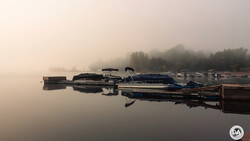
See if you can match the three photographs Bergreen puts up near the end of the video to the $300, $750, and $1,500 lenses that shot them.




Join the Fstoppers community for free
-
Post comments and join in the discussions
-
Browse the site ad-free
-
Share your work and get featured in the community
-
Compete in the photo contests for fun and prizes