Mirrorless stopped being a single category years ago. What sits under that word now runs from a 496 g travel body you can drop in a jacket pocket to a 1,340 g stacked-sensor flagship built to shoot a World Cup final. What separates them is not just money but a stack of specific technologies (stacked sensors, subject-detection autofocus, in-body stabilization, open-gate video) that arrive at different tiers, and buying well means knowing which of them you will actually use. A wildlife shooter and a studio portrait photographer both want "the best mirrorless camera," and they should walk out of the store with completely different ones.
Three things decide almost every mirrorless purchase in 2026. The first is sensor tier: format, resolution, and whether the sensor is stacked for speed or a conventional readout that costs far less. The second is autofocus, which has quietly become the biggest performance separator between price brackets. The third is how much video the body is really built to do, because a camera engineered around 7K open-gate raw makes different compromises than a stills-first body. This guide is organized around those tiers and roles rather than one flat ranking.
Two commitments run through every entry. Each pick states its real weakness in the narrative, not just in a bullet list, and each says whether we have tested it: where an Fstoppers hands-on review exists we link it, and where one does not we say so and write from verified specs. Prices are current B&H body-only figures.
At a Glance
- Best Overall: Canon EOS R6 Mark III
- Best Professional: Nikon Z9
- Best Full Frame for Resolution: Sony a7R VI
- Best APS-C: Fujifilm X-T5
- Best Hybrid: Panasonic Lumix S1 II
- Best Compact and Travel: OM System OM-3
- Best Value Full Frame: Nikon Z5 II
- Best for Beginners: Sony ZV-E10 II
Best Overall: Canon EOS R6 Mark III
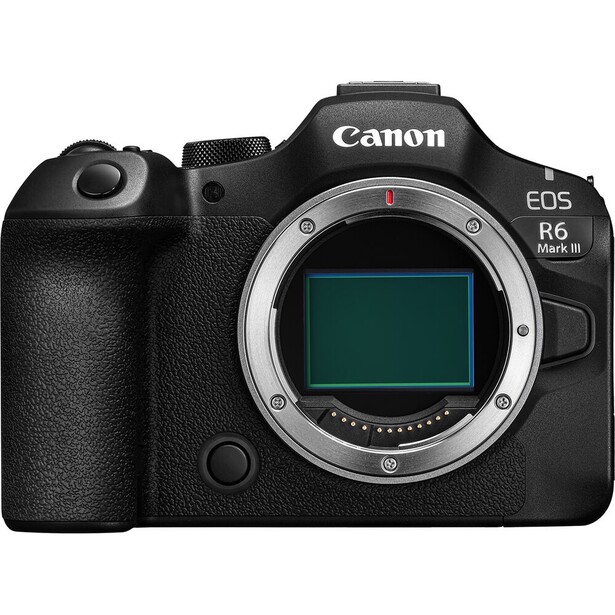
- Sensor: 32.5 MP full frame CMOS
- Autofocus: Dual Pixel CMOS AF II with people, animal, and vehicle detection
- Continuous shooting: 40 fps electronic, 12 fps mechanical, 20-frame pre-capture
- Stabilization: up to 8.5 stops in-body
- Video: 7K/60 raw, 7K/30 open gate, 4K/120 with no crop, Canon Log 2
- Cards: one CFexpress Type B, one UHS-II SD
- Weight: 699 g with battery
- Price: $2,799 (B&H)
The R6 Mark III is the camera we hand to a photographer who refuses to own a specialist. It moves to a new 32.5 MP full frame sensor, which lands in the sweet spot between the outgoing 24 MP bodies and the resolution monsters: enough to crop into a wildlife frame or make a large print, not so much that every shoot fills a drive. When we put it through a hands-on review, the autofocus was the standout, fast and accurate in a way that made the older R5 and R5 C feel a half-step behind, and the 40 fps electronic burst with a 20-frame pre-capture buffer meant the decisive-moment shots that used to slip past simply did not.
What earns it the overall slot is range. The video side is genuinely serious for a body this size: 7K raw internally, 7K/30 open gate that uses the full 3:2 sensor, and 4K up to 120p with no crop, all with Canon Log 2 and its wide dynamic range. That is a spec set that would have sat in a cinema body two years ago, and it is stuffed into a camera that weighs 699 g and hides a deep, comfortable grip. The relocated power switch on the right shoulder is a small thing that turns out to matter when you are shooting one-handed. Canon's RF lens catalog, from the affordable f/1.8 primes to the exotic zooms, backs it up better than any rival mount for a generalist.
The honest limits are real. Push the high-resolution video modes hard and it can overheat, there is no in-camera anamorphic desqueeze, and it drops the physical timecode port that a working video shooter might want. None of that touches the person this camera is for, the stills-and-video generalist who wants one body that never becomes the reason a shot did not happen. If you want a single camera to cover events, portraits, wildlife, and client video without apologizing in any of them, this is the one to buy, so check the current price of the Canon EOS R6 Mark III at B&H. Also consider the Nikon Z6 III if you shoot more video than stills and want a partially stacked sensor at a similar price.
Read our full review: Canon EOS R6 Mark III: Midrange Powerhouse for 2025
What We Like
- Fast, accurate Dual Pixel CMOS AF II across people, animals, and vehicles
- 40 fps burst with a 20-frame pre-capture buffer
- Cinema-grade 7K raw and open-gate video in a small body
- Deep, comfortable grip and a well-placed power switch
What Could Be Better
- Can overheat in the demanding high-resolution video modes
- No in-camera anamorphic desqueeze and no timecode port
- 32.5 MP trails dedicated high-resolution bodies for landscape and studio work
Best Professional: Nikon Z9
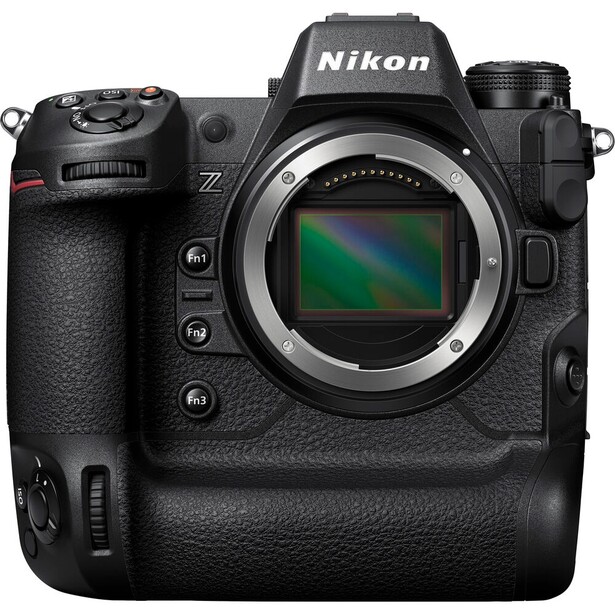
- Sensor: 45.7 MP stacked BSI CMOS full frame
- Autofocus: 3D-tracking with nine subject-detection types, EXPEED 7
- Continuous shooting: 20 fps raw, 30 fps full-resolution JPEG, 120 fps at 11 MP
- Stabilization: 5-axis in-body, up to 6.0 stops with Synchro VR
- Video: 8.3K/60 12-bit N-RAW, 8K/30, 4K/120
- Cards: dual CFexpress Type B
- Weight: 1,340 g with battery
- Price: $5,296.95 (B&H)
We spent a year on commercial shoots and film productions with the Z9, and what follows draws on that year of hands-on use as well as a verified spec sheet and a long public track record. Several years after it landed, it is still the body professionals reach for when the shoot cannot be repeated. It was the camera that proved a flagship did not need a mechanical shutter at all, and the stacked 45.7 MP sensor reads out fast enough that rolling-shutter distortion effectively disappears even on a panning race car. The integrated vertical grip balances long telephotos properly and shoots all day without a battery swap, and the buffer holds well over a thousand raw frames in a burst, a number that stops mattering as a spec and starts mattering when a play develops for eight straight seconds.
Nikon's subject detection, driven by the same EXPEED 7 processor that trickled down into cheaper bodies, tracks nine subject types and is built to hold a bird's eye through branches with a tenacity that reads as uncanny. The video side is a professional's toolkit rather than an afterthought: internal 8.3K/60 in 12-bit N-RAW, 8K/30, and 4K/120 for slow motion, all recorded to fast CFexpress Type B cards. The always-on Real-Live viewfinder never blacks out, even mid-burst, which in practice removes the last mechanical hesitation from tracking a moving subject.
The tradeoffs are exactly what you would expect from a true flagship. It is large and it is heavy at 1,340 g, so it is a poor fit for anyone who wants a discreet or travel-friendly body, and the 45.7 MP sensor, brilliant as it is, is not the resolution leader anymore. It is also a 2021 design; Nikon has kept it current with firmware, and a Z9 II is rumored but unannounced, so you are buying a mature platform rather than the newest thing. For a working pro who needs speed, ruggedness, and a body that simply does not flinch, it remains the standard, so check the current price of the Nikon Z9 at B&H. Also consider the Nikon Z8 if you want the same sensor and processor in a smaller body without the built-in grip.
What We Like
- Stacked sensor kills rolling shutter and enables a blackout-free viewfinder
- Class-leading subject detection for sports and wildlife
- Enormous buffer and all-day battery from the integrated grip
- Professional internal 8K raw video
What Could Be Better
- Large and heavy, and not remotely discreet
- 45.7 MP no longer leads on resolution
- A 2021 platform with a rumored, unannounced successor
Best Full Frame for Resolution: Sony a7R VI
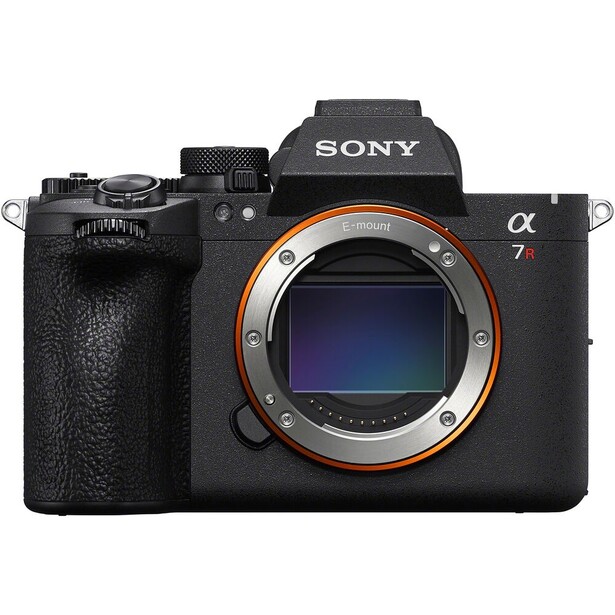
- Sensor: 66.8 MP stacked BSI CMOS full frame
- Autofocus: AI-driven real-time recognition across people, animals, birds, and vehicles
- Continuous shooting: up to 30 fps blackout-free, 14-bit raw
- Stabilization: up to 8.5 stops in-body
- Video: 8K/30 with a 1.2x crop, 4K/120
- Cards: dual, each CFexpress Type A or UHS-II SD
- Weight: 713 g with battery
- Price: $4,498 (B&H)
For years the high-resolution camera meant sacrificing speed, and the a7R VI is the body that ended the compromise. Sony put a fully stacked 66.8 MP sensor at the center of it, the highest-resolution stacked full frame sensor made, and the payoff is a camera that resolves fine detail like a medium format back yet fires 14-bit raw files at 30 fps with no viewfinder blackout. That combination did not exist before. A landscape shooter gets files with room to crop hard and print huge, and a studio or fashion photographer gets resolution to spare, but so does a wildlife or sports shooter who used to have to choose the lower-megapixel body to get the frame rate.
The rest of the camera is built to keep up with the sensor. The 9.44m-dot viewfinder is among the best made, bright and detailed enough that critical manual focus on a 66.8 MP file is realistic, and Sony's AI-driven subject recognition remains the benchmark for stickiness across people, animals, and birds. When we shot it, the detail was the story: the kind of resolution where you keep zooming in expecting the image to fall apart and it simply does not. Video is a real capability rather than a token, with 8K/30 from 8.2K oversampling and 4K up to 120p, though the 8K mode carries a 1.2x crop.
The caveats are cost and consequence. This is an expensive body, the 66.8 MP files demand fast cards and serious storage, and Sony moved to a new, higher-capacity battery that is not interchangeable with the packs you may already own for older Alpha bodies, so budget for spares. If you do not genuinely need this much resolution, the money is better spent elsewhere in this guide. For the photographer whose work lives or dies on detail, this is the resolution champion that no longer asks you to give up speed, so check the current price of the Sony a7R VI at B&H. Also consider the outgoing Sony a7R V if you want 61 MP at a meaningfully lower price and do not need the stacked sensor's burst rate.
Read our full review: Sony a7R VI Beats Sony's Own Flagship
What We Like
- 66.8 MP of detail with no speed penalty
- 30 fps blackout-free raw from a stacked sensor
- Reference-class 9.44m-dot viewfinder
- Best-in-class AI subject recognition
What Could Be Better
- Expensive, and the huge files demand fast cards and storage
- New battery is not compatible with older Alpha packs
- 8K video carries a 1.2x crop
Best APS-C: Fujifilm X-T5
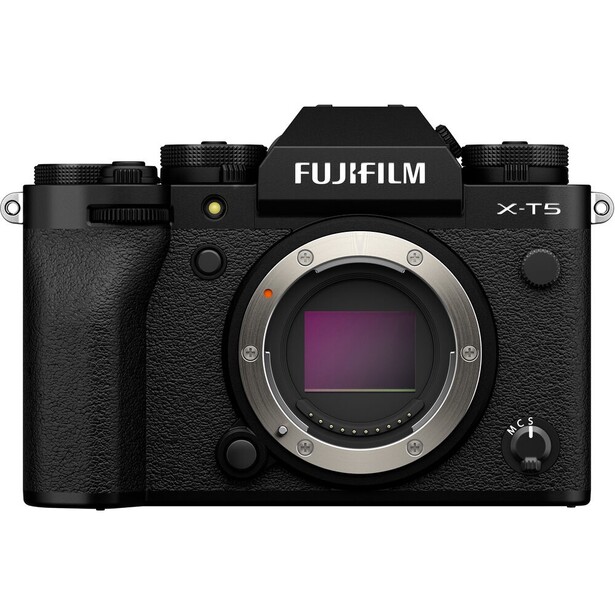
- Sensor: 40.2 MP APS-C X-Trans CMOS 5 HR
- Autofocus: intelligent hybrid AF with subject detection, X-Processor 5
- Continuous shooting: 15 fps mechanical, 20 fps electronic with a 1.29x crop
- Stabilization: up to 7.0 stops in-body
- Video: 6.2K/30, 4K/60
- Cards: dual UHS-II SD
- Weight: 557 g with battery
- Price: $1,999 (B&H)
APS-C is where you go when you want most of full frame's capability in a smaller, cheaper, more enjoyable package, and the X-T5 is the body that makes the argument best. We reviewed the X-T5 after ten months of near-daily use, and the case for it rests on that time and on what it is built around. Its 40.2 MP X-Trans sensor resolves more detail than most full frame cameras, and it gives you room to crop hard into a landscape file without the image falling apart. Fujifilm pairs that with the thing the brand is loved for: physical shutter-speed, ISO, and exposure-compensation dials on the top plate, so you set exposure by feel without ever entering a menu.
The film simulations are the other half of the appeal. Twenty-plus color profiles distilled from decades of Fujifilm's film chemistry mean the files come off the card already looking finished, which is liberating for anyone who would rather shoot than sit in Lightroom. The three-way tilting screen flips out for both horizontal and vertical low-angle work, and the seven stops of in-body stabilization make the compact primes hand-holdable in low light. For travel, street, portraits, and landscapes, this is a complete kit that weighs 557 g. If a fixed lens would do, our compact and point-and-shoot cameras guide covers that end of the market.
Where it gives ground is action and video-forward work. The X-Trans autofocus, much improved though it is, still trails the best Sony, Canon, and Nikon systems at tracking fast, erratic subjects, and the tilting screen does not flip forward for vlogging. There is one more thing to weigh: an X-T6 has been rumored for late 2026, so if you want the newest sensor you may prefer to wait or buy the X-T5 at a discount. For the stills photographer who values resolution, dial-driven controls, and color they do not have to fix, this is the best APS-C camera you can buy, so check the current price of the Fujifilm X-T5 at B&H. Also consider the smaller Fujifilm X-T50 if you want the same sensor in a lighter, cheaper body.
What We Like
- 40.2 MP resolves detail that shames many full frame bodies
- Dedicated top-plate dials make exposure tactile
- Film simulations produce finished files straight out of camera
- Compact and light with seven stops of stabilization
What Could Be Better
- Autofocus trails the best rivals for fast action
- Tilting screen does not face forward for vlogging
- An X-T6 is rumored for late 2026
Best Hybrid: Panasonic Lumix S1 II
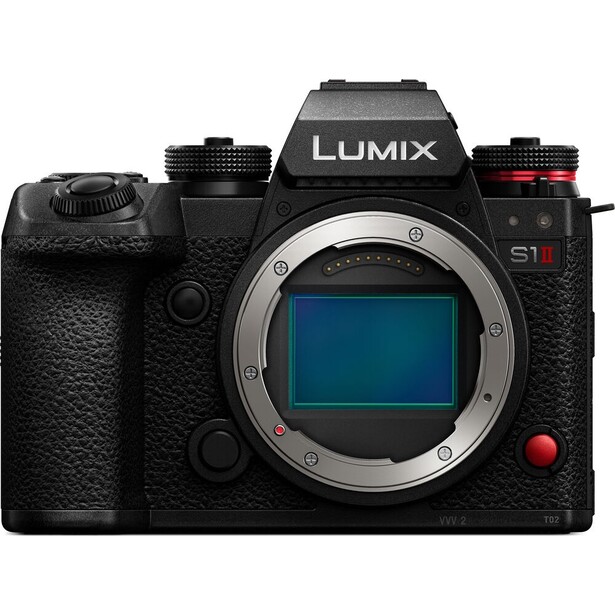
- Sensor: 24.1 MP partially stacked CMOS full frame
- Autofocus: phase-hybrid AF with human, animal, and vehicle detection
- Continuous shooting: up to 70 fps electronic
- Stabilization: up to 8.0 stops in-body
- Video: 5.1K/60 open gate, C4K/4K 120p, internal ProRes RAW, Dynamic Range Boost
- Cards: one CFexpress Type B, one UHS-II SD, plus USB SSD recording
- Weight: 800 g with battery
- Price: $2,897.99 (B&H)
If your work genuinely splits between photo and video, the Lumix S1 II is the body least willing to compromise on either. Panasonic built it around a new 24.1 MP partially stacked sensor, and the video feature set is the deepest here by a wide margin: 5.1K/60 open gate that records the full sensor height for reframing between vertical and horizontal deliverables, C4K and 4K at 120p, internal ProRes RAW, and a Dynamic Range Boost mode that extends latitude for high-contrast scenes. When we tested it, the addition Panasonic had long been missing finally landed, a phase-hybrid autofocus system that keeps up with subjects the way Sony and Canon owners take for granted.
The stills side is not the afterthought it might look like next to that video list. The partially stacked sensor fires up to 70 fps with the electronic shutter, the eight stops of in-body stabilization are among the strongest made, and Panasonic's color and its real-time LUT system let you bake a look into both photos and footage. The 5.76m-dot viewfinder is large and crisp, and at 800 g the body is solid without being a burden. For the wider field of cameras built to do both jobs, see our hybrid cameras guide.
The reasons it is not the overall pick are specific. It is expensive, the 24.1 MP resolution is modest if your priority is stills detail rather than speed and video, and the L-mount lens ecosystem, strong as it has become through the Panasonic, Leica, and Sigma alliance, is still not as deep or as cheap to build into as Sony E or Canon RF. For the photographer whose income depends on delivering both stills and polished video from one body, none of that outweighs what it does, so check the current price of the Panasonic Lumix S1 II at B&H. Also consider the Lumix S1 IIE, which shares the feature set on a conventional sensor for less money if you do not need the 70 fps burst.
Read our full review: Lumix S1 II, The World's Best Hybrid Video Camera With 1 Major Flaw
What We Like
- Deepest video toolkit here, including open gate and internal ProRes RAW
- Phase-hybrid autofocus finally competitive with Sony and Canon
- 70 fps stills burst and eight stops of stabilization
- Flexible card and USB SSD recording options
What Could Be Better
- Expensive for the resolution on offer
- 24.1 MP is modest for detail-first stills work
- L-mount lens catalog is smaller and pricier to build into than Sony or Canon
Best Compact and Travel: OM System OM-3
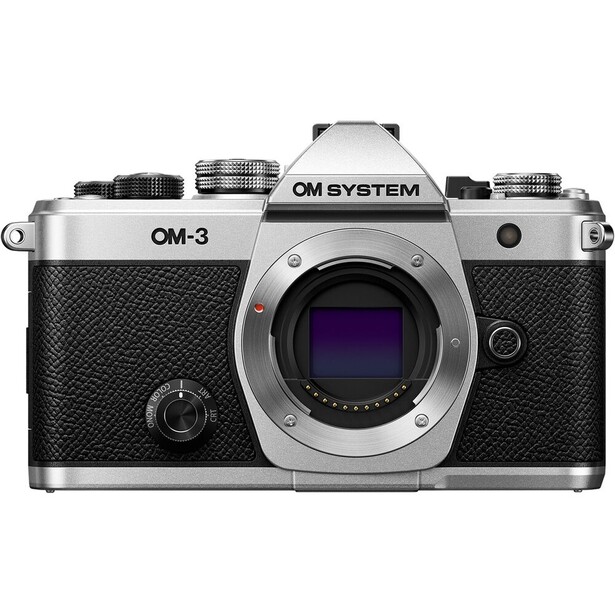
- Sensor: 20.4 MP stacked BSI Live MOS, Micro Four Thirds
- Autofocus: 1,053-point cross-type quad-pixel with subject detection
- Continuous shooting: up to 120 fps
- Stabilization: 6.5 stops in-body, up to 7.5 with Sync IS lenses
- Video: 4K/60
- Cards: single UHS-II SD
- Weight: 496 g with battery
- Price: $1,699.99 (B&H)
The best travel camera is the one you actually bring, and at 496 g with lenses a fraction of the size of full frame glass, the OM-3 is built to go where a bigger body stays home. It borrows the flagship OM-1 Mark II's 20.4 MP stacked sensor and TruePic X processor, so under the retro dials sits genuinely fast hardware: 120 fps bursts, a dense 1,053-point autofocus grid, and the computational tricks OM System is known for. Its IP53 weather-sealing rating is a specific promise most rivals avoid making, which means you can shoot it in real rain and dust without the nervous glances a "weather-resistant" body earns.
That computational toolkit is the reason to buy it over a small full frame body. Live ND simulates a long exposure for silky water without a physical filter, handheld high-resolution mode composites a higher-megapixel file, and in-camera focus stacking and Live Composite handle macro and light-trail work that would otherwise mean a laptop and a tripod. When we reviewed the OM-3, those modes were not gimmicks but the actual reason to reach for it, features that let a traveler pack one small body and leave the filter kit and tripod behind. The design, all knurled dials and a flat top plate, is a deliberate homage to the film-era OM cameras.
The compromises come from the sensor size. At 20.4 MP on a Four Thirds chip, it gives up low-light headroom and shallow-depth-of-field potential to APS-C and full frame, and the single card slot rules it out for anyone who needs in-camera backup on a paid job. It is also priced like a serious enthusiast camera rather than a budget one. For the traveler, hiker, and street photographer who values a tough, tiny, endlessly capable kit over ultimate image quality, nothing here competes with it, so check the current price of the OM System OM-3 at B&H. Also consider the Fujifilm X-T50 if you want a larger APS-C sensor in a similarly small body and can live with less weather-sealing.
Read our full review: The Sexy OM-3: So Much More Than a Body to Die For
What We Like
- Flagship stacked sensor and autofocus in a tiny body
- True IP53 weather-sealing, rare at any price
- Computational modes replace filters and a tripod
- Small, light lenses and a beautiful retro design
What Could Be Better
- Smaller sensor gives up low-light and background blur
- Single card slot limits professional use
- Priced like a full frame enthusiast body
Best Value Full Frame: Nikon Z5 II
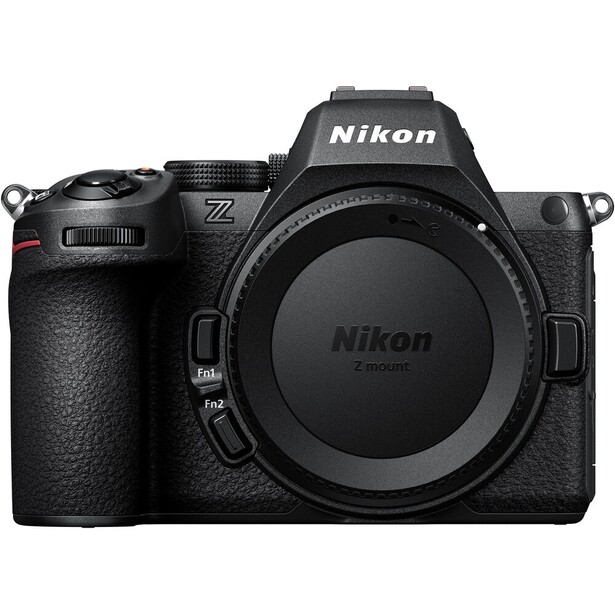
- Sensor: 24.5 MP BSI CMOS full frame
- Autofocus: subject detection across nine types, EXPEED 7
- Continuous shooting: up to 30 fps with pre-release capture
- Stabilization: up to 7.5 stops in-body
- Video: 4K/60 with a crop, 4K/30 oversampled, Full HD/120
- Cards: dual UHS-II SD
- Weight: 700 g with battery
- Price: $1,696.95 (B&H)
The Z5 II is the camera that finally made the cheapest full frame tier feel like a real choice rather than a compromise. Nikon put its flagship EXPEED 7 processor, the same one running the Z9, into an entry-level body, and the autofocus that follows is startling at the price: the same subject detection that locks onto eyes, animals, and vehicles on cameras costing three times as much.
In use it is quietly complete. The 24.5 MP BSI sensor is a proven performer in low light, the in-body stabilization runs to 7.5 stops, and the viewfinder is one of the brightest in the class, a genuine advantage when you are shooting into the sun. When we reviewed it, the surprise was how little it gave up to feel like a bargain: dual card slots for backup, pre-release capture that buffers frames before you fully press the shutter, and a build that does not feel hollow. It is the body we point most new full frame buyers toward before they overspend, and if your ceiling is lower than this, our budget cameras guide picks up below it.
The limits show up mostly in speed and video. There is no stacked sensor, so fast electronic-shutter shooting shows some rolling-shutter skew, the 4K/60 mode comes with a crop, and it records to SD rather than faster CFexpress. Those are the right corners to cut at this price, and they will not bother the photographer this camera is for. If you want to shoot full frame without spending flagship money and refuse to accept flagship-tier autofocus being out of reach, check the current price of the Nikon Z5 II at B&H. Also consider the Canon EOS R8 if you want a lighter body and can live with a single card slot.
Read our full review: Nikon Z5 II Review: Affordable Full Frame Power
What We Like
- Flagship EXPEED 7 autofocus at an entry price
- Strong low-light sensor and 7.5 stops of stabilization
- Bright viewfinder and dual card slots for backup
- Pre-release capture buffers frames before you press
What Could Be Better
- No stacked sensor, so fast electronic shooting shows skew
- 4K/60 comes with a crop
- SD only, no faster CFexpress option
Best for Beginners: Sony ZV-E10 II
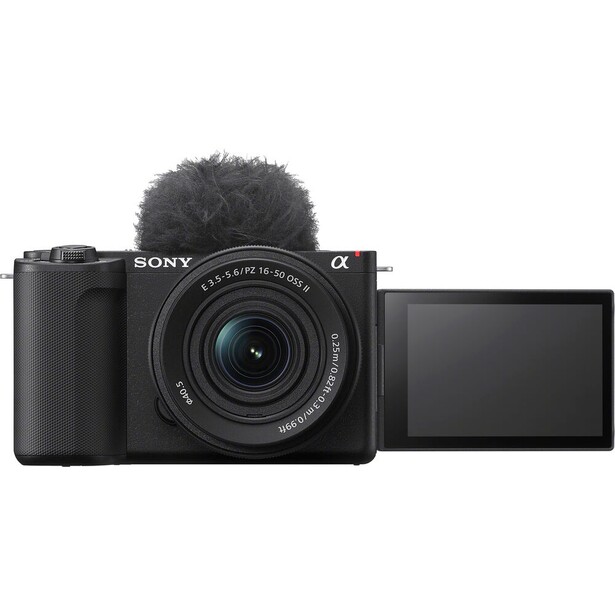
- Sensor: 26 MP APS-C BSI CMOS
- Autofocus: real-time recognition AF with subject tracking
- Continuous shooting: 11 fps mechanical, 8 fps electronic
- Stabilization: electronic only, no in-body stabilization
- Video: 4K/60 with a crop, 4K/30 oversampled, 10-bit 4:2:2
- Cards: single UHS-II SD
- Weight: 377 g with battery
- Price: $1,098 (B&H)
Most people buying their first mirrorless camera in 2026 are not only shooting stills, they are making videos too, and the ZV-E10 II is the best on-ramp for that shooter. We reviewed the ZV-E10 II and found it a first camera that a beginner will not quickly outgrow. It puts Sony's real-time recognition autofocus, the subject tracking that made the brand's reputation, into a light 377 g body that costs about what a decent phone does. The 26 MP APS-C sensor is a real step up from any phone, the fully articulating screen faces forward for talking to camera, and the three-capsule directional microphone with its bundled wind muff means usable audio without buying a separate mic on day one.
The reason it earns the beginner slot over a more traditional body is that it removes friction. A background-defocus button opens the aperture for you, a product-showcase mode racks focus to whatever you hold up to the lens, and the larger NP-FZ100 battery lasts the better part of a day rather than dying at lunch. Sony's E-mount is the deepest affordable lens ecosystem here, with a wall of budget primes and zooms from Sigma, Tamron, and Viltrox, so a beginner can grow the kit cheaply. For a wider set of first cameras, including bodies with viewfinders, start with our cameras for beginners guide.
Be clear about what it drops. There is no viewfinder at all, so bright-day stills mean composing on the rear screen, and there is no in-body stabilization, so handheld walking footage leans on electronic correction that crops in and can look slightly processed. For a beginner whose first love is video, neither is a dealbreaker. If you are learning on a camera and posting the results, check the current price of the Sony ZV-E10 II at B&H. Also consider the Canon EOS R50 or Nikon Z50 II if you want a built-in viewfinder and a more stills-focused first camera.
What We Like
- Sony's class-leading autofocus at an entry price
- Forward-facing screen, good built-in mic, and creator tools
- Large NP-FZ100 battery and 10-bit oversampled 4K
- The deepest affordable lens ecosystem here
What Could Be Better
- No viewfinder for bright-day stills
- No in-body stabilization
- 4K/60 crops in
How to Choose a Mirrorless Camera
Start with sensor tier, because it sets the price floor and the character of everything else. Micro Four Thirds and APS-C buy you smaller, cheaper, lighter kits and, in the case of the X-T5, surprising resolution. Full frame buys low-light headroom and shallow depth of field. The question is not which is best in the abstract but which matches your subjects: a traveler and a wedding photographer are right to answer it differently. Within full frame, resolution is its own decision. Twenty-four megapixels is plenty for most work and keeps files manageable, while 45 to 67 megapixels only earns its storage cost if you crop aggressively or print large.
Autofocus is the spec that has quietly become the biggest separator between tiers, and it is worth prioritizing over almost everything else if you shoot anything that moves. The flagship bodies and the newer processors trickling down into cheaper ones, like the EXPEED 7 in the Z5 II, track eyes and animals with a reliability that older cameras cannot touch. If you photograph kids, pets, sports, or wildlife, spend here first. The related decision is whether you need a stacked sensor. Stacked readout is what enables blackout-free bursts and eliminates rolling-shutter skew, and it is the single biggest reason a flagship costs what it does. If you never shoot fast action under artificial light or panning, you can save a great deal by skipping it.
Then be honest about video. A body engineered around open-gate raw, like the Lumix S1 II or the R6 Mark III, makes real design compromises to get there, and you pay for capability you may never touch. If video is incidental, buy the stills camera and let its 4K be a bonus. Two features are worth insisting on: a viewfinder, which makes composing in bright light far easier and is the main thing the vlogging bodies give up, and dual card slots if you shoot anything you cannot reshoot. Everything after that is lens ecosystem, and that choice outlives the body. Sony E and Canon RF have the deepest catalogs, L-mount and Nikon Z are strong and growing, and Micro Four Thirds and Fujifilm X reward you with the smallest, most characterful glass.
What We're Looking For
Our picks weigh autofocus reliability, the honesty of a camera's spec sheet against how it behaves in the field, the depth and cost of each lens mount, build quality and weather-sealing, and how well a body serves its intended shooter rather than how it scores in the abstract. Most picks here come from gear our writers have used and reviewed hands-on, and we link those reviews in the entry; where we have not tested a camera, we say so in the entry rather than imply a review we did not run. Every specification in this guide was verified against current manufacturer and retailer sources at the time of writing, and prices are the current B&H figure for the body only.
Frequently Asked Questions
Is a Stacked Sensor Worth Paying for in 2026?
Only if you shoot fast action or under artificial light. A stacked sensor reads out fast enough to eliminate rolling-shutter skew and enable blackout-free bursts, which matters enormously for sports, wildlife, and flash work. For portraits, landscapes, travel, and general shooting, a conventional sensor like the one in the Nikon Z5 II delivers the same image quality for far less money.
Do I Need Full Frame, or Is APS-C Enough?
APS-C is enough for most photographers, and the 40 MP Fujifilm X-T5 out-resolves many full frame bodies. Full frame earns its cost in low light and when you want shallow depth of field from the same framing. If you shoot mostly in good light or value a smaller, cheaper kit, APS-C or even Micro Four Thirds is the smarter buy.
Should I Wait for a Newer Model or Buy Now?
Buy now unless a specific successor is imminent and you want it. Two picks here, the Fujifilm X-T5 and the Nikon Z9, have rumored replacements on the horizon, which usually means the current model gets discounted rather than worse. Cameras rarely lose capability, so a mature, well-supported body at a settled price is often the better value than the newest release.
Which Mirrorless Brand Has the Best Lenses?
Sony E and Canon RF have the deepest full frame catalogs, with Sony holding an edge in affordable third-party options from Sigma, Tamron, and Viltrox. Nikon Z and L-mount are strong and growing quickly. Fujifilm X and Micro Four Thirds offer the smallest, most characterful lenses. Choose the mount whose lenses fit your budget and subjects, because that choice outlasts any single body.
Is In-Body Stabilization Necessary?
It is very useful but not essential. In-body stabilization lets you hand-hold slower shutter speeds for low-light stills and steadies handheld video, and most cameras here have it. The main exceptions are entry-level bodies like the Sony ZV-E10 II. If you shoot mostly in good light or on a tripod, you can live without it; for handheld low-light work, prioritize it.
Fstoppers may earn a commission from purchases made through links in this article. Our picks are made independently by our editorial team.