
Canon's lens ecosystem is one of the most extensive in photography, spanning decades of innovation and multiple camera systems. For photographers entering the Canon world in 2026, understanding how all these lenses work together (or don't) can feel like deciphering ancient hieroglyphics. The good news is that once you understand the underlying logic, it all makes sense, and Canon's system offers tremendous flexibility for leveraging glass from multiple eras on modern bodies.
The Foundation: Two Mounts That Define the Modern Era
Before diving into the alphabet soup of lens prefixes, you need to understand the two primary mounts that matter for anyone shooting Canon today. Everything else branches from these two systems.
The EF mount arrived in 1987 and represented nothing short of a revolution. Canon abandoned their existing FD mount entirely and started fresh with a fully electronic interface. Gone were the mechanical levers and linkages of the FD era. In their place, Canon implemented electronic contacts that handle everything from autofocus motor control to aperture adjustment to image stabilization communication. This electronic foundation proved remarkably forward-thinking, and the EF mount went on to define the DSLR era for nearly four decades.
The RF mount debuted in 2018 with Canon's first full frame mirrorless cameras. By eliminating the mirror box, Canon's engineers gained freedom to rethink lens design. The RF mount features a generous 54mm diameter combined with a short 20mm flange distance. These specifications enable optical designs that were difficult or impractical in the DSLR era, particularly for wide angle lenses where rear elements can now sit closer to the sensor for improved corner sharpness and reduced complexity in retrofocus designs. Canon's strategic development focus for interchangeable stills lenses is now on the RF mount, and this is where you'll find the cutting-edge optics that showcase what modern lens design can achieve.
Decoding the Alphabet Soup: Every Canon Lens Prefix Explained
Here's where photographers typically get confused, and understandably so. Canon has released lenses under numerous designations over the decades, and not all of them play nicely together. Understanding these prefixes is essential knowledge for anyone shopping the used market or trying to figure out which lenses will work with their camera body.
FD and New FD Lenses (1971 to 1987)
The FD mount represents Canon's manual focus era. Original FD lenses used a distinctive breech-lock mounting system where a chrome ring rotated to secure the lens. Canon later simplified this with the "New FD" (often abbreviated nFD) design, switching to a more conventional bayonet-style mount. Both versions are functionally identical in terms of compatibility.
Here's the critical point: FD lenses are physically incompatible with any Canon DSLR or native Canon mirrorless mount. The flange distance and mount geometry simply don't work together. However, the rise of mirrorless cameras has given FD glass a second life. Because mirrorless bodies have such short flange distances, simple mechanical adapters can mount FD lenses on RF-system cameras for manual focus use. Many FD lenses, particularly the fast primes, have developed cult followings among videographers and portrait photographers who prize their distinctive bokeh and color rendition.
EF Lenses (1987 to Present)
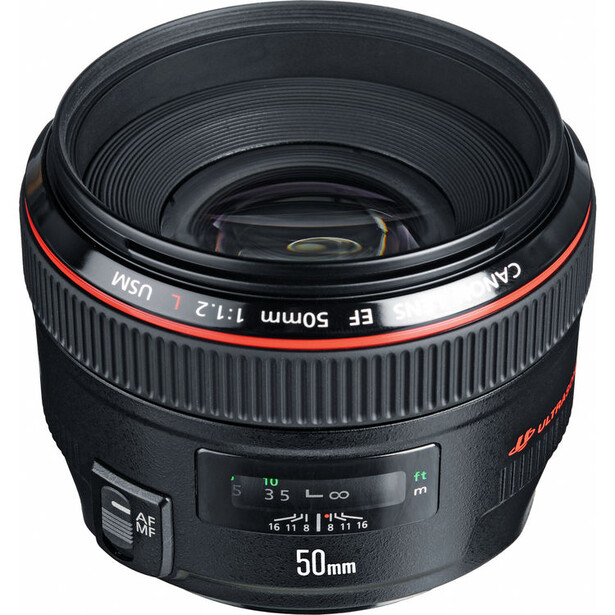
The EF designation indicates a full frame DSLR lens designed for the original electronic mount Canon introduced in the late 1980s. This is the largest and most diverse lens family in Canon's history, encompassing everything from budget-friendly kit zooms to exotic super-telephoto primes. The fully electronic nature of these lenses means they work natively on every Canon EOS film SLR and DSLR ever manufactured. EF lenses also adapt seamlessly to Canon's mirrorless systems via simple electronic adapters.
EF-S Lenses (2003 to Present)
Canon introduced the EF-S designation alongside their APS-C (crop sensor) DSLR lineup. These lenses are designed specifically for cameras with the smaller sensor, allowing Canon's engineers to create more compact and affordable optics by not having to cover the full 35mm frame. The image circle these lenses project is just large enough for the crop sensor, which is why they cannot be used on full frame cameras.
Canon implemented a physical design to prevent dangerous mounting mishaps. EF-S lenses feature a rear protrusion (a plastic shroud around the rear element assembly) that extends further back than EF lenses. The specific design varies by lens model, but the geometry is engineered to be incompatible with full frame DSLR bodies. If an EF-S lens is forced onto a full frame DSLR through modification, the mirror may strike the rear of the lens during cycling on some body and lens combinations, risking damage to both camera and lens. The bottom line: EF-S lenses are not compatible with full frame DSLRs, and attempting to force the issue invites mechanical damage and produces severe vignetting that renders the photos unusable. One note for used lens buyers: third-party crop lenses from Sigma (DC series) and Tamron (Di-II series) used the standard EF mount geometry without the rear protrusion found on Canon EF-S glass. These lenses will physically mount on full frame Canon DSLRs despite being designed for crop sensors, but they'll produce heavy vignetting that makes the images unusable for most purposes.
On the mirrorless side, EF-S lenses can be adapted to RF-mount cameras, both full frame and APS-C. When mounted on a full frame RF body like the R5, the camera automatically engages a crop mode to match the lens's image circle, resulting in a significant resolution reduction. An R5 Mark II shooting with an adapted EF-S lens drops from 45 megapixels to roughly 17 megapixels. This is perfectly functional for many uses, but it's something to consider when evaluating whether to keep EF-S glass in your kit.
EF-M Lenses (2012 to 2023)
The EF-M story is one of Canon's more frustrating chapters. These lenses were designed specifically for the EOS M mirrorless camera line, Canon's first foray into mirrorless with a dedicated APS-C system.
The problem is that Canon quietly abandoned the M system without providing a migration path. EF-M lenses cannot be adapted to the RF mount system due to incompatible flange distances and mount geometries. As of 2026, the EOS M line is discontinued, EF-M lenses are no longer in production, and photographers who invested in the system are left with orphaned equipment. If you're considering Canon today, avoid EF-M entirely.
RF Lenses (2018 to Present)
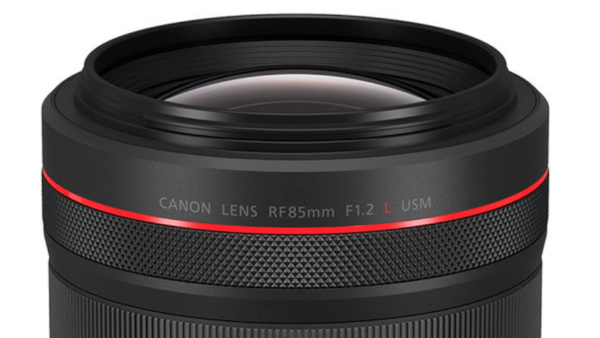
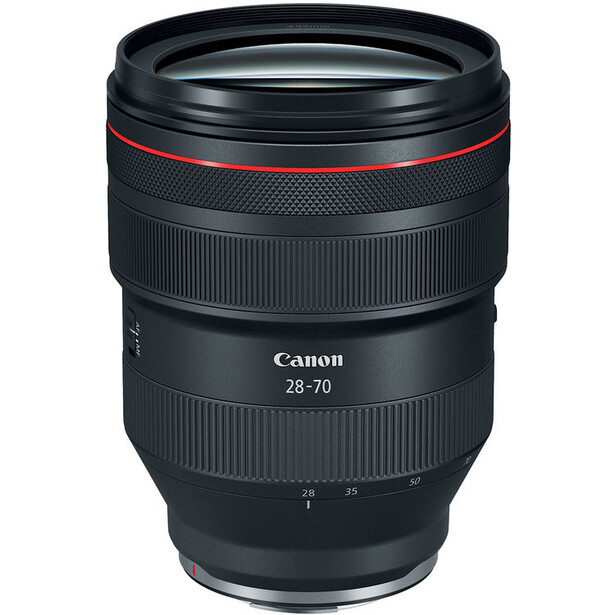
The RF designation indicates native full frame mirrorless lenses designed specifically for the EOS R camera system. This is Canon's current flagship lens lineup and where all new development is concentrated. RF lenses take full advantage of the mount's wide diameter and short flange distance, enabling optical designs that outperform their EF predecessors in many cases. The RF 28-70mm f/2L USM, for example, offers a constant f/2 aperture across its zoom range, something that simply wasn't practical in the DSLR era.
RF-S Lenses (2022 to Present)
Canon's newest lens designation covers native mirrorless optics designed for their APS-C R-system cameras like the EOS R7 and EOS R10. These lenses offer compact size and lower prices by only needing to cover the crop sensor's image circle. However, Canon made a smart compatibility decision here that differs from the DSLR era: RF-S lenses can be physically mounted on full frame RF bodies without any physical interference.
When you mount an RF-S lens on a full frame camera like the R5, the camera automatically recognizes the lens type and engages crop mode to use only the center portion of the sensor. As with adapted EF-S lenses, this results in a substantial resolution reduction, but it means photographers moving from an APS-C R-series body to full frame can still use their existing lenses during the transition period. It's a far more elegant solution than the physical lockout of the EF-S era.
Full Frame Versus Crop: Understanding the Sensor Size Relationship
Canon's APS-C sensors feature a 1.6x crop factor relative to full frame, slightly tighter than the 1.5x factor used by Nikon and Sony. This means a 50mm lens on a Canon crop body provides a field of view equivalent to an 80mm lens on full frame.
The cross-compatibility rules are straightforward. EF lenses work natively on all Canon DSLRs (full frame and crop) and adapt to RF mirrorless with full functionality. RF lenses work only on RF mirrorless bodies but cover both full frame and APS-C sensors. Mount an RF 24-70mm f/2.8L IS USM on an R7, and you get a weather-sealed professional zoom with a 38-112mm equivalent field of view. This makes full frame glass a smart investment even for crop-sensor shooters, as it provides an upgrade path.
Crop lenses are more restricted. EF-S lenses are designed not to mount on full frame DSLRs due to rear protrusion and mirror clearance issues, and attempting to force compatibility risks mechanical damage. RF-S mounts on full frame mirrorless but triggers crop mode, which dramatically reduces your effective resolution. If you're shooting with an R5 Mark II for its 45-megapixel output, mounting an RF-S lens drops you to around 17 megapixels.
The Lens Quality Hierarchy: Understanding Canon's L-Series and Beyond
Canon uses visual indicators to help photographers identify lens quality tiers, though the system isn't as formalized as some competitors. The red ring around the lens barrel indicates L-series (Luxury) glass, Canon's professional designation. L-series lenses feature superior optical designs, robust weather sealing, and premium build quality with materials like magnesium alloy construction. They command premium prices but represent the best Canon offers.
Below the L-series, Canon produces a range of consumer and prosumer optics without specific visual branding. These lenses vary widely in quality, from excellent values like the RF 35mm f/1.8 IS Macro STM to basic kit zooms designed primarily on cost considerations. Reviews and specifications become important here, as the lack of an L designation doesn't necessarily indicate a poor lens.
Third-party lens support for RF mount has evolved since Canon introduced the system, though it remains more restricted than competing platforms. For years, Canon did not license the mount, leaving Sigma and Tamron unable to produce native RF autofocus lenses. That changed recently, with both manufacturers now offering licensed RF-mount options. However, this opening has focused primarily on APS-C (RF-S) lenses, and full frame native autofocus choices from third parties remain significantly more limited than what Sony E-mount shooters enjoy. If extensive third-party glass is important to your buying decisions, this disparity is worth researching before committing to Canon's system.
Bridging the Eras: Adapter Options and Their Capabilities
One of Canon's greatest strengths in the mirrorless transition has been adapter support. The basic Canon EF-EOS R Mount Adapter is a simple ring that adds the correct spacing between EF lenses and RF camera bodies while passing through all electronic communication. Autofocus performance is essentially identical to using the lens on a DSLR, image stabilization works normally, and all lens metadata transmits correctly.
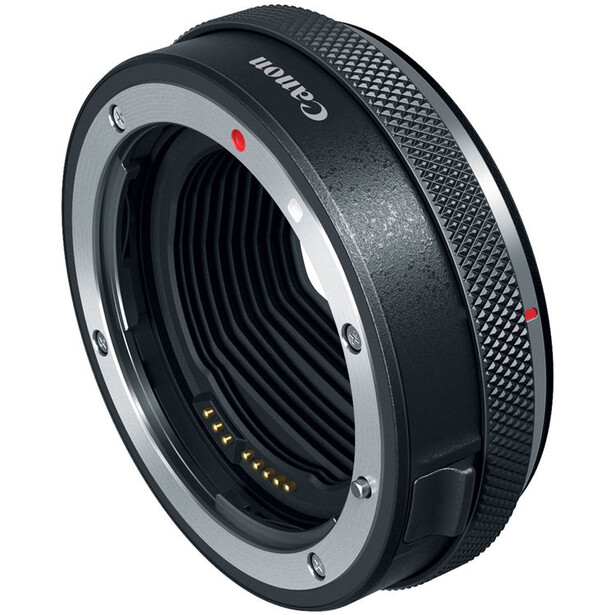
Canon also offers variant adapters that add functionality. The Control Ring Mount Adapter EF-EOS R includes a customizable dial that can be programmed for aperture, ISO, or exposure compensation. The Drop-In Filter Mount Adapter EF-EOS R features a slot behind the lens mount that accepts specialized circular polarizers and neutral density filters, particularly valuable for ultra-wide lenses where front-mounted filters are impractical.
For vintage FD glass, FD-to-RF adapters are basic mechanical spacers with no electronic communication. You get physical mounting and infinity focus capability, but autofocus, automatic aperture, and EXIF data are unavailable. Focus peaking in the electronic viewfinder makes manual focusing practical for deliberate shooting situations.
It's worth repeating the important limitation: there is no functional adapter from EF-M to RF or any other system.
Quick Reference: Compatibility at a Glance
Lens Type Fits RF Mirrorless? Fits Full Frame DSLR? Fits Crop (APS-C) DSLR? RF Yes (Native) No No RF-S Yes (Native)* No No EF Yes (via Adapter) Yes (Native) Yes (Native) EF-S Yes (via Adapter)* No Yes (Native) FD Yes (Manual Only) No No EF-M No No No*Full frame RF cameras automatically engage crop mode when using RF-S or EF-S lenses.
Practical Guidance for 2026
If you're transitioning from a Canon DSLR to the mirrorless R system, breathe easy. Your EF lenses, especially any L-series glass you've invested in, remain completely viable. Buy the basic EF-EOS R adapter (or the control ring version if you want the extra functionality) and start shooting immediately. There is genuinely no rush to replace quality EF glass with RF equivalents unless a specific new lens design offers capabilities you actually need. The adapted performance is that good.
If you're building a new Canon kit from scratch, go native RF for your primary lenses. These designs take full advantage of the mount's capabilities and represent the best Canon currently offers. For budget-conscious shooters or those seeking creative tools, consider exploring the vintage FD market. Lenses like the FD 50mm f/1.4 and 85mm f/1.8 can be found affordably and offer beautiful rendering characteristics that differ meaningfully from modern clinical sharpness. If you're new to photography and want to build a strong foundation before investing in premium glass, Photography 101 is an excellent resource for understanding how to get the most out of any camera system.
When buying used lenses, learn to identify the visual markers that indicate lens type. EF lenses feature a red circle alignment mark on the mount. EF-S lenses have a white square alignment mark. Both RF and RF-S lenses use the same red alignment index on the RF mount, so you'll need to check the lens name designation (look for the "RF-S" label on the barrel) to determine whether it's a crop or full frame optic. Knowing these distinctions prevents expensive mistakes when shopping the used market.
Looking Forward
Canon's DSLR era has effectively concluded. Production has wound down and no new EF-mount cameras are in development. The EF system is now legacy glass, though that legacy will remain useful for years through adaptation to mirrorless bodies.
The RF ecosystem has matured into a comprehensive system capable of serving any photographic need, from compact RF-S kit lenses to exotic super-telephotos. For photographers entering Canon's system today, the path is clear: invest in RF-mount glass for your core needs, adapt quality EF lenses you already own or find used, and enjoy the creative possibilities that vintage FD glass offers through simple manual-focus adapters.






Join the Fstoppers community for free
-
Post comments and join in the discussions
-
Browse the site ad-free
-
Share your work and get featured in the community
-
Compete in the photo contests for fun and prizes
1 Comment
Maybe I am overlooking it, but what is the native Canon mirrorless mount you are referring to here? I thought RF was Canon’s native mirrorless mount.
“Here's the critical point: FD lenses are physically incompatible with any Canon DSLR or native Canon mirrorless mount. … Because mirrorless bodies have such short flange distances, simple mechanical adapters can mount FD lenses on RF-system cameras for manual focus use.”