A thousand dollars is a strange ceiling in 2026. It is low enough that it rules out every full frame body launched in the last two years, yet high enough that the cameras still under it are genuinely good, not the plasticky compromises this price used to buy. The hard part is not finding a capable camera for the money. It is that the best options crowd the ceiling: the best-known contender, Nikon's Z50 II, lands right at the top of the budget body-only, and the outdoor favorite, the OM-5, has sold through into clearance and been replaced by a Mark II that pushes past the cap. So the sub-$1,000 shelf in 2026 is a mix of value all-rounders, a couple of cameras sitting right at the ceiling, and one used full frame body that quietly outclasses everything new at this price.
We built this guide around how you actually shoot rather than a single ranking, because the right $700 camera for a parent photographing a soccer game is the wrong one for someone filming themselves cooking. Three things decide most of these purchases: whether you need a viewfinder or shoot entirely off the screen, whether stills or video comes first, and how much of your budget you want to leave for a lens instead of the body. Every pick below is judged on all three. Prices move constantly at this end of the market, so the figures here are a snapshot and the buy links go straight to the current listing.
Two more things we promise in every entry. Each pick gets its real weakness stated in the narrative, not buried in a bullet. And each one carries an honest note on where it sits in its product cycle, because at this price a body that is late in its life or selling through on clearance changes the math on whether to buy now or wait. If you are shopping for your very first camera rather than your cheapest one, our best cameras for beginners guide covers the same ground from a different angle.
At a Glance
- Best Overall Under $1,000: Canon EOS R50
- Best Cheapest: Canon EOS R100
- Best for Video and Vlogging: Sony ZV-E10 II
- Best for Straight-Out-of-Camera Color: Fujifilm X-M5
- Best APS-C for Enthusiasts: Fujifilm X-T30 III
- Best Used Full Frame for the Price of New: Nikon Z5
- Best for Travel and Bad Weather: OM System OM-5 Mark II
Best Overall Under $1,000: Canon EOS R50
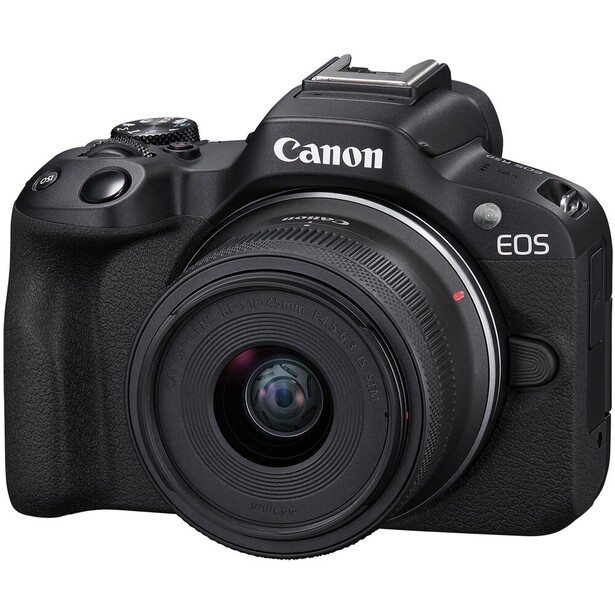
- Sensor: 24.2 MP APS-C CMOS
- Autofocus: Dual Pixel CMOS AF II with people, animal, and vehicle detection
- Stabilization: none in-body, digital stabilization in video
- Continuous shooting: 12 fps mechanical, 15 fps electronic
- Video: 4K/30p uncropped, oversampled from 6K
- Viewfinder and screen: 2.36m-dot OLED viewfinder, 3-inch vari-angle touchscreen
- Weight: 375 g with battery
- Price: $849 (B&H)
The R50 wins the overall slot on value math more than raw spec. It gives you a real electronic viewfinder, Canon's Dual Pixel CMOS AF II with the subject detection inherited from far pricier bodies, 24.2 megapixels, and uncropped 4K oversampled from 6K, then leaves a few hundred dollars of your budget intact for a lens. Nothing else here does all of that at this price. We have not put the R50 through a full Fstoppers review, so take this as a read of the specs rather than our own bench time. The Dual Pixel CMOS AF II system, with subject detection carried down from Canon's pro bodies, locks onto a person, a dog, or a passing cyclist and stays on the eye. For a first serious camera that is the difference between keepers and near-misses.
It is also one of the friendliest cameras to learn on. Canon's guided interface explains what aperture and shutter speed are doing as you turn the dials, then gets out of the way once you know. The body is small and light, the vari-angle screen flips forward for the occasional piece to camera, and the grip is deeper than a 375 g body normally manages. For a parent, a student, a traveler on a budget, or anyone buying their first interchangeable-lens camera, it is the pick that needs no caveat about what you shoot.
The honest weaknesses are two, and the first is about timing. Canon has pulled the R50 body from its own store, though B&H and other retailers still stock it new at a settled price, so you are buying a proven camera late in its cycle rather than the newest thing. Canon has said nothing about a Mark II, and the rumor mill has been quiet, so we would buy rather than wait. The second is glass: the RF-S lens lineup for Canon's crop bodies stays thin, and third-party support is limited, so building out a deep, cheap kit is harder here than on Sony or Fujifilm. For someone shooting the kit zoom and one prime, neither bites for a year or two. If you want the best all-around camera under a grand with money left for a lens, check the current price of the Canon EOS R50 at B&H. Also consider the video-focused Canon EOS R50 V if you never use a viewfinder and want a cheaper Canon built for the screen.
What We Like
- Class-leading, beginner-friendly autofocus with subject detection
- Viewfinder plus uncropped, oversampled 4K/30p
- Leaves real budget for a lens
- The best guided menu for learning exposure
What Could Be Better
- Pulled from Canon's own store, late in its cycle
- Thin RF-S lens selection and limited third-party support
- Single card slot and modest battery life
- No in-body stabilization
Best Cheapest: Canon EOS R100
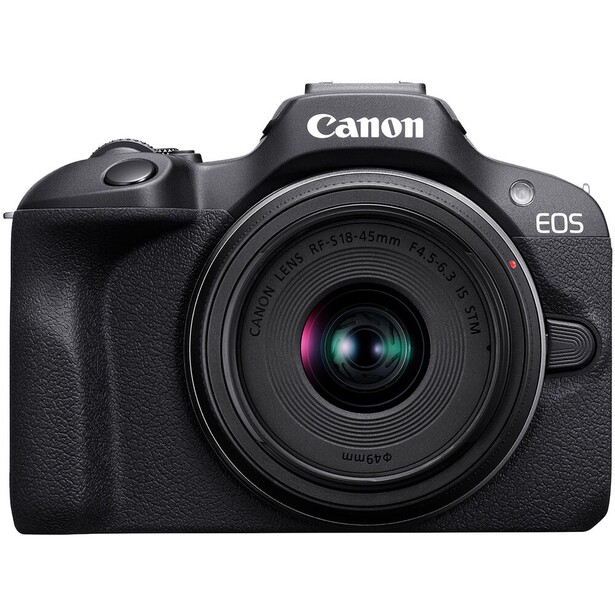
- Sensor: 24.1 MP APS-C CMOS
- Autofocus: Dual Pixel CMOS AF with face and eye detection
- Stabilization: none in-body, digital stabilization in video
- Continuous shooting: 6.5 fps
- Video: 4K/24p with a heavy crop, Full HD/60p
- Viewfinder and screen: 2.36m-dot OLED viewfinder, fixed 3-inch non-touch screen
- Weight: 356 g with battery
- Price: $499 (B&H)
The R100 answers exactly one question: what is the least you can spend to get a real interchangeable-lens camera with a viewfinder? It gives you the same 24-megapixel resolution as cameras costing twice as much, a proper OLED viewfinder that most budget rivals delete to hit their price, and access to Canon's RF and RF-S lenses. This is not a camera we have reviewed, and the spec sheet does most of the arguing here. For a teenager learning the craft, a backup body, or a gift, it clears the bar that matters.
You feel the savings everywhere else, and you should know where before you buy. The rear screen is fixed and does not respond to touch, which in 2026 feels genuinely dated and slows down both menu navigation and low-angle work. The autofocus is an older, simpler generation of Dual Pixel than the R50 uses, competent on still faces but not in the same tracking league. The 4K mode is cropped hard and capped at 24p, so treat this as a stills camera that shoots clean 1080p rather than a 4K machine. Its 6.5 fps burst is fine for a walk in the park and slow for anything that runs. There is no in-body stabilization, which means a stabilized kit lens or a faster shutter speed indoors.
On cycle timing, the R100 is the oldest design in this guide and the likeliest of our picks to be replaced, with persistent talk of a Mark II sometime after 2026. Nothing is confirmed, and Canon is still selling this one as its cheapest RF body, so if the price is right there is no reason to sit on your hands. Buy the R100, put the difference toward a Canon RF 50mm f/1.8 STM, and you will have a kit that shoots well above its cost. If you can stretch to the R50, do, because the touchscreen and better autofocus are worth it. For the buyer who cannot, check the current price of the Canon EOS R100 at B&H, because it is the honest floor of the new-camera market.
What We Like
- The cheapest new mirrorless camera with a viewfinder
- Full 24 MP resolution and RF lens access
- Small, light, and simple to hand a first-timer
What Could Be Better
- Fixed, non-touch rear screen
- Older autofocus and a slow 6.5 fps burst
- 4K is heavily cropped and capped at 24p
- No in-body stabilization, and the oldest design here
Best for Video and Vlogging: Sony ZV-E10 II
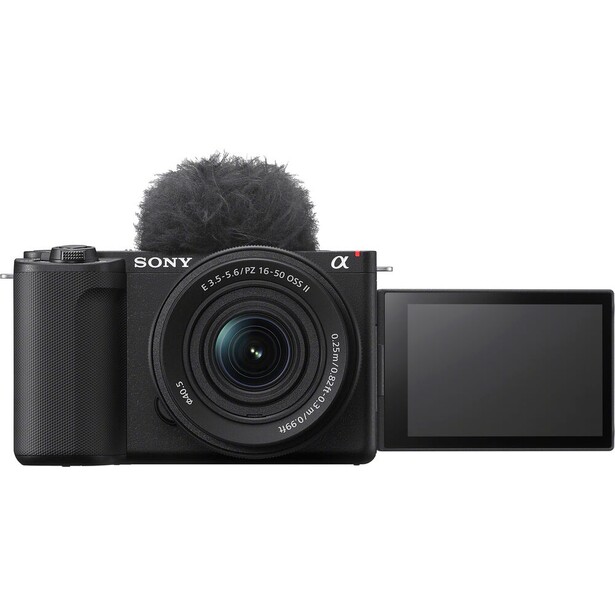
- Sensor: 26 MP APS-C Exmor R CMOS
- Autofocus: 759-point hybrid AF with real-time subject recognition
- Stabilization: none in-body, electronic stabilization only
- Continuous shooting: 11 fps
- Video: 4K/60p with a crop, 4K/30p oversampled from 6K, 10-bit 4:2:2, 1080/120p
- Viewfinder and screen: no viewfinder, 3-inch vari-angle touchscreen
- Weight: 377 g with battery
- Price: $1,098 (B&H)
If your first camera is really a tool for making videos, the ZV-E10 II is the one built around that job. Sony designed it for the way creators actually work: a fully articulating screen that faces forward, a three-capsule directional microphone with a bundled wind muff, a background-defocus button that opens the aperture for you, and a product-showcase mode that racks focus to whatever you hold up to the lens. Those features read as gimmicks on a list, and they stop feeling that way the first time you film yourself alone.
Underneath sits a serious camera, and we are reading its spec sheet rather than reporting from a review of our own. The 26-megapixel sensor and Sony's subject tracking are the real reasons to buy it, because that autofocus holds an eye whether you are talking to the lens or moving through a scene, and it remains the benchmark at this price. The upgrades over the original are the larger NP-FZ100 battery, which takes runtime from frustrating to all-day, and 4K/60p the first model could not manage cleanly. Sony's E-mount also hands you the deepest affordable lens catalog of any system here, including a wall of Sigma, Tamron, and Viltrox glass that keeps a video kit cheap, so the money you do not spend on the body goes a long way.
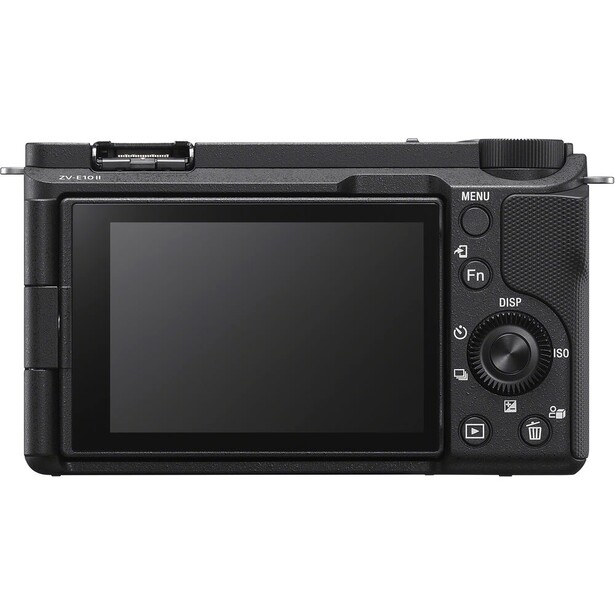
Two things keep it out of the overall slot. There is no viewfinder at all, so bright-day stills mean composing on the rear screen, and there is no in-body stabilization, so handheld walking footage leans on electronic correction that crops in and can look slightly processed. For a video-first creator neither is a dealbreaker. On cycle timing this one is comfortable: Sony's ZV line runs on roughly a three-year cadence, the Mark II landed in 2024, and Sony spent early 2026 adding 4K/120p to this body by license rather than replacing it. Its list price does run past this guide's $1,000 line, and it discounts often, so check the current price of the Sony ZV-E10 II at B&H before you commit. Anyone learning the craft of moving image alongside it will get a lot from Fstoppers' Introduction to Video: A Photographer's Guide to Filmmaking.
What We Like
- Best-in-class autofocus and subject tracking
- Genuinely useful creator tools and a good built-in mic
- Large NP-FZ100 battery and oversampled 4K/30p
- The deepest affordable lens ecosystem here
What Could Be Better
- No viewfinder for stills
- No in-body stabilization
- 4K/60p crops in, and the list price runs past the $1,000 cap
Best for Straight-Out-of-Camera Color: Fujifilm X-M5
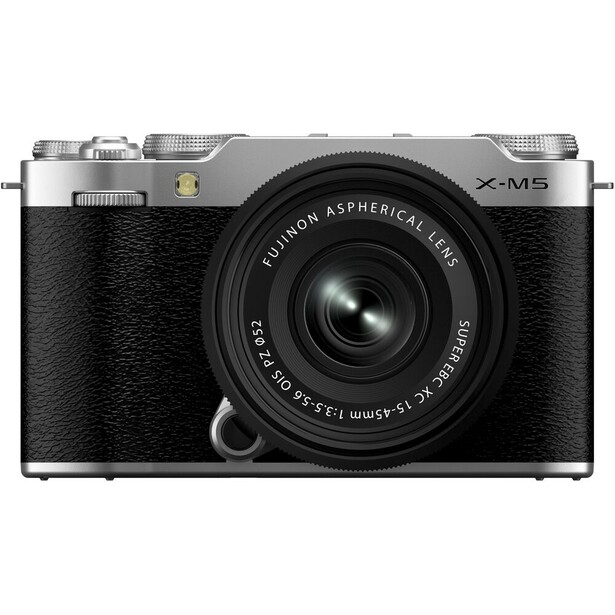
- Sensor: 26.1 MP APS-C X-Trans CMOS 4
- Autofocus: phase-detection AF with subject recognition
- Stabilization: none in-body, digital stabilization in video
- Continuous shooting: 8 fps mechanical, 20 fps electronic, 30 fps with a 1.25x crop
- Video: 6.2K/30p 10-bit, 4K/60p, 1080/240p
- Viewfinder and screen: no viewfinder, 3-inch vari-angle touchscreen
- Weight: 355 g with battery
- Price: $999 (B&H)
Some people do not want to edit. They want to take a photo that already looks finished and post it, and the X-M5 is built for that person. Fujifilm's film simulations are the draw, 20 color profiles distilled from decades of film chemistry, and the X-M5 puts them on a dedicated top dial so you can spin from a punchy Velvia landscape to a muted classic-negative portrait without opening a menu. The files come off the card looking done, and for someone who finds Lightroom intimidating, that is a more joyful way to learn. We have not reviewed this body ourselves, so the color claim rests on Fujifilm's own long-documented profiles rather than our bench time with it.
It is also the lightest camera in this guide at 355 g, small enough to carry every day, and it doubles as a strong content camera with 6.2K and 4K/60p video plus the subject-detection autofocus Fujifilm carried down from pricier bodies. The X-mount lens catalog is deep and full of character, with a rich set of affordable primes that suit the camera's street-and-travel personality, and the body-only price leaves room for one of them. It is also mid-cycle and safe to buy: the X-M5 arrived in late 2024, and Fujifilm's 2026 attention is on the X-T6, not a replacement for this one.
Be clear-eyed about the omissions. There is no viewfinder, so you compose on the rear screen, and there is no in-body stabilization, so low-light handheld stills need a steadier hand or a faster lens. The vari-angle screen and light body make it a better one-handed content camera than a deliberate photographer's tool, and if stills are your whole reason for buying, the X-T30 III below is the better Fujifilm. If you shoot mostly in good light and love the idea of nailing color in camera, none of that will bother you, so check the current price of the Fujifilm X-M5 at B&H.
What We Like
- Film-simulation dial makes great color effortless
- Lightest body here and easy to carry daily
- Strong 6.2K and 4K/60p video
- Deep, characterful X-mount lens catalog
What Could Be Better
- No viewfinder
- No in-body stabilization
- Vari-angle screen aside, it favors casual over deliberate shooting
Best APS-C for Enthusiasts: Fujifilm X-T30 III
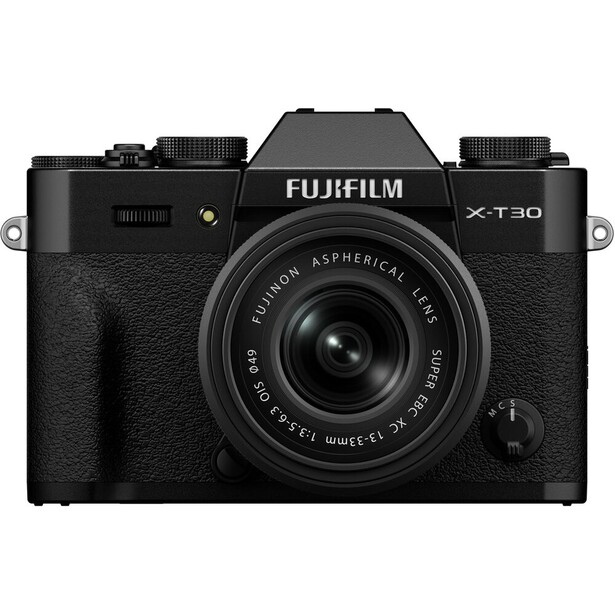
- Sensor: 26.1 MP APS-C X-Trans CMOS 4
- Autofocus: phase-detection AF with subject recognition
- Stabilization: none in-body, digital stabilization in video
- Continuous shooting: 8 fps mechanical, 20 fps electronic, 30 fps with a 1.25x crop
- Video: 6.2K/30p 10-bit, 4K/60p, F-Log2
- Viewfinder and screen: 2.36m-dot OLED viewfinder at 0.62x, 3-inch two-way tilting touchscreen
- Weight: 378 g with battery
- Price: $1,149 (B&H)
Dials, a finder, and Fujifilm color: the X-T30 III lists a little past this guide's $1,000 line and is the pick for the enthusiast who wants to shoot rather than stream. Where the X-M5 is a screen-first content camera, this is a photographer's tool: a bright OLED viewfinder, real shutter-speed and exposure-compensation dials, and the same X-Processor 5 and 26.1-megapixel sensor, now paired with a film-simulation dial of its own. The processor is the story. Fujifilm's older bodies had autofocus you had to fight, and the new X-Processor 5 subject-detection system finally sticks to eyes, animals, and moving subjects the way Sony and Canon shooters take for granted. We have not run it through a review of our own.
The controls are the reason to choose it. The dials give you full manual exposure without touching a menu, which is how a lot of people actually learn the exposure triangle, and the compact rangefinder-style body stays pocketable with a pancake lens. Video is more capable than the price suggests, with 6.2K capture, 4K/60p, and F-Log2 for anyone who wants to grade. The X-mount lenses behind it, especially the affordable primes, are the reason a lot of photographers stay in this system for a decade, though at this price you will be buying one of them later rather than alongside the body.
The compromises are deliberate. There is no in-body stabilization, which Fujifilm reserves for its pricier models, so slow shutter speeds handheld need a steady grip or a stabilized lens. The rear screen tilts rather than flips out, so it is awkward for filming yourself, and the 0.62x viewfinder is on the small side next to full frame rivals. This is the newest camera in the guide, announced in late 2025, so you are buying at the start of its cycle rather than the end. For a stills-first enthusiast willing to stretch a little past $1,000 for the most capable new body here, check the current price of the Fujifilm X-T30 III at B&H.
What We Like
- Much-improved subject-detection autofocus
- Real dials and a viewfinder for deliberate shooting
- Capable 6.2K and 4K/60p video with F-Log2
- Access to the full X-mount prime lineup
What Could Be Better
- No in-body stabilization
- Screen tilts rather than flipping forward
- Small 0.62x viewfinder, and the list price runs past the $1,000 cap
Best Used Full Frame for the Price of New: Nikon Z5
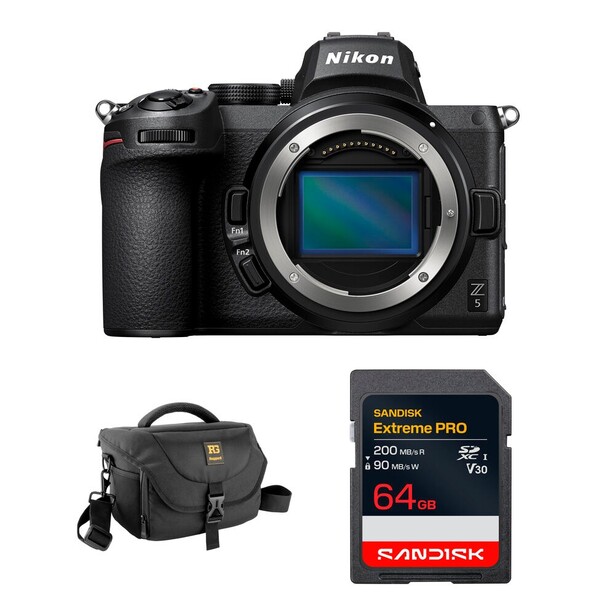
- Sensor: 24.3 MP full frame CMOS
- Autofocus: 273-point hybrid phase detection with Eye AF
- Stabilization: 5-axis in-body, up to 5 stops
- Continuous shooting: 4.5 fps
- Video: 4K/30p with a 1.7x crop, 1080p full width
- Viewfinder and screen: 3.69m-dot OLED viewfinder, 3.2-inch tilting touchscreen
- Weight: 675 g with battery
- Price: discontinued new; used pricing varies by condition grade (B&H Used, MPB, KEH)
The smartest budget move in 2026 might be to skip new APS-C entirely and buy last generation's full frame body used. The Z5 is the one worth hunting for. Nikon has since shipped a Z5 II, which pushed prices on the original down hard, and a clean used Z5 now sells for less than several of the new APS-C bodies above it while giving you a full frame sensor, in-body stabilization, dual UHS-II card slots, and a magnesium-alloy weather-sealed body none of them can match. On the used market it turns up constantly and cheaply, and every dollar you do not spend on the body can go toward a lens. We have not reviewed the original Z5, so what follows is the spec case rather than a testing report.
It is a camera a class above its price. The 24.3-megapixel sensor delivers the low-light headroom and shallow-depth control a smaller sensor cannot, the IBIS buys you several stops in dim rooms, and the two SD slots mean instant backup, a feature usually reserved for far pricier bodies. Nikon's Z mount has matured into one of the best in the business, and the affordable primes like the 40mm f/2 and 28mm f/2.8 are compact and cheap. For a portrait, wedding-second-shooter, or landscape beginner who cares about image quality over frame rate, this is the most sensor per dollar in the guide.
The tradeoffs are real and worth naming. The autofocus is a generation behind the newest Nikons, competent for portraits and landscapes but not for fast birds or sports, the 4.5 fps burst is the slowest here by a wide margin, and 4K carries a heavy 1.7x crop that makes wide video awkward. At 675 g it is also the heaviest camera here. As for cycle timing, this pick is deliberately at the end of one: the Z5 is discontinued new, which is exactly why the used price is so good, and buying used means buying from a dealer with a warranty and a stated condition grade rather than a stranger. Compare grades and check the current price of the Nikon Z5 at B&H, then cross-shop the same body at MPB and KEH. Our best used cameras guide goes deeper on how to buy secondhand without getting burned.
What We Like
- Full frame image quality for the price of new APS-C
- In-body stabilization and dual card slots
- Magnesium-alloy, weather-sealed build
- Mature, high-quality Z lens options
What Could Be Better
- Autofocus trails the newest Nikon bodies for action
- Slow 4.5 fps burst and 4K video with a heavy 1.7x crop
- Heaviest camera here, and you are buying used
Best for Travel and Bad Weather: OM System OM-5 Mark II
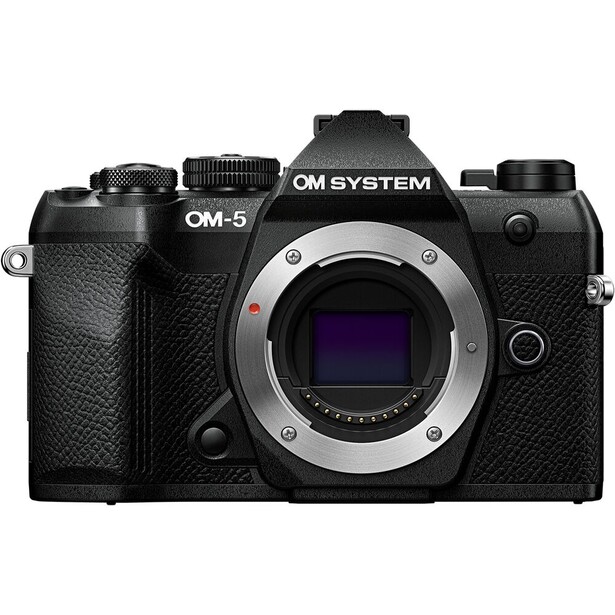
- Sensor: 20.4 MP Four Thirds Live MOS
- Autofocus: 121-point cross-type phase detection
- Stabilization: 5-axis in-body, up to 7.5 stops with Sync IS lenses
- Continuous shooting: 10 fps with continuous AF, up to 30 fps silent
- Video: 4K/30p, C4K/24p, 1080/120p
- Viewfinder and screen: 2.36m-dot OLED viewfinder, 3-inch vari-angle touchscreen
- Weight: 418 g with battery and card
- Price: $1,049.99 (B&H)
Photographers who fall for the outdoors keep hitting the same wall: the good camera stays home when the weather turns or the pack gets heavy. The OM-5 Mark II is the answer to that exact problem. It carries a full IP53 rating and is freezeproof to -10 degrees Celsius, which is a tested certification rather than the vague weather-resistant language most rivals use, so it shrugs off real rain, dust, and cold. The whole system is small, because a Four Thirds sensor allows lenses a fraction of the size and weight of full frame equivalents, and a day-hike kit fits in a jacket pocket. It replaced the original OM-5 in mid-2025 and fixed that camera's most-complained-about omission, adding USB-C charging and a deeper grip, and the original has now sold through into clearance, which is why we point new buyers at the Mark II instead.
Its headline trick is stabilization. The in-body system is rated to 7.5 stops with Sync IS lenses, enough on the specification sheet to hand-hold shutter speeds that would otherwise need a tripod, and OM System layers genuinely clever computational tools on top: a Live ND mode that simulates a long exposure for silky waterfalls without a filter, handheld high-resolution capture up to 80 megapixels, and in-camera focus stacking for landscapes and macro. Enthusiasts pay extra for those features elsewhere, and here they arrive in a body you will actually carry. We have not tested this one ourselves yet, so we are reading OM System's current specifications rather than reporting from a review.
The honest limitation is the sensor, and the second one is the price. At 20.4 megapixels on a smaller Four Thirds chip, it gives up low-light headroom and background blur to the APS-C and full frame options here, and the autofocus, much improved though it is, trails Sony and Nikon for fast action. This is not the camera for indoor sports or dreamy portrait bokeh. Like the Sony and the pricier Fujifilm here, it lists above our $1,000 line, and we kept it anyway because nothing under the cap offers IP53 sealing, 7.5 stops of stabilization, and a kit this small. Micro Four Thirds glass is cheap and plentiful, so the system total still lands where a full frame kit cannot. Discounts on this body have been frequent since launch, so check the current price of the OM System OM-5 Mark II at B&H before you decide whether to stretch. Also consider a clearance OM System OM-5 if you want the same weather-sealing for less and can live without USB-C charging.
What We Like
- True IP53 weather-sealing and freezeproofing, rare at any price
- Up to 7.5 stops of stabilization with Sync IS lenses
- Computational tools like Live ND, 80 MP handheld high-res, and focus stacking
- Small, light lenses and a pocketable kit, with USB-C charging at last
What Could Be Better
- Smaller sensor gives up low-light and background blur
- Autofocus trails the best APS-C rivals for action
- Sensor and processor are carried over from an older generation
- Starts above this guide's $1,000 ceiling at list price
How to Choose a Budget Camera Under $1,000
Start with the decision that outlasts the body, which is the lens mount. The lenses you buy over the next few years will cost more and last longer than any camera in this guide, so before you fixate on a spec, look at the affordable glass for that system, especially a cheap fast prime like a 50mm f/1.8 or a 30mm f/1.4. Sony's E-mount and Fujifilm's X-mount have the deepest affordable catalogs, Nikon's Z lineup has matured into a strong one, Micro Four Thirds is small and cheap, and Canon's RF-S remains the thinnest. That single fact should weigh more heavily than a frame-rate figure.
Next, be honest about whether you shoot stills or video first, and whether you need a viewfinder. A viewfinder helps you learn, because composing with the camera to your eye in bright light is steadier and easier than squinting at a screen, and it is the main thing the video-focused bodies give up. If you film yourself, buy a camera designed for that, with a forward-facing screen and a good microphone, rather than forcing a stills camera into the role. If you shoot outdoors in bad weather, weather-sealing and stabilization matter more than autofocus speed, which is the entire argument for the OM-5 Mark II.
Then resist the megapixel race. Twenty to 26 megapixels is plenty for prints larger than most people ever make, and chasing a bigger number mostly fills your hard drive faster. In-body stabilization is the spec that matters more than people think at this price, since only two cameras here have it and it decides whether you can shoot handheld in a dim room. Two cameras sit just outside this guide and deserve a mention: Nikon's Z50 II, an excellent all-rounder that lands right at the top of this budget body-only, and the newest full frame bodies, which start well above it and are covered in our best mirrorless cameras guide. If neither tempts you, everything above is genuinely capable, and the smartest play at this level is often to spend less on the body and more on a lens. If you are starting from zero, Fstoppers' Photography 101 walks through how to actually use whichever one you pick.
What We're Looking For
Our picks weigh autofocus reliability, the depth and affordability of each camera's lens ecosystem, the quality of the controls for someone still learning, and how well the body suits its intended shooter rather than how it scores on a spec sheet, all against a $1,000 body-only target. Every specification here was verified against current manufacturer and retailer sources at the time of writing. Most picks across our guides come from gear our writers have used and reviewed hands-on, and where we have not, we say so in the entry: none of the cameras in this guide have been through a full Fstoppers review, so these selections rest on verified current specs and each camera's documented design, and no entry claims testing we have not done.
Frequently Asked Questions
Can You Get a Good Camera for Under $1,000 in 2026?
Yes, and easily. Under $1,000 today buys a 24 to 26 megapixel APS-C body with reliable subject-detection autofocus, 4K video, and access to a real lens system, which is more capability than professionals had a decade ago. The ceiling rules out new full frame bodies, but a used one like the Nikon Z5 fits, and the APS-C options are more than enough for most people.
Should I Buy a Cheaper Camera or Spend More on Lenses?
Spend more on lenses. The body you start with will be replaced in a few years, but a good lens outlasts several cameras and does more for image quality than any sensor upgrade at this level. A sensible plan is a modest body, the kit zoom, and one affordable fast prime, which teaches you more than a pricier body with only its kit lens.
Is a Used Full Frame Camera Better Than a New APS-C Camera?
It depends on what you shoot. A used Nikon Z5 gives you full frame image quality, in-body stabilization, and dual card slots for the price of a new crop-sensor body, which is ideal for portraits and landscapes. A new APS-C camera like the Canon R50 offers newer, faster autofocus and a warranty, which matters more for action and for buyers who want peace of mind.
Do I Need 4K Video in a Budget Camera?
Only if you shoot video. Most cameras here record 4K, but the quality varies: the Canon R50 and the Fujifilm bodies oversample for crisp footage, while the Canon R100 crops 4K heavily and caps it at 24p. If video is a priority, the Sony ZV-E10 II is built for it. If you shoot stills, do not pay a premium for 4K specs you will not use.
Is the Canon EOS R100 Worth It?
For the right buyer, yes. The R100 is the cheapest new mirrorless camera with a viewfinder, and it delivers full 24-megapixel stills and RF lens access at a rock-bottom price. Its fixed non-touch screen and older autofocus are real limitations, so if you can stretch to the Canon R50, do. If your budget is firm, the R100 plus a 50mm f/1.8 is a strong starter kit.
Fstoppers may earn a commission from purchases made through links in this article. Our picks are made independently by our editorial team.